

A diaper change can suddenly leave you wondering whether a red patch, swollen area or surprising poop colour is normal. The useful question is not simply whether it looks unusual. Check three things together: Is your baby’s skin intact? Has their urine or stool changed from their usual pattern? Are they feeding, waking and behaving normally?
This framework can help you decide between simple home care, a call to your child’s clinician and urgent help. It cannot diagnose a rash, infection or genital condition from appearance alone. If your baby seems seriously unwell, their overall condition matters more than how mild the diaper area looks.
Start with skin, output and behaviour
Before cleaning the area, pause long enough to see what is actually happening. Look under good light. Notice whether redness is limited to the surfaces that touch the diaper or reaches into the creases. Check for swelling, broken skin, blisters, discharge or a groin bulge. Then look at the diaper itself and compare it with your child’s normal pattern.
Key takeaways
- Mild, localized redness on closed skin can often be managed by gentle cleaning, thorough drying, frequent changes and a protective barrier ointment.
- A rash that spreads, reaches deeply into skin folds, develops spots around its edges, opens, weeps or causes significant pain needs clinical advice.
- Green, yellow and brown stool can all occur normally. Red, pale white or clay-coloured stool, or black stool after the newborn meconium stage, deserves prompt attention.
- Sudden painful swelling or dark colour in the scrotum or groin is an emergency warning sign.
- Poor feeding, unusual sleepiness, persistent vomiting, breathing difficulty, dehydration or fever in a young infant should override a wait-and-see plan.
Behaviour helps you set the urgency. A comfortable baby who feeds normally and has their usual wet diapers gives you room to examine a mild skin change. A baby who is hard to wake, cannot keep feeds down, appears to be in severe pain or is producing markedly less urine needs prompt medical assessment even if the visible rash is small.
Read the rash pattern before reaching for a cream
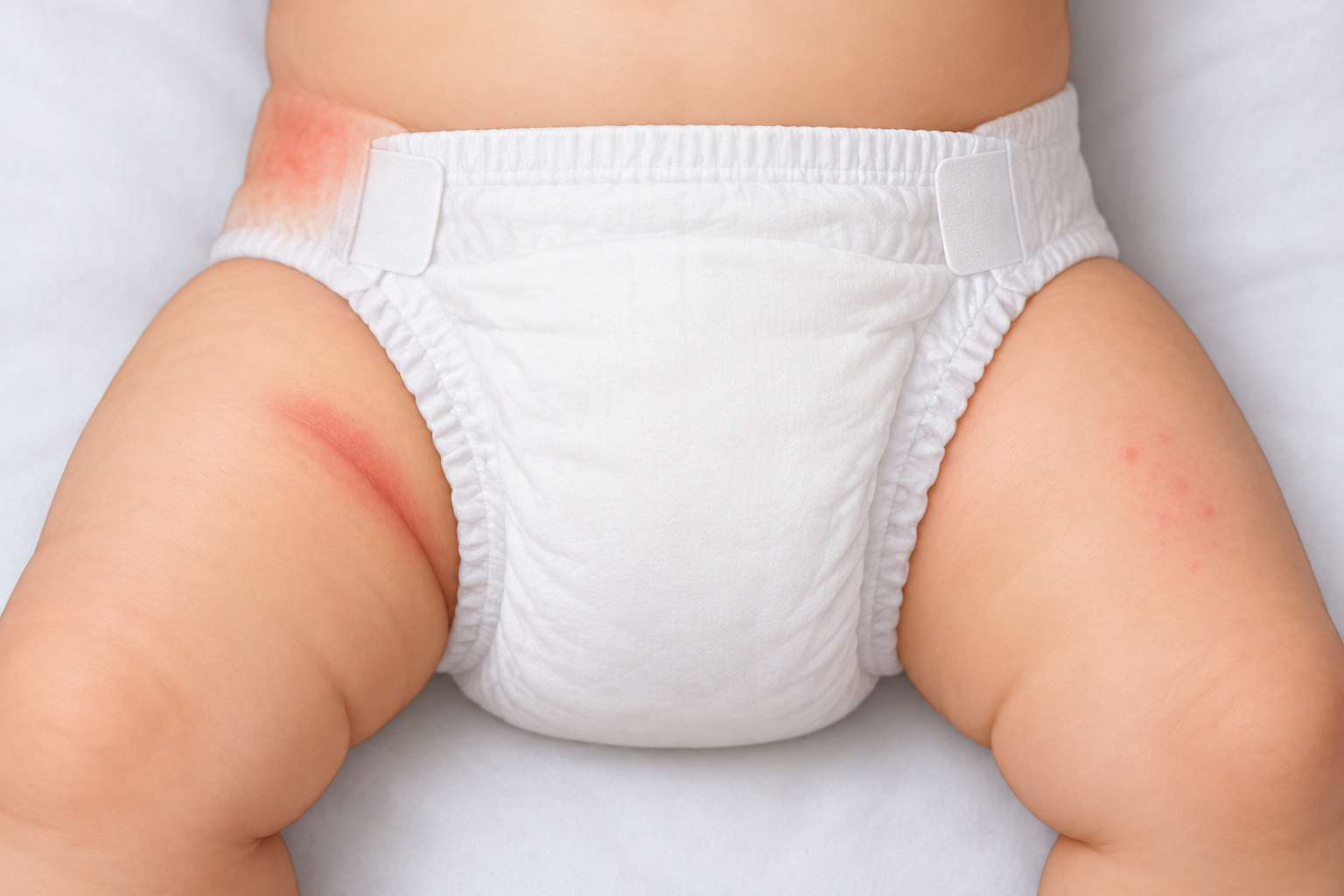
Moisture, stool and friction can damage the skin barrier. A typical irritant rash is often reddest on the rounded surfaces in direct contact with the diaper, while the deepest folds are less affected. Loose or frequent stools can make this pattern worsen quickly because the skin is exposed more often.
For a mild rash on unbroken skin, use a simple routine:
- Change wet or soiled diapers promptly.
- Clean gently with lukewarm water and a soft cloth, or use an unscented wipe that does not sting. Do not scrub.
- Pat the area dry or allow a short period of diaper-free air time.
- Apply a generous layer of plain barrier ointment containing petrolatum or zinc oxide. At the next change, remove only what is soiled instead of rubbing the skin completely bare.
- Pause new fragranced wipes, soaps, lotions and diaper products while you watch for improvement. Keep powders away from your baby’s face and breathing zone.
A different pattern needs a different decision. Bright redness that extends into the folds, with smaller red bumps beyond the main patch, can fit a yeast rash. Crusting, pus, spreading warmth, blisters or open sores can point to infection or another condition that barrier cream will not fix. Contact your child’s clinician rather than repeatedly changing creams or layering several medicated products together.
Seek advice if careful barrier care is not beginning to help, if the rash keeps returning or if diaper changes are becoming very painful. Get prompt help for rapidly spreading redness, significant swelling, bleeding that is not from a small surface crack, or a rash accompanied by fever or an unwell baby.
Treat genital swelling and colour changes by urgency

The genital area can have normal variations as well as problems that need an examination. The safest approach is to clean only what you can see, avoid force and judge swelling by its speed, tenderness, colour and effect on your baby. A range of common baby genital concerns can look similar at home, so persistent or unexplained changes belong with a clinician.
Vulva and vaginal discharge
A newborn’s vulva may look puffy, and a small amount of clear, white or briefly blood-tinged discharge can result from changing hormone exposure after birth. Clean the outside gently and do not put soap, wipes or medication inside the vagina.
Call your baby’s clinician if discharge is foul-smelling, pus-like, persistent or accompanied by worsening redness, pain, fever or poor feeding. Bleeding that is more than a slight newborn discharge, appears later, continues or has no clear surface source also needs assessment.
Penis, foreskin, scrotum and groin
If your baby has an intact foreskin, wash the outside only. The foreskin is normally attached in infancy and should never be forced back. Forceful retraction can cause pain, tearing and scarring. If your baby was circumcised recently, follow the aftercare instructions from the clinician who performed or checked the procedure; contact them about worsening swelling, spreading redness, persistent bleeding, discharge or difficulty passing urine.
Scrotal or groin swelling may be caused by fluid or a hernia and cannot be sorted out reliably from a description alone. A soft bulge that comes and goes, including one that becomes more visible when your baby cries, should be shown to a clinician. Do not repeatedly press or force a bulge back in.
Go for urgent emergency assessment if swelling becomes sudden, firm, very tender, red, blue or dark; if a groin bulge will not settle; or if it occurs with severe distress or vomiting. Those features can signal trapped tissue or loss of blood flow, where delay can cause harm. A concern about a testicle that does not seem to be in the scrotum is usually not something to search for by squeezing at home; ask your child’s clinician to examine it.
Use poop and urine as evidence, not a diagnosis
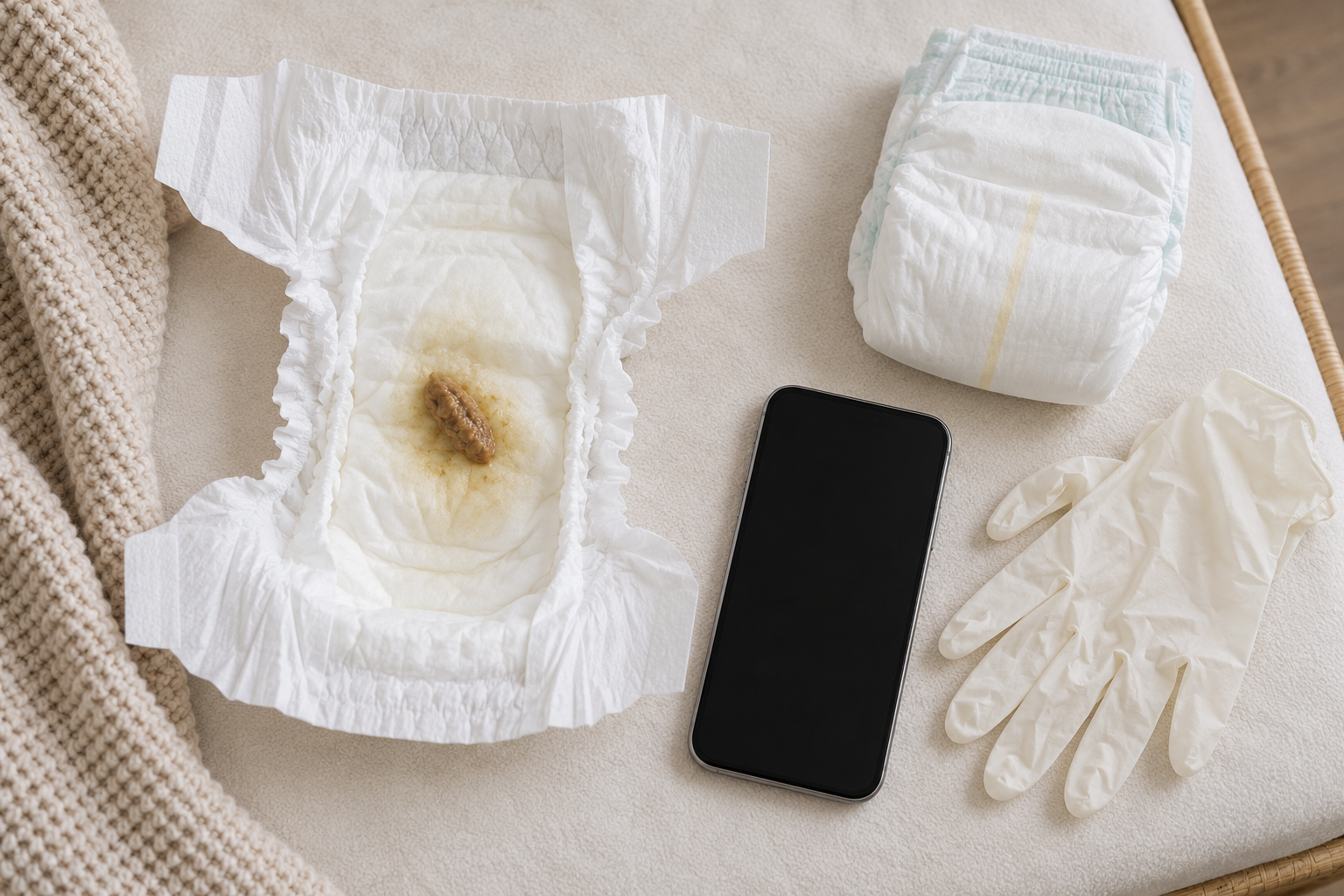
Baby stool changes with age, feeding and digestion. Yellow, green and brown can all fall within the normal range of baby-poop colours. Consistency and frequency also vary, so compare the diaper with your own baby’s established pattern instead of another child’s schedule.
Colour becomes useful when it changes what you do:
- Green: Often normal by itself. Pay more attention to feeding, comfort, consistency and hydration than to green colour alone.
- Red: Food can sometimes mimic blood, and a small surface crack near the anus can leave a bright streak. Because you cannot safely assume the cause, photograph the diaper and contact your child’s clinician for guidance.
- Pale white, grey or clay-coloured: This can reflect a problem with bile reaching the stool. Arrange prompt medical assessment rather than waiting through several more diapers to see whether it resolves.
- Black: Thick, dark meconium is expected in a newborn’s earliest stools. Black or tar-like stool after that stage can have several explanations, including digested blood, and should be assessed promptly. Do not assume a supplement explains it unless your clinician has already told you to expect that change.
- Much more watery than usual: Watch the whole baby. Repeated watery stools combined with fewer wet diapers, a dry mouth, unusual sleepiness, poor feeding or persistent vomiting can signal dehydration and require prompt help.
Urine offers a second hydration check. A brief pink or orange, brick-dust-looking stain can occur in an early newborn diaper when urine is concentrated, but it should prompt you to check feeding and wet-diaper output. Contact your baby’s clinician if it persists, returns, accompanies poor feeding or you are unsure whether the stain is blood. Visible blood in urine, obvious pain with urination, markedly fewer wet diapers or a long gap compared with your baby’s normal pattern needs medical advice.
Odour alone does not diagnose a urinary infection. A strong new smell matters more when it comes with fever, vomiting, poor feeding, unusual irritability, lethargy or apparent pain. A clinician may need a properly collected urine sample; squeezing urine from a diaper cannot provide a reliable diagnostic sample.
Choose the next step and document what changed

You do not need to name the condition before asking for help. You need to choose a safe level of response and give the clinician a clear account of what changed.
| Response | Examples | What to do |
|---|---|---|
| Home care with close observation | Mild localized redness, intact skin, normal feeding and behaviour, and the usual urine and stool pattern | Clean gently, dry, use a plain barrier ointment and check for improvement at each change. |
| Contact your child’s clinician promptly | A persistent or worsening rash; fold involvement or surrounding red spots; unexplained discharge; a recurring groin bulge; blood-like stool or urine; pale stool; black stool beyond meconium; or a marked change in wet diapers | Call the clinic or local health advice service. Ask how soon your child should be examined and what home care is safe while you wait. |
| Seek urgent or emergency care | A baby who is hard to wake, has breathing difficulty, appears severely dehydrated or in severe pain; sudden dark or painful scrotal swelling; a firm trapped groin bulge; persistent vomiting; or rapidly spreading redness with serious illness | Use urgent care or emergency services appropriate to the severity. Do not delay to test another cream or wait for another diaper. |
Before you call, take a clear photo in neutral light if doing so will not delay care. Record when the change began, whether it is spreading, recent diarrhea or constipation, new diapers or skin products, medicines such as antibiotics, feeding changes, vomiting, measured temperature and wet-diaper output compared with normal. For stool colour, a photo taken before disposal is usually more useful than a description such as dark or strange.
Protect your child’s privacy when photographing the genital area. Include only what the clinician needs to assess, and use the clinic’s approved communication channel rather than ordinary social messaging.
At the next diaper change, start with the same three checks: skin, output and behaviour. If all three are steady, simple care and observation may be enough. If the pattern is changing or your baby seems ill, make the call based on the more serious sign rather than waiting for the diaper area to look worse.
References
- Parents – 6 Common Baby Genital Problems and How to Address Them
- Parents – Why Are Baby Poops Different Colors? Understand Your Baby’s Poop




