
If your bleeding stopped after birth and has now started again, you may be wondering whether your period is back – and whether what you are seeing is normal. The date alone cannot answer that question. Your feeding pattern, the way the bleeding began, and what happens over the next few cycles all offer better clues.
Your first postpartum period may arrive earlier or later than you expected, and it may not resemble your pre-pregnancy periods. Here is how to interpret the changes, avoid an easy-to-miss pregnancy risk, and recognize bleeding that deserves medical attention.
Key takeaways
- If you are not breastfeeding, your period may return as early as four to eight weeks after delivery.
- If you exclusively breastfeed or pump, going six months or longer without a period can be normal. There is still plenty of individual variation.
- The first few periods can be irregular, heavier or lighter, longer or shorter, and more or less painful than they were before pregnancy.
- You can become pregnant before the first period because ovulation happens before menstrual bleeding.
- Contact a health care provider for bleeding that requires a pad or tampon change every hour, lasts longer than seven days, or contains clots larger than a quarter.
Work out whether the bleeding could be a period
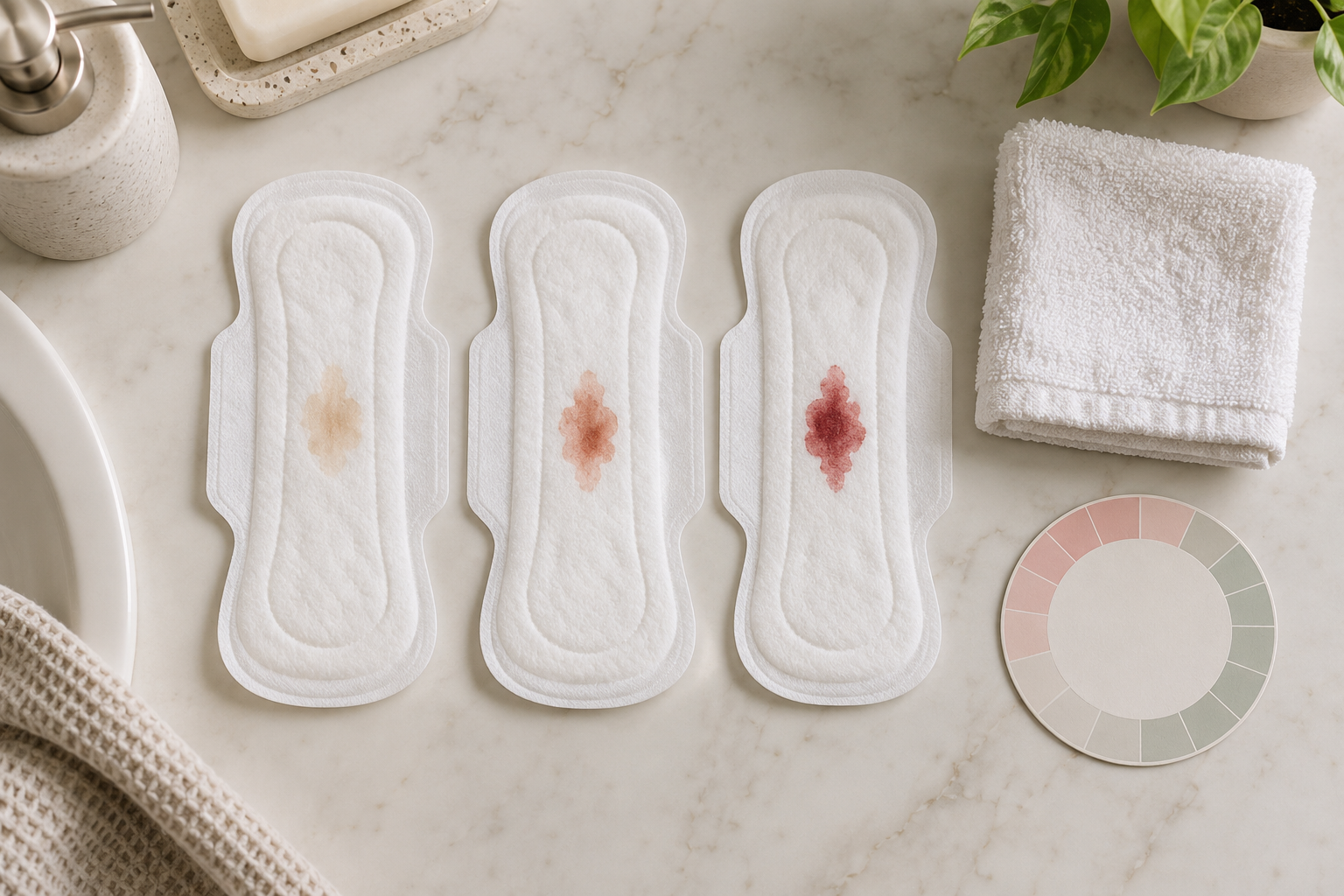
The bleeding that begins after delivery is postpartum discharge, commonly called lochia. It is not a menstrual period. If bleeding has continued from the birth without a clear break, do not assume that your cycle has restarted simply because the colour or flow changed.
A new episode of bleeding after the initial postpartum bleeding has ended may be a period, but appearance alone cannot confirm the cause. Feeding is the most useful timing clue because the hormone prolactin, which supports milk production, also suppresses ovulation.
- If you are not breastfeeding: A period can return four to eight weeks after birth.
- If you exclusively breastfeed or pump: Your period may stay away for six months or longer. Some people menstruate sooner, especially when nursing or pumping routines change.
- If you combination-feed: Your period may return after weeks or months. There is no single reliable date because the amount and frequency of milk removal vary.
These ranges are clues, not deadlines. To make any new bleeding easier to assess, record its first day, whether there was a clear gap after postpartum bleeding, and whether your feeding routine recently changed. If the bleeding seems unusual for where you are in your recovery, contact your postpartum care team rather than deciding from the calendar alone.
Expect a transition, not an immediate return to your old cycle
Your first period after pregnancy may be heavier or lighter, longer or shorter, and more or less crampy than it used to be. A change does not automatically mean that something is wrong. Pregnancy changes the uterus, and the uterine lining must re-establish its usual cycle after delivery.
The comparison can also be misleading if you used hormonal birth control before becoming pregnant. If contraception previously made your periods lighter, a period without that hormonal effect may seem unusually heavy even when part of the difference is simply the absence of your old birth-control pattern.
Irregular timing is common during the first several cycles. One cycle might last 24 days, the next 28, and another 35. If your periods were regular before pregnancy, they will often settle within a few months or after breastfeeding ends. If they were irregular before pregnancy, that underlying pattern may continue unless its cause is addressed.
Once your clinician has said internal menstrual products are appropriate after delivery, you may also notice that a tampon, cup, or disc fits differently, particularly after a vaginal birth. That does not necessarily mean you need the next size up. Try a different shape or size if your old product is uncomfortable, leaks, or will not sit properly.
Track more than the start date for the first few cycles. Note the final day, how often you change period products on the heaviest day, clot size, pain, and any spotting between periods. Those details are more useful to a clinician than saying only that the period felt heavier.
Do not wait for a period before thinking about contraception
The first postpartum period tells you that ovulation has already occurred. That creates a fertile window before you receive any visible sign that your cycle is returning, so pregnancy is possible before the first period.
Breastfeeding often delays ovulation, but it does not guarantee protection from pregnancy. Ovulation may return as feeds become less frequent, formula is added, solid foods are introduced, or pumping and nursing routines change. You may not recognize that transition until after the fertile window has passed.
If you want to avoid pregnancy, choose a contraceptive plan before resuming penis-in-vagina sex rather than waiting for menstrual bleeding. Ask your health care provider which options fit your health history and feeding plans; some birth-control pills are not appropriate for every nursing parent. If pregnancy would affect your immediate plans, make this conversation part of postpartum care even if your period still seems months away.
Use specific thresholds for deciding when to call

A somewhat heavier flow or stronger cramps can occur during the first few postpartum periods. Extremely heavy or persistently unusual bleeding still needs assessment. Contact a health care provider if you experience any of the following:
- You need to change a pad or tampon every hour or more often.
- A period lasts longer than seven days.
- You pass clots larger than a quarter.
- You have spotting between periods.
- Your periods restart and then you miss one, especially if pregnancy is possible.
- You have no period three months after giving birth when you are not breastfeeding, or three months after you stop breastfeeding.
- You have severe pain, extreme cramping, or bleeding that otherwise concerns you.
These patterns can have several explanations. A clinician may need to check for pregnancy or conditions such as infection, fibroids, polyps, anemia, or thyroid dysfunction. The bleeding pattern cannot identify the cause by itself, so do not try to diagnose it from clot size or cycle timing alone.
When you call, have your notes ready: when the bleeding started, how frequently you are changing products, how large the clots are, whether you have pain or spotting, your current feeding pattern, your contraception, and whether pregnancy is possible. If bleeding is rapidly worsening or you feel acutely unwell and cannot reach your regular provider, seek urgent medical care.
For now, put two practical safeguards in place: record the details when bleeding begins, and arrange contraception before you rely on the absence of a period. If one of the warning signs appears, call rather than waiting to see what the next cycle does.
References