
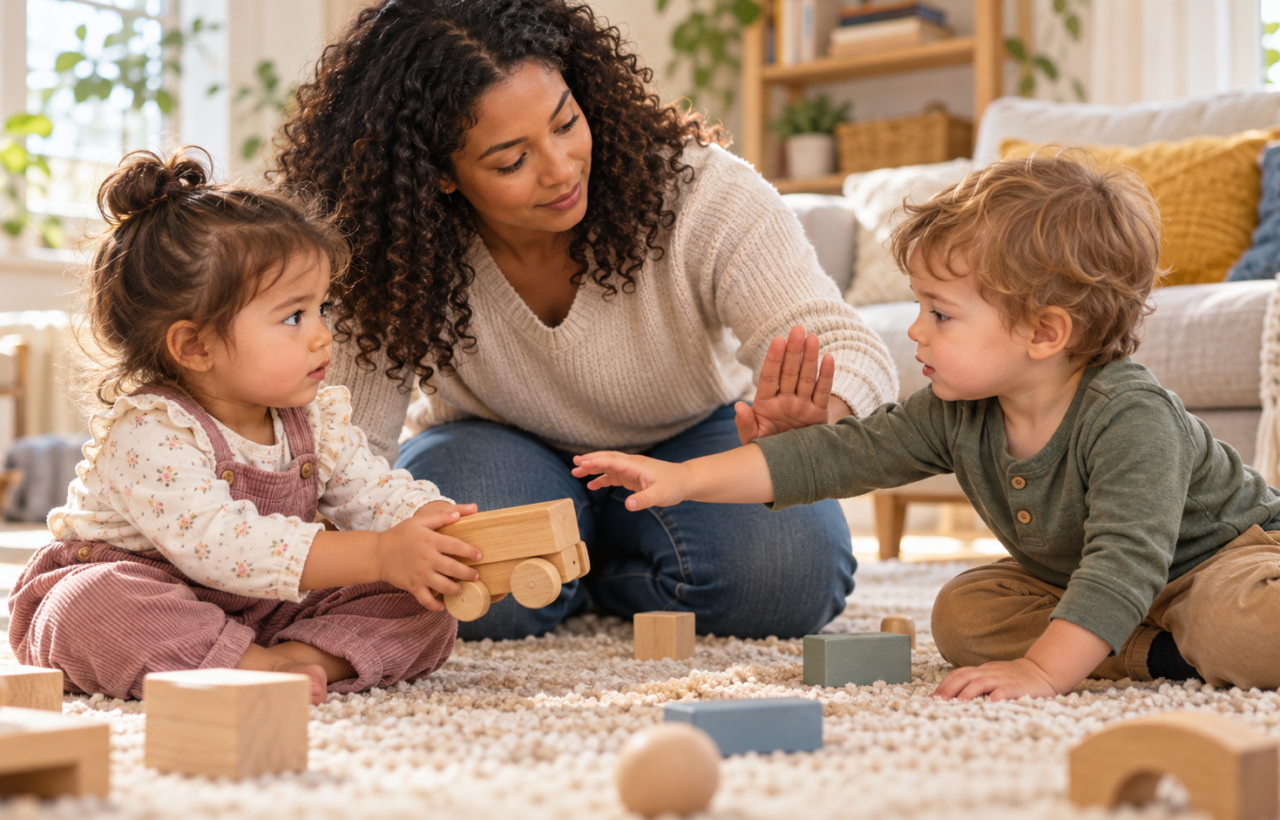
Your toddler hits another child over a toy, bites during a struggle, or shoves you when you set a limit. The immediate question is usually the same: Is this a difficult developmental phase, or a warning sign?
Hitting, biting, and shoving can be part of toddler development, but they still require a clear response. The useful distinction isn’t simply whether aggression happened. Look at what triggered it, whether your child is learning other ways to respond, how much harm it causes, and whether the pattern is persisting or escalating.
First decide whether you’re seeing a skill gap or a pattern
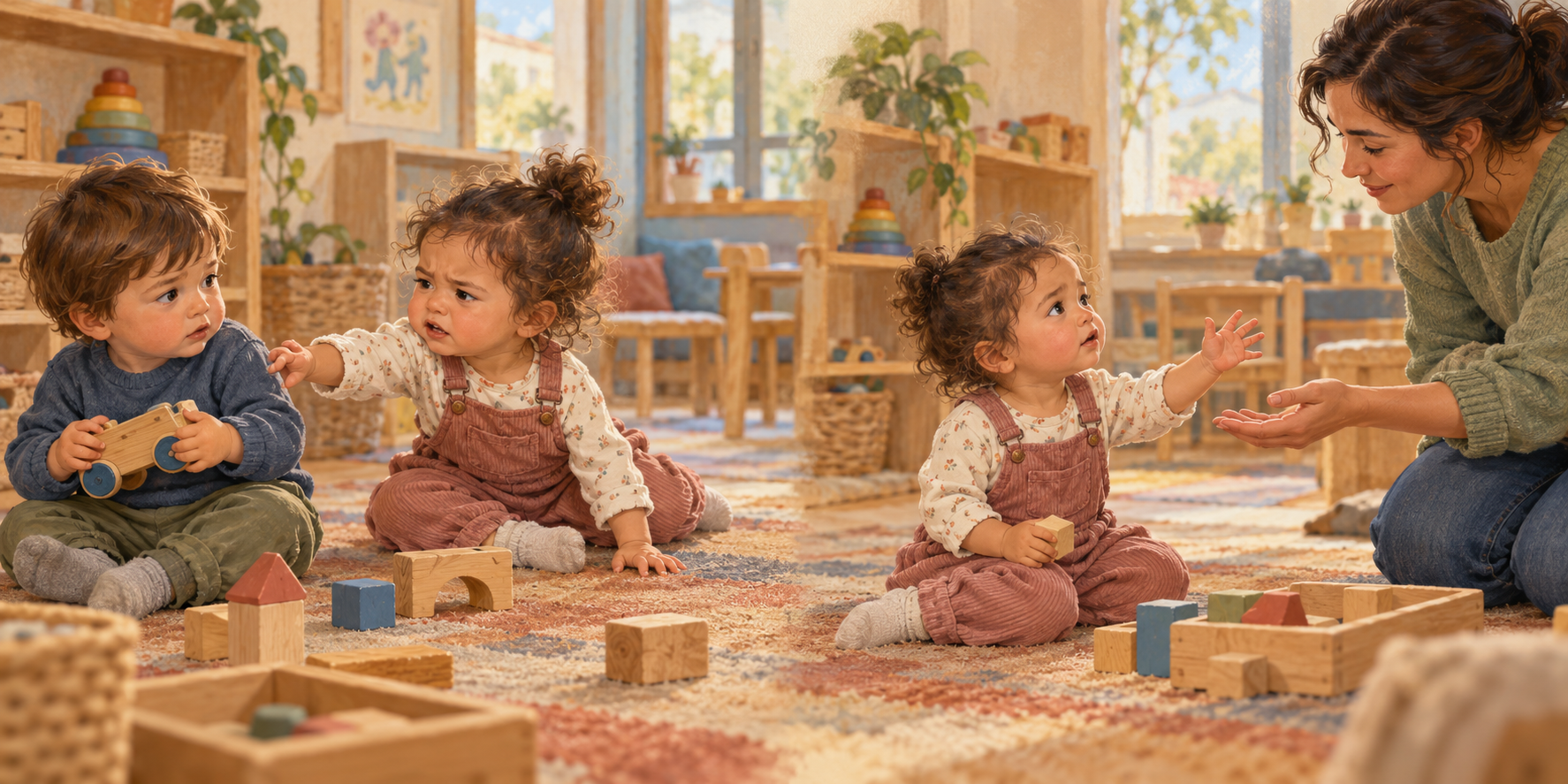
Toddler behaviour often runs ahead of toddler skills. Language, impulse control, emotional regulation, social awareness, and respect for boundaries are all still developing. A child who wants a toy back may have a powerful reaction before they can find the words or self-control to handle it differently.
Aggression at this age may express frustration, anger, or territorial feelings. It can also be experimental: a toddler pushes, then watches to see what happens. Some children imitate behaviour they have observed. These acts are often a developmental stage that eases as communication and self-regulation improve.
Calling the behaviour developmentally common doesn’t mean overlooking it. It means treating each incident as a safety problem and a teaching opportunity, while watching whether the overall pattern is improving.
After an incident, ask three practical questions:
- What happened immediately beforehand? Look for a toy dispute, unwanted touch, frustration, overwhelm, or a boundary your child disliked.
- What happened immediately afterward? Notice whether hitting produced the toy, attention, escape, or another result your child wanted.
- Is the pattern changing? Consider whether the behaviour is becoming more frequent or harmful, spreading to more settings, or continuing despite consistent teaching.
Those questions are more useful than labelling your child as aggressive. They tell you what skill to teach and whether you need outside support.
Use the same five-step response every time
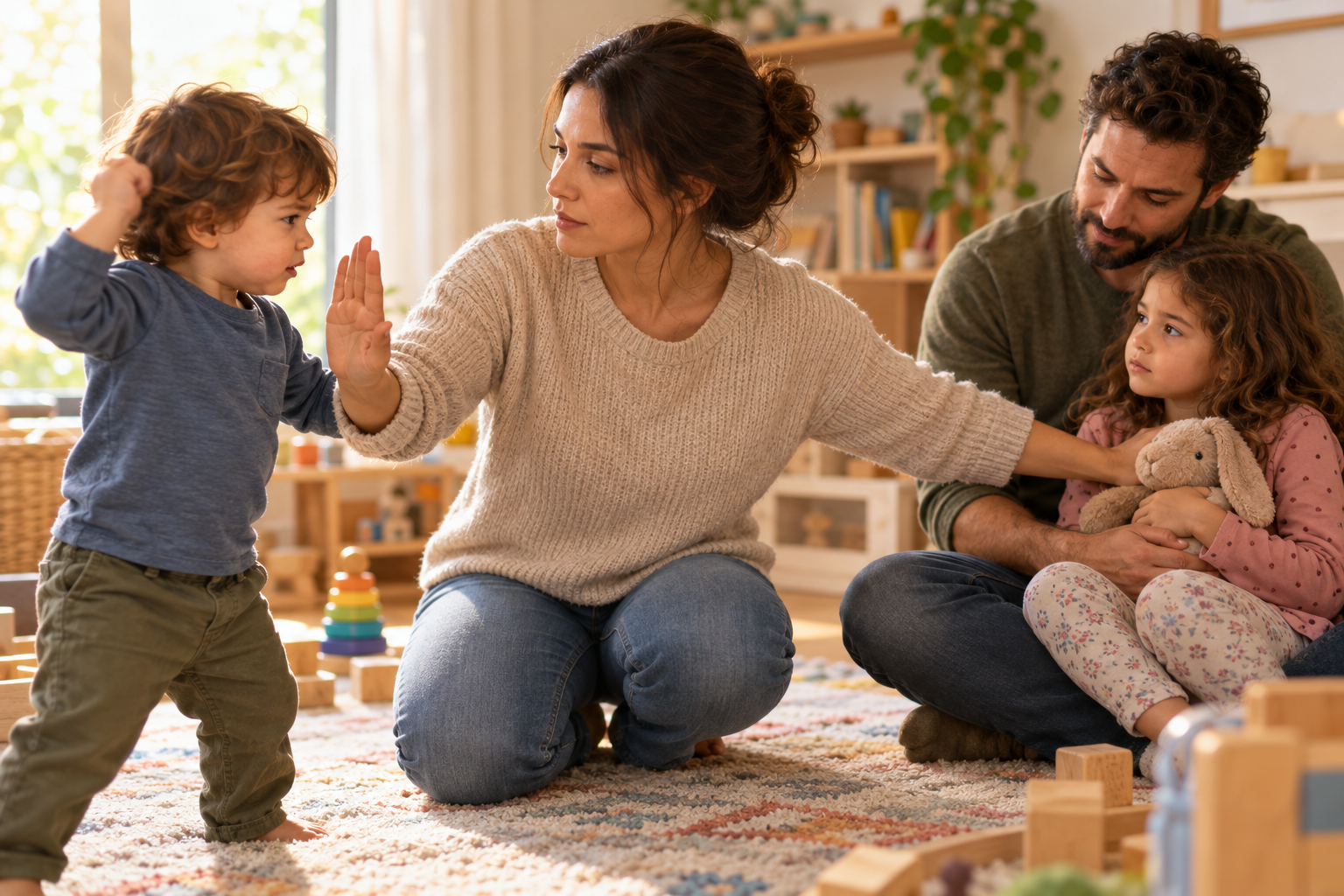
Toddlers learn from what happens immediately after an action. A delayed lecture is less useful because your child may no longer connect it to the behaviour. Keep your response calm, brief, and predictable.
- Stop the action and make the space safe. Gently block the hit, move the children apart, or remove the object being used to hurt. Use one short rule: “I won’t let you hit. Hitting hurts.”
- Attend to the person who was hurt. Check the injured child first. This meets the immediate need and avoids making aggression the fastest route to your full attention.
- Do not let aggression deliver the desired result. If your child hit to obtain a toy, don’t hand over the toy because of the hit. Otherwise, the outcome can teach that aggression works.
- Name the feeling without approving the action. Try: “You wanted the truck. You’re angry. I won’t let you hit.” Accepting the feeling and stopping the behaviour are compatible.
- Teach the replacement after your child is calm. Practise “Turn, please,” “Help,” “Stop,” or a simple gesture suited to your child’s language level. When your toddler can participate, ask what they could do next time and help them choose one realistic option.
A calm and consistent response models the control you’re trying to teach. Don’t hit, bite, or spank your child to demonstrate how hurting feels; that repeats the behaviour you want them to stop. Threats may suppress a moment without teaching a safer response. A time-out also shouldn’t become the automatic answer to every incident; if it is used as a cool-down, it should be a limited tool rather than the whole discipline plan.
Teach the replacement before the next conflict
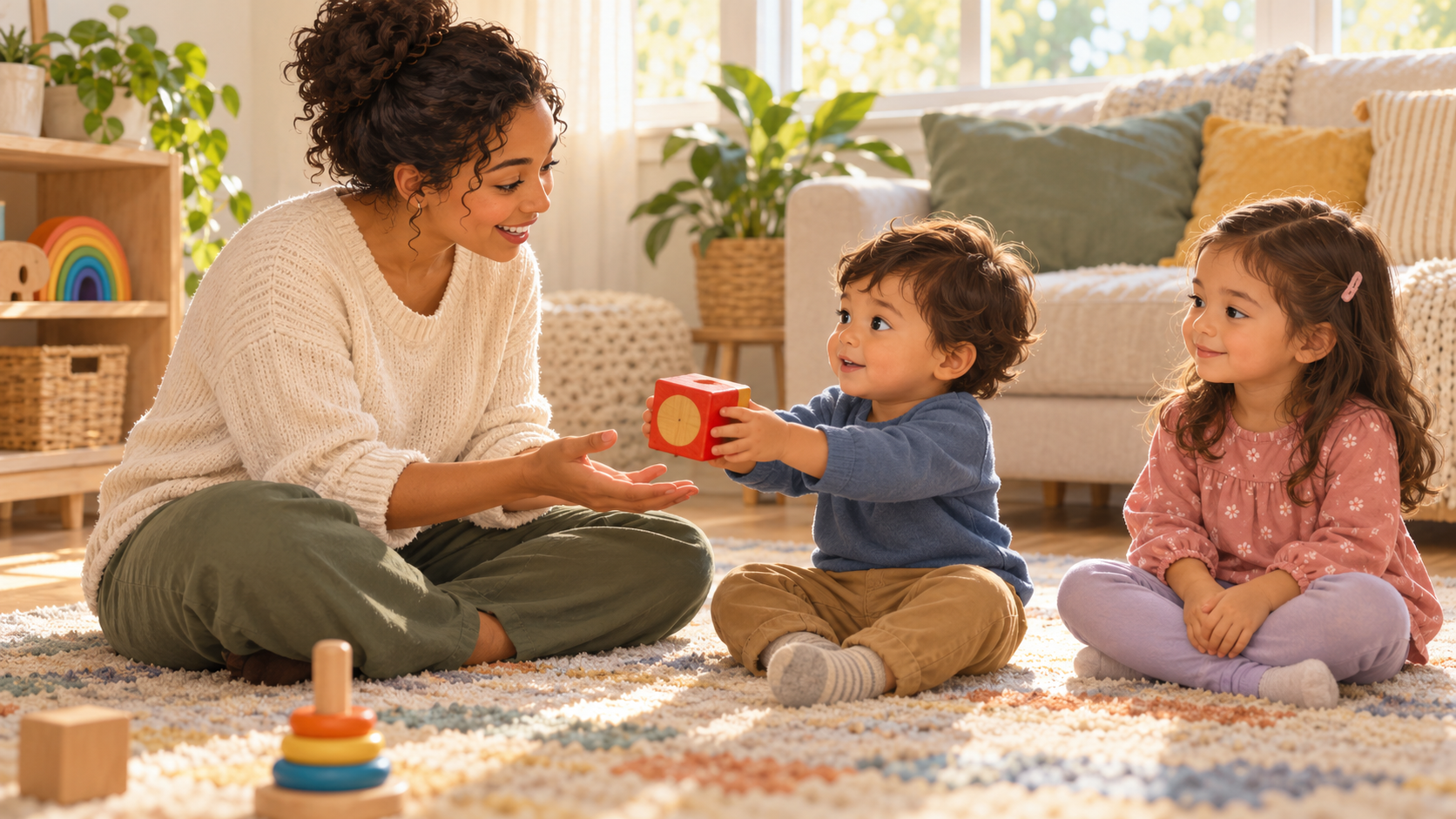
The best time to practise a new response is when nobody is in the middle of a struggle. Choose one replacement that matches the recurring problem. If another child takes a toy, teach “Help.” If your toddler dislikes being touched, teach “Stop” and stepping back. If your child has few spoken words, pair the word with a gesture and model it repeatedly.
Stay close during peer play while aggression is active. Intervene when you see the conflict building, before a hand, bite, or shove lands. Close supervision is especially useful around situations that have already produced aggression, such as disputes over a favourite object.
Notice the behaviour you want repeated. Be precise: “You gave the block back with gentle hands,” or “You asked me for help instead of pushing.” Specific feedback tells your toddler which action worked; general praise does not identify the skill as clearly.
If incidents keep happening, maintain a short factual log. Record the situation, what occurred just before the aggression, exactly what your child did, whether anyone was injured, how the adults responded, what happened afterward, and how your child recovered. Ask daycare caregivers to describe what they observe in the same concrete terms. This can reveal a repeatable pattern and gives your pediatrician more useful information than a broad statement that your toddler is “always aggressive.”
Know the warning signs that deserve professional help

A single hit or bite doesn’t establish a disorder. Warning signs concern persistence, harm, reach, and disruption. The American Academy of Pediatrics recommends contacting your pediatrician when a child is unusually aggressive for longer than a few weeks or when any of the following occurs:
- Your child attacks caregivers or other adults.
- Your child physically injures themselves or someone else, including causing bruises or a head injury.
- A school or daycare sends your child home because of aggressive behaviour.
- Your child becomes fixated on violent themes.
- The behaviour escalates instead of easing as your child learns safer ways to communicate and regulate emotions.
You can also contact your pediatrician if you are struggling to cope, even if you aren’t sure the behaviour meets one of those descriptions. You don’t have to diagnose the cause before asking for support. If aggression continues through the preschool years, a child mental health professional can help assess the pattern and guide the family.
If you cannot keep the people present safe during an episode, or someone may be seriously injured, separate everyone from immediate danger and seek local urgent or emergency help. Behaviour strategies are not a substitute for medical attention after a potentially serious injury.
For a pediatric appointment, bring your incident log and be ready to describe when the pattern began, where it happens, common triggers, injuries, how adults respond, and whether daycare sees the same behaviour. These details help the clinician distinguish an occasional developmental behaviour from a pattern that needs further assessment.
Key takeaways
- Hitting, biting, and shoving can reflect still-developing language, impulse control, emotional regulation, and social skills.
- Respond immediately: stop the action, protect the person who was hurt, and state the rule in a few words.
- Validate the feeling without allowing the aggression or giving your child the result they were trying to obtain.
- Practise one simple replacement response when your toddler is calm, then praise its use specifically.
- Call your pediatrician when aggression remains unusual for more than a few weeks, targets adults, causes injury, disrupts daycare or school, involves fixation on violent themes, or becomes unmanageable for your family.
Before the next difficult moment, choose your one-sentence limit and one replacement skill. Repeating those two things consistently gives your toddler a clear boundary and a usable way forward, while your notes will show you when the pattern warrants professional help.
References



