
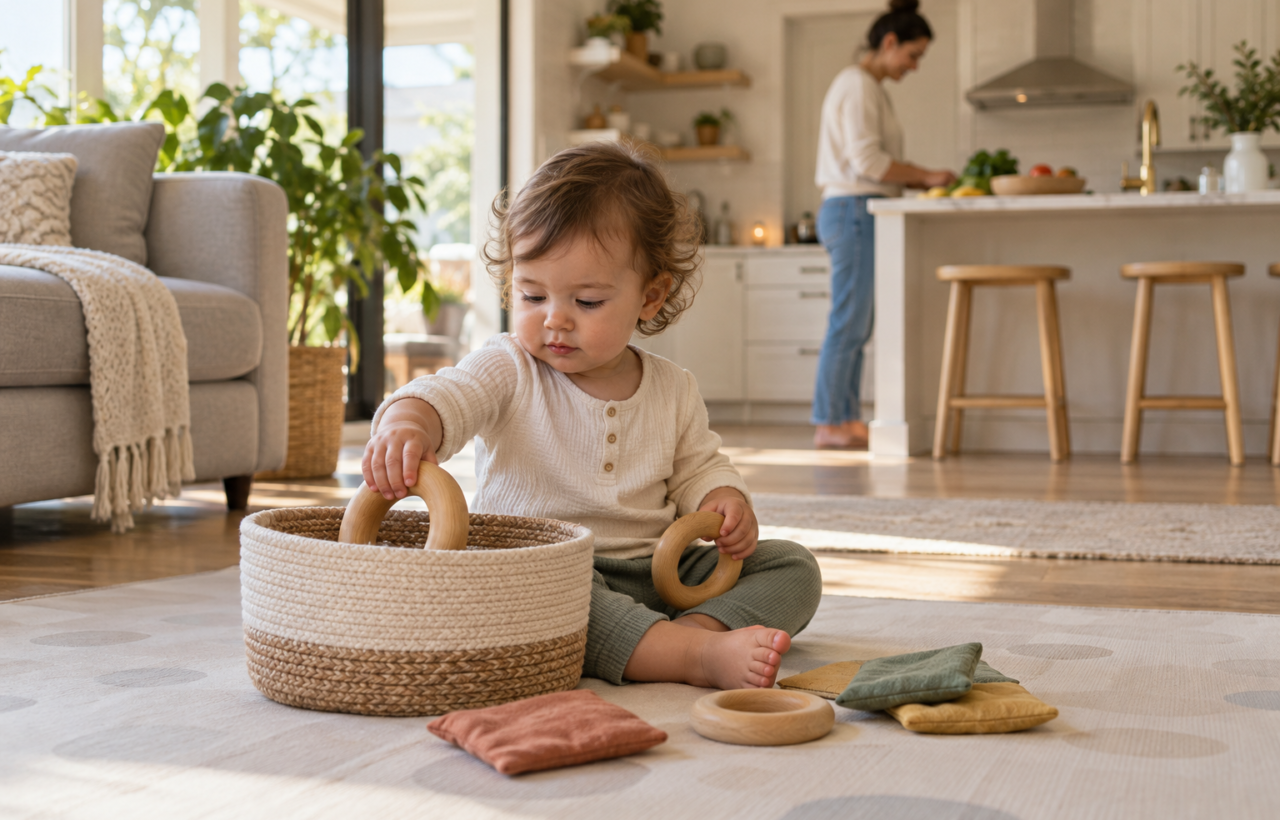
When you need to make lunch, feed another child or simply sit down, “do a screen-free activity” can sound like one more job. The useful question is not how to become a constant entertainer. It is how to make offline play obvious enough for your child to enter and simple enough for you to repeat.
Start with a safe space, a small selection of materials and one action your child already enjoys. That combination is more useful than a complicated activity you have to plan, explain and supervise from beginning to end.
Screen-free does not have to mean parent-led
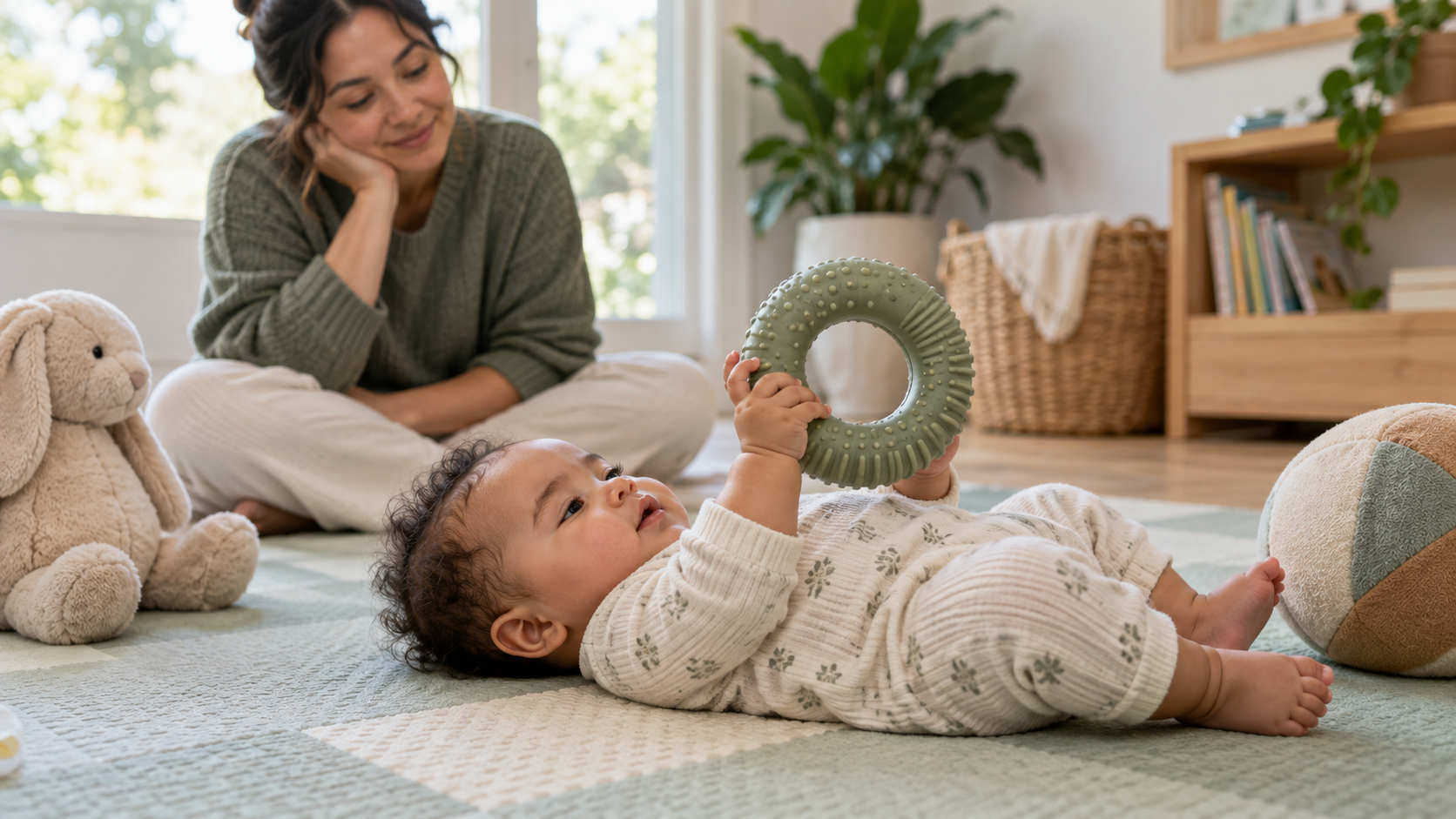
A baby studying your face is playing. So is a child repeatedly dropping a cloth into a bowl, rolling a ball away or pretending to feed a doll. You do not need a craft, a lesson or a finished product for the time to count.
Open-ended play has no single correct result. A bowl might be filled, stacked, carried, tapped or turned into a pretend hat. Hands-on materials can invite children to move, create, explore and use their senses, but no particular toy guarantees developmental progress. The useful feature is flexibility: your child can decide what happens next.
Before setting anything out, ask:
- What action does my child keep repeating: reaching, filling, dropping, carrying, rolling, stacking or pretending?
- Can the material be used safely in more than one way?
- Is the activity understandable without a long demonstration?
- Can I provide the level of supervision it requires right now?
Those questions steer you toward play that fits the child in front of you. They also help you avoid buying a toy whose only interesting feature is what it does when an adult switches it on.
Match the setup to what your child can do now
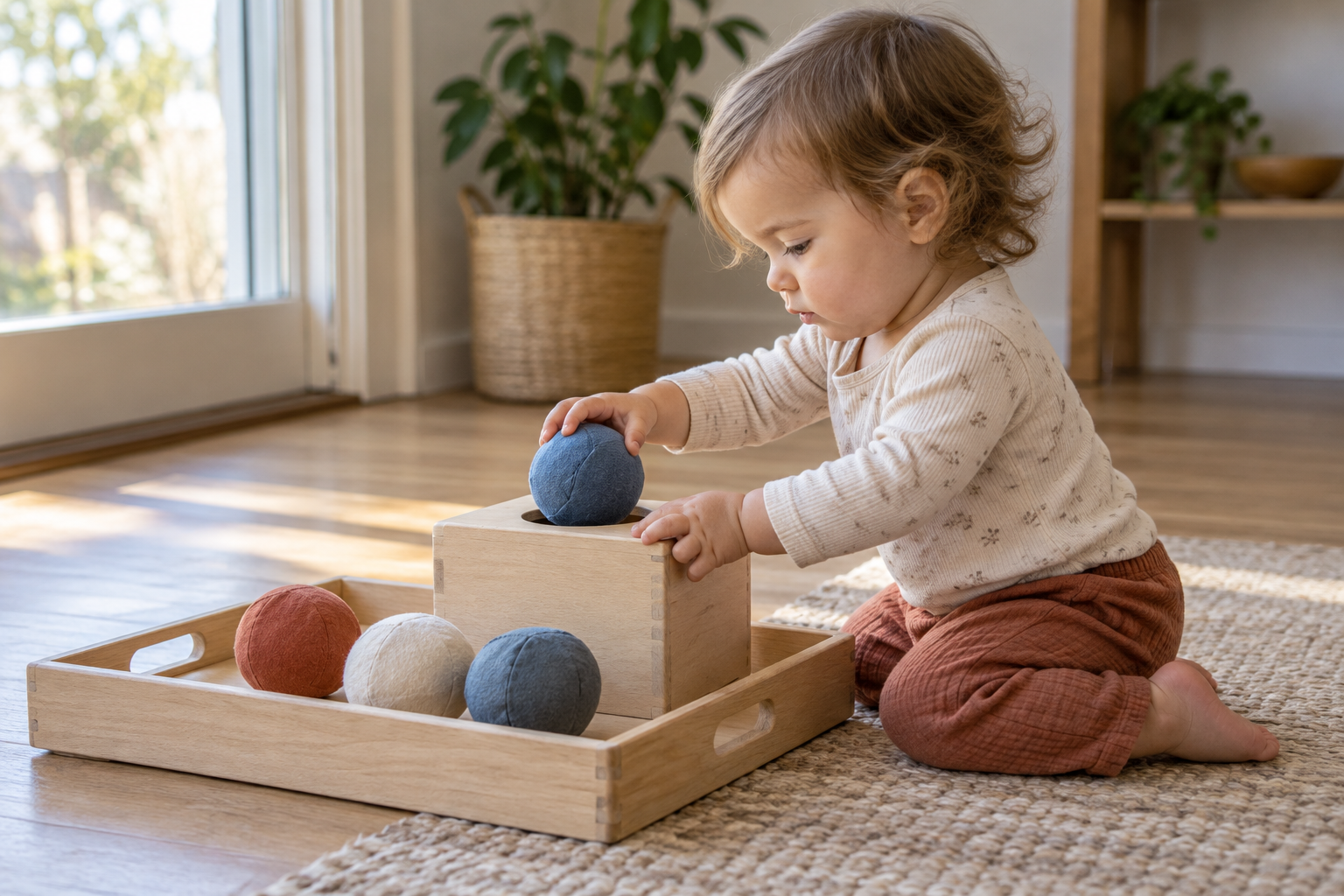
Age labels matter for safety, but they are not a script for how your child must play. Choose an invitation based on current movement, grasp and mouthing habits. If your child still explores everything with their mouth, use materials that remain safe when handled that way, regardless of the suggested age range.
Before sitting or crawling
Your face, voice and hands are already rich play materials. Copy a sound, pause for a response, make a gentle expression or slowly move a safe object where your baby can notice and reach toward it. You can also offer contrasting textures one at a time, such as a smooth unbreakable cup and a clean washcloth.
Use the safe floor space where your baby normally plays. Stay close, keep fabric away from the face and remove anything that sheds, splinters or has a cord, loose piece or detachable decoration.
Once sitting, reaching or moving across the floor
Container play becomes useful because one setup supports several actions. Put large cloths beside a wide, unbreakable bowl and let your child pull them out, push them in or move them between containers. Nesting bowls, a ball rolled along a clear floor and a wooden spoon tapped against a sturdy bowl offer equally clear cause and effect.
Keep the materials large enough that they cannot be swallowed, and recheck household objects each time. A cracked bowl or loosening handle can turn yesterday’s safe object into today’s hazard.
Walking, carrying and early pretend play
Toddlers can bring their repeated actions into everyday routines. They can carry washcloths to a basket, move large wooden spoons between containers, build with sturdy cups or pretend to cook beside you. A doll, cup, spoon or empty food container can become part of a simple pretend scene without requiring you to direct the story.
For mark-making, use washable, non-toxic supplies labelled for your child’s age and supervise their use. The goal is exploration, not a recognizable picture. Scribbling, changing grip and switching colours are all complete activities.
Children develop unevenly, so treat these descriptions as setup clues, not tests or milestone checklists. If you have a concern about your child’s development, discuss it with their health-care professional rather than trying to judge it from their response to an activity.
Reuse a few play patterns instead of inventing new activities
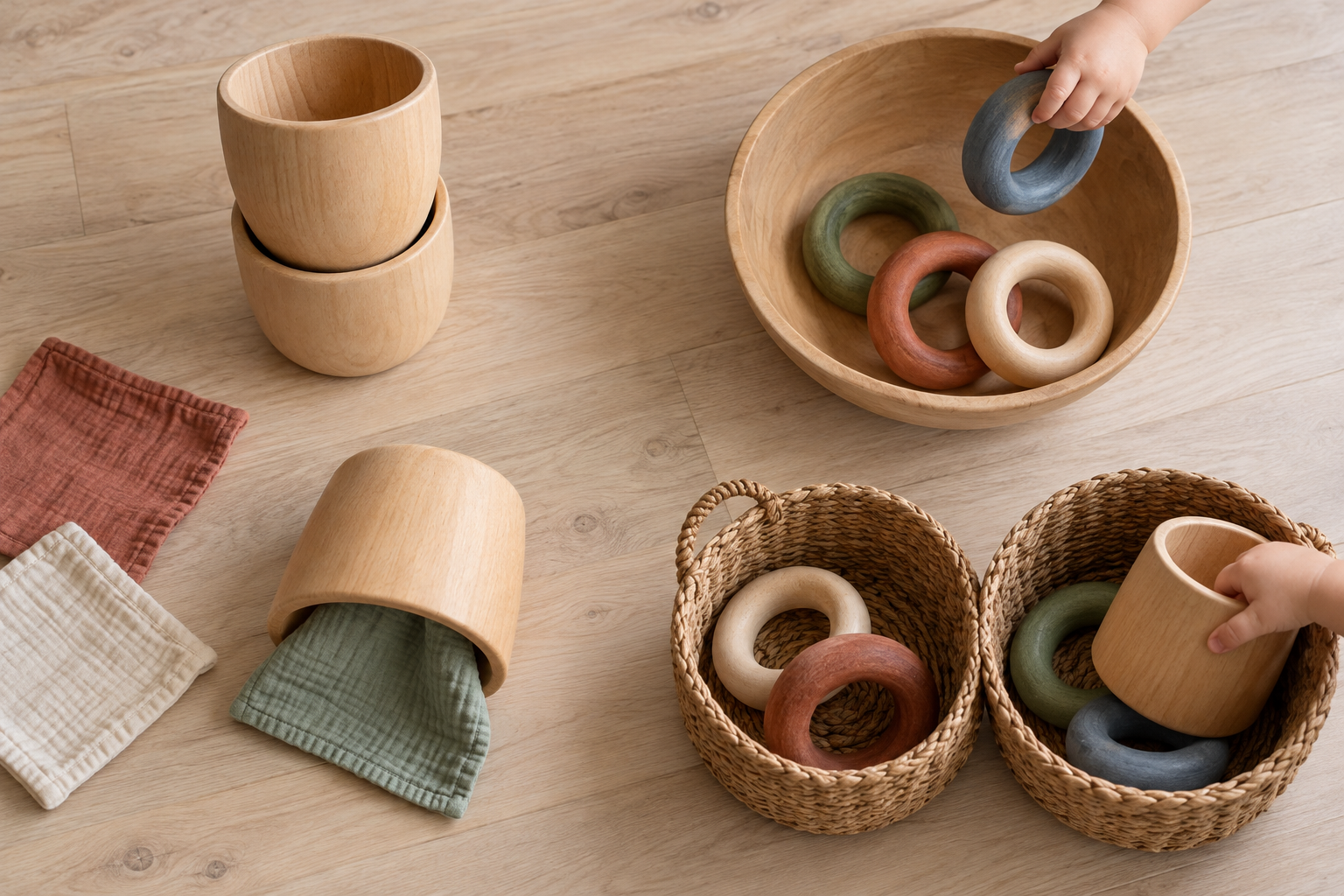
The easiest screen-free ideas are patterns you can rebuild with different safe materials. Notice which pattern holds your child’s attention, then vary the objects without changing the basic action.
- Fill and empty: Put clean washcloths, large blocks or sturdy cups beside an unbreakable container. A younger child may simply remove everything; an older toddler may carry, sort or pretend with the same objects.
- Post and retrieve: Let a toddler place large soft blocks through a wide opening in a carefully inspected box, then open the box to retrieve them. Remove staples, loose tape and torn cardboard before play.
- Stack and knock down: Use nesting cups, small boxes or lightweight bowls. Build a simple stack, then let your child change or topple it.
- Roll and follow: Roll a soft ball across a clear floor. A sitting child can push it back; a mobile child can follow and retrieve it.
- Hide and find: Partly cover a familiar object with a cloth while you are directly supervising. Make it easy to find at first, then let your child take over the hiding.
- Pretend and imitate: Offer safe versions of familiar objects, such as a cup, spoon, doll or toy phone. Follow your child’s idea instead of correcting how the object is “supposed” to be used.
Ordinary objects still require a safety check. Exclude anything sharp, breakable, hot or electrical, along with medications, button batteries, magnets, long cords, plastic bags and pieces small enough to enter a child’s mouth. Skip beads, dry beans and similar loose fillers with babies and young toddlers. Water play requires close, continuous adult attention and should never be the activity you offer while your attention is divided.
Help your child begin without taking over the play
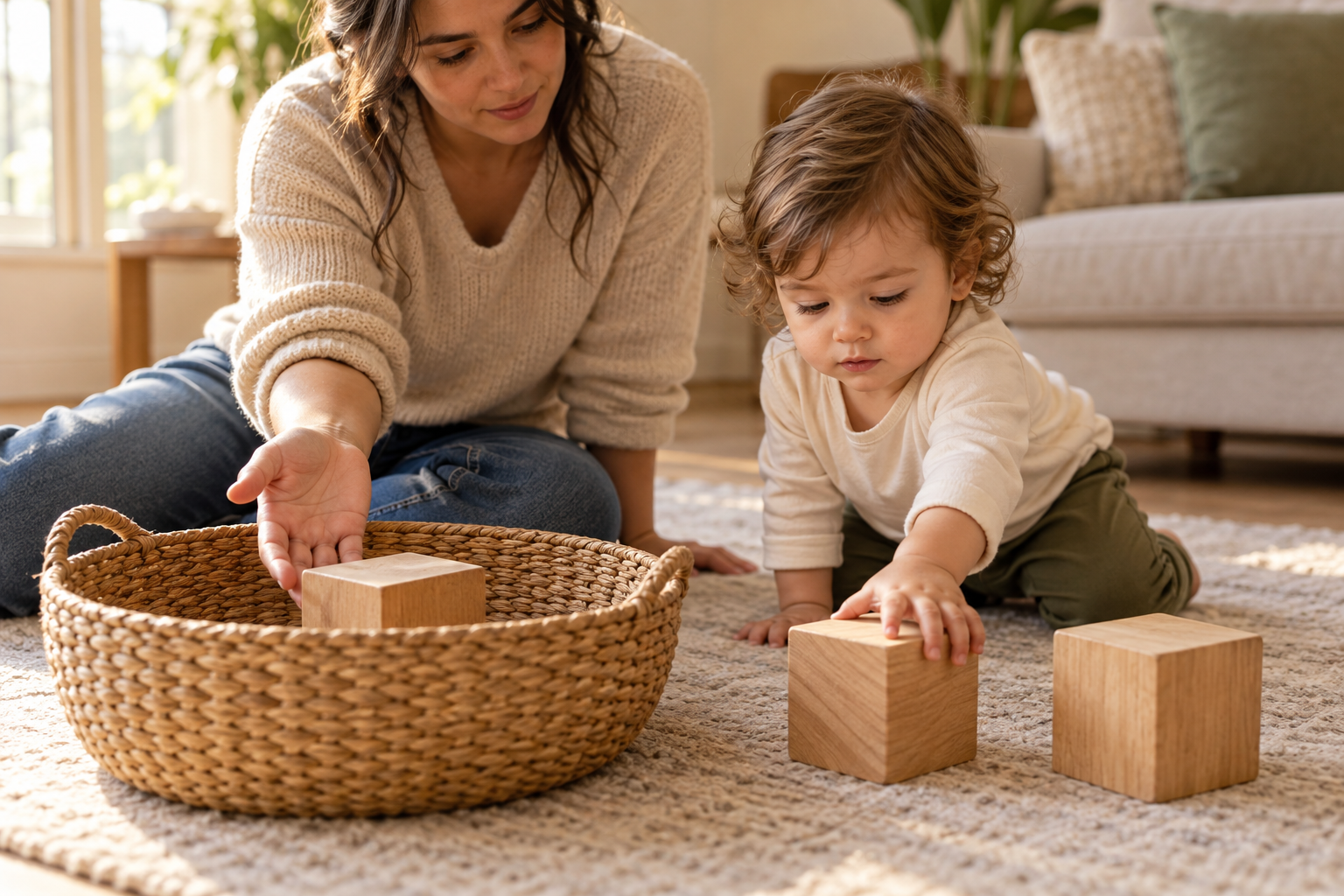
A basket of objects is not always an invitation. If your child dumps it and walks away, the setup may be asking them to find the idea on their own. Make the first action visible, then leave room for a different idea.
- Connect: Sit nearby and notice what your child is already looking at or touching.
- Demonstrate: Perform one simple action, such as dropping a cloth into a bowl or rolling a ball.
- Pause: Give your child space to respond. Avoid repeating instructions or moving their hands for them.
- Follow: If they use the material differently but safely, treat that as the play rather than redirecting them to your plan.
- Fade back: Shift to a nearby task while remaining available and providing the supervision appropriate for your child’s stage.
Light narration can help without turning play into a quiz. “The cup fell” or “You put the cloth inside” describes what happened. Questions such as “What colour is that?” or “Can you do it properly?” can make an open activity feel like a test.
If your child immediately calls you back, reduce the distance before changing the activity. If they seem unsure, make the action clearer or remove competing materials. If they are frustrated, return to something familiar. Independent play is not the absence of an adult, especially for babies and young toddlers; it is a gradual shift from doing the activity together to letting the child direct more of it.
When you genuinely need both hands, use only an activity you have already watched your child handle safely in a fully childproofed space. That is not the moment to introduce water, art supplies, loose sensory materials or a new household object.
Make screen-free play easier to repeat on ordinary days
The best setup is the one you can reproduce when the day is busy. A predictable environment does more work than a long list of special activities.
- Create a “yes” space: Use a floor area where everything within reach has already been checked. A child who can explore without constant redirection has a clearer path into play.
- Offer a small, visible selection: Place a few compatible materials together, such as bowls with cloths or a ball with an open box. Keep the rest away. If your child only scatters the materials, simplify the selection again.
- Prepare before the difficult transition: Set out the activity before you start cooking, take a work call or help a sibling. Waiting until your child is already asking for a screen makes the alternative harder to introduce calmly.
- Keep repeatable materials near the routine: A basket of safe kitchen objects can live near the kitchen play area; washcloths and a container can stay near the laundry. You should not have to search the house each time.
- Use a clear screen transition: State what is happening and offer a concrete next action: “The screen is finished. You can roll the ball or fill the bowl.” Avoid negotiating through a long menu of choices.
- Rotate in response to behaviour: Put something away when it is consistently ignored or used unsafely. Bring it back later in a new pairing rather than replacing it with a purchase.
Screen-free play does not need to become an all-day rule or a measure of good parenting. Choose one recurring part of the day when an offline setup would genuinely help. Once that pocket feels workable, you can decide whether another one would serve your family.
Key takeaways
- Follow the action your child already repeats instead of searching for a perfect activity.
- Choose open-ended materials that can be filled, carried, stacked, rolled or used for pretend play.
- Demonstrate one action, pause and let your child change the idea.
- Use familiar activities when your attention is divided, and reserve water, art materials and loose parts for close supervision.
- Begin with one predictable screen-free moment rather than trying to redesign the entire day.
For your next difficult stretch of the day, pick one familiar play pattern and prepare it in advance. A bowl and a handful of safe objects may look modest, but if your child knows what they can do with them and you can set them out again tomorrow, the setup is doing its job.
References



