
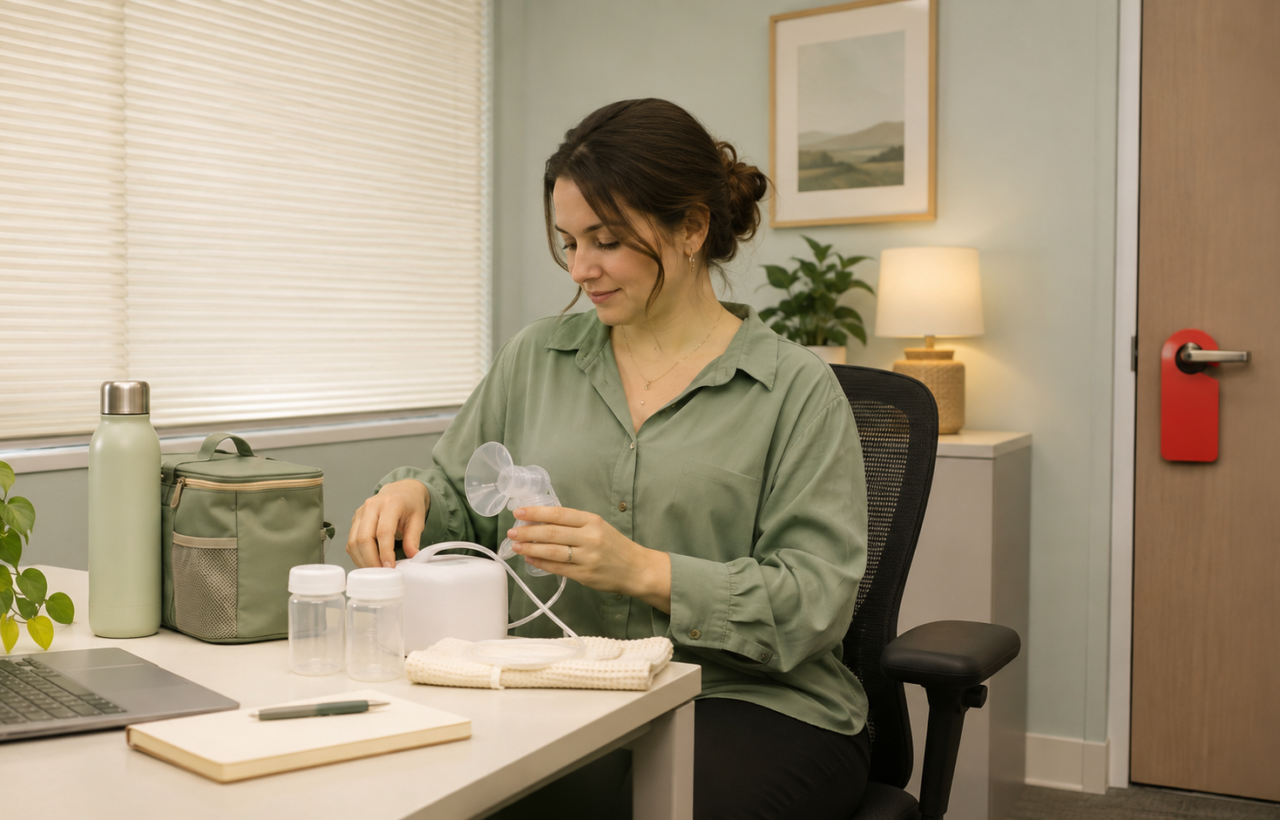
Your pumping time has arrived, every meeting room is occupied, and there is no lactation room to fall back on. The immediate job is not to design a perfect workplace policy. It is to get privacy, pump, and handle your milk and equipment safely without turning every session into a search for somewhere to go.
When no dedicated space exists, the practical problem may be how to finish a pump session at the desk where you already are. A workable contingency has four parts: a genuinely private spot, a clear do-not-enter signal, a self-contained kit, and a milk-storage plan decided before you connect the pump.
First, decide whether your desk is actually usable
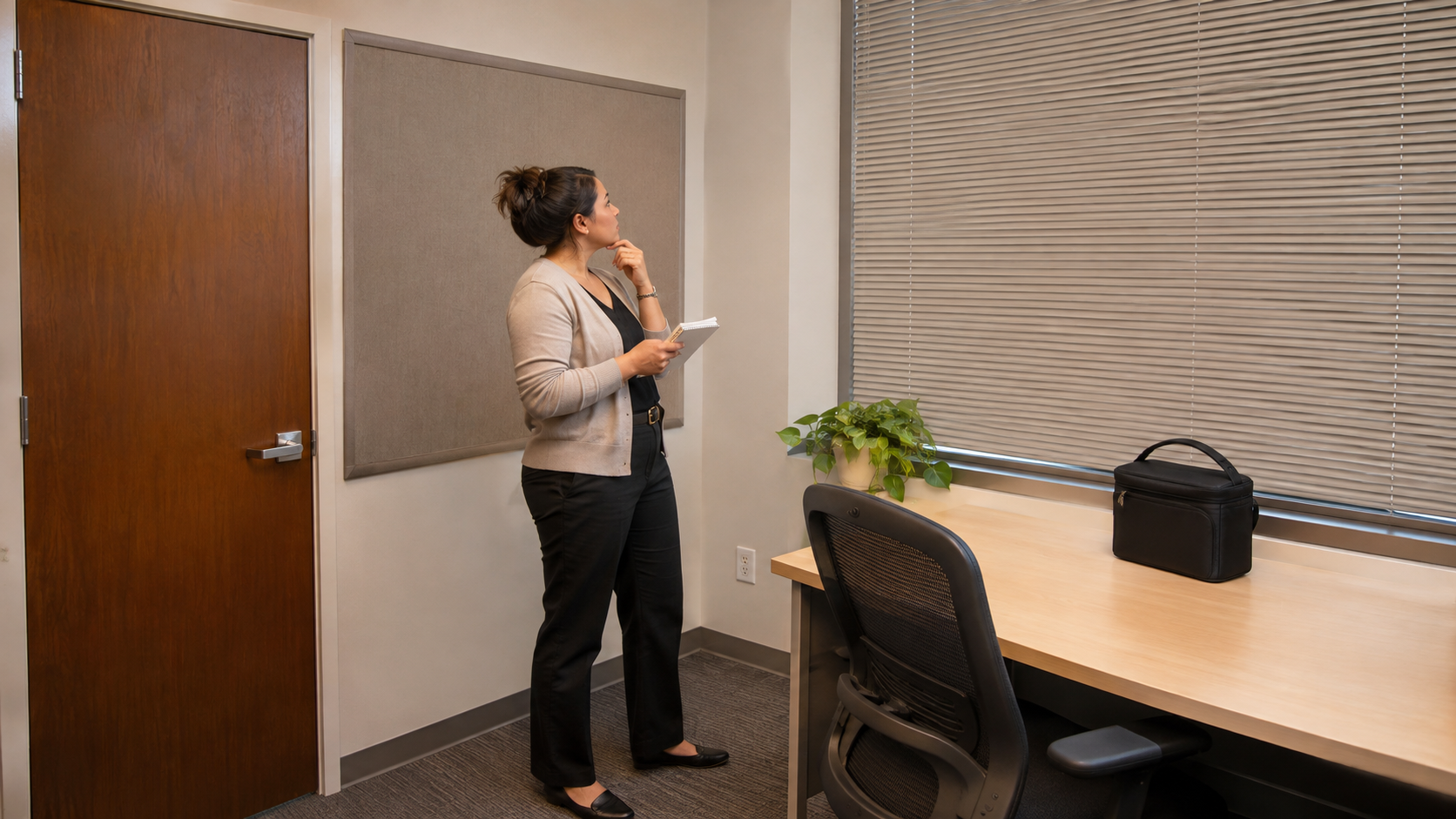
A desk can work if it is inside a private office or another enclosed workspace. An open-plan workstation, reception desk, shared hot desk, or cubicle is different: discreet equipment may reduce visibility, but it does not prevent someone from approaching, looking over a partition, or interrupting while you handle pump parts and milk.
Check the whole session, not just the minutes when the pump is running. You also need privacy while positioning the pump, adjusting clothing, disconnecting, sealing the milk, and packing used parts.
- Visual privacy: Can you remain out of view from doors, windows, hallways, cameras, and neighbouring desks?
- Control of entry: Can the door be locked, or can a reliable sign and agreed workplace practice stop people from entering?
- A clean setup area: Is there a clear surface for your containers and clean equipment, with handwashing available nearby?
- A safe pump setup: Can you place the pump securely and keep any cord out of walkways? If you plan to use battery power, is that mode supported by your pump?
- Milk handling: Do you already know how you will seal, identify, cool, store, and transport the milk under the guidance you follow?
If one of those answers is no, do not wait until you are connected to solve it. Ask for a private office, reservable room, wellness room, or another enclosed space, plus a backup for times when the first choice is unavailable.
A wearable pump is not a complete privacy plan. It may sit under clothing, but you still have to account for pump noise, fit adjustments, possible leaks, removal, and milk transfer. Choose it because it suits your body and pumping needs, not because your workplace has failed to plan for privacy.
Turn the desk session into a fixed sequence
The less you have to decide in the moment, the easier it is to protect the session from interruptions. Use the same sequence each time:
- Protect the time. Block the session on your calendar. If you do not want to disclose the reason widely, label it as unavailable or a private health break and tell only the people who need to support the arrangement.
- Control the space. Close and secure the door if permitted. Put up a simple do-not-enter sign, silence notifications, and ask a nearby colleague to redirect visitors if the door cannot be locked.
- Prepare your hands and surface. Wash your hands, clear the desk, and use cleaning products appropriate for the surface. Clean or sanitize pump components only as directed by the pump manufacturer and the health guidance you follow.
- Place everything within reach. Set out the pump controls, clean parts, collection containers, caps, and storage supplies before adjusting your clothing. Keep your phone and anything unrelated away from the clean area.
- Pump without adding avoidable demands. You can answer email or do a quiet task if that feels comfortable, but working through the session is optional. Avoid calls or meetings that could pressure you to admit someone, switch on a camera, or rush disconnection.
- Close the session completely. Disconnect, seal the milk, deal with any spill, move the milk to your planned storage, and place used parts in their designated container before reopening the space.
A cardigan, scarf, or nursing cover can be available if it makes you more comfortable, but it is not a substitute for privacy and it should not be treated as the price of pumping at work. Your setup should not depend on staying covered while someone enters unexpectedly.
Pack a kit with separate clean and used zones
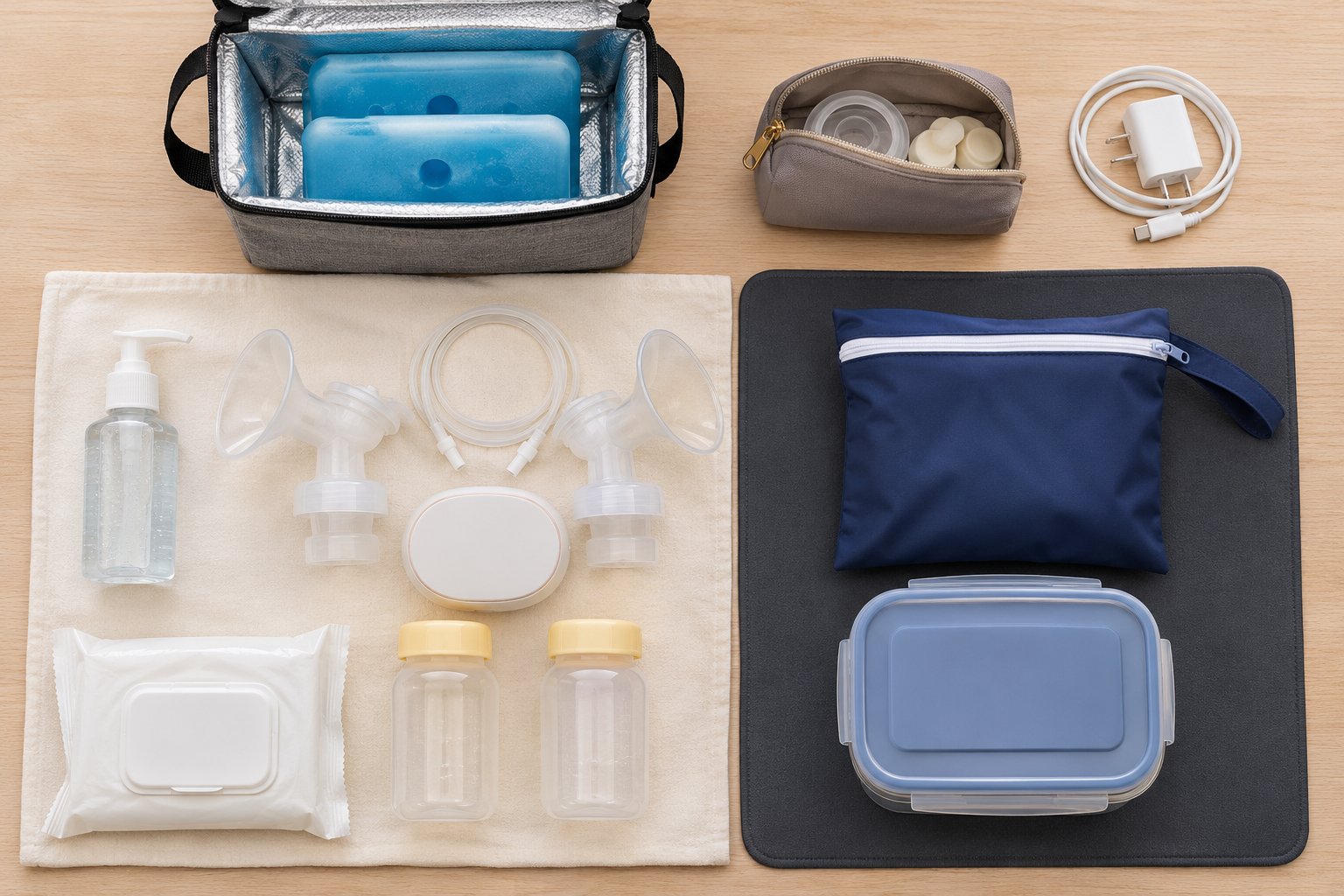
A loose collection of parts at the bottom of a work bag creates confusion when you are already short on time. Pack the session as two zones: one pouch or container for clean items and another for equipment after use.
- Your pump and the parts required for one complete session, prepared according to the manufacturer’s directions
- Compatible milk-collection containers and their caps or closures
- A dedicated container or washable bag for parts after use
- Desk-cleaning supplies appropriate for your workplace surface
- Any pump-approved charging cable, power supply, or batteries you rely on
- A spare breast pad and, if practical, a spare top for leaks or spills
- Your chosen privacy item, if you want one
- A cooler and cold packs if they are part of the safe storage and transport plan you follow
Do not place clean pump parts directly in a handbag, desk drawer, or shared cupboard. Physical separation makes it easier to see what is ready to use and what still needs to be cleaned.
Decide where the milk goes before your first work session. If you plan to use a shared refrigerator, confirm that it is available and that your sealed containers can be stored without being moved or mistaken for something else. Use a plain identifying label if needed. If there is no suitable refrigerator, choose a safe cooling and transport method based on official local health guidance rather than guessing at storage times or temperatures.
The same caution applies to used pump parts. Follow the manufacturer’s cleaning and drying instructions. Keeping parts in a container during the workday does not itself clean them, and a shortcut that works for someone else’s pump may not be appropriate for yours.
Ask for a named space and a named backup

A vague promise that you can find an empty room leaves you competing with meetings every time you need to pump. Ask for an arrangement that answers four questions: which room, how you reserve it, how entry is prevented, and what happens when that room is unavailable.
Message you can adapt: Hi [name], I need a predictable private place for pumping during the workday. My desk is workable only if I can prevent entry and remain out of view. Can we designate [room], confirm how I can reserve it, and choose a backup for conflicts? I also need a safe plan for storing expressed milk. Please let me know who can confirm the arrangement before [date or shift].
If you are offered a storage closet, inspect the actual space rather than accepting the label as the solution. A room that contains cleaning chemicals, lacks a clear surface, cannot be secured, or is entered by other employees without warning does not solve the practical problem. Explain the specific failure: for example, the door does not lock, people need supplies during your session, or there is nowhere clean to place a milk container. A concrete problem is easier to address than saying only that the room feels unsuitable.
If the agreed space repeatedly becomes unavailable, keep brief factual notes: the date, the room you were meant to use, what prevented access, whom you contacted, and what alternative you requested. That record helps you show the pattern and ask for a more reliable arrangement. If you need to understand your formal workplace options, consult current guidance for your location or a qualified employment adviser; a desk workaround does not answer the legal question.
Key takeaways
- Use your desk only when you can protect the entire session from view and interruption, including setup and milk handling.
- Prepare the space, clean area, equipment, storage, and do-not-enter signal before connecting the pump.
- Keep clean equipment physically separate from used parts, and follow the instructions for your specific pump.
- Treat a wearable pump or cover as an optional tool, not as a replacement for a private arrangement.
- Ask work to name both a primary space and a backup instead of sending you to search for an empty room each time.
- Use official local health guidance for milk storage and transport; do not improvise a time or temperature limit.
If pumping is painful, you develop breast symptoms that concern you, or the pump fit seems wrong, changing rooms is not the whole fix. Contact a qualified lactation professional or healthcare professional for individual guidance.
Before your next workday, rehearse the setup while fully dressed: unpack, position everything, check what you can reach, and pack it away again. Any awkward step you notice is something you can fix at home. If the missing piece is privacy or room access, send the request now so the next session does not depend on luck.
References



