

Your toddler reaches into the family popcorn bowl during movie night. Should you let them try one soft-looking piece? If your child is younger than 4, the safest answer is no.
For parents of babies and toddlers from 0 to 36 months, this is one snack you can take off the decision list completely. The practical challenge is not finding a way to prepare popcorn for them. It is keeping the shared bowl out of reach and providing an age-appropriate alternative.
Under 4, the answer is no
The American Academy of Pediatrics recommends waiting until a child is at least 4 before offering popcorn. That age is a minimum, not an automatic serving date: development and maturity also determine whether a child is ready for a food with a challenging texture.
This creates a straightforward rule. Before age 4, skip popcorn entirely. At age 4 or later, look at the child’s chewing ability and willingness to follow eating instructions before deciding. If either is uncertain, wait longer.
Picking out a fluffy piece, breaking it into smaller pieces or standing close by does not change the recommendation for a younger child. Popcorn itself is the unsuitable texture. Supervision is important when an older, developmentally ready child eats it, but supervision does not make it an appropriate food for a baby or toddler.
Why a fluffy snack can still cause choking

Popcorn can look light and easy to chew, but its texture is inconsistent. Hard pieces can be hidden among the softer parts, and unpopped kernels may remain in the bowl. A child cannot judge that difference just by reaching for a piece.
Young children are still learning to chew thoroughly. They also do not yet have all the molars used to grind small, hard foods. A toddler may therefore try to swallow popcorn before reducing its harder parts to a manageable texture.
Popcorn can provide whole grains and fibre for children who are old enough to eat it safely, but nutritional value does not cancel a texture-related choking risk. For a child under 4, choose a different snack rather than trying to modify popcorn.
Keep the family popcorn bowl out of toddler hands

Movie night becomes easier when you plan for the moment your toddler sees everyone else eating. Set up the younger child’s snack before the popcorn appears:
- Choose a familiar alternative. Serve a food that is appropriate for your child’s current feeding stage and that they already manage comfortably. An age-labelled puff or another suitable soft snack may work, but the right choice depends on the child’s abilities.
- Make separate portions. Give adults and older children their own bowls instead of placing one communal tub within the toddler’s reach.
- Set a no-sharing rule. Tell siblings, relatives and other caregivers that the younger child cannot have popcorn, even if they ask for only one piece.
- Keep eating calm and seated. Serve the toddler’s alternative in the usual eating place rather than while they are walking, climbing or reaching across the couch.
- Clean up afterwards. Check the couch, floor and cup holders for dropped popcorn and unpopped kernels before the toddler starts exploring again.
Use the same plan at a cinema, party or playdate. Bring a known alternative, mention the no-popcorn rule before snacks are distributed and keep the communal container out of reach. This prevents another adult or an enthusiastic older child from assuming that one piece is harmless.
At age 4, check readiness before serving popcorn
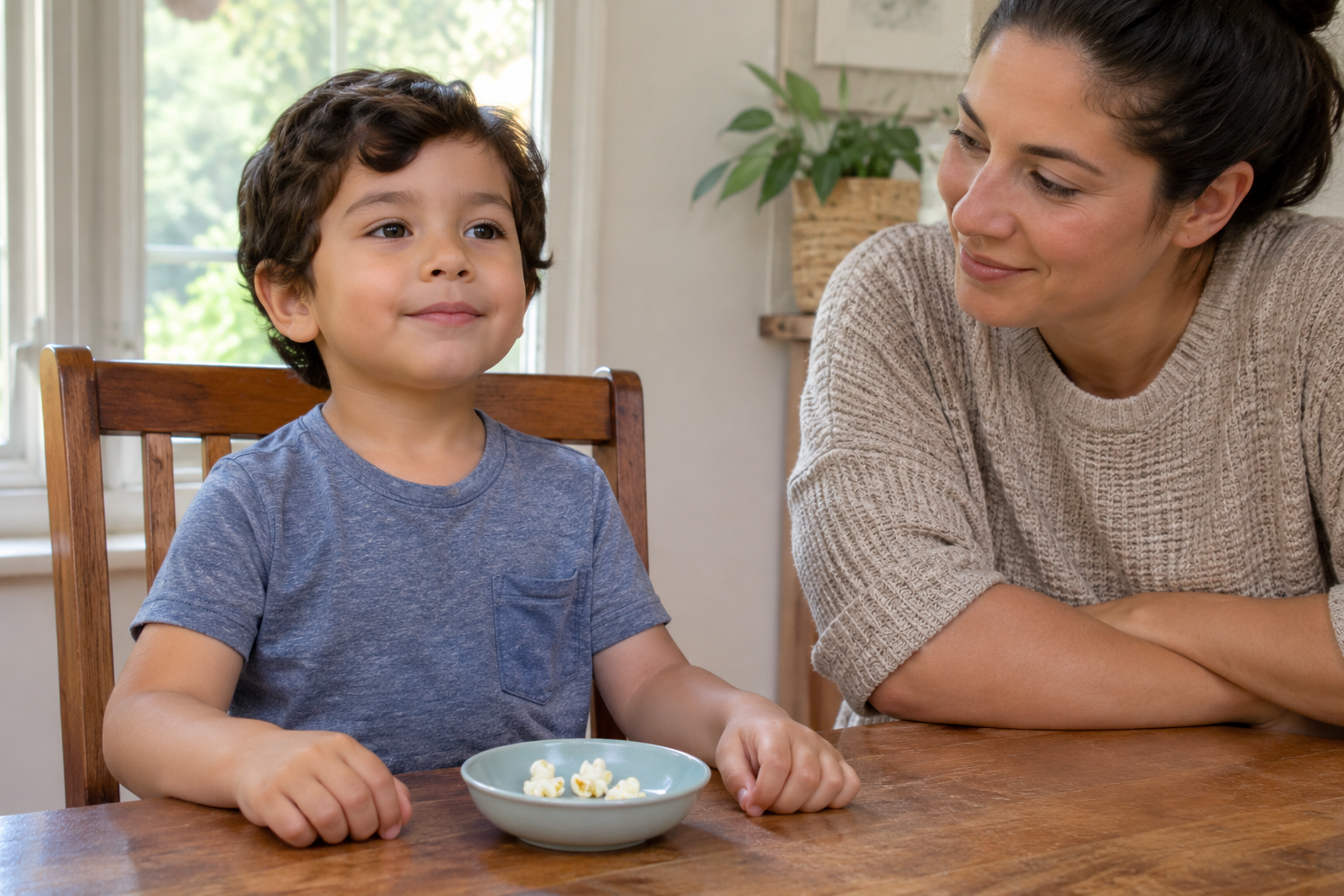
A fourth birthday makes popcorn something you can consider, not something you must introduce. Wait until your child can manage more complicated textures, chew reliably and pay attention while eating. A child with feeding or swallowing concerns may need individualized guidance from a pediatric clinician before trying it.
When an older child is ready, reduce avoidable risks:
- Serve plain popcorn rather than pieces coated with hard caramel or mixed with nuts.
- Sort through the portion and remove every unpopped kernel you can find.
- Have the child sit and focus on eating instead of running or playing.
- Remind them to chew each mouthful thoroughly before swallowing.
- Supervise closely. If the movie is too distracting for careful eating, finish the snack before pressing play.
These precautions reduce risk; they do not make choking impossible. Popcorn can present a choking hazard at any age because harder pieces may be mixed into its softer texture.
If any child appears to be choking or has trouble breathing, call your local emergency services immediately and follow the dispatcher’s instructions. Do not delay emergency help while looking for an online tutorial. A certified infant-and-child first-aid course is the appropriate place to learn and practise age-specific choking responses before you need them.
Key takeaways
- Children younger than 4 should not be given popcorn.
- Age 4 is the earliest point to consider it, and some children need to wait longer.
- For babies and toddlers, use a familiar, age-appropriate alternative instead of altering popcorn.
- Prevent accidental sharing by separating portions, briefing caregivers and cleaning up dropped pieces.
- For a developmentally ready older child, serve plain popcorn, remove unpopped kernels and supervise attentive eating.
- Treat suspected choking or breathing difficulty as an emergency.
Before your next movie night, choose the toddler’s snack first and tell everyone that popcorn is not for sharing. Revisit the decision after the fourth birthday only when the child’s chewing skills and attention are ready for the texture.
References



