
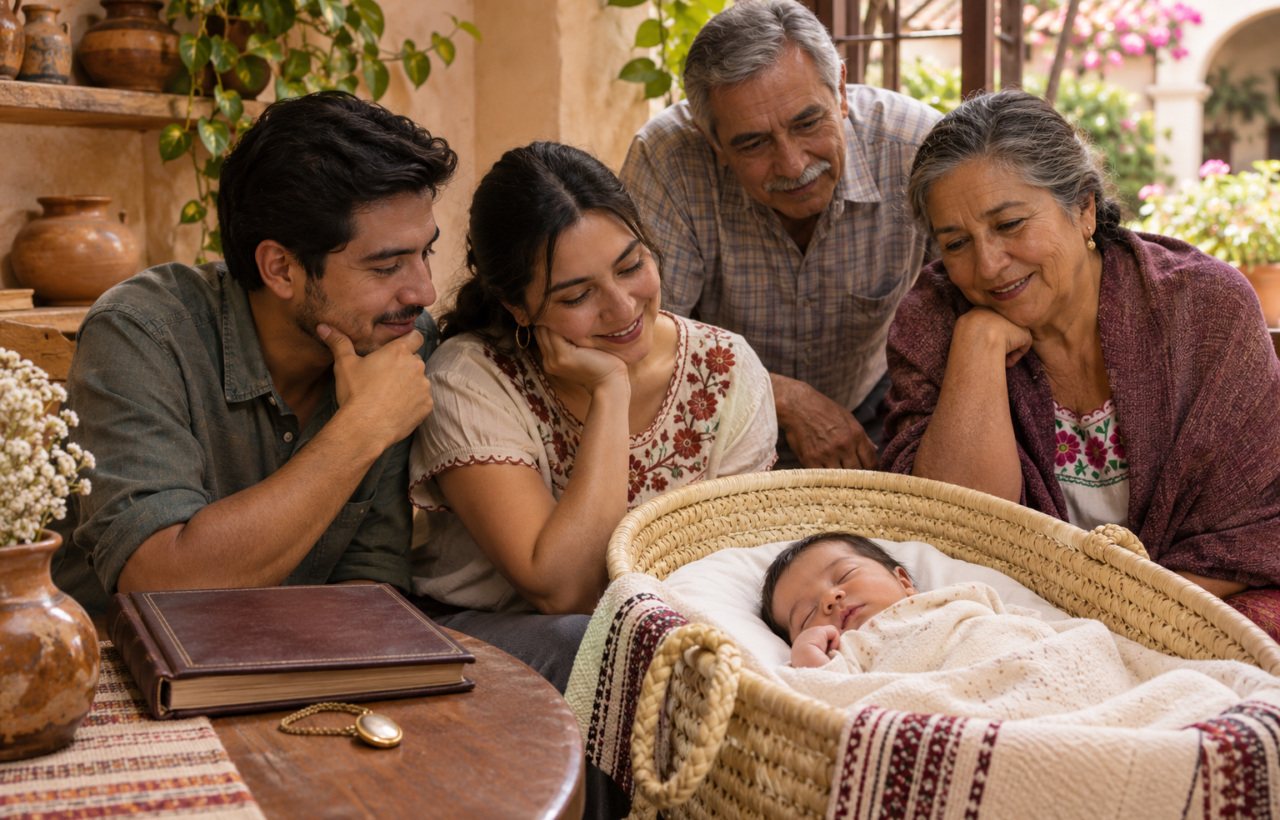
You may love Mateo because of its sound, because it belongs to someone in your family, or because its meaning speaks to you. Those are different reasons, and knowing which one matters most will make the choice much easier.
If you are considering a name connected with Mexican culture, do not stop at a one-line translation. Look at its linguistic roots, the way your family will actually use it, and how it fits the child’s complete name. That is where a name becomes more than an attractive entry on a list.
A name can carry more than one kind of meaning

Baby-name meanings are usually presented as short definitions, but a name can hold several kinds of meaning at once. The linguistic meaning tells you where the word or name came from. Cultural associations come from language, history, faith, literature and familiar public figures. Family meaning comes from the people and memories attached to it in your own home.
Consider Mateo, the Spanish form of Matthew, commonly interpreted as “gift of God”. That definition may be exactly what attracts you. In another family, however, the decisive reason may be that Mateo was a beloved grandfather’s name or that it sounds natural in both Spanish and English. The etymology has not changed, but the name’s personal significance has become much richer.
Lily is commonly used as a girl’s name and carries an immediate association with the flower. A Mexican family could choose Lily because of that association, because it appears in the family tree, or simply because they love it. The family’s choice does not require every name to have a specifically Mexican linguistic origin.
When you describe a finalist, separate these layers instead of blending them into a vague claim. Write down its established linguistic meaning, what it evokes for you, and whether it has a real family connection. If only the last part is personal, say so. “We chose it because it reminds us of your grandmother” is a complete and honest naming story.
Mexican naming tradition is a family practice, not a checklist
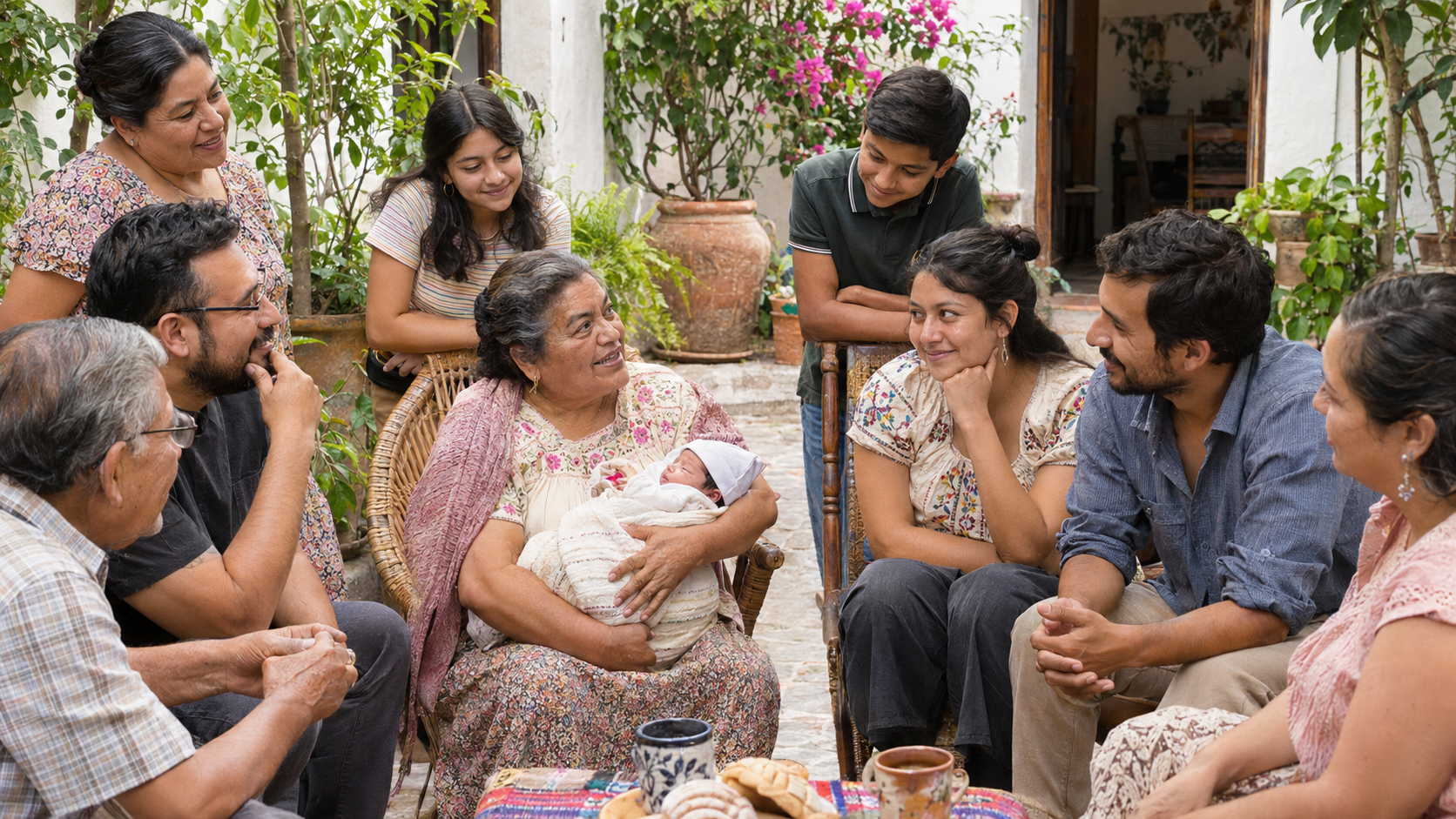
There is no single test that makes a name Mexican. Families may draw from Spanish-language, Indigenous, religious, secular, historical, regional or international influences. The range of names associated with Mexican culture reflects that breadth. Your family’s location, generation, languages and history may all shape what feels familiar.
Many Mexican names are written with one or more given names followed by family names from both sides of the family. Those family names are not merely decorative middle names. They can identify both parental lines, although the exact order, everyday usage and legal treatment depend on the family and the place where the child is registered.
This matters when you are testing a baby name. A given name that sounds effortless by itself may feel repetitive beside the complete family name. A second given name may solve the rhythm, create an honour connection or make the full name cumbersome. Say and write the complete version you actually expect to register, rather than evaluating each part in isolation.
If you are naming across generations or countries, ask relatives concrete questions rather than asking whether a candidate is “traditional.” Useful questions include:
- What was the person’s complete registered name?
- Which part of the name did relatives use at home?
- Was there a nickname that mattered more than the formal name?
- Which accent marks, spaces or hyphens appeared in the original spelling?
- How were the family names ordered and shortened in daily life?
- Would using this name be understood as an honour, and would that create an expectation you should discuss?
If your family is not Mexican but you are drawn to a name connected with Mexican culture, you can still approach it thoughtfully. Learn its pronunciation and meaning, understand the context in which it is used, and avoid presenting it as evidence of ancestry you do not have. Respect comes from accuracy and candour, not from finding a label that grants automatic permission.
Check the meaning before building a story around it

A one-line name definition is a starting point, not a complete biography. Spellings travel between languages, related names develop different forms, and families sometimes repeat a meaning that is more sentimental than linguistic. Before you put a definition in a baby book or announcement, make sure you can explain what kind of meaning it is.
Start with origin and language
Ask which language form you are choosing and whether the stated meaning belongs to that name or to an older related form. With Mateo, for example, it is useful to know both the Spanish-language form and the familiar “gift of God” interpretation. That is more precise than calling it simply a Mexican word.
Separate symbolism from etymology
Parents often choose a name for what it symbolizes rather than its oldest linguistic root. Lily may evoke a flower, a garden, a season or a particular person. Those associations can be meaningful without being presented as literal translations. Use phrases such as “it reminds us of” or “we associate it with” when that is what you mean.
Let the family story be specific
If a name honours someone, record the connection while the people who know it can still tell you. Ask how the namesake pronounced it, what they were called as a child, and why the name matters to the family. A specific story will mean more to your child than an inflated claim about heritage.
This check can also expose a mismatch early. You might love a meaning but dislike the usual pronunciation, or love the sound while feeling no attachment to the traditional definition. Neither conflict automatically disqualifies the name. It simply tells you what you are truly choosing.
Test the complete name in the child’s real life
The best shortlist is not the one with the most beautiful meanings. It is the one whose names still work when spoken by relatives, written on documents and attached to an adult. Run every finalist through the same practical checks so that affection for one candidate does not make you overlook a problem.
- Write the full registered form. Include every intended given name and family name. Read the initials, look for accidental repetition, and notice whether you are assuming that one family name will disappear in everyday use.
- Say it in every language used at home. Each caregiver should pronounce the full name naturally. You do not need identical accents, but you should know whether the preferred pronunciation will be recognizable to the people closest to the child.
- Ask what people will shorten. A nickname may emerge from the first name, a second given name or a family habit. Decide whether the likely short forms feel acceptable instead of assuming no one will use them.
- Confirm the exact spelling. If the name includes an accent mark, space or hyphen, decide what you intend to preserve. Then check the registration requirements where the child will be registered and keep the spelling consistent across official documents.
- Use it at different life stages. Say the name as if you were soothing a baby, calling a child across a playground, introducing a colleague and reading it at a formal ceremony. This reveals whether you like the whole name or only its nursery-stage image.
- Check the honour openly. When the candidate refers to a living relative or a sensitive family history, confirm the correct name and discuss the intention before registration. A naming surprise is rarely worth discovering later that the gesture was misunderstood.
Turn your preferences into must-haves before making the final choice. You might require a name to work with both family names, be pronounceable in Spanish and English, or preserve a particular relative’s spelling. Other features, such as popularity or nickname options, may be preferences rather than deal-breakers. This distinction helps when two appealing names win on different grounds.
Key takeaways for choosing with confidence
- A name’s linguistic meaning, cultural associations and family significance are related but distinct. Record each one accurately.
- Mexican naming traditions vary across families, regions, languages and generations. Begin with your own family history rather than treating a name list as a rulebook.
- Mateo is a Spanish form associated with the meaning “gift of God,” while Lily is a familiar flower name commonly used for girls. Either can acquire a deeper meaning through a family’s story.
- Evaluate the complete registered name, including all intended given names and family names, rather than testing the first name alone.
- Say the name in the languages your child will hear, consider likely nicknames, and confirm the intended spelling before registration.
- If you are honouring someone, collect the pronunciation, spelling and story from relatives while you can.
Take each finalist and complete the same short record: established meaning, language or origin, family connection, exact full spelling, everyday pronunciation and likely nickname. Any blank that matters is a question to answer before you decide. The strongest choice will be the name whose story you can tell your child simply, accurately and without qualification.
References
- Parents — Mateo Name Meaning
- Parents — Lily Name Meaning
- Parents — 75 Vibrant Baby Names from Mexican Culture Gaining in Popularity



