
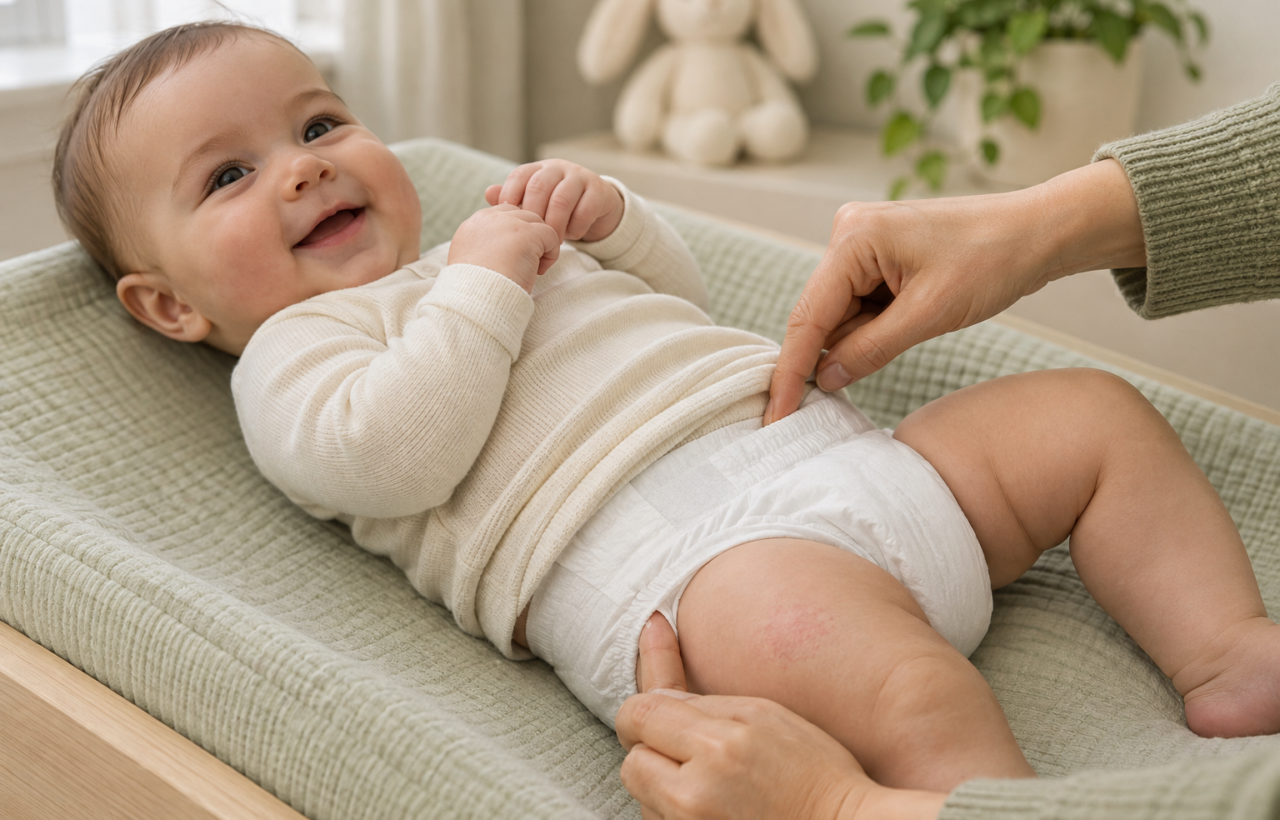
If every change reveals the same angry-looking skin, buying the next box labelled “sensitive” isn’t a dependable plan. Start with a more useful question: Is the diaper leaving moisture against your baby’s skin, trapping heat, rubbing, or exposing already-reactive skin to an unnecessary ingredient?
The best first choice is usually an absorbent, breathable, fragrance-free diaper that fits without leaving pressure marks. Pair it with frequent changes and a simple barrier routine. Then watch the pattern of the rash, because ordinary irritation, eczema and a contact allergy don’t call for exactly the same response.
Key takeaways
- Choose absorbency and breathability together. One moves wetness away from the skin; the other lets heat and humidity escape.
- Treat “hypoallergenic,” “natural” and “gentle” as prompts to inspect the details, not as proof that a diaper will suit your baby.
- Fragrance-free is a sensible default for reactive skin. Also check the skin-contact layer for lotions or botanical extracts.
- Change at least every two to three hours, sooner during a flare, and immediately after a bowel movement.
- A rash that follows an elastic, cuff or printed area deserves medical attention because the pattern can point to a contact allergy.
- Call your baby’s clinician promptly for fever, blisters, pustules, open or oozing sores, sharply bordered redness, significant pain, or any rash in a premature baby.
First, read the pattern rather than guessing “eczema”
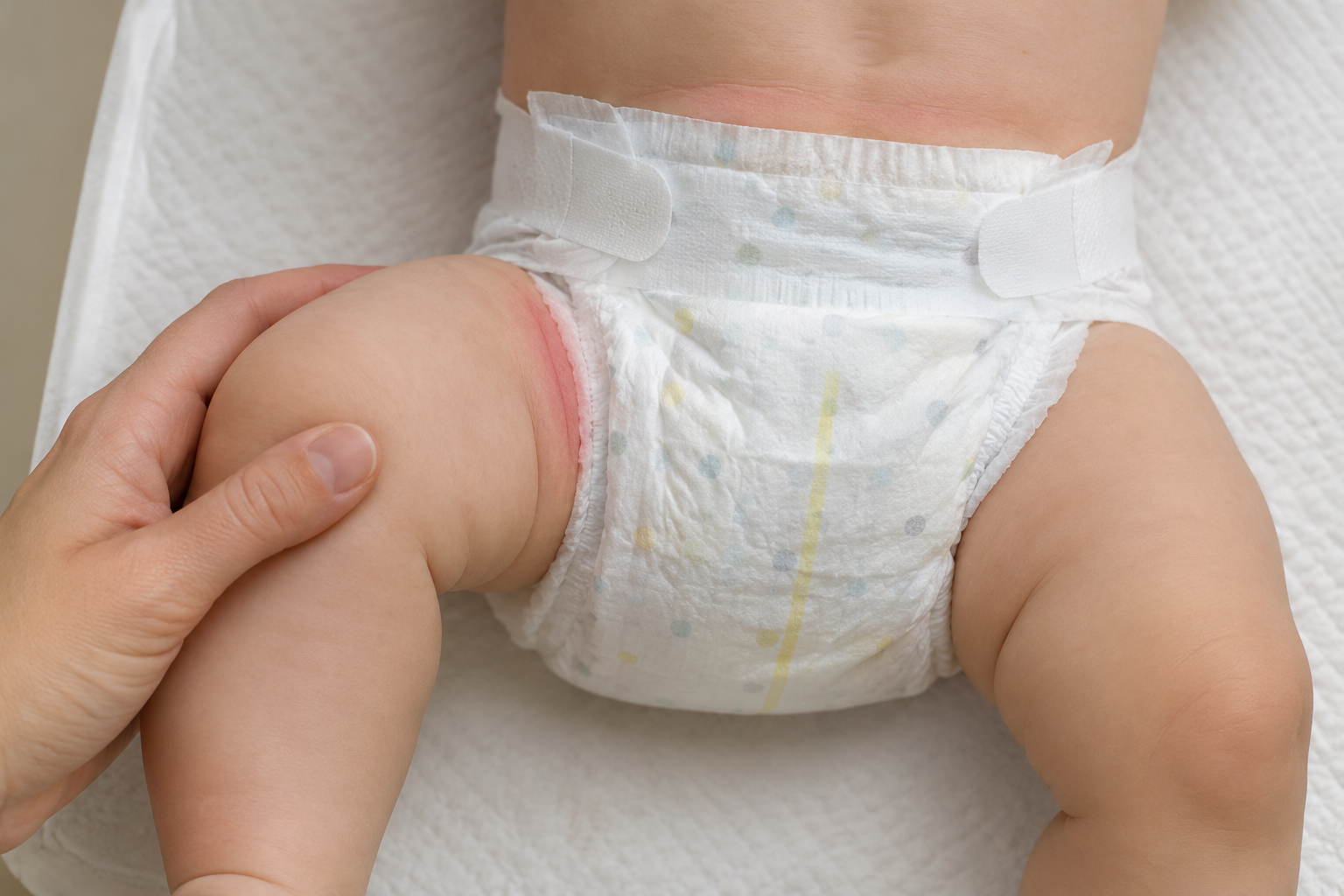
Three different problems can appear under a diaper, and the location gives you useful information.
- Irritant diaper dermatitis: This is the classic diaper rash caused by prolonged contact with urine, stool and moisture, compounded by rubbing. It tends to affect skin that is repeatedly exposed inside the diaper and should improve when you reduce moisture, friction and contact with irritants.
- Atopic eczema: This is a chronic skin-barrier condition that flares and settles over time. In babies, eczema usually begins on the face or scalp rather than in the diaper area. A baby with eczema-prone skin can still become irritated under a diaper more quickly because that skin has a less effective barrier.
- Allergic contact dermatitis: This is a reaction to a particular material or ingredient. The shape can mirror the trigger. Redness confined to the waistband, leg elastic, cuffs or printed sections is more suspicious than general redness across the diapered skin.
If the rash exists only under the diaper, don’t assume that eczema is the diagnosis simply because the skin looks dry or red. Start by removing the ordinary sources of irritation. If the rash also recurs on the face, scalp or elsewhere, or you can’t tell which pattern you are seeing, ask your pediatrician to examine it rather than cycling through creams and diaper brands.
Moisture makes this entire area more vulnerable. A covered diaper environment traps warmth and dampness; urine and stool irritate the skin; wiping and a snug fit add friction. Once the surface is softened, even routine cleaning can aggravate it. That is why changing the diaper matters, but changing how long it stays on matters just as much.
Buy for dryness, airflow and low irritation
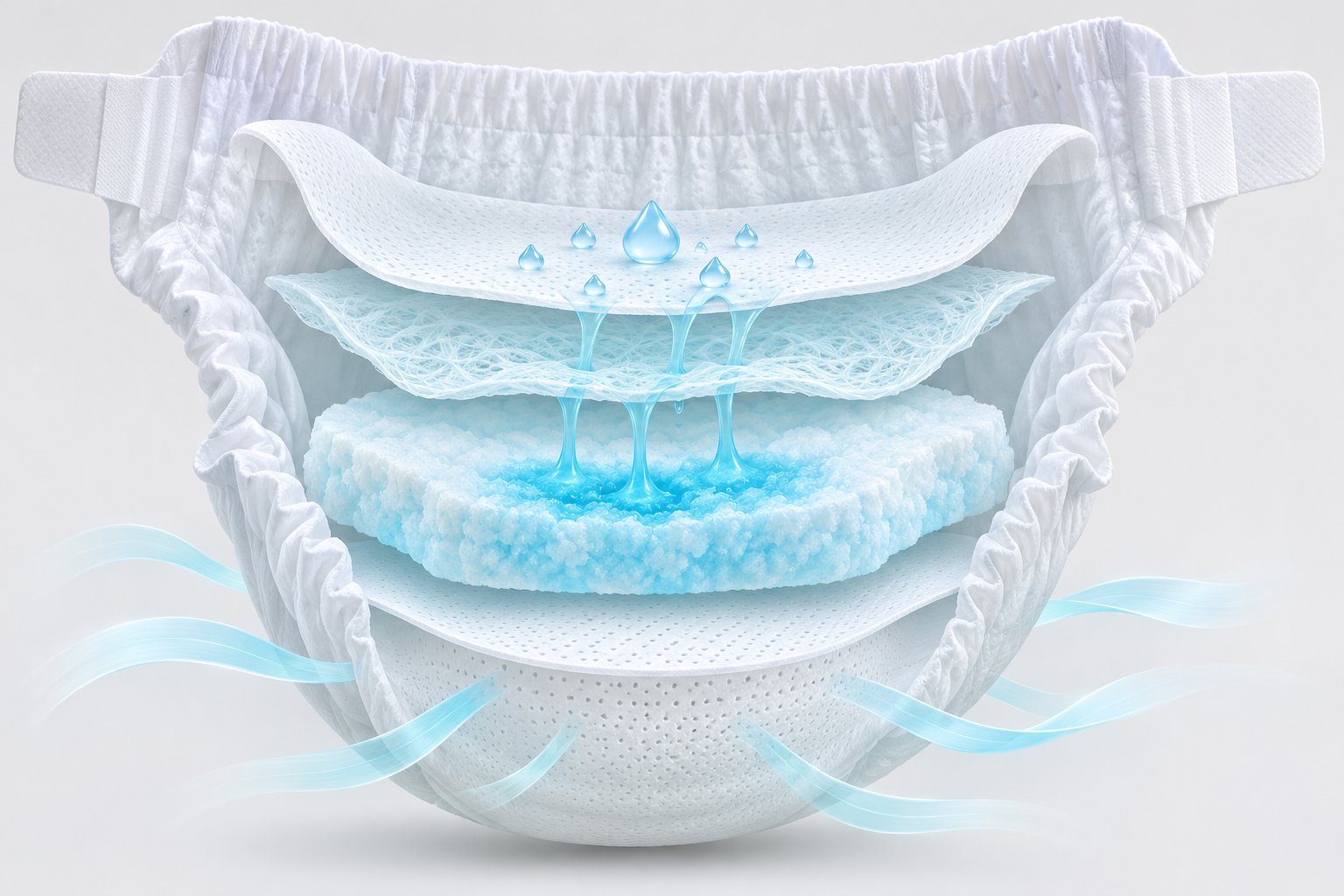
You do not need to choose between an absorbent diaper and a breathable one. They solve different parts of the same problem. A superabsorbent core draws liquid away from the skin, while a breathable backsheet allows some trapped heat and humidity to escape. A 2025 systematic review covering 13 studies and 2,935 children included superabsorbent diapers among the measures associated with preventing diaper dermatitis. An older industry-conducted clinical trial found fewer severe cases with highly breathable diapers than with standard non-breathable products. These findings support looking for both functions, not treating them as competing upgrades.
Use this order when you compare packages:
- Absorbent core: The diaper should keep the skin-contact surface reasonably dry between changes. Extra capacity is not permission to leave a wet diaper on longer.
- Breathable backsheet: Move this higher on your list in hot weather or when your baby becomes sweaty inside the diaper.
- No added fragrance: Fragrance adds no skin-care benefit and can irritate reactive skin. “Unscented” and “fragrance-free” are not necessarily interchangeable claims, so look for the latter.
- A simple skin-contact layer: Check whether the topsheet contains lotion or botanical extracts. A plant-derived ingredient can still be an unnecessary exposure for a baby who reacts easily.
- Specific testing or independent recognition: “Hypoallergenic” is not a regulated promise of zero reactions. Dermatologist testing and outside accreditation give you more information, although neither guarantees that an individual baby will tolerate the product.
- Minimal dye where it touches: If redness traces a printed panel or coloured section, choose a plainer diaper and show the pattern to your baby’s clinician.
- Correct fit: A tight diaper creates rubbing and pressure; a loose one permits leaks. Persistent red marks or repeated blowouts are reasons to reassess the size instead of finishing the box at all costs.
Do not make chlorine-processing language your main decision. “Elemental chlorine-free” and “totally chlorine-free” describe manufacturing choices, but the evidence provided for treating either one as a clinical requirement is thin. If two diapers otherwise work equally well, you can use that preference as a tiebreaker. It should not outrank fit, absorbency, airflow and the removal of fragrance.
The change routine can matter more than the logo
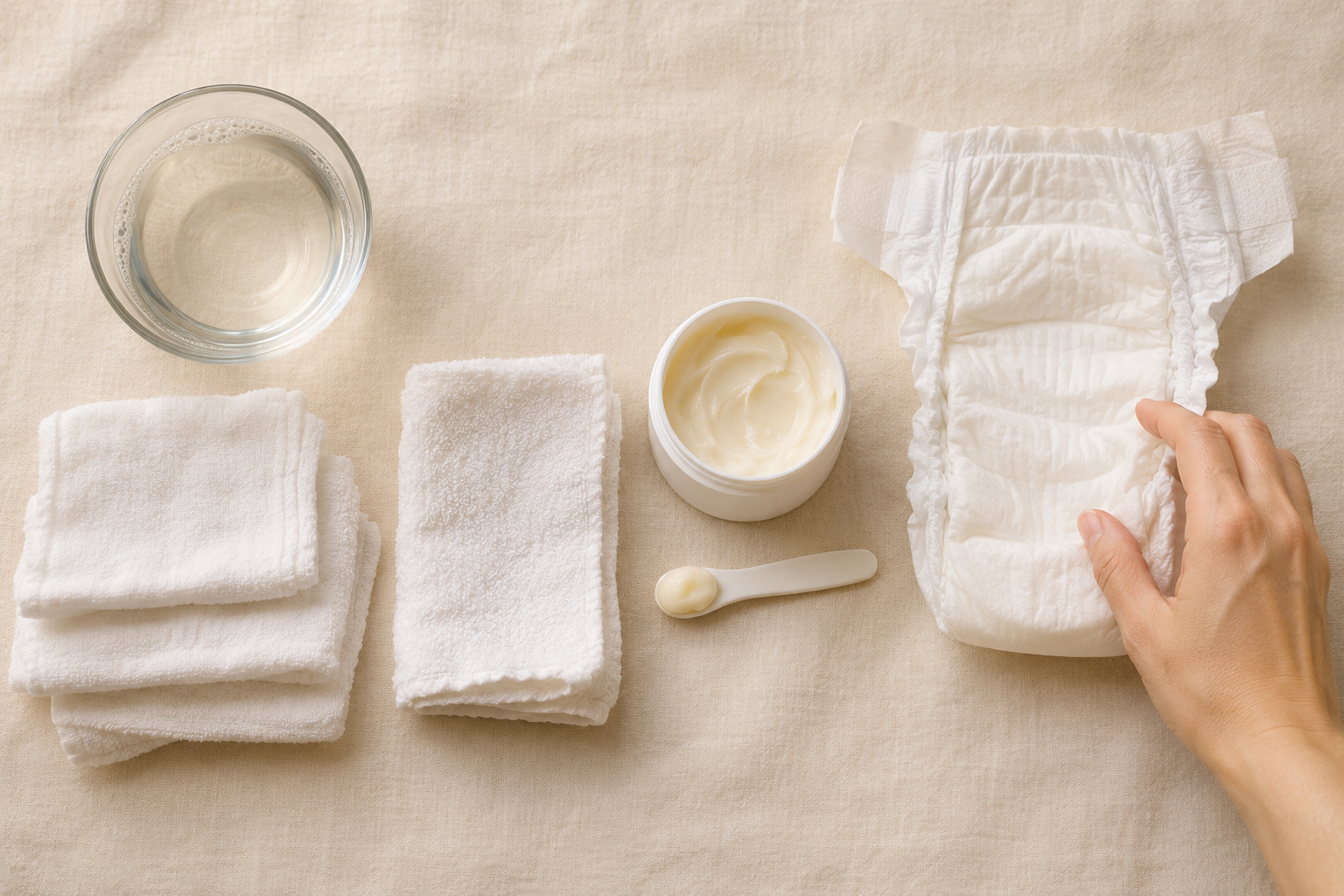
A premium sensitive-skin diaper can still leave a baby sore if it remains wet for too long. During an uncomplicated flare, use a consistent routine so you reduce irritation and can tell whether the new diaper is helping.
- Change every two to three hours: Change more often while the skin is inflamed and immediately after every bowel movement. A wetness indicator can help you notice a change is due, but it does not replace absorbency or regular checks.
- Simplify cleaning: Use alcohol- and fragrance-free wipes. When the skin is particularly sore, plain water and a soft cloth remove another possible source of irritation.
- Reduce rubbing: Clean gently, pat the skin dry and avoid scrubbing the same softened area. Give the skin some diaper-free air time before fastening a fresh diaper when practical.
- Use a barrier at every change: A zinc-oxide ointment creates separation between vulnerable skin and the next exposure to urine or stool. It works alongside frequent changes, not instead of them.
- Check the fastening: You want a secure seal without compression marks. If loosening the tabs causes leaks but tightening them leaves redness, try the next size or a different diaper shape.
- Record what changes: Note the diaper, wipes and cream in use and whether the redness is spreading, fading or tracing a specific component. This is more useful to a clinician than trying to remember several simultaneous product switches.
Be cautious with steroid creams in this location. A diaper acts as an occlusive covering, which can increase absorption through the skin. Low-potency hydrocortisone is sometimes used for infant eczema under medical guidance, but mid-potency steroids are generally avoided in the diaper area. Ask your pediatrician before applying any steroid there, including one previously prescribed for another part of your baby’s body.
A practical diaper shortlist, with the claims in context
There is no universal “eczema diaper.” Your useful shortlist is the set of products that meet the functional criteria, fit your baby’s body and remain affordable enough to change frequently. These are reasonable starting points for different priorities:
- Pampers Pure Protection: A relevant option when independent eczema recognition matters to you. It carries the National Eczema Association’s Seal of Acceptance and is described as fragrance-, paraben- and lotion-free, with totally chlorine-free wood pulp. The seal is a meaningful screening signal, not a promise that no individual reaction can occur.
- Pampers Swaddlers: A mainstream option if absorbency and sensitive-skin testing are your priorities. All sizes have been fragrance-free since June 22, 2026. In a Pampers-sponsored randomized trial, a regimen combining Swaddlers with Sensitive Wipes produced 50% fewer instances of severe redness and twice as many redness-free babies than other widely available options. Because the intervention included both diapers and wipes and the manufacturer sponsored the trial, the result does not prove that the diaper alone will prevent a rash.
- Bambo Nature Dream: A product to consider when airflow and a short additive list lead your decision. The manufacturer describes a fully breathable backsheet, totally chlorine-free pulp, and no fragrance or moisturizing lotion. Those are useful specifications, but they are manufacturer claims rather than evidence that this diaper will outperform every alternative on your baby’s skin.
- Huggies Snug & Dry: A simpler formulation to compare when you want a fragrance-free diaper with a wetness indicator. The manufacturer says it contains no lotions, parabens or natural-rubber latex. Treat the indicator as a changing prompt, not as a rash-prevention feature.
- Coterie The Diaper: Another option for a baby who seems to react to added ingredients. Its stated formulation uses totally chlorine-free pulp and no added fragrance, parabens, latex or lotions. As with any ingredient-focused product, the real test is whether the diaper also fits well and stays dry on your baby.
- Honest Clean Conscious: Worth comparing if third-party materials testing matters to you. The diapers are described as fragrance-free, hypoallergenic and dermatologist-tested, with OEKO-TEX Standard 100 certification. That certification addresses testing for specified substances; it does not diagnose the cause of a rash or guarantee eczema control.
If money is tight, prioritize a well-fitting, fragrance-free and absorbent diaper you can change often over premium processing claims. A more expensive box cannot compensate for prolonged wetness. When trying a new product for a mild, uncomplicated irritation, keep the rest of the routine simple and stable enough to see whether the location and intensity of the redness change.
Know when a diaper swap is no longer enough
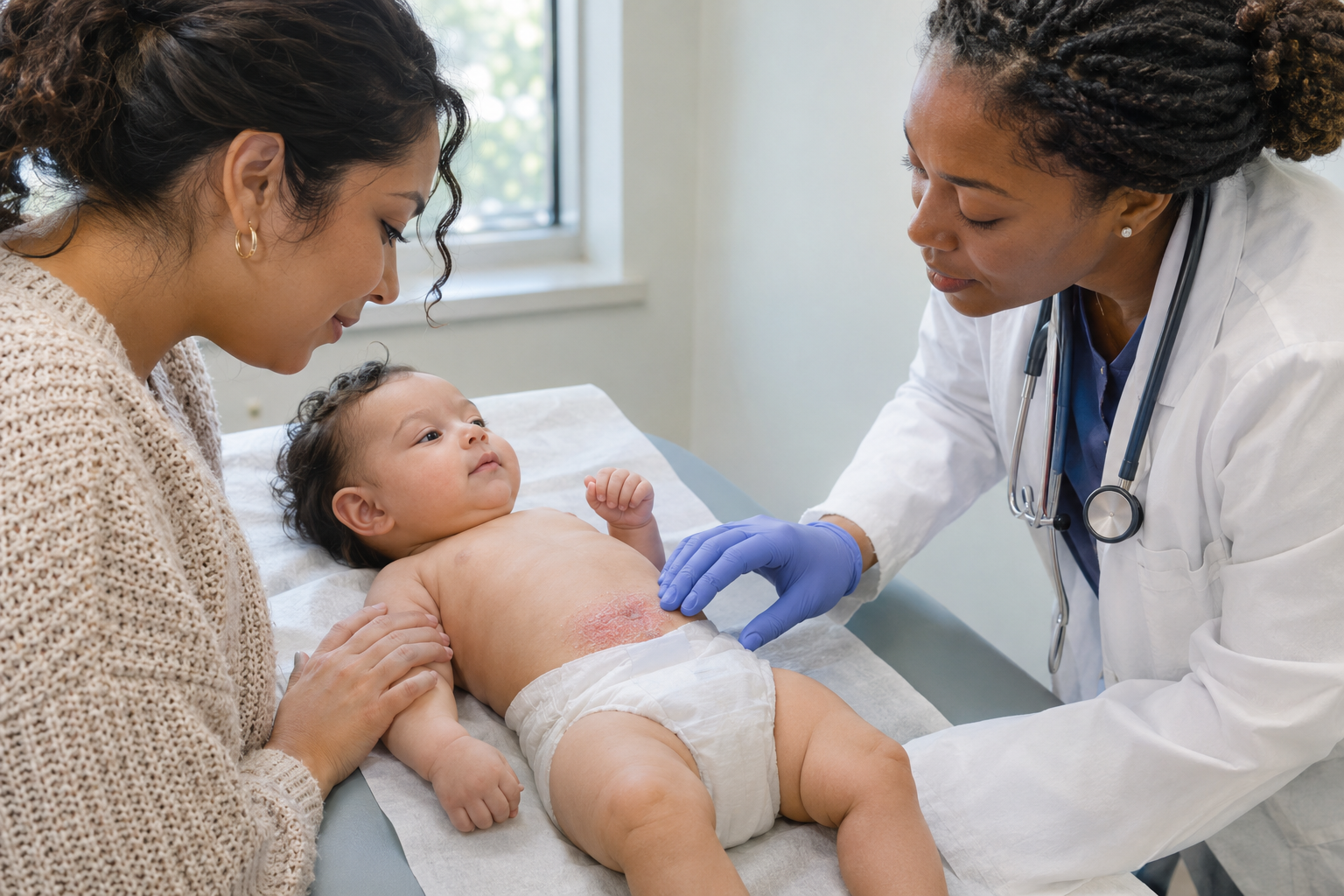
A diaper change cannot treat every cause of inflamed skin. Contact your baby’s pediatrician if the rash is not beginning to improve after two to three days of careful home treatment, does not respond to diaper and routine changes, or lasts longer than a week.
Call promptly rather than continuing to experiment at home if you see any of the following:
- Fever with the rash.
- Pustules, pimples, blisters, peeling, crusting, or open or oozing sores.
- Swelling, marked pain or skin that is breaking down.
- A sharply defined border or redness that is spreading.
- A reaction limited to an elastic, leg cuff, waistband or printed area.
- Any diaper-area rash in a premature baby.
For your next change, make the decision small and observable: use a fragrance-free, breathable and absorbent diaper; check that the fit leaves no pressure marks; clean gently; dry the skin; and apply the barrier your baby’s clinician recommends. If the redness follows a component or fails to ease within the expected window, stop shopping for a better label and let a pediatrician identify what the skin needs.
References
- Scary Mom — The Best Diapers For Diaper Rash, Ranked (2026)
- Scary Mom — Diapers & Eczema: What Dermatologists Say



