
When children resist chores, the problem is not always laziness or defiance. The setup around the chore often matters just as much as the task itself: when it happens, how it is introduced, what tools are available, and what comes before or after it.
Mother U identifies several household patterns that can make chore time harder than it needs to be. Taken together, the advice points to a practical shift: chores work best when they are treated as a normal part of family life, not as a surprise request or a last-minute battle.
Chore Resistance Often Starts Before the Chore
A child may push back because the work feels unexpected, too large, or poorly timed. According to Mother U, asking for chores only occasionally can make them feel like an interruption instead of a responsibility. If a child is used to playing, resting, or using a screen first, a sudden request to clean can land as a major disruption.
That does not mean every chore has to become a rigid production. It means parents may get better cooperation when the rhythm is predictable. Daily or weekly expectations help children understand that cleaning up is part of belonging to the household, not a favor they are doing for an adult.

Make the Expectation Clear and Consistent
One of the most useful distinctions in the source is between offering a choice and setting an expectation. A child may be able to choose whether to start with books or laundry, or whether to sweep before wiping the table. But if the chore itself is required, phrasing it like an optional question can create confusion.
Consistency also reduces the need for repeated persuasion. When chores are rare, every request can become a fresh negotiation. When they are built into the day, the parent is not inventing a new rule each time; the family is simply following the existing routine.
- Use direct language: state the chore instead of asking whether the child wants to do it.
- Keep the timing familiar, such as before a meal, before screens, or during a daily reset.
- Allow limited choices inside the expectation so the child has some control without avoiding the job.
Remove Practical Barriers That Make Chores Feel Bigger
Mother U also emphasizes having the right supplies within reach. This is easy to underestimate. If a child cannot reach the broom, does not know which cloth to use, or needs an adult to find every item, the chore becomes dependent on the parent before it even begins.

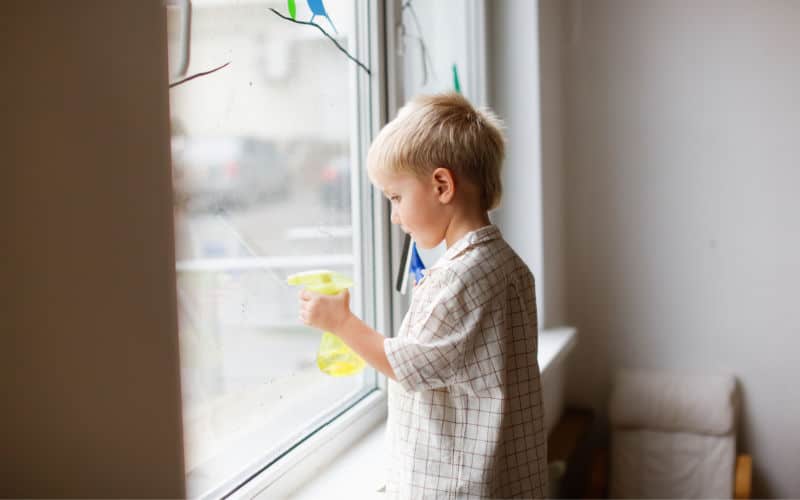
Kid-accessible tools can make the task feel more manageable. The source mentions items such as nontoxic cleaning products, mops, brooms, stools, cleaning caddies, and supplies stored where children can get to them. The broader principle is simple: a child is more likely to take ownership of a task they have been shown how to do and equipped to complete.
This is also where parents may need to separate unwillingness from inexperience. If a child has never been taught the steps, resistance may be a sign that the job feels vague. Modeling the chore, doing it together, and then gradually handing it over can prevent a lot of frustration.
Use Consequences and Incentives Without Daily Drama
The source argues that if nothing happens when a child refuses a chore, refusal is likely to continue. That does not require a harsh response. It does require a consequence that is already connected to the routine, so the parent is not scrambling for a reaction in the moment.
A common approach is to put responsibilities before privileges. For example, Mother U uses the idea of chores before screen time. The point is not that screens are the only possible incentive; it is that the order of the day matters. Fun activities are easier to enjoy after basic responsibilities are done, and harder to pause once they have already started.
Parents can also time chores before something naturally motivating, such as snack, a meal, going out, or another pleasant part of the day. This keeps the structure simple: finish the expected task, then move on.
Key Takeaways
- Chores are easier to enforce when they happen regularly, not randomly.
- Children need clear expectations, not open-ended questions, when a task is required.
- Supplies should be safe, reachable, and familiar enough for children to use with confidence.
- Work-before-play routines can reduce arguments over screens and other preferred activities.
- Large messes create overwhelm, so frequent small resets are usually easier than occasional major cleanups.
Keep Messes From Becoming Too Overwhelming
A room or play area that has gone too far can feel impossible to a child. Mother U notes that regular tidying, evening resets, and cleaning up after independent play can help prevent the task from becoming so large that the child does not know where to begin.

For parents, the practical move is to reduce the size of the ask. A short routine done often is usually easier to teach, supervise, and repeat than a full-room cleanup after days of buildup. It also gives children more chances to practice, which is how chores become familiar instead of exceptional.
The long-term goal is not perfect cleaning from a young child. It is steady participation. When chores are predictable, properly taught, and connected to normal family routines, resistance has fewer places to take hold.
Inspired by this post on Mother U.