
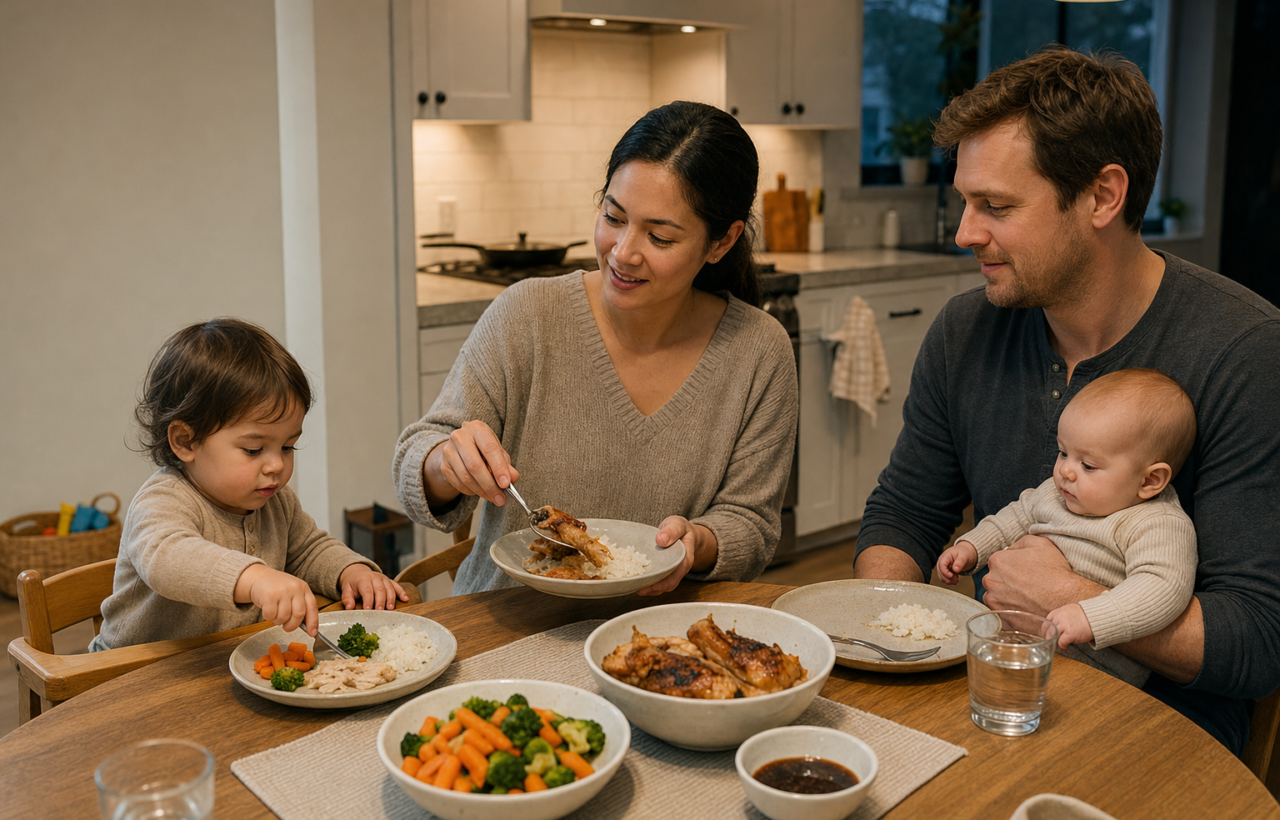
Some evenings, the hardest part of dinner isn’t cooking. It’s deciding what can be made while a baby needs you, a toddler wants familiar food, and the adults still need a real meal.
You don’t need a new recipe for every night. You need a small set of dinner formats that match the time, energy, and attention you actually have. Choose the format first, serve the same core food in different ways, and keep one fallback meal that requires almost no decision-making.
Key takeaways
- Plan around the kind of evening you expect: fast stovetop, one-pan, hands-off, build-your-own, or fallback.
- Build dinner from a protein, an easy base, produce, and optional finishes instead of making separate meals for adults and children.
- Keep sauces, spice, and crunchy toppings separate until each plate is assembled.
- Prep reusable components, such as cooked chicken or rice, rather than committing the family to several complete reheated meals.
- Treat grilled cheese, quesadillas, soup, or another dependable option as part of the plan, not evidence that the plan failed.
Build your rotation around the kind of night
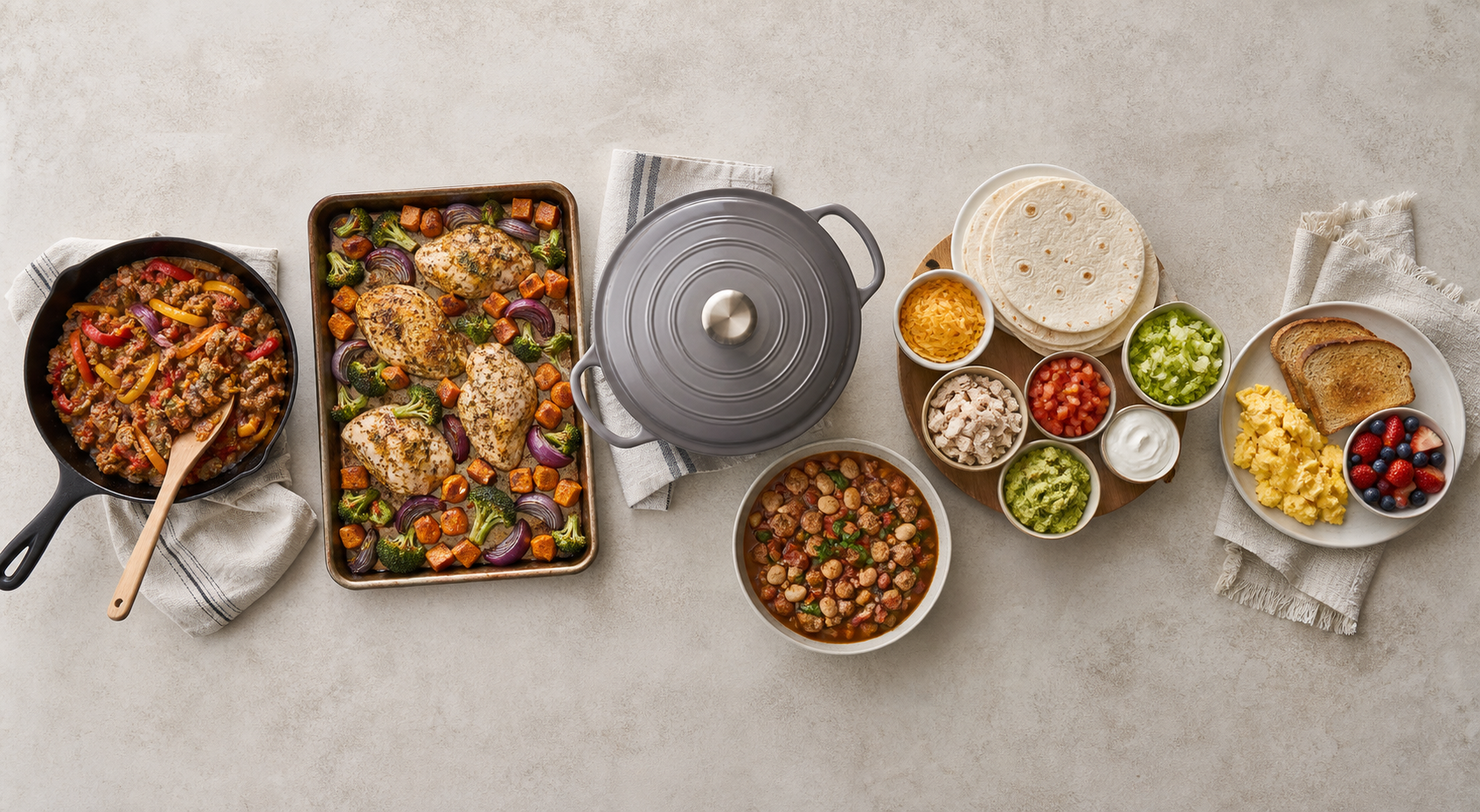
Start with your calendar, not a folder of recipes. Mark the evenings when you will arrive home late, manage bedtime alone, or have little attention available for cooking. Give each night a cooking label before choosing the food.
- Fast stovetop night: Use a quick-cooking protein and a base that needs little attention. Miso salmon and Tuscan salmon can fit into a roughly 20-minute dinner, while Korean ground beef bowls take about 25 minutes. Shrimp, ground turkey, and thin pieces of chicken serve the same purpose.
- One-pan night: Put the main protein and vegetable in one skillet or on one sheet pan. Lemon chicken with asparagus, a ground turkey and zucchini skillet, sausage with peppers, and skillet lasagna reduce the number of moving parts as well as the cleanup.
- Hands-off night: Choose this when active cooking time is the problem, even if total cooking time is longer. Slow-cooker chicken tortilla soup and cheesy chicken pasta can do most of their cooking while you handle the rest of the day.
- Build-your-own night: Quesadillas, tacos, bowls, sliders, wraps, and pizza-style meals let everyone start with the same ingredients. A child can receive a simpler plate while adults add sauce, vegetables, spice, or crunch.
- Fallback night: Keep the ingredients for one nearly automatic meal in the house. Grilled cheese with tomato soup, quesadillas, pasta, pancakes, pizza, and chicken nuggets can all hold this slot. Pick the option your household will reliably eat.
This distinction matters because “quick” and “easy” are not always the same. A skillet dinner may be ready sooner but need frequent stirring. A sheet-pan meal may take longer while leaving your hands free. Match the cooking method to the resource you lack that night: minutes, attention, clean dishes, or cooperation at the table.
Assigning labels also makes substitutions easier. If salmon is unavailable, replace it with another fast protein; don’t rebuild the whole week. If the slow cooker never got started, move the fallback meal into that slot. The rotation survives because the role of the meal stays the same.
Turn one dinner into plates for different eaters
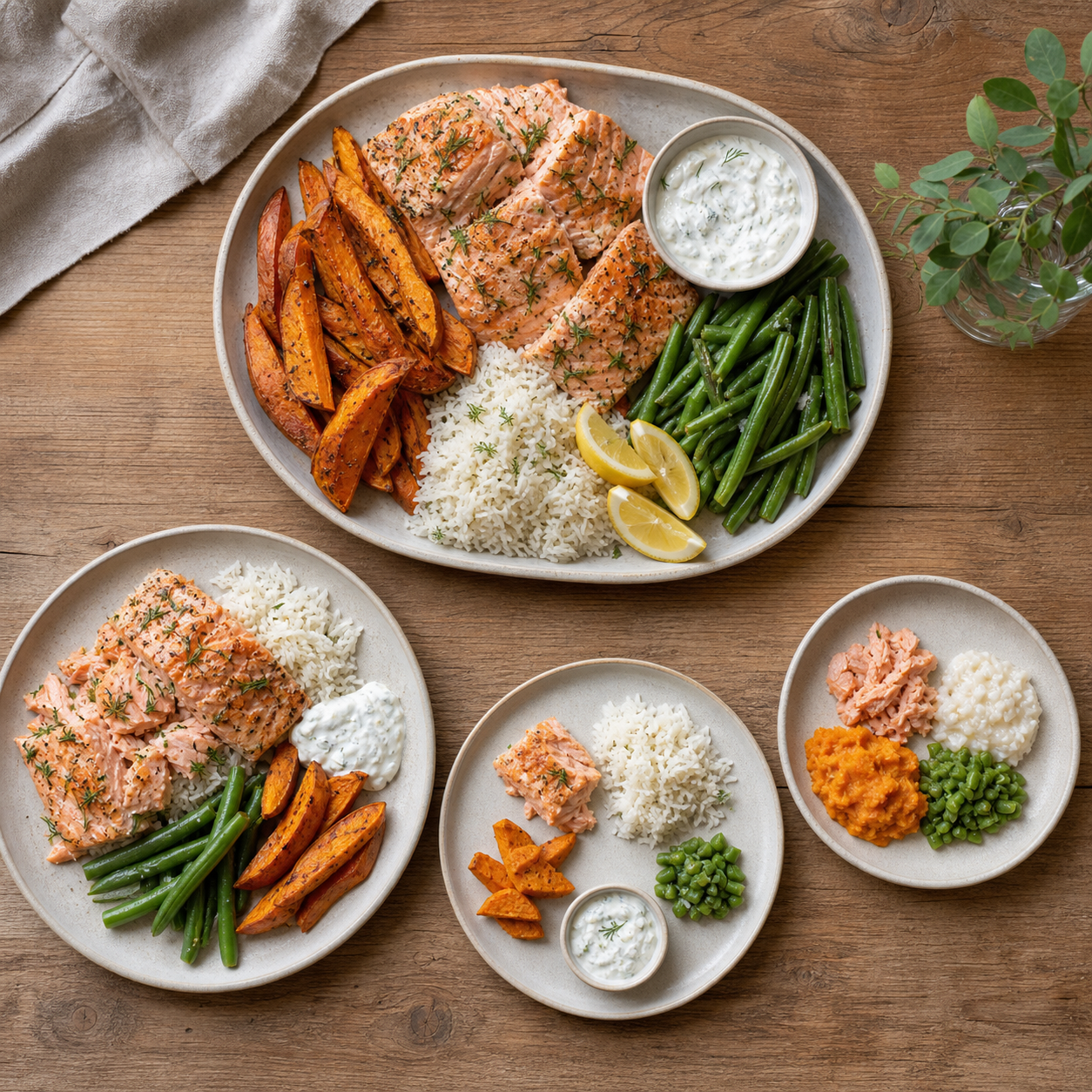
A family meal doesn’t have to look identical on every plate. It only needs a shared core. Use four parts when you plan it:
- Protein: chicken, beef, turkey, fish, eggs, tofu, beans, tuna, or cheese.
- Base: rice, pasta, bread, tortillas, potatoes, or another familiar starch.
- Produce: a vegetable or fruit that can be served in a suitable form for each eater.
- Finish: sauce, herbs, cheese, chopped vegetables, or crunchy toppings added at the table.
Once those parts are separate, the meal becomes easier to adjust without opening a second set of ingredients. For ground beef bowls, an adult might combine beef, rice, vegetables, and sauce. A young child who dislikes mixed textures can receive small portions of the same components separately. For sheet-pan chicken, adults can add a sharp sauce after cooking while the child’s portion stays simpler. For pasta, sauce can be stirred through one serving and offered beside another.
Put one predictable food on the table when the main dish may be unfamiliar. Rice, bread, fruit, plain noodles, or a familiar vegetable can fill that role. This is not a promise that your child will eat dinner. It simply means the plate contains something recognizable without requiring you to cook on demand after a refusal.
Keep hidden vegetables in their proper place. Blending sweet potato or cauliflower into macaroni and cheese, adding finely chopped vegetables to orzo, or using a vegetable-rich pasta sauce can make a familiar dish more substantial. It should not be the only way vegetables appear. Visible vegetables can still be offered beside the familiar food, giving your child a chance to notice them without making acceptance a condition of the meal.
Convenience does not override serving safety. For a child who is eating family foods, change the shape and texture to match the eating skills they currently use. Check fish carefully for bones, take meat off drumstick or wing bones, and keep hard, crunchy, or hot-spiced finishes off the child’s portion. If your baby is not yet eating family food or has an individual feeding plan, continue following that plan.
Prep the parts that save tomorrow
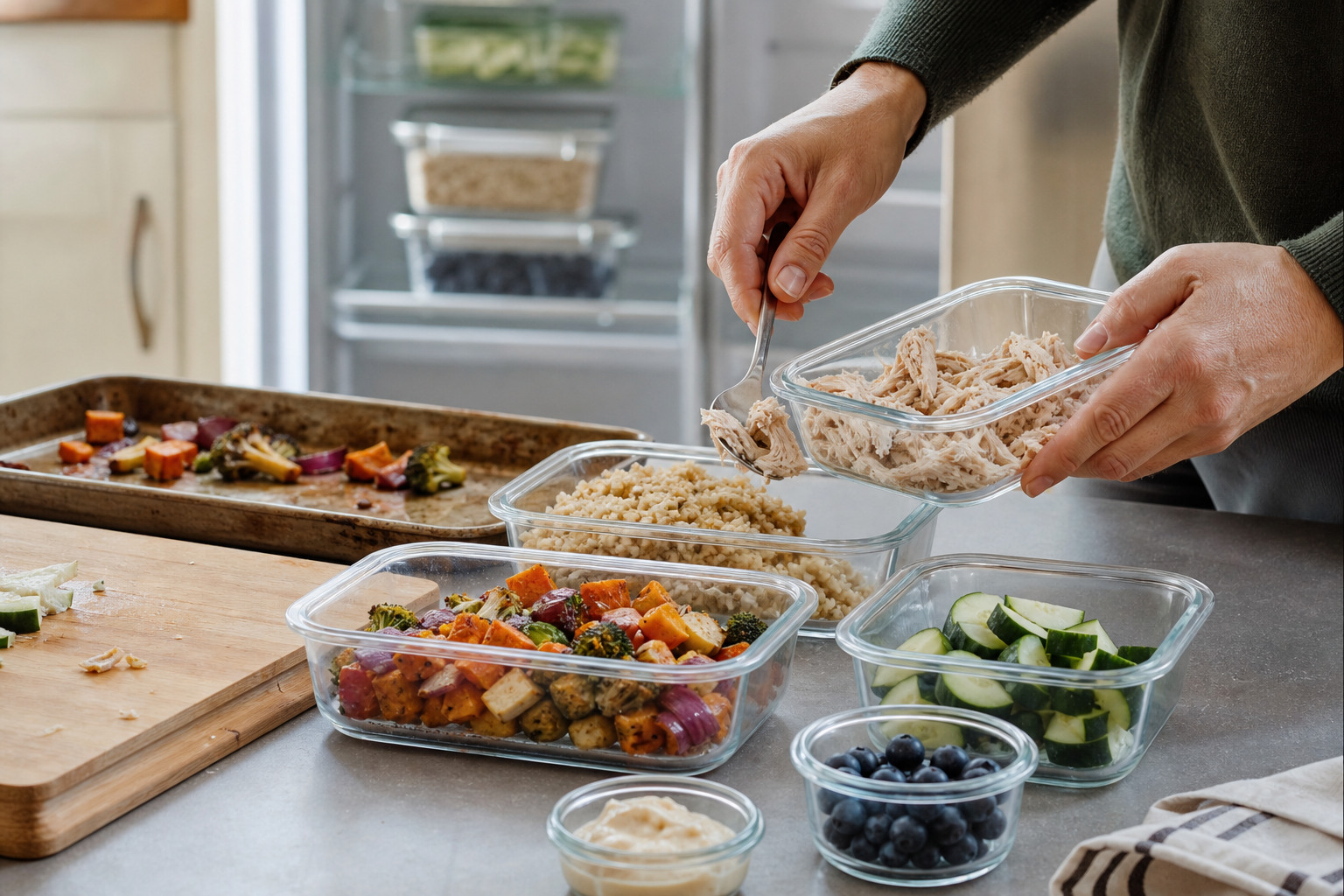
Preparing several complete dinners can create a fridge full of meals nobody wants by the end of the week. Component prep gives you more room to respond to changing appetites and schedules.
- Cook one neutral protein with a second use: Roast enough chicken for a sheet-pan dinner and the next night’s quesadillas. Reserve the second portion before adding a sauce that will limit where it can go.
- Make a base do two jobs: Rice can support a ground beef bowl and return beside salmon. Bread can serve a planned sandwich night and the fallback grilled-cheese dinner.
- Prepare the next vegetable while today’s food cooks: Cut the next sheet-pan vegetables while rice simmers, or assemble quesadilla fillings while chicken is in the oven.
- Store finishes separately: Sauce, cheese, chopped vegetables, and crunchy toppings keep the shared core adaptable. Everyone can finish a plate differently without another cooking step.
- Protect the fallback: If a pantry or freezer item has been assigned to the emergency dinner, don’t casually use it for lunch. Replace it as soon as it is used.
A useful test is whether a prepared item can become at least two meals. Browned ground meat can go into bowls, a pasta skillet, stuffed vegetables, or quesadillas. Cooked chicken can move into wraps, soup, sliders, or pizza. A single-purpose casserole may still be worth making when your family likes the leftovers, but it is less flexible when appetites are unpredictable.
Extra food should be cooled, stored, and reheated using your usual food-safety practices. If you are not confident that a reserved portion will be used promptly, freeze it rather than building the rest of the week’s plan around it.
Try this five-night plan with one practical grocery list
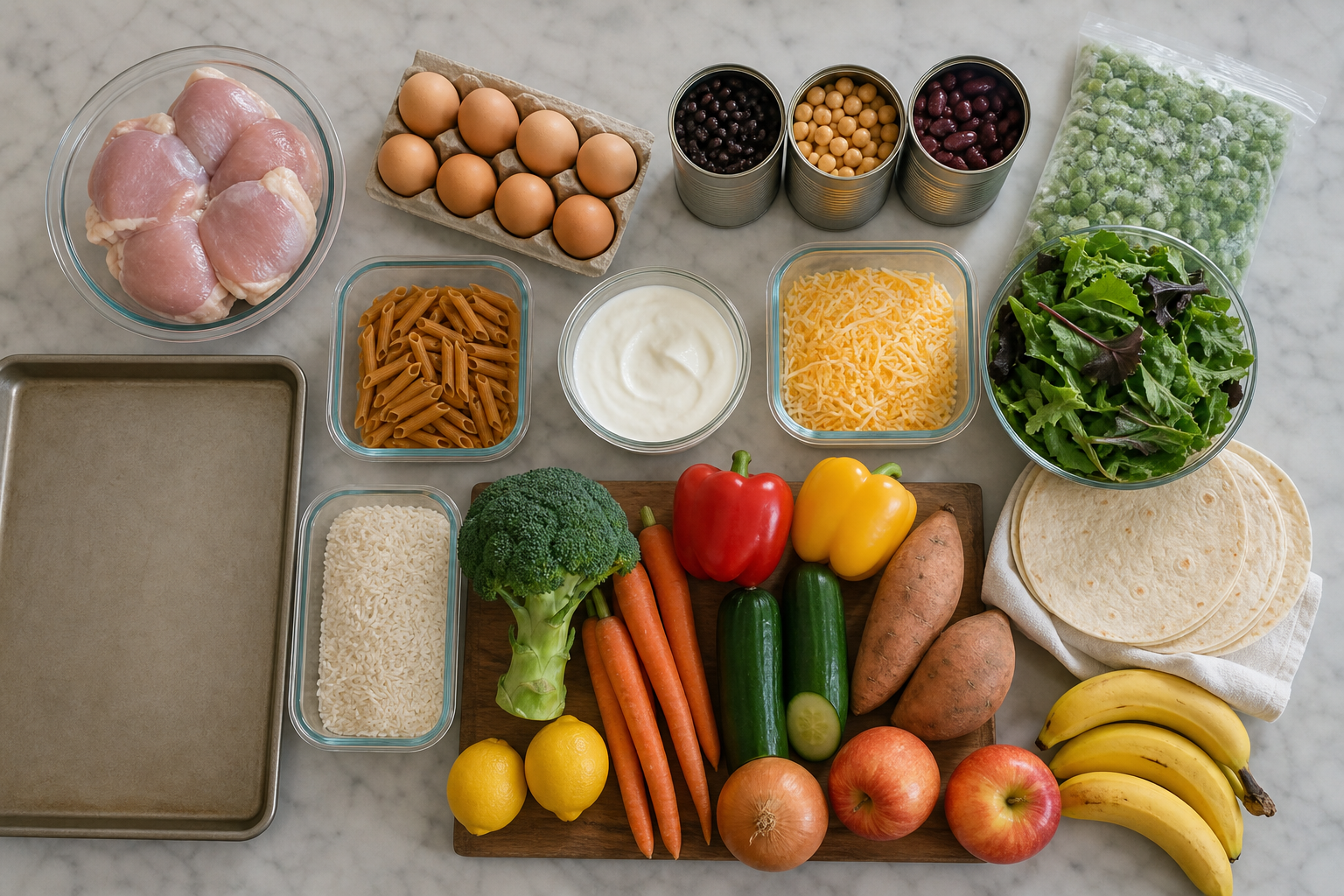
This rotation uses three main proteins, repeats useful ingredients, and includes a deliberate fallback. Adjust quantities to your household’s appetites and to which family members are eating the meal.
- Ground beef rice bowls: Brown the beef, cook rice, and add a vegetable your family already uses. Reserve a less-seasoned portion if needed, then let adults add sauce or stronger toppings. Put the components in separate areas of a young child’s plate if mixed food is a barrier.
- Sheet-pan lemon chicken and asparagus: Cook enough chicken for this dinner and the following night. Serve it with remaining rice or bread. Prepare the child’s chicken and vegetable in the texture they safely manage.
- Chicken quesadillas: Fill tortillas with the reserved chicken and cheese. Put optional vegetables or salsa in some quesadillas or offer them separately. Fruit or a simple vegetable makes an easy side without adding another cooked dish.
- Grilled cheese and tomato soup: This is the planned low-capacity dinner. If the evening is easier than expected, add a salad or another simple side. If it is harder, serve the basic meal and move on to bedtime.
- Miso salmon with rice and greens: Miso salmon is a roughly 20-minute option, so it fits a night when you can cook but do not want a long process. Flake a young child’s portion, check it for bones, and serve the sauce separately if that makes the meal easier to approach.
Shop for the plan by function:
- Proteins: ground beef, enough chicken for two dinners, salmon, and shredded cheese.
- Bases: rice, tortillas, and bread.
- Produce: asparagus, greens, fruit, and one or two vegetables your household already knows how to use.
- Pantry and fridge: miso, lemons, tomato soup, cooking oil, and the sauces or toppings you normally put on bowls and quesadillas.
- Backup: a frozen vegetable, an accepted side, or another item that can complete the fallback dinner.
Avoid filling the cart with aspirational ingredients that belong to no specific meal. If you cannot point to the night when an ingredient will be used, leave it off this list. Variety can grow after the system works; the first goal is to get the planned food onto the table.
Before your next grocery run, choose one fast protein, one one-pan meal, one customizable dinner, and one dependable fallback. Put each on the night that matches its demands. Repeat the slots that make evenings easier, and replace only the meal that your family has stopped using.
References
- Motivation for Mom – High-Protein Meal Ideas for Busy Weeknights and Meal Prep
- Motivation for Mom – Toddler-Friendly Dinner Ideas for Easier Family Meals