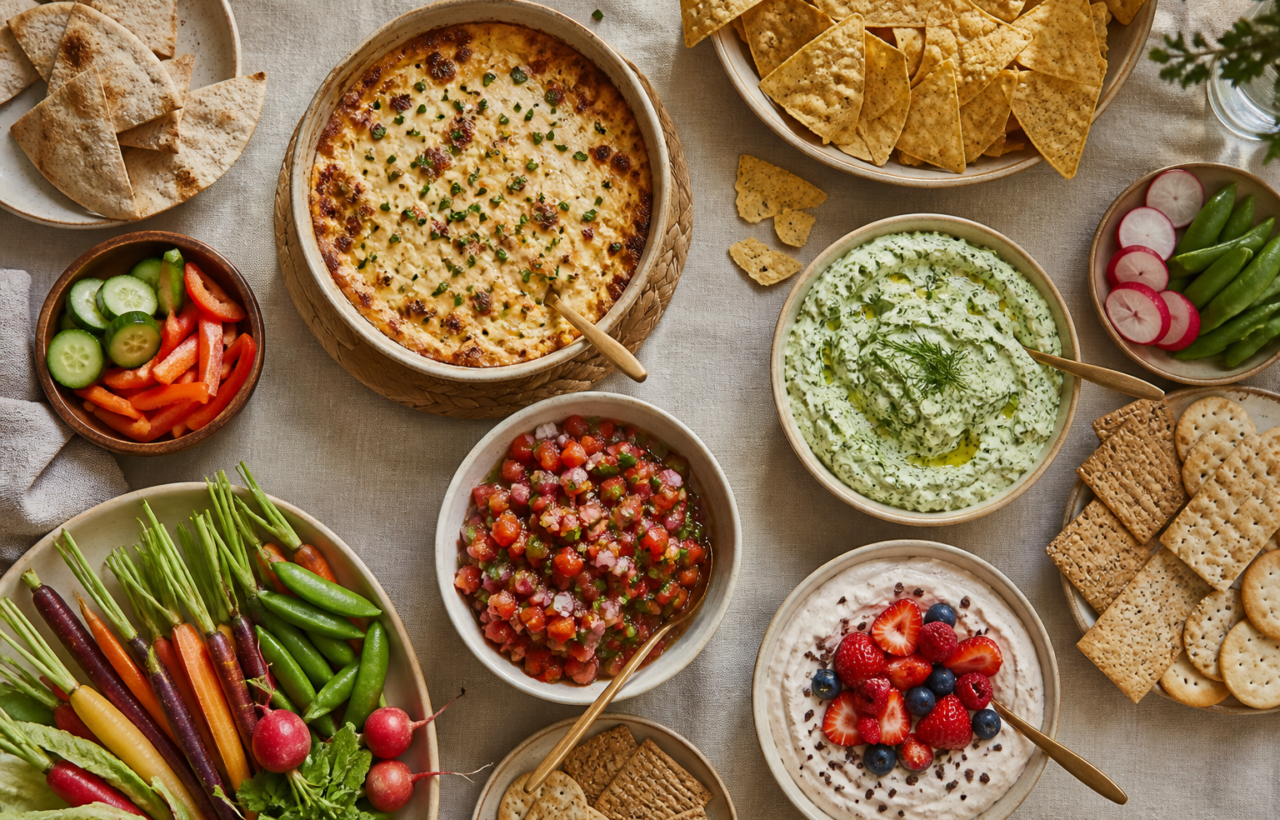
A good party dip plan is less about finding the longest recipe list and more about assigning each bowl a job. Across the source articles, the strongest pattern is contrast: sweet and savory, hot and cold, creamy and chunky, rich and fresh.
That makes dips useful for hosts who need flexible food for grazing, potlucks, BBQs, game nights, dessert tables, and casual family gatherings. The sources do not provide detailed recipes, so the most useful synthesis is a planning framework: choose fewer dips, choose them deliberately, and match each one to the way the event will actually run.
Start With the Role the Dip Needs to Play
The source articles cover several overlapping party situations, but each one points to a slightly different hosting need. The sweet dip article reported fruit-friendly options and dessert-inspired flavors such as cookie dough, cheesecake, and s’mores. The summer dip article focused on BBQs, potlucks, parties, and casual snacking, with dips and salsas that can be fresh, creamy, chunky, or spicy. The savory party dip article emphasized game nights, holidays, potlucks, and casual gatherings, while the cold dip article centered on easy snacking and low-effort entertaining.
Taken together, those sources suggest a practical first question: is the dip meant to be an appetizer, a grazing snack, a side for a summer spread, or a dessert? A creamy savory dip can anchor a snack table, while a sweet dip can make dessert more informal. A fresh salsa-style option can lighten a BBQ table, while a cold dip can reduce last-minute cooking.
Planning by role also prevents duplication. Three rich, creamy bowls may look generous at first, but they can feel repetitive. One rich option, one fresh or tangy option, and one sweeter or bolder option will usually give guests more useful variety.
Use Temperature as the Simplest Sorting Tool
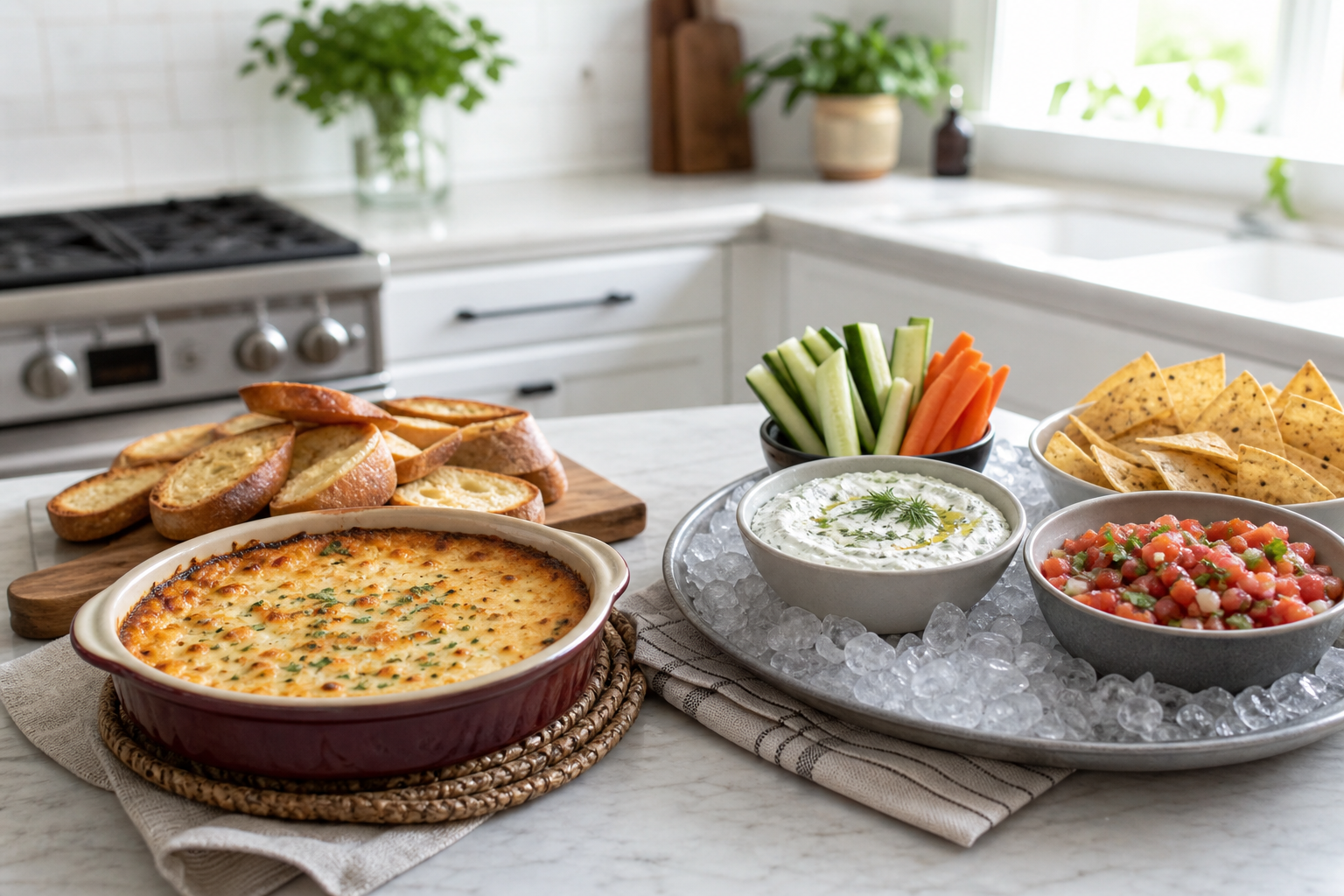
The savory party dip source reported both hot and cold options, which makes temperature one of the clearest ways to narrow the menu. Hot dips tend to feel more substantial and can suit cozy gatherings, game nights, or holiday-style spreads. The same source noted richer directions such as cheese and bacon, as well as vegetable-based options.
Cold dips serve a different purpose. The cold dip source described creamy dips as well as brighter, tangier choices, including options with vegetables and herbs. That makes cold dips especially useful when the host wants food that can be prepared before guests arrive and set out with minimal final work.
For an easy table, the choice does not need to be hot versus cold across the whole menu. A small gathering may only need one cold dip and a few dippers. A larger party can support one warm, richer dip and one cooler, fresher dip so the table has contrast without becoming complicated.
Balance Texture Before Adding More Recipes
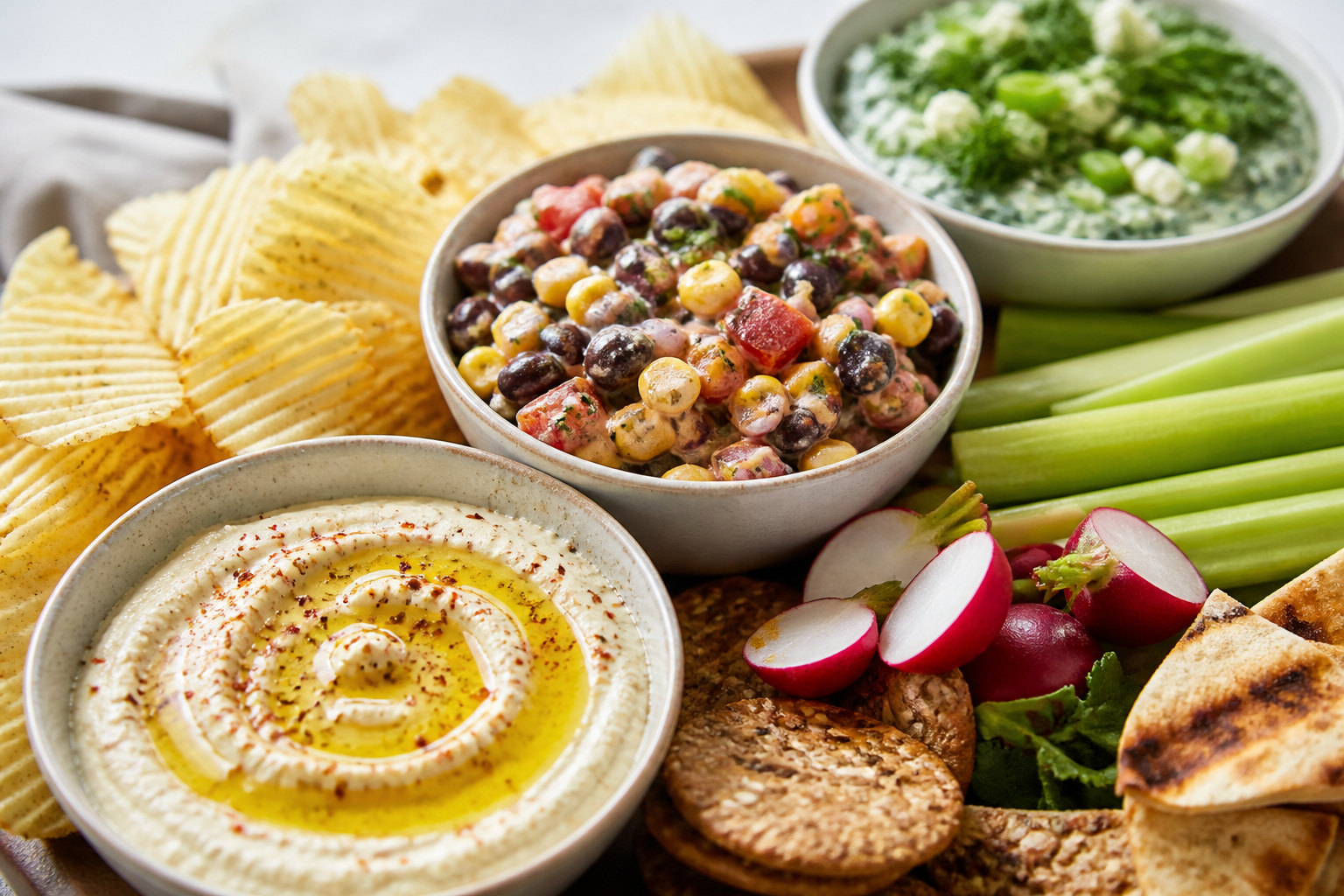
Several sources point to texture as a key planning detail. The summer article reported creamy and chunky options, including dips and salsas. The cold dip article highlighted creamy dips, fresh vegetables, and herbs. The savory party dip article described creamy options alongside bolder choices built around cheese, bacon, or vegetables.
That overlap matters because texture is often what makes a dip spread feel complete. Creamy dips bring body and familiarity. Chunky salsas or vegetable-forward dips bring color and bite. Tangy or herb-heavy dips can keep a table from feeling too heavy, especially when other party foods are rich.
- Key takeaways: Choose dips by role first: appetizer, snack, side, or dessert.
- Use temperature to simplify decisions: hot for a more substantial feel, cold for easier advance prep.
- Build contrast with texture: creamy, chunky, fresh, tangy, or sweet.
- For larger groups, offer different jobs rather than several dips that taste similar.
- Match dippers to the dip’s texture so guests can actually serve themselves easily.
Make Sweet Dips Part of the Plan, Not an Afterthought
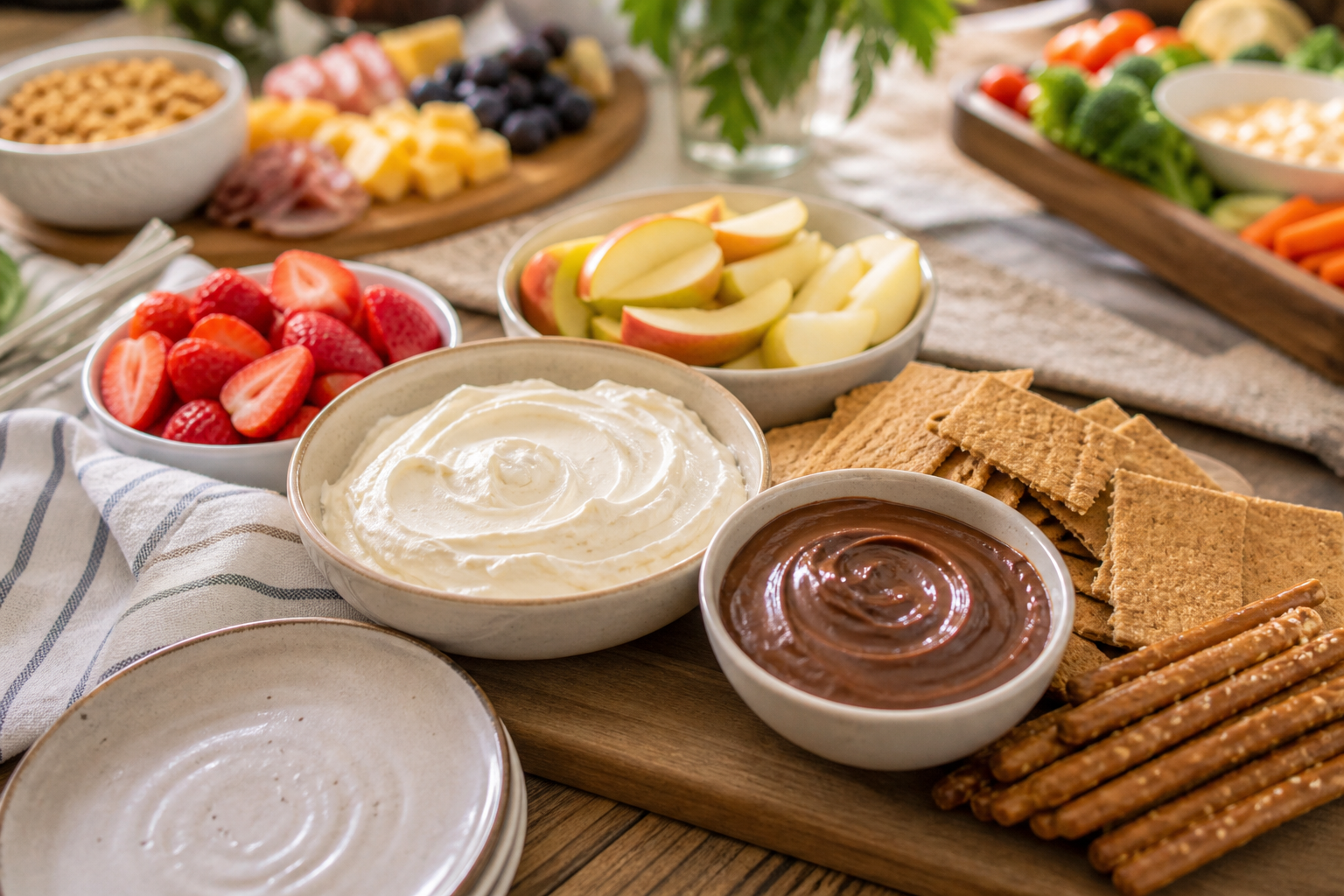
The sweet dip source treated sweet dips as a bridge between a snack board and a plated dessert. It reported fruit-friendly dips as well as dessert-inspired flavors including cookie dough, cheesecake, and s’mores. That gives hosts a useful option when a full cake, pie, or tray dessert feels less practical.
Sweet dips work best when they are planned with the rest of the table. If the meal is already heavy, a fruit-friendly dip can make dessert feel lighter and more flexible. If the dip is the main dessert, a more indulgent flavor can do that job with simple accompaniments. The source also noted that some sweet dips rely on only a few ingredients, which makes them useful for quick preparation.
The same contrast rule applies here: rich dips benefit from crisp or fresh dippers, while very sweet dips often work better when paired with something neutral. The point is not to make every dessert-style dip at once, but to choose the one that fits the occasion.
Plan Around the Host’s Real Constraints
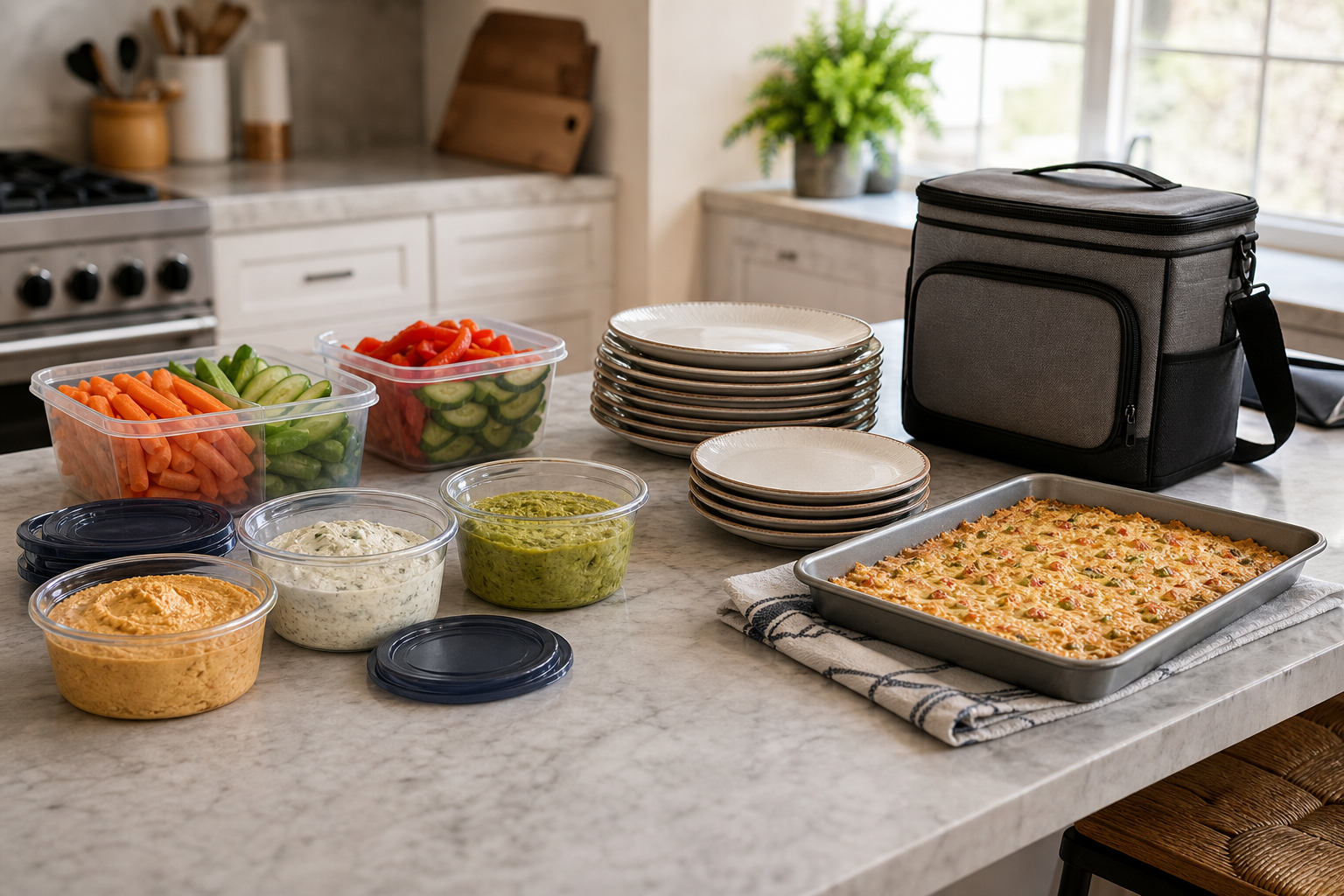
All four source articles emphasized ease in some form. The summer source mentioned quick options for last-minute gatherings. The savory party dip source described dips as easy for hosts to prepare. The cold dip source framed cold dips as simple choices for events and casual snacking. The sweet dip source also noted that some options use only a few ingredients.
That shared point is important: the easiest dip is not always the fastest recipe on the page. It is the one that fits the event’s timing, table space, serving temperature, and travel needs. A potluck dip should be easy to carry and serve. A BBQ dip should still feel appealing while people wait for grilled food. A game-night dip should be easy to scoop in small portions. A dessert dip should be simple enough that it does not compete with the rest of the hosting work.
The most useful party dip plan is usually short and intentional: one familiar anchor, one contrast option, and one dip that fits the event’s mood. That approach keeps the food generous without turning a simple snack table into another full menu.
References
- Mama of Five — Sweet Dip Ideas for Fruit, Parties, and Dessert Tables
- Mama of Five — How to Choose Summer Dips for BBQs, Potlucks, and Parties
- Mama of Five — A Practical Guide to Choosing Party Dips That Work
- Mama of Five — Cold Party Dips: How to Build an Easy Snack Spread