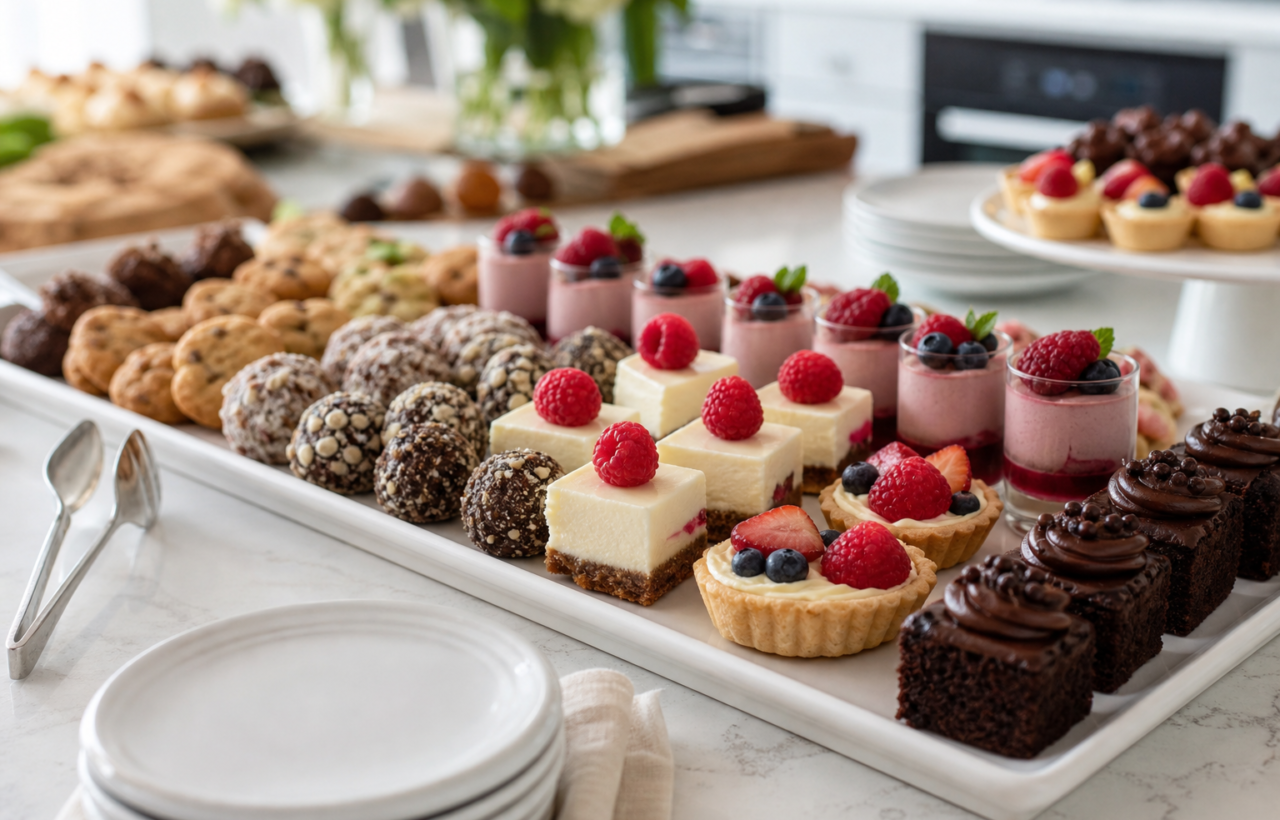
Bite-sized desserts work best when they solve two party problems at once: serving should be simple, and the tray should still feel varied. The two Mama of Five roundups approach that goal from different directions, with one focused on mini desserts in cups and the other on small pink desserts for party trays.
Taken together, they point to a practical dessert strategy: choose a few small-format sweets that differ by texture, richness, and serving temperature, then make as much as possible ahead without turning the tray into a last-minute decorating project.
Start With Format Before Choosing Flavors
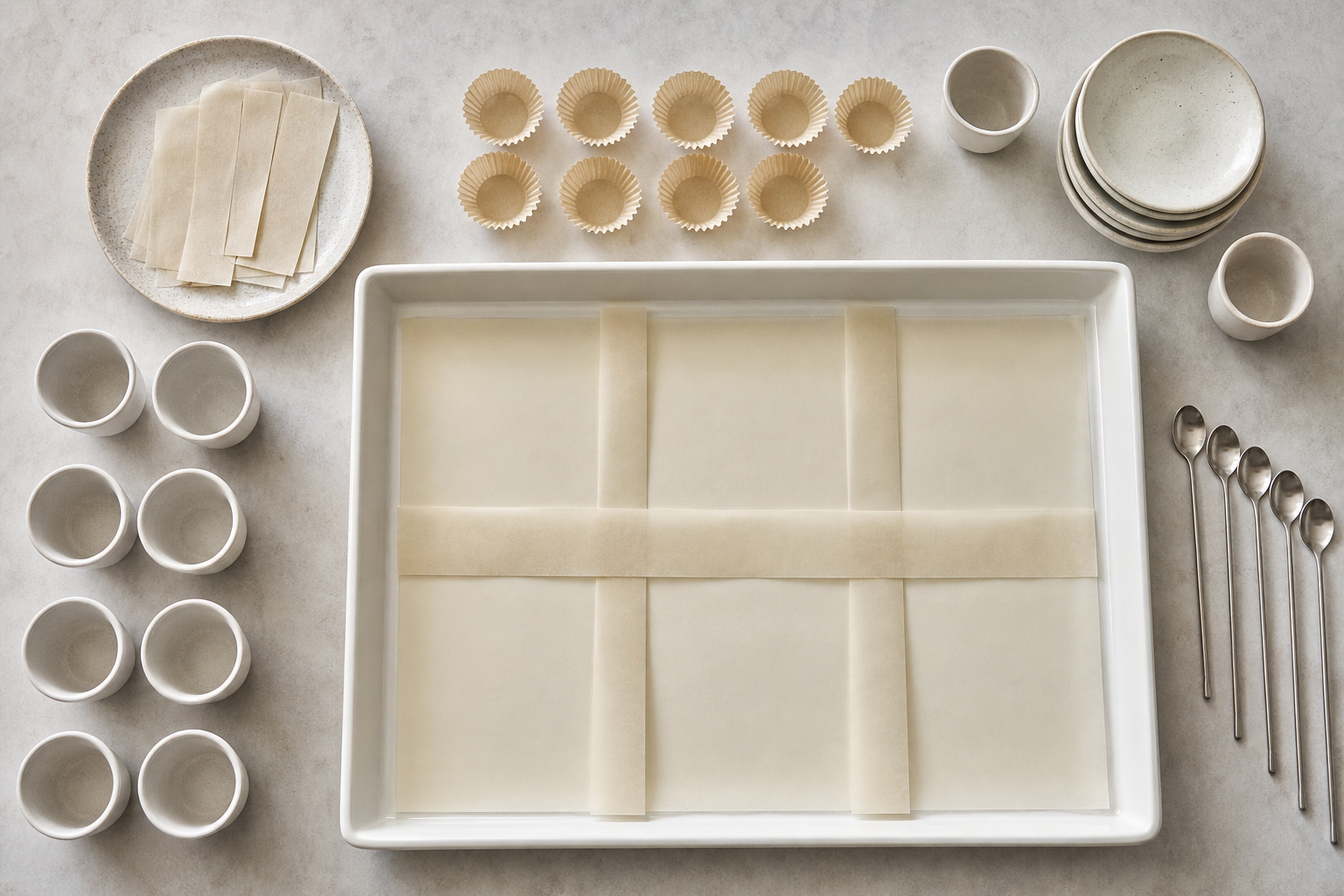
The cup-dessert source reported that mini desserts in cups are useful because they are already portioned, can be assembled ahead, and reduce the need for slicing, scooping, or plating at serving time. Its examples include parfaits, cheesecakes, mousses, fruit options, chocolate flavors, and coffee-inspired choices.
The pink-dessert source approached the same party need through bite-sized tray items. It reported a list centered on small pink desserts such as pink vanilla cake pops, cheesecakes, truffles, cookies, and both baked and no-bake sweets. In that version, the tray is unified by color rather than by container.
That difference matters for planning. Cup desserts are strongest when neat portions and chilled layers are the priority. Bite-sized tray desserts are stronger when guests are mingling and can pick up a cookie, truffle, or cake pop without needing a spoon. A balanced make-ahead spread can use both ideas, but it should not require every dessert to be built the same way.
Use Variety to Avoid a Repetitive Sweets Tray
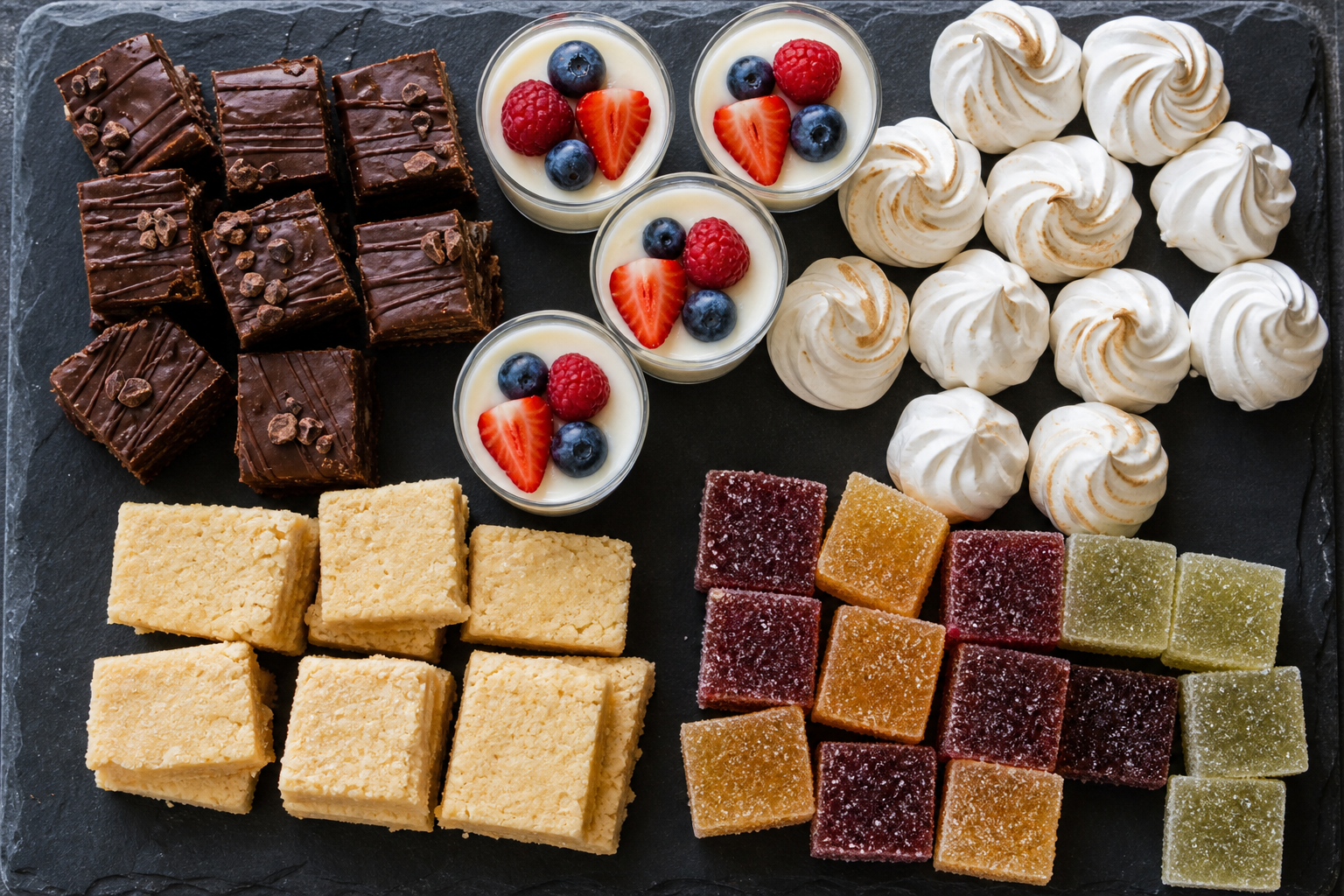
Both sources emphasize small party desserts, but they cover different kinds of variety. The cup-dessert source reported fruit, chocolate, and coffee flavors, while the pink-dessert source reported cake pops, cheesecakes, truffles, cookies, and other baked or no-bake treats. The useful synthesis is that a tray needs contrast in more than one way.
A host does not need many desserts if each one has a distinct role. A fruit-forward cup can make the tray feel lighter. A chocolate or truffle-style option can cover the richer end. A cookie or cake-pop item can give guests something sturdy and familiar. A cheesecake or mousse cup can add a creamy, chilled option without requiring a full cake.
- Key takeaways: Build around contrast, not quantity.
- Use cups when portion control, layers, or chilled serving matter.
- Use tray bites when guests need easy, self-serve sweets.
- Choose a mix of cake-like, creamy, crunchy, fruity, and rich options where possible.
- Let a color theme support the spread, but do not let it replace texture and flavor variety.
Make-Ahead Does Not Mean Assemble Everything Early
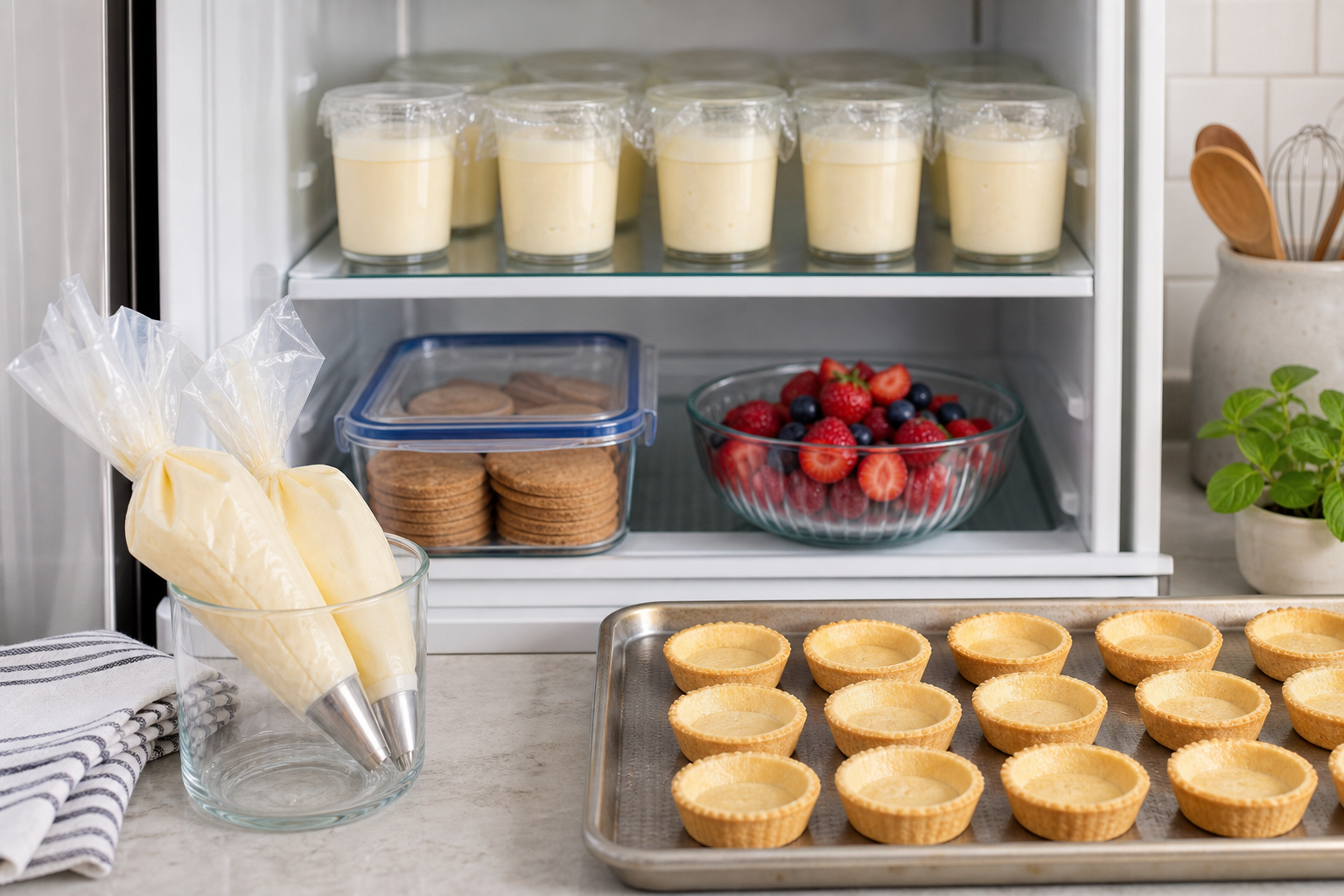
The cup-dessert source reported that many of the desserts it described are no-bake and suitable for making ahead. The pink-dessert source similarly noted quick preparation and uncomplicated ingredients in its party-focused collection. Those are helpful signals for hosts, but make-ahead planning still depends on how each dessert holds once assembled.
In general party planning terms, creamy desserts and layered cup desserts often benefit from chilling, while crisp toppings and delicate decorations may be better added closer to serving. The cup-dessert source specifically raised the planning issue that crunchy toppings and fruit components can change after sitting, even though the supplied material did not provide exact timing for any individual recipe.
The pink-dessert source also points to a useful workload strategy: mix baked and no-bake choices so everything does not compete for the same oven, refrigerator, or finishing time. A tray built entirely from chilled items can create storage pressure. A tray built entirely from decorated bites can create finishing pressure. Combining formats spreads the work out.
How to Build the Tray Without Overcomplicating It
The strongest plan is to select a small number of roles rather than a long list of recipes. Based on the two sources, a practical tray could include one cup dessert, one cake-like bite, one creamy item, and one sturdier baked item. That reflects the cup source’s emphasis on parfaits, cheesecakes, and mousses, while also using the pink source’s examples of cake pops, truffles, and cookies.
- Choose the serving style first: cups for spoonable desserts, tray bites for finger-food sweets, or a combination of both.
- Pick two or three flavor directions instead of trying to cover every possible preference.
- Include at least one sturdier item, such as cookies, if the dessert table will sit out for guests to browse.
- Reserve chilled cups or cheesecake-style items for the desserts that benefit most from individual portions.
- Add visual cohesion through a shared color, topping, or presentation detail only after the textures are varied.
This approach also keeps the pink-theme idea in proportion. The pink-dessert source reported that a shared color can make a party tray feel intentional, but the broader lesson is that visual cohesion works best when the desserts still eat differently from one another.
When Cups Beat Bites, and When Bites Beat Cups
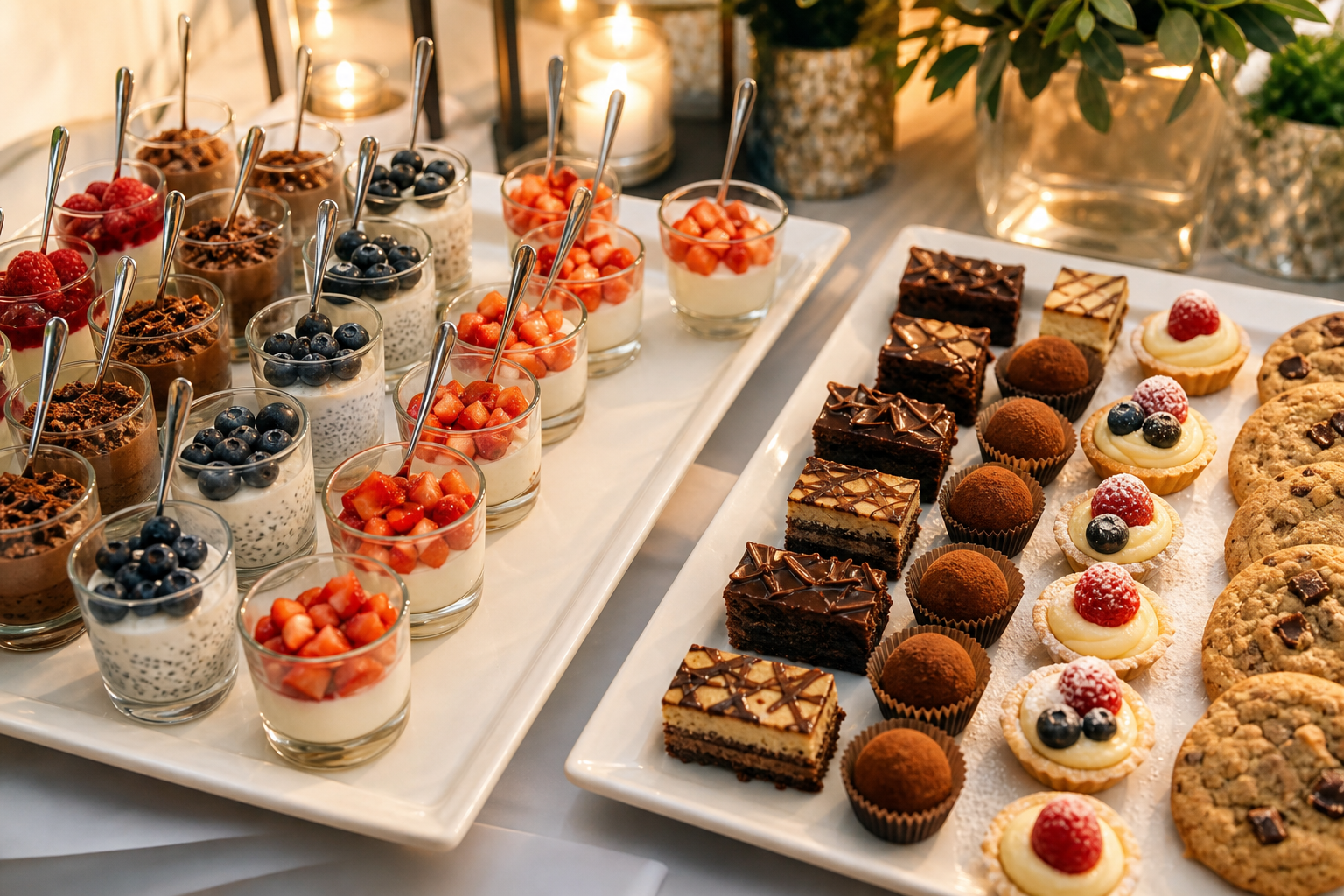
Mini cups are the better choice when the dessert depends on layers, soft texture, or a controlled portion. The cup-dessert source reported parfaits, cheesecakes, and mousses as examples, and those formats naturally suit spoonable serving. Cups also help keep different flavors separate, which is useful when offering fruit, chocolate, and coffee-style options together.
Bite-sized tray desserts are the better choice when guests are standing, talking, or returning to the dessert table more than once. The pink-dessert source’s examples, including cake pops, truffles, cookies, and small cheesecakes, fit that kind of grazing format. They also allow a color theme to carry across different desserts without making every item the same.
The most useful party tray may use cups sparingly rather than making them the entire dessert table. A few chilled cups can add polish and portion control, while cookies, truffles, or cake pops keep the table easy to navigate. That balance gives guests choice without turning the host’s prep list into a collection of separate mini projects.
A Flexible Template for the Next Dessert Table
The two source roundups do not provide enough detail in the supplied material to compare exact yields, storage windows, or ingredient lists. What they do provide is a clear planning framework: small desserts are most useful when they simplify serving, offer texture variety, and can be prepared without crowding the final hour before guests arrive.
For future parties, the better question is not how many mini desserts can fit on a tray. It is which few will make the table easier to serve, more interesting to eat, and realistic to prepare ahead.
References
- Mama of Five — Mini Desserts in Cups for Simple Make-Ahead Parties
- Mama of Five — Small Pink Party Desserts for a Bite-Sized Sweets Tray