Safe sleep advice can feel most urgent at the exact moment parents are most tired: when a baby finally settles and everyone wants rest. The practical question is simple, though: what position should a baby be placed in, and what should be kept out of the sleep space?
Drawing on guidance reported by Newton Hush, this article separates the core rule from the common exceptions parents wonder about, including spit-up, rolling, stuffy noses, swaddles, pillows, blankets, and car seat naps.
Key takeaways
- According to Newton Hush, babies should be placed flat on their backs for sleep until at least their first birthday.
- Stomach, side, and inclined sleep positions carry avoidable breathing or suffocation risks for infants.
- Once a baby can roll independently, parents should still start sleep on the back, but do not necessarily need to reposition the baby after rolling.
- A clear crib matters as much as body position: no pillows, blankets, bumpers, stuffed toys, positioners, or rolled blankets for young babies.
The safest starting position is flat on the back
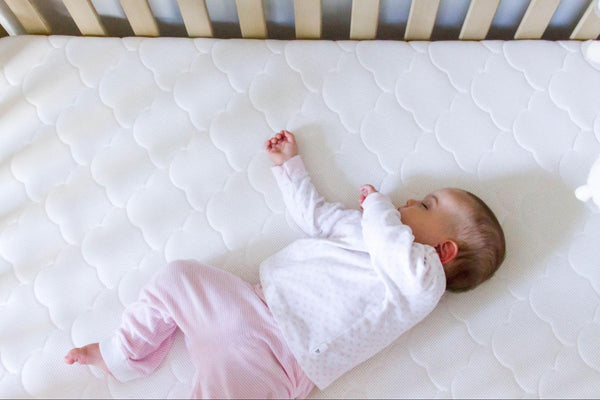
Newton Hush identifies back sleeping as the main safe-sleep rule for babies, citing the American Academy of Pediatrics recommendation that babies sleep on their backs until at least age one. That applies to overnight sleep and naps.
One common worry is that a baby might spit up and choke while lying on the back. Newton Hush explains the opposite concern: when a baby is on the back, the windpipe sits above the esophagus, so spit-up is less likely to enter the airway. The article frames back sleeping as the default, not a special setup only for certain babies.
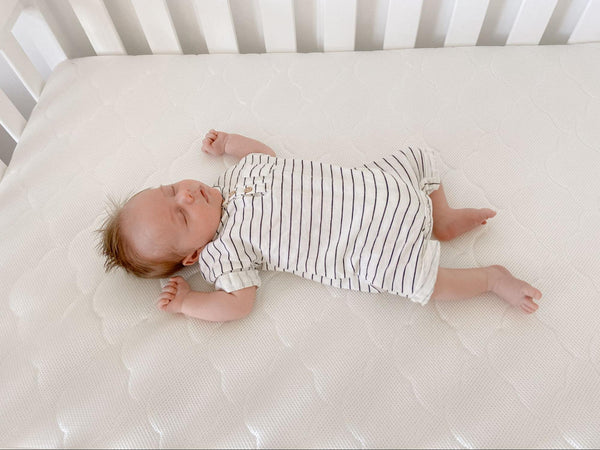
The important distinction is between placing a baby down to sleep and what happens after the baby develops more mobility. For a baby who is not yet rolling, the parent controls the starting position, and Newton Hush says that position should be flat on the back.
Why stomach, side, and inclined sleep are different risks
The positions parents sometimes use to solve one problem can create another. Stomach sleeping may look comfortable, but Newton Hush reports that babies sleeping on their stomachs are more likely to rebreathe exhaled air, which has less fresh oxygen and more carbon dioxide. The source also notes that babies may sleep more deeply on their stomachs, which can make it harder for them to wake if breathing becomes difficult.
Side sleeping can seem like a compromise, but it is not a stable position for a young baby. Newton Hush warns that a baby placed on the side can tip forward onto the stomach before having the strength or coordination to move back. Positioners, rolled blankets, and similar props are not a safe workaround because they add loose objects to the crib.
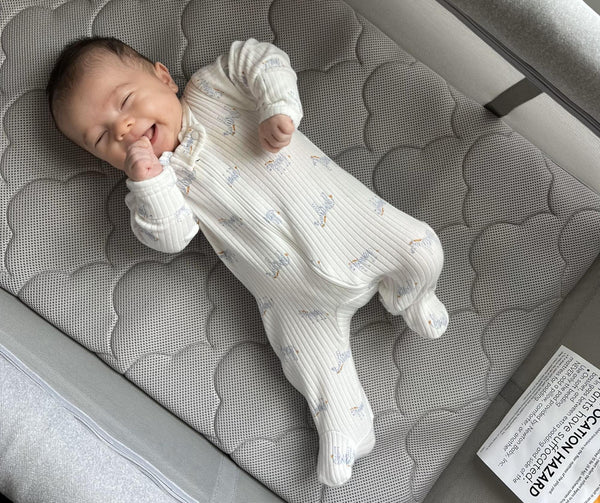
Inclined sleep has its own problem. Newton Hush says babies can fall asleep in car seats, swings, or bouncers, but sleeping at an angle can lead to positional asphyxia if the head slumps forward and narrows or blocks the airway. Those devices may be useful when a baby is awake and supervised, but the source recommends a firm, level surface for sleep.
Rolling changes monitoring, not the starting rule
Newton Hush says rolling can begin around four months, and it often alarms parents who put a baby down on the back and later find the baby on the stomach. The source treats rolling as a developmental milestone because it reflects growing neck and core strength.
The rule does not become stomach placement. Parents should still put the baby down on the back. But once the baby can roll independently, Newton Hush says parents do not have to keep turning the baby back over during the night.
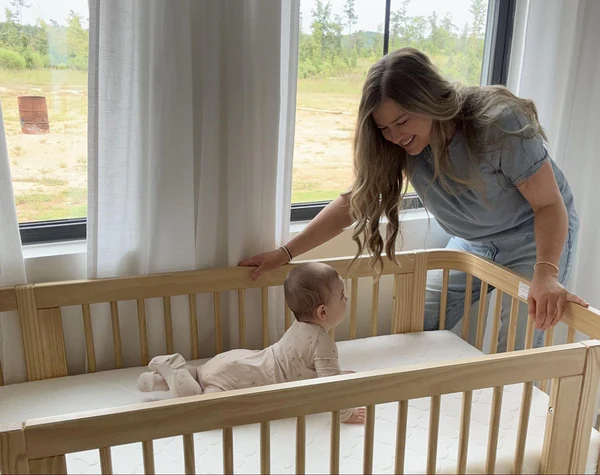
Rolling also changes swaddling. According to the source, the first sign of rolling, whether during sleep or awake time, is the point to stop swaddling and move to a sleep sack that leaves the arms free. That matters because a baby who rolls needs access to their arms and body movement.
The crib setup should not compete with the sleep position
A safe sleep position can be undermined by an unsafe sleep space. Newton Hush recommends keeping the crib bare, with a firm breathable mattress, a fitted sheet, and the baby. The source says pillows, blankets, quilts, bumpers, stuffed animals, positioners, and rolled blankets should stay out of the crib for babies under one, and notes that waiting until 18 months is even better for pillows and blankets.
For warmth, the source suggests swaddling only before rolling signs appear, or using a properly sized sleep sack that allows free movement. For room comfort, Newton Hush gives a temperature range of 68 to 72 F and says white noise should be kept at or below 50 dB, with the machine at least 7 feet from the crib.
The same article also distinguishes bed-sharing from room-sharing. It advises against bed-sharing while describing room-sharing, with a crib or bassinet near the parents bed for the first six months, as helpful for feeding access and reassurance.
Common worries: congestion, crying, and comfort objects
When a baby has a stuffy nose, Newton Hush says parents should not prop the baby up with a pillow. The source explains that an inclined position can let a young babys head fall forward and compromise the airway. Instead, it suggests saline drops and gentle clearing with a bulb syringe before bedtime.
If a baby protests back sleeping, the article recommends consistency rather than switching positions. A calming routine, such as a bath, gentle infant massage, or lullaby, may help the baby settle while keeping the sleep surface flat and clear.
The simplest safe-sleep checklist is also the hardest to overcomplicate: place the baby on the back, use a firm and level sleep surface, keep loose items out, stop swaddling when rolling starts, and treat car seats, swings, and bouncers as awake-time gear rather than routine sleep spaces.
Inspired by this post on Newton Hush.