
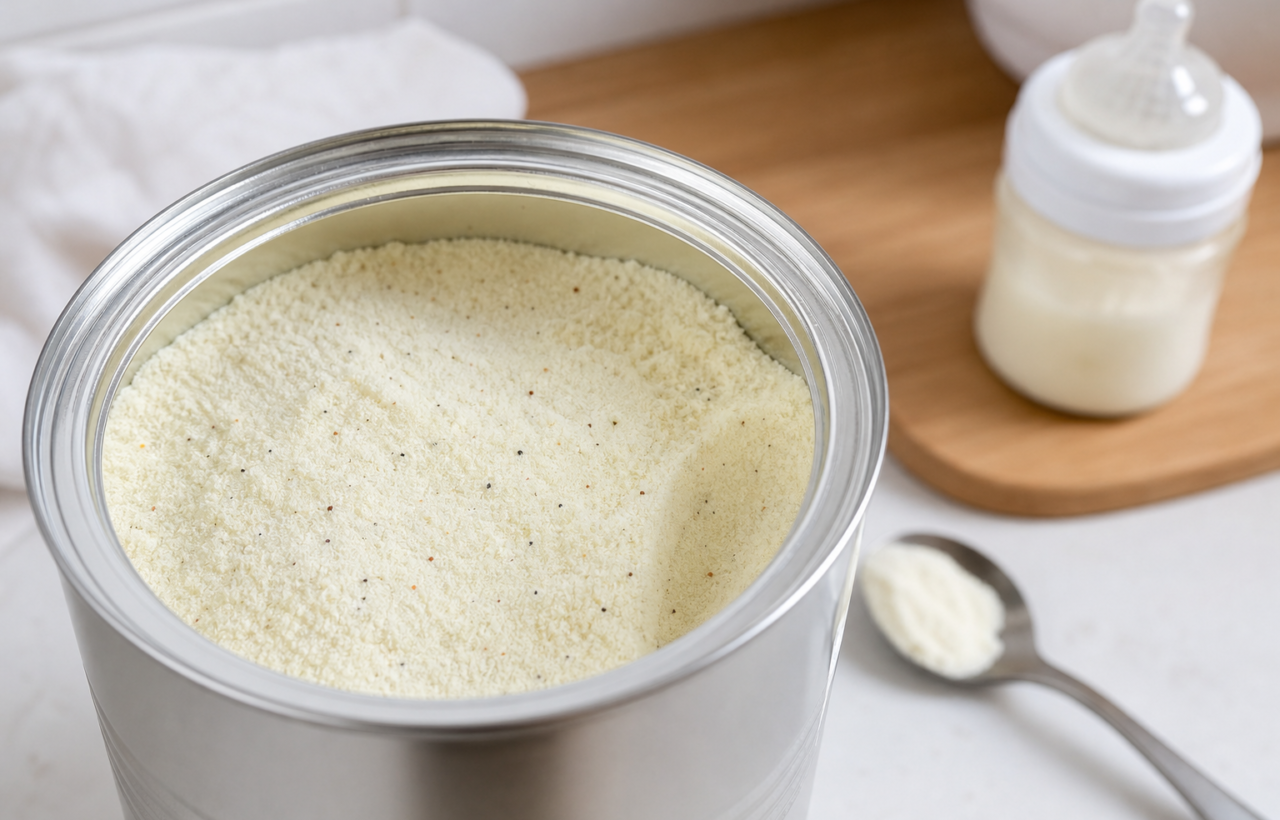
A small brown or black dot in powdered formula can be unsettling, especially when it appears in a freshly opened can. The hibobbie Blog identifies many of these tiny flecks as caramelized particles, sometimes also called scorched particles.
This guide explains what those specks are, how the source says they form, what they may mean for safety, and when a parent should pause and contact the formula maker rather than guessing.
The quick read for parents
- According to hibobbie Blog, caramelized particles can look like brown specks, dark flecks, or black dots in powdered infant formula.
- The source describes them as a normal product variation that can form when formula ingredients are heated and dried during manufacturing.
- The source says these particles do not make formula unsafe and do not change nutrition, taste, or mixing performance when formula is prepared as directed.
- Parents should still contact the manufacturer if the formula smells unusual, the package is damaged, there is moisture inside, or the powder contains large, hard, or otherwise suspicious material.
What the specks are, according to the source
The source describes caramelized particles as small tan, brown, or black bits that can occasionally appear in powdered infant formula. They may stand out because formula powder is usually much lighter in color, but visibility alone is not the same as a safety problem.
In plain terms, the source compares the process to browning that can happen when milk or sugar is heated during cooking. Formula production also involves heat. As liquid ingredients are transformed into shelf-stable powder, naturally occurring milk sugars and proteins may toast slightly in tiny amounts.
That matters because a tiny dark fleck is not automatically a sign of spoilage, contamination, or a manufacturing defect. The distinction is important: a normal variation may be safe to use, while damaged packaging, moisture, odor, or foreign objects call for a different response.
Why they do not appear in every can
One practical frustration is inconsistency. A parent may see a few specks in one can and none in the next, even when the product is otherwise the same. hibobbie Blog says that can happen because the particles form naturally during production and may vary with ingredient sourcing and processing conditions.
The source also notes that caramelized particles can appear in both opened and unopened cans because they are created during manufacturing, not because a properly sealed can has later been stored in a particular way. Organic and non-organic formulas can both show the same type of particle, according to the article, because the issue relates to how ingredients respond to heat rather than whether the formula is organic.
Safety, nutrition, and mixing
The central safety point from hibobbie Blog is direct: caramelized particles, as described in the article, do not make infant formula unsafe. The source also says they do not change the formula’s nutritional profile, create a noticeable taste change, or interfere with mixing when the product is prepared according to directions.
The article adds one simple observation parents can use: if a speck crushes easily into a fine powder with a clean spoon or clean fingers, it is likely a caramelized particle. That is not a substitute for contacting the manufacturer when something seems wrong, but it can help distinguish a powdery toasted speck from a hard foreign object.
Some particles may also break down or dissolve after formula is prepared, especially with warm water, according to the source. If a small speck does not fully dissolve but otherwise fits the description of a caramelized particle, the source still frames it as a harmless part of the powdered formula.
When to stop and ask the manufacturer
Reassurance has limits. The most useful rule is to look at the whole can and the whole serving, not only the color of one dot. The source recommends contacting the formula manufacturer or customer support if anything about the product seems off.
- An unusual smell or off odor from the formula
- Damage to the can, lid, or safety seal
- Moisture inside the packaging
- Large or hard foreign objects in the powder
- Significant discoloration or unusual clumping
- Anything else that does not seem right
That advice is especially useful because parents are not expected to diagnose every powder variation at home. If the issue is bigger than a few tiny, crushable specks, or if the packaging raises questions, the manufacturer is the right place to ask.
How the source frames quality control
hibobbie Blog also places caramelized particles in the broader context of formula oversight. The source notes that infant formula is regulated by the U.S. Food and Drug Administration and describes safety and quality testing as part of the process before formula reaches families.
The article includes brand-specific claims about Bobbie’s own quality program, including additional third-party testing and certifications connected to Clean Label Project, Sorette, and Light Labs. It also says each Bobbie batch undergoes more than 2,000 safety and quality checks and that Bobbie manufactures in its own U.S.-based facility.
For parents reading this more generally, the takeaway is not to ignore concerns, but to sort them carefully. A few tiny caramelized particles are described by the source as a normal production-related variation. Odor, moisture, damaged seals, clumping, or hard material are different signals and deserve follow-up before another bottle is prepared.
Inspired by this post on hibobbie Blog.