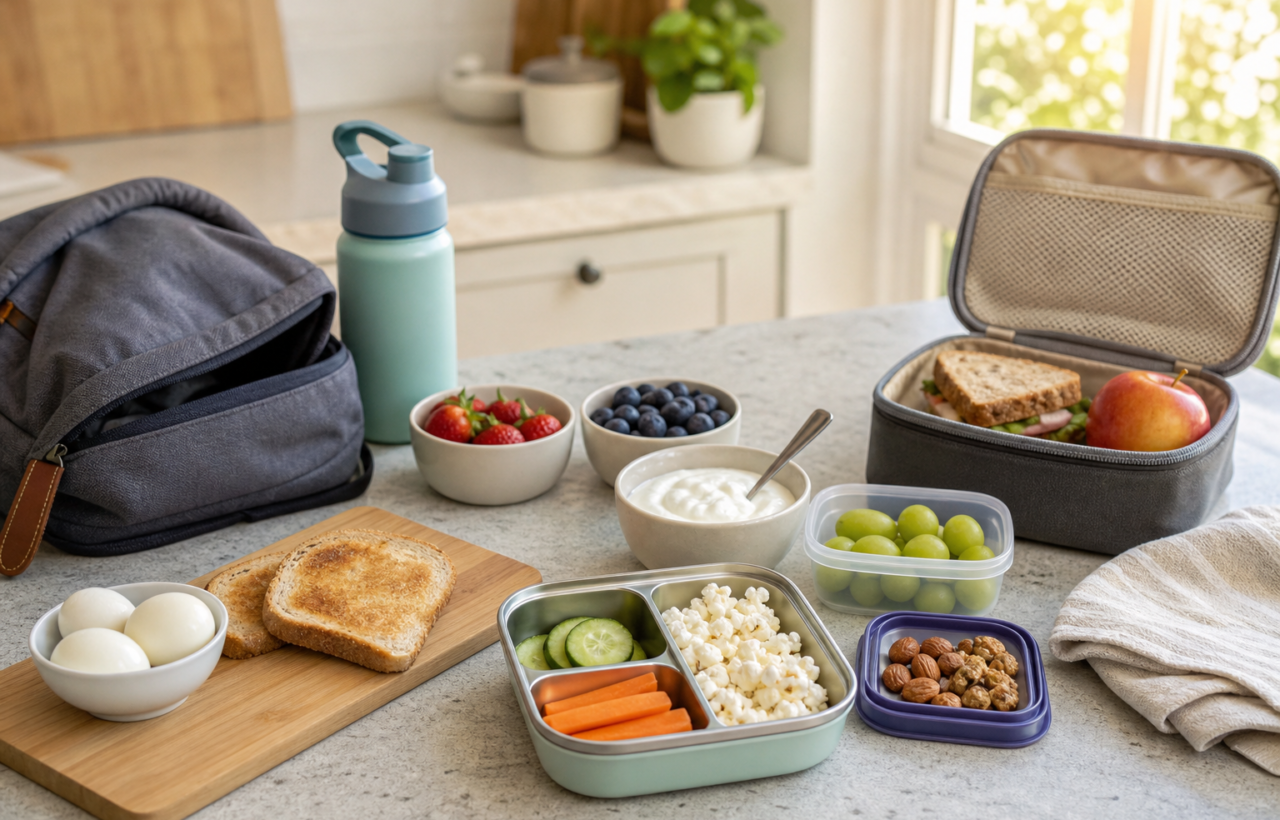
School-morning food works best when it is treated as a system, not a daily creativity test. Across the three diapr.ai source articles, the shared pattern is practical: families need meals that are fast, familiar, and flexible enough to survive tired mornings.
The synthesis is not that every family needs more recipes. It is that breakfast, snack prep, and lunch packing become easier when adults reduce decisions, reuse foods that already work, and give children limited, manageable ways to participate.
Start With the Morning Bottleneck
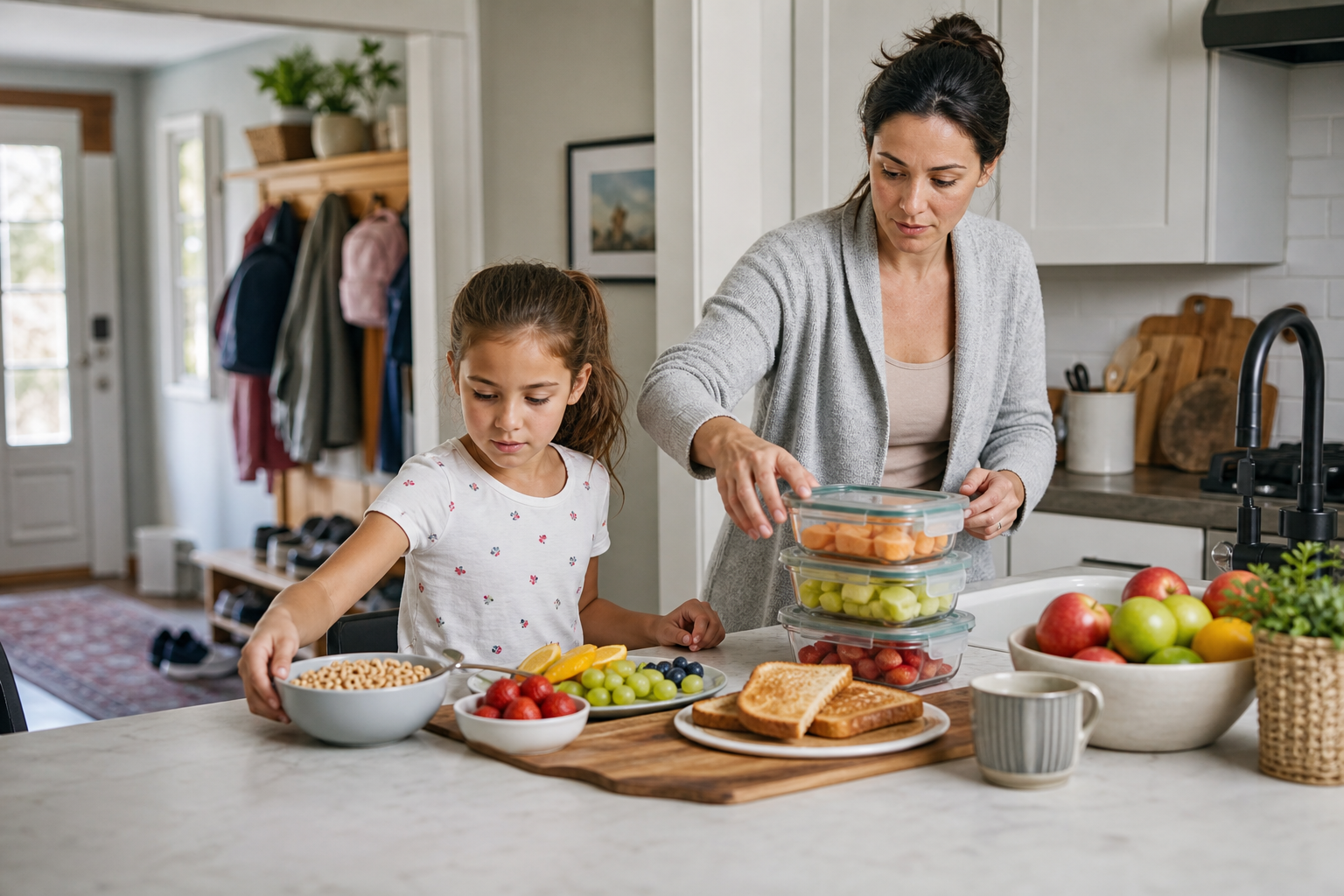
The breakfast source reported a set of 21 quick school-morning breakfast ideas, but its more useful implication is that the real pressure point is not inspiration. It is the fixed deadline of the school day, combined with lunches, bags, forms, and children moving at different speeds.
That same time-pressure logic applies to lunch. The leftover-lunch source argued that packing is easier when the starting point is a meal the child has already accepted, rather than a new idea invented in the morning. Together, the breakfast and lunch sources point toward the same operating principle: decide less when the clock is already tight.
A practical school-morning food plan can therefore be built around defaults. Breakfast can come from a small rotation. Lunch can begin with dinner portions that traveled well before. Snacks can rely on simple assembly rather than elaborate preparation. The goal is not sameness for its own sake; it is fewer fragile decisions before the day has even started.
Build Around Foods Children Already Recognize
The strongest overlap between the breakfast and leftover-lunch sources is familiarity. The breakfast source emphasized limited, repeatable choices rather than constantly changing the menu. The leftover-lunch source reported that dinner can become a stronger lunch candidate when the child ate it willingly at home.
This does not mean every accepted food should be packed or served again immediately. The leftover source added an important school-context filter: food that worked at dinner still has to work in a lunch box. Temperature, packaging, utensils, sauces, and whether the child can open the container all affect whether a familiar food remains usable away from home.
Breakfast has a similar constraint. A meal that is appealing on a weekend may not be realistic on a rushed weekday. The breakfast source framed the best options as easy to assemble, serve, and repeat. In practice, familiar food only helps if it also fits the setting where it will be eaten.
Use Participation Without Turning Food Into a Debate
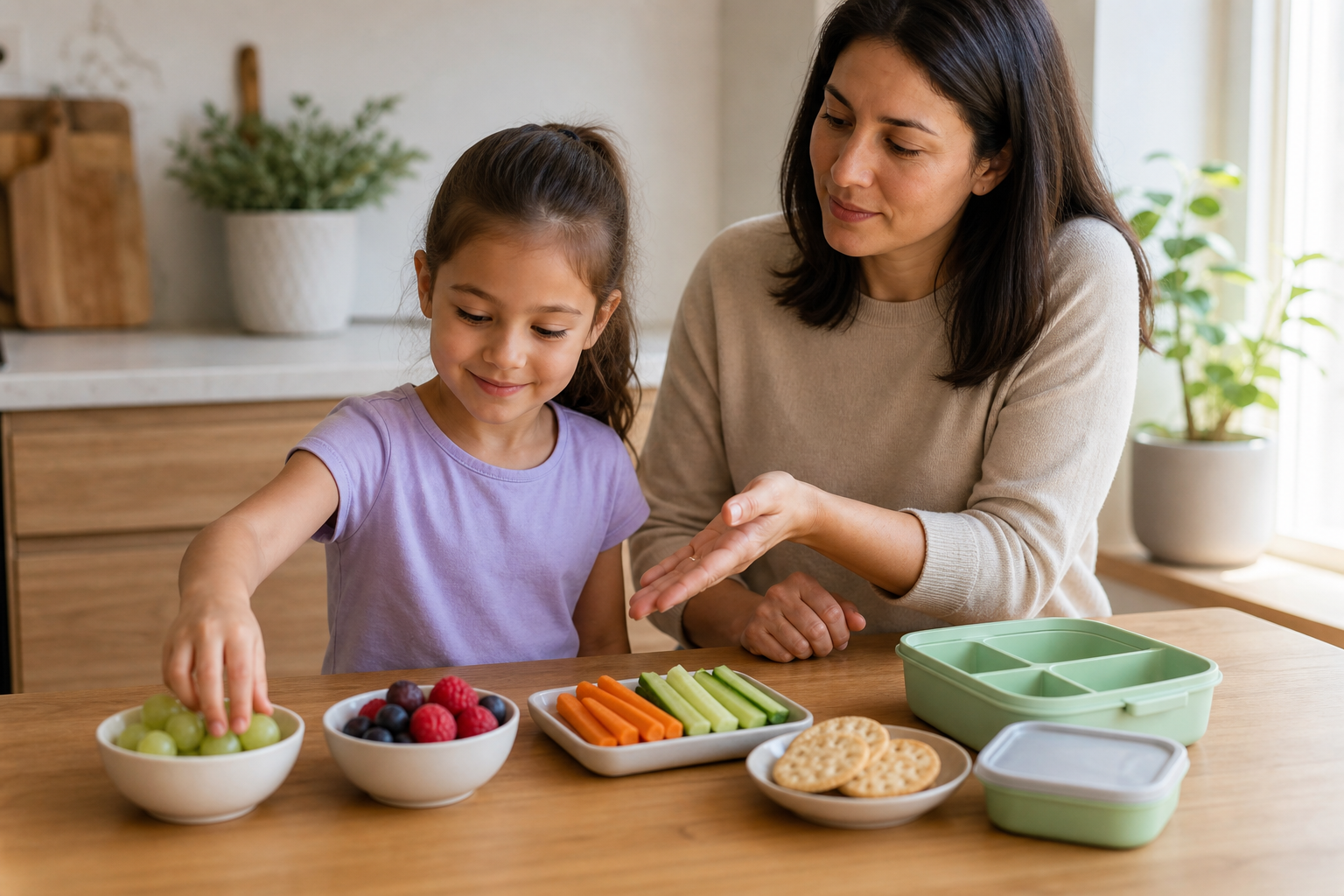
The snack-prep source contributed a different but compatible angle: children may be more open to trying foods when they help choose, assemble, or taste them. It did not claim that involvement guarantees acceptance. Instead, it framed participation as a low-pressure way to make foods feel less sudden and more ordinary.
That idea can support school-morning meals without handing children an unlimited menu. The snack source emphasized limited choices, such as choosing between two fruits, spreads, or toppings. This pairs well with the breakfast source’s focus on small rotations: children can have a real choice inside a structure adults can actually manage.
Participation also has a role in lunch prep. The leftover-lunch source noted that portioning can happen before cleanup, turning next-day lunch into a follow-through step rather than a separate planning task. For older children, an age-appropriate role might be choosing a familiar side or helping place components in a container they can open at school. The point is ownership at a useful scale, not a new negotiation every morning.
Think in Components Instead of Perfect Plates
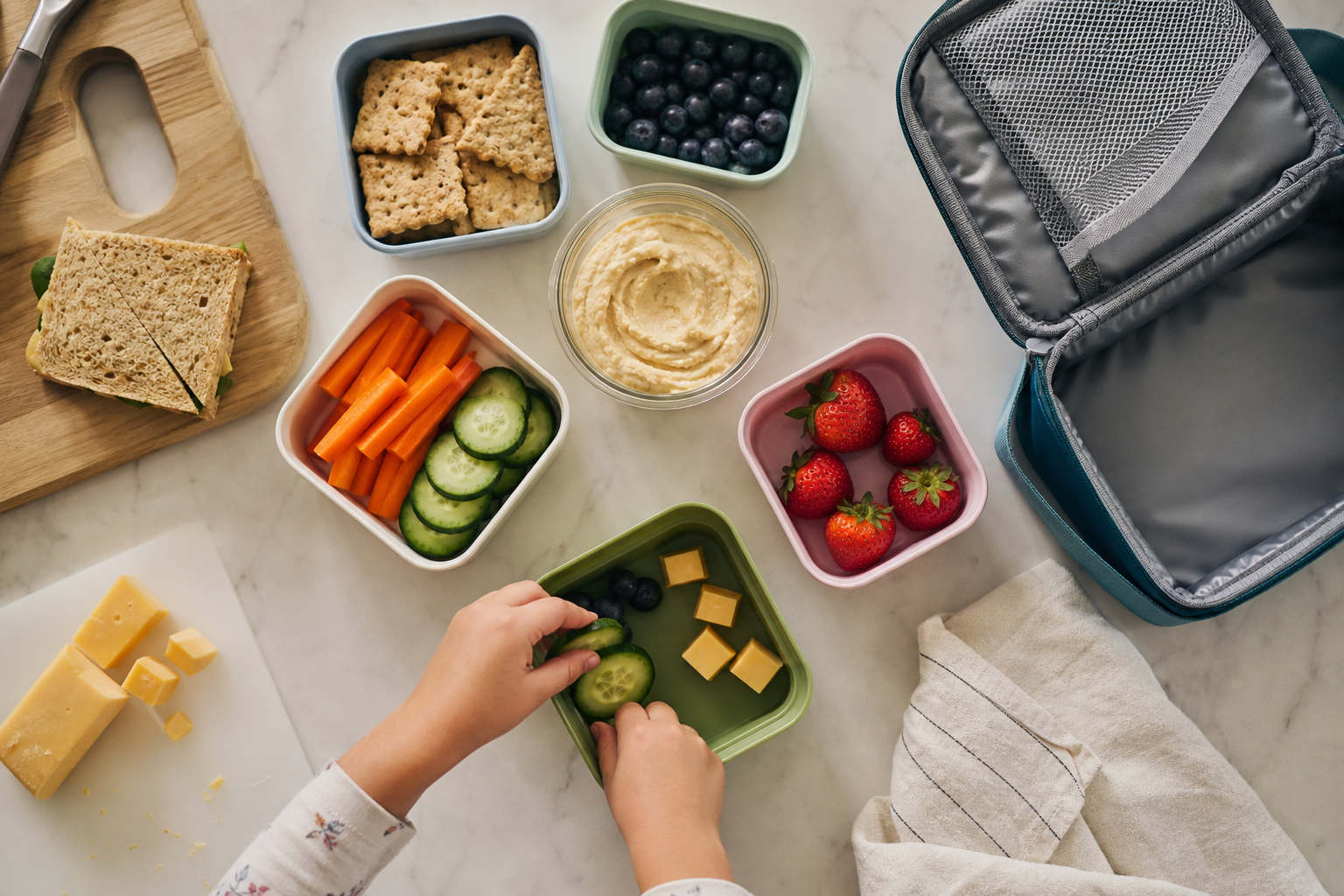
All three sources move away from the idea of a perfect school-day meal. The breakfast source favored a rotation that can flex depending on whether the morning is late, calm, grocery-stretched, or suited to simple assembly. The snack source favored small, realistic tasks and limited choices. The lunch source advised treating leftovers as components that can be simplified, separated, or paired with a reliable side.
This component mindset is useful because school food has to pass several practical tests. Can it be prepared quickly? Will the child recognize it? Can it be eaten in the time available? Does it hold up in the container? Does it avoid turning a busy morning into a search for missing ingredients?
Pantry thinking is part of that resilience. The breakfast source connected school-morning meals with pantry-friendly planning, while the lunch source described familiar add-ons such as fruit or crackers as ways to round out a smaller leftover main. The shared lesson is that dependable basics protect the routine when the week is uneven.
FAQ
What is the simplest way to reduce school-morning food stress?
Based on the sources, the most useful first move is to narrow the decision. A small breakfast rotation, a few reliable pantry options, and a habit of saving lunch-sized portions after dinner can reduce the number of choices adults and children face in the morning.
Are leftovers always a good school lunch?
No. The leftover-lunch source reported that leftovers work best when the child accepted the dinner version and when the food still makes sense in a school setting. Containers, temperature, utensils, sauces, and school food rules all matter.
How much choice should children get?
The snack-prep source supported limited choices rather than open-ended menu planning. Offering two realistic options can give children ownership while keeping breakfast, snack prep, or lunch packing manageable for adults.
The useful next step is to watch what actually comes home eaten, what creates delays, and what children can help manage without turning the routine into a production. Over time, that evidence can shape a short list of school-day meals that are ordinary in the best way: repeatable, accepted, and ready when the morning is not.
References
- diapr.ai Blog – A Practical School-Morning Breakfast Rotation for Families
- diapr.ai Blog – Kid-Friendly Snack Prep That Keeps Healthy Eating Low-Key
- diapr.ai Blog – A Practical Way to Turn Leftovers Into Kids’ Lunches