School style is often treated as a shopping problem, but the sources point to a wider family question: how can children feel comfortable, expressive, and ready for the school day while still working within rules, budgets, and daily routines?
Taken together, the articles suggest a practical middle path. Clothing, uniforms, hair, nails, and salon choices can all support self-expression, but they work best when children get real choices inside clear limits.
Style Works Best When It Starts With The School Day
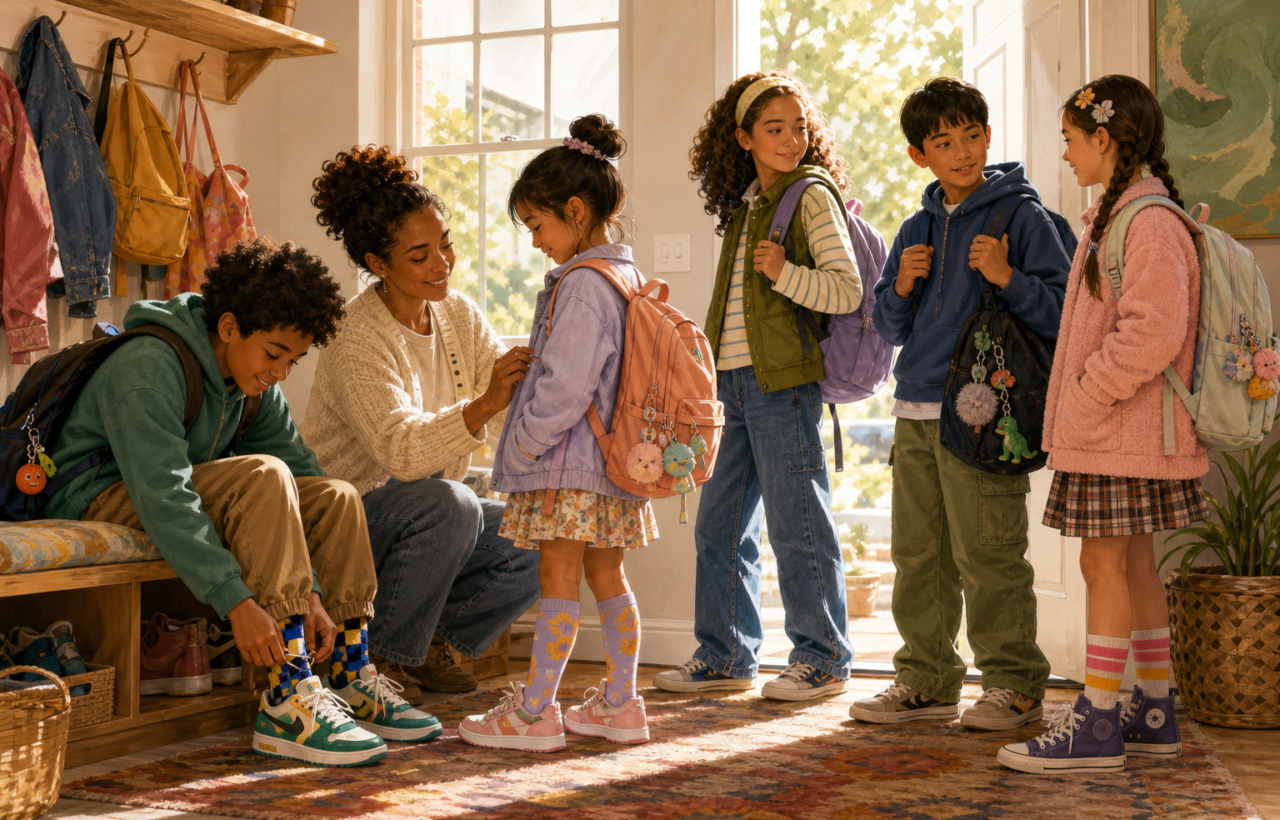
The back-to-school planning source frames style as a mix of clothes, shoes, hair, nails, school expectations, shifting tastes, and family budget. Its most useful point is that families should begin with the reality of the day: sitting in class, moving between activities, handling weather, following dress expectations, and getting out the door without turning every morning into a negotiation.
That connects closely with the article on clothing and confidence, which reports that what children wear can affect mindset. The synthesis is not that a certain outfit creates confidence. It is that clothing can either reduce friction or add it. A child who can sit, run, focus, and feel like themselves has one less distraction to manage.
This is where parent judgment and child agency can work together. Adults can set the filters around weather, school rules, laundry, budget, and comfort. Children can still choose colors, combinations, accessories, or favorite pieces inside those filters. The choice is bounded, but it remains meaningful.
Uniforms Narrow The Options, Not The Conversation
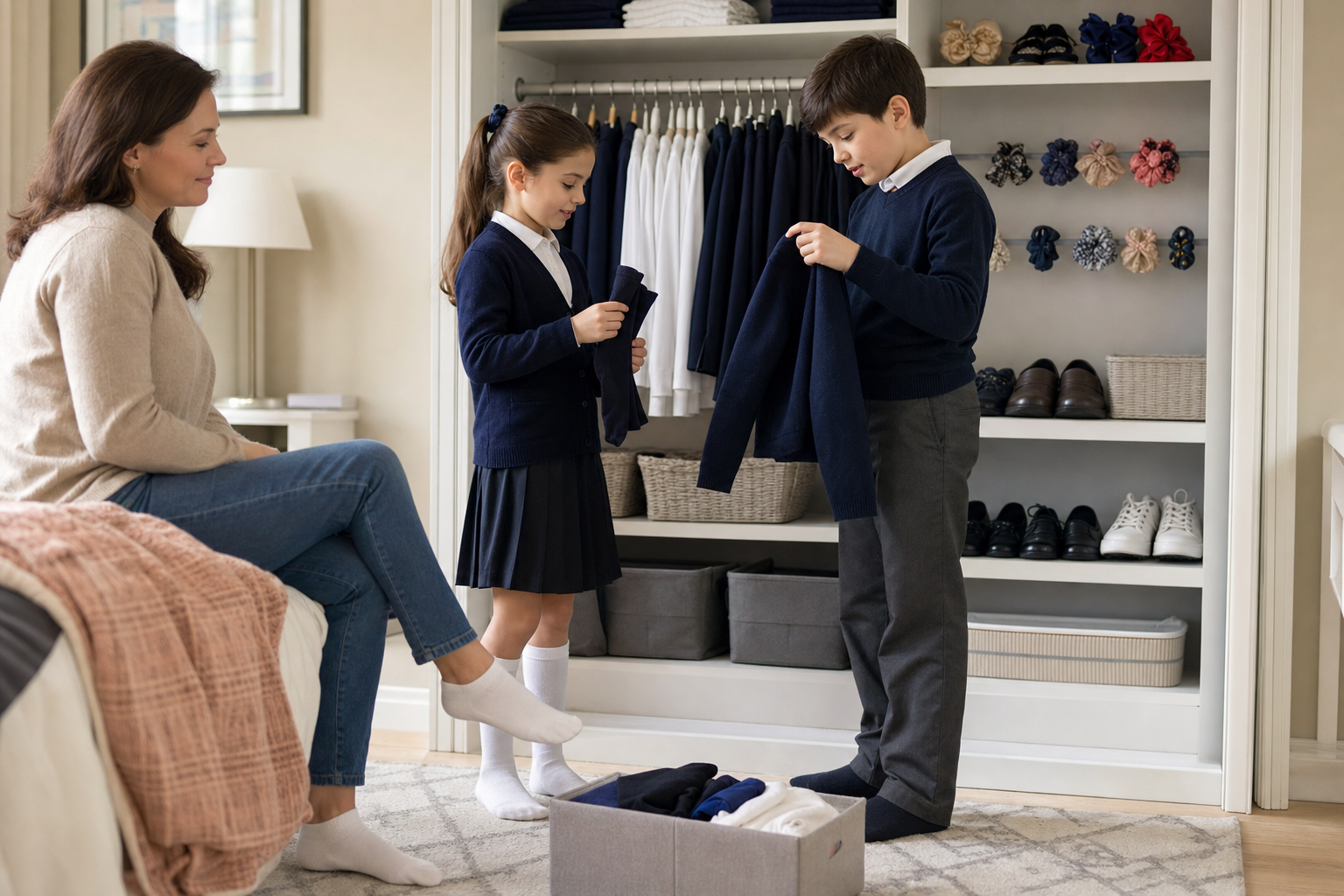
The uniform-focused source adds an important constraint: some children do not have much freedom in the main outfit at all. It reports that policies may address colors, shoe styles, jewelry, hair accessories, sock length, and visible patterns, and it names jewelry, watches, hair accessories, belts, socks, and shoes as possible personalization points when school rules allow them.
That makes the rulebook the starting point, not the ending point. Once a family knows what is allowed, children can be offered a small set of compliant choices. A watch in a preferred color, an approved hair accessory, comfortable shoes, or socks that fit the policy can help a uniform feel less imposed without creating a dress-code problem.
The same comfort standard still applies. Shoes, socks, and belts are not just decorative. The source specifically treats them as practical pieces that need to hold up through the day. A stylish uniform add-on that pinches, slips, or distracts is unlikely to support either confidence or self-expression for long.
Hair Choices Can Be A Low-Stakes Test Of Autonomy
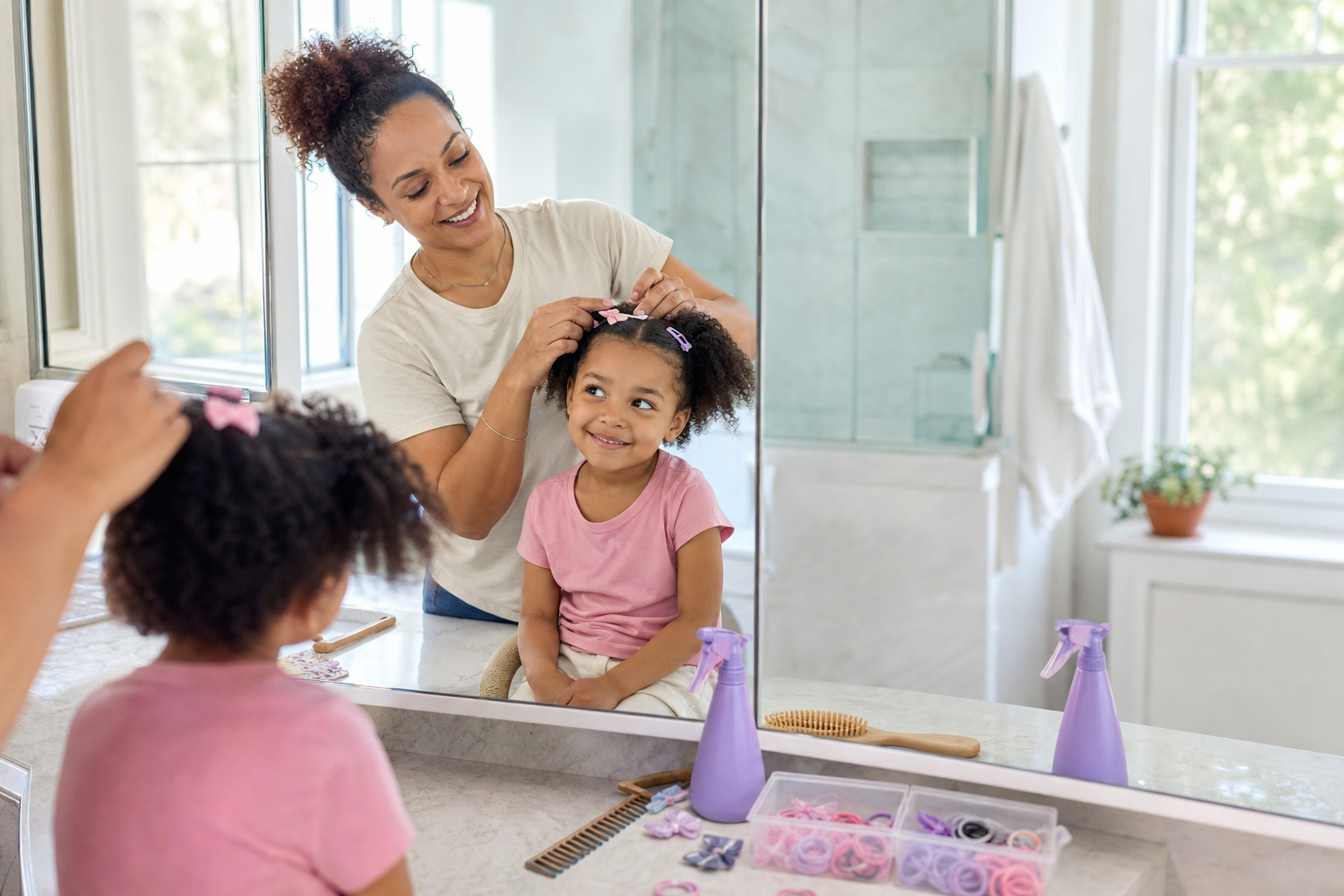
The article on children leading their own hair choices gives the topic more emotional depth. It reports that hair can connect to comfort, identity, and self-expression, including gender identity, while also noting that not every haircut request has to be treated as a major identity statement.
Across the sources, hair stands out because it is visible and personal, but also usually manageable within family limits. A child asking for a different cut, length, color, or style may be asking for novelty, easier care, recognition, or a closer match between how they feel and how they are seen. The most constructive first response is curiosity rather than dismissal.
The hair-autonomy source also draws a useful distinction between real limits and reflexive discomfort. Cost, timing, hygiene, upkeep, and school rules are concrete boundaries. Worries about relatives’ opinions or inherited ideas about how a child should look may deserve a different kind of reflection. The parent does not have to say yes to everything, but a clear reason is different from a vague no.
Chemical And Salon Choices Need A Higher Bar
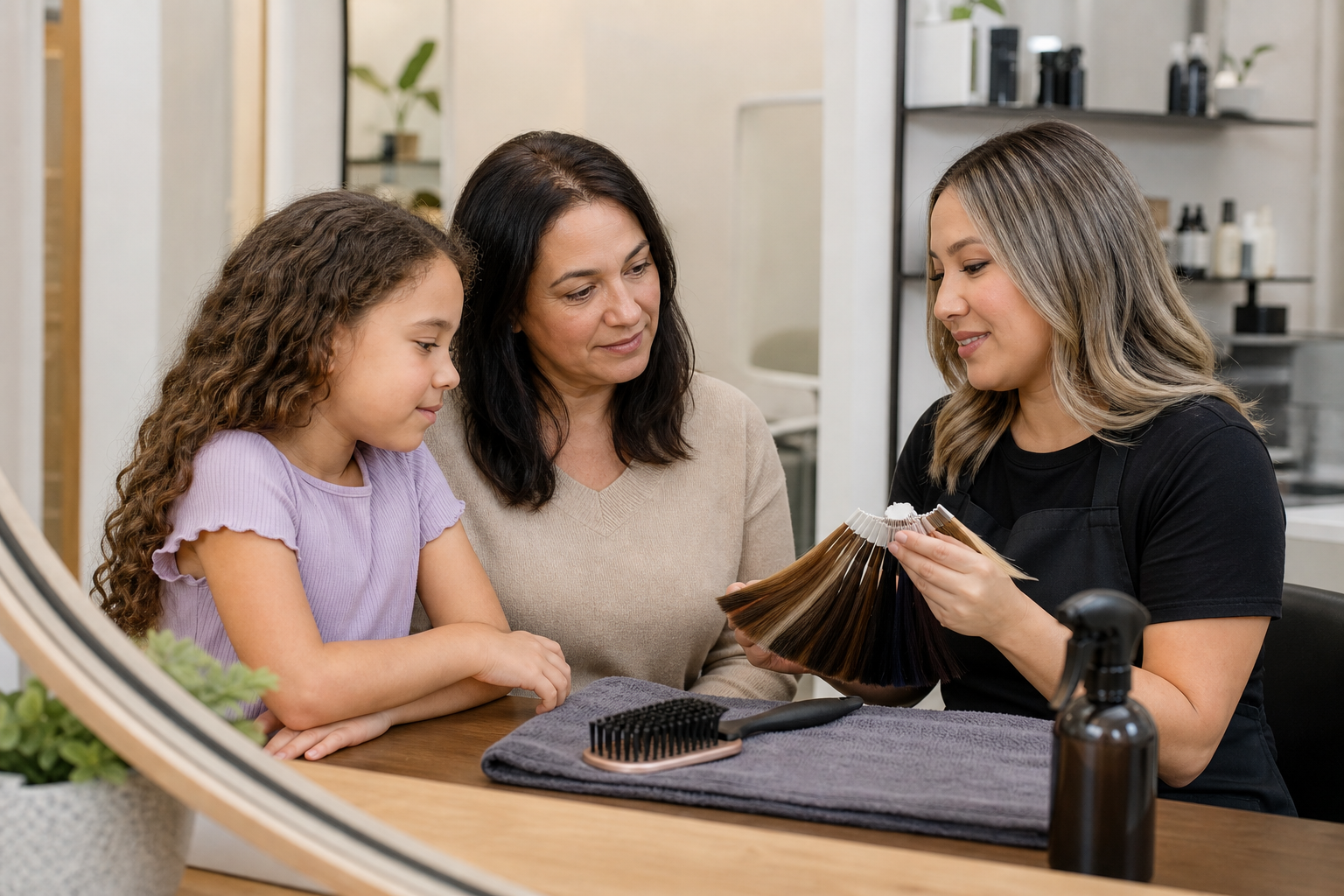
The curly perm source shows why not all style decisions carry the same level of risk or responsibility. It presents teen curly perms as a way to explore texture, volume, and self-expression, but it also emphasizes questions about hair suitability, cost, timing, salon experience, expectations, and aftercare before booking.
That is a useful contrast with lower-stakes choices such as socks, accessories, or a reversible styling change. A chemical salon service asks more of the teen and the family. The source reports that parents should ask whether a curly perm is suitable for the teen’s hair type, how much it costs, how long it takes, and whether the salon has experience with teen hair and chemical treatments.
The larger principle is proportionality. The more a choice affects hair condition, money, time, maintenance, or safety, the more specific the conversation should become. A teen can still have ownership, but ownership should include understanding aftercare, realistic results, and the possibility that waiting may be the better decision.
Limits Are More Respectful When They Are Specific
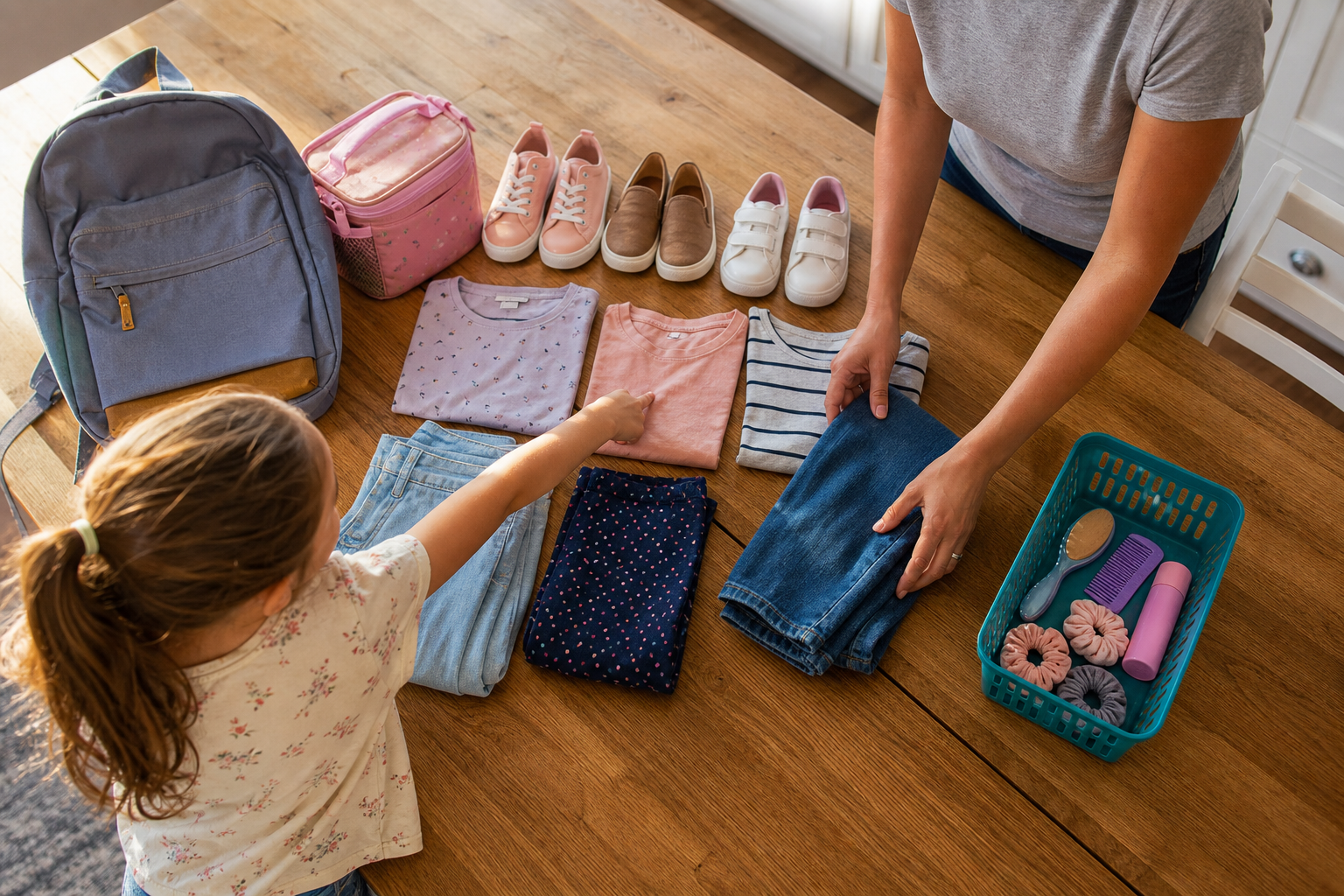
Several sources converge on the same parenting pattern: children benefit from having a voice, and adults still need to set limits. The quality of those limits matters. A budget limit, dress-code limit, salon-safety concern, or upkeep requirement is easier for a child to understand than a broad rejection based on taste.
The clothing-confidence source warns against making style another standard children must meet. That point matters across the whole topic. The goal is not to teach children that looking a certain way gives them value. It is to help them notice comfort, function, self-knowledge, and appropriate self-expression.
A practical family approach is to treat style choices as supervised decision practice. Children can explain what they like, compare options, work within constraints, and live with maintenance requirements. Adults can protect the parts that genuinely need protecting without making every preference feel like a character judgment.
FAQ
How much choice should children have over school clothes?
The sources support limited, real choice. Parents can set the boundaries around school rules, weather, budget, care, and comfort, while children choose among options that already meet those needs.
What if a child wears a uniform?
The uniform source reports that permitted details may include jewelry, watches, hair accessories, belts, socks, and shoes, depending on the school’s policy. Families should check the rulebook first, then offer approved ways to personalize.
When should parents slow down a style decision?
The higher the impact, the slower the decision should be. A teen curly perm, for example, raises questions about hair condition, salon experience, cost, timing, and aftercare that do not apply in the same way to a simple accessory or outfit choice.
The best school style decisions are not the most trend-aware ones. They are the ones children can wear, maintain, explain, and feel comfortable carrying into the school day.
References
- diapr.ai Blog — A Practical Back-to-School Style Plan for Families
- diapr.ai Blog — How Kids’ Clothing Choices Can Support Confidence
- diapr.ai Blog — Teen Curly Perms: Questions Parents Should Ask First
- diapr.ai Blog — Helping Kids Personalize Uniforms Without Breaking Rules
- diapr.ai Blog — How Hair Choices Can Help Kids Practice Self-Trust