Pyramid patience is a modest card-table activity with a useful family role: it gives children and adults something quiet to focus on without turning downtime into a large group game or a screen session.
The supplied source material is narrow, but it points to a practical idea. A previous diapr.ai Blog post, drawing on My Baba, identified pyramid patience as the same game often called pyramid solitaire and framed it as a simple home card activity. The value for families is less about novelty and more about having a repeatable, low-equipment option ready for calm pockets of time.
Why this small card game fits quiet downtime
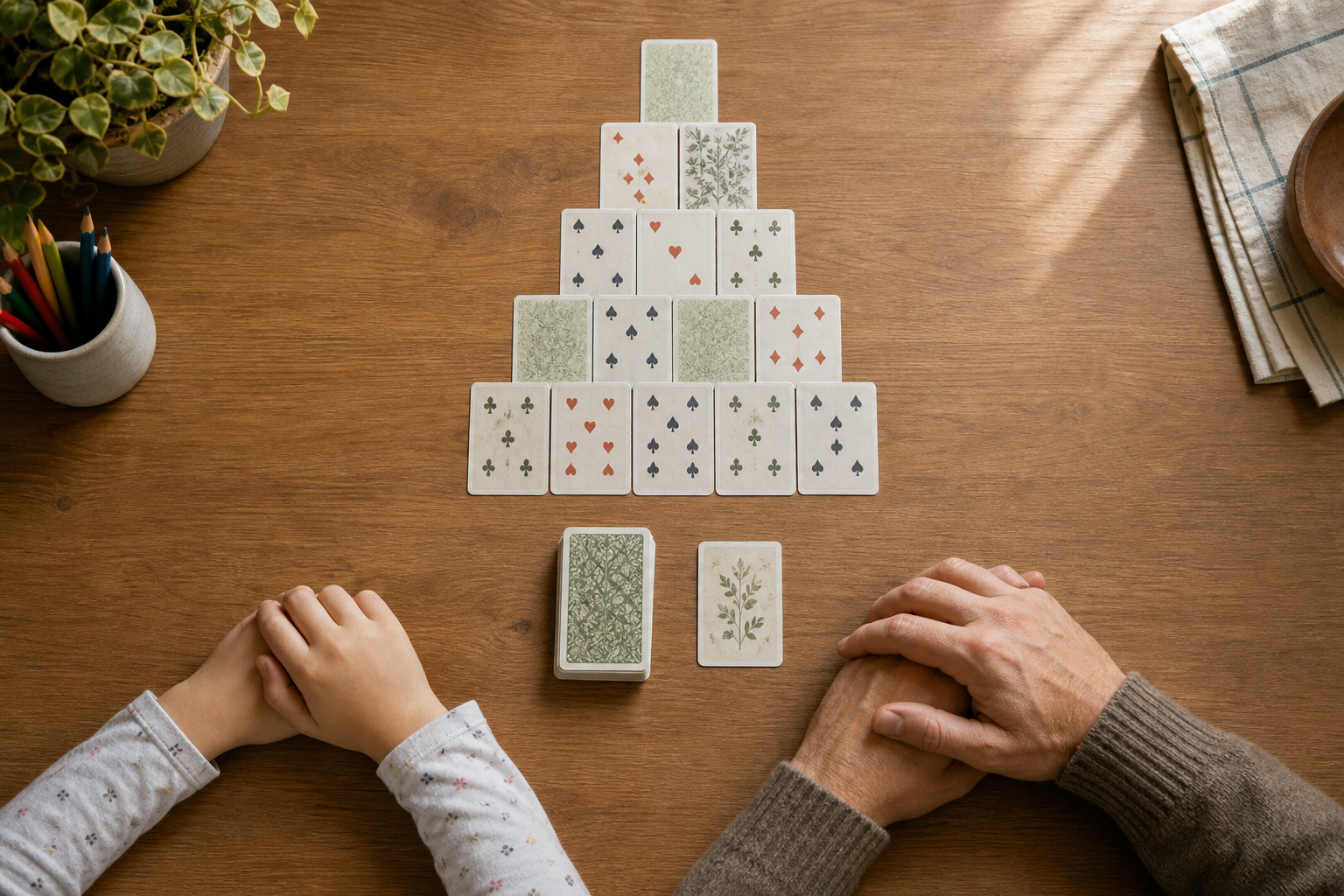
Pyramid patience works because it asks for attention without asking for performance. The earlier diapr.ai Blog post reported that the available My Baba source text was only a short teaser, not a full rule sheet, but it clearly placed pyramid patience within home-friendly card game content.
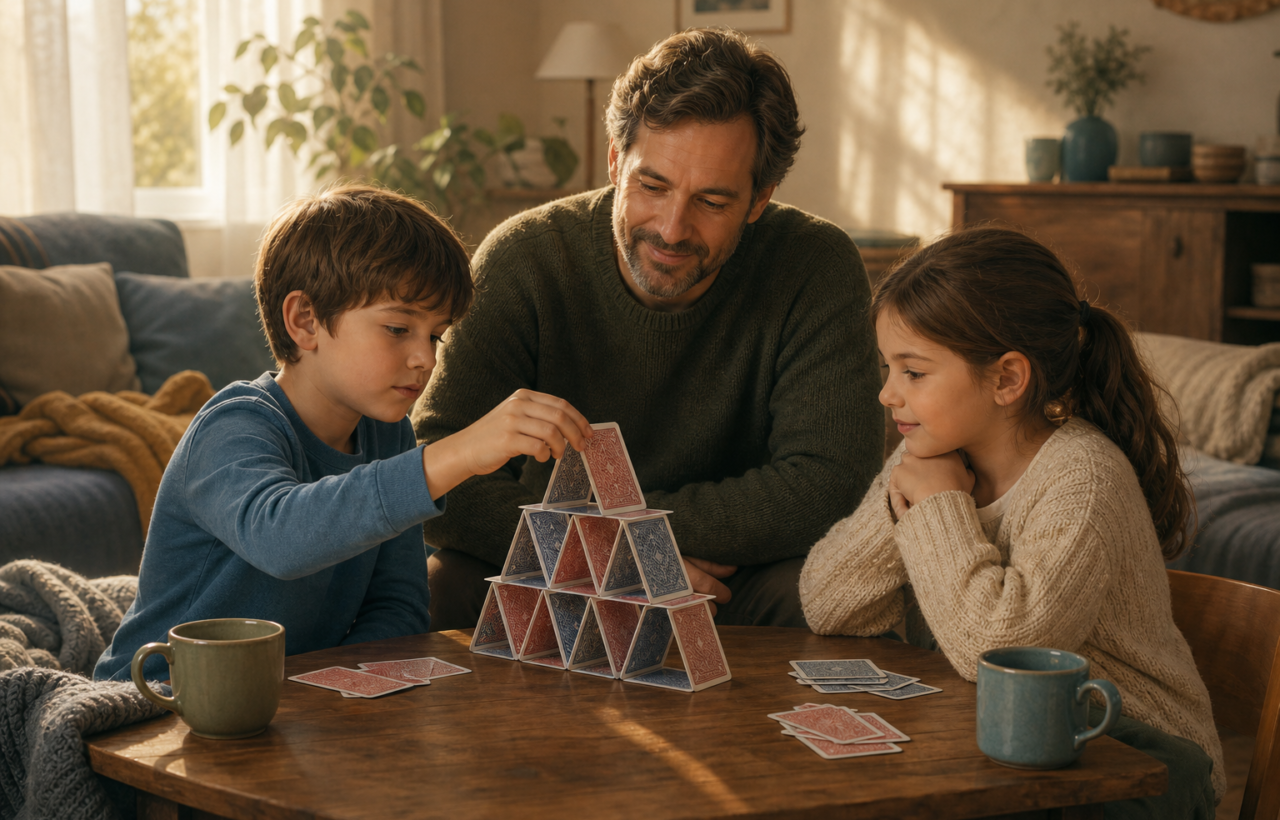
As general background, pyramid solitaire is commonly understood as a solo card game built around a pyramid layout. Cards become available as blocking cards are removed, so the player is watching the shape of the game change while making simple choices. That makes it well suited to a quiet table, a slow afternoon, or a short shared moment between a caregiver and a child.
What families should take from the source
- The activity identified in the source is pyramid patience, also known as pyramid solitaire.
- The supplied material does not provide a complete rules guide, age range, timing estimate, or formal set of variations.
- The strongest reliable takeaway is that the game is being presented as a simple card-based activity for home play.
- Any detailed rules should be treated as general context about the widely known game, not as a claim reported by the source.
How the game supports observation and number play
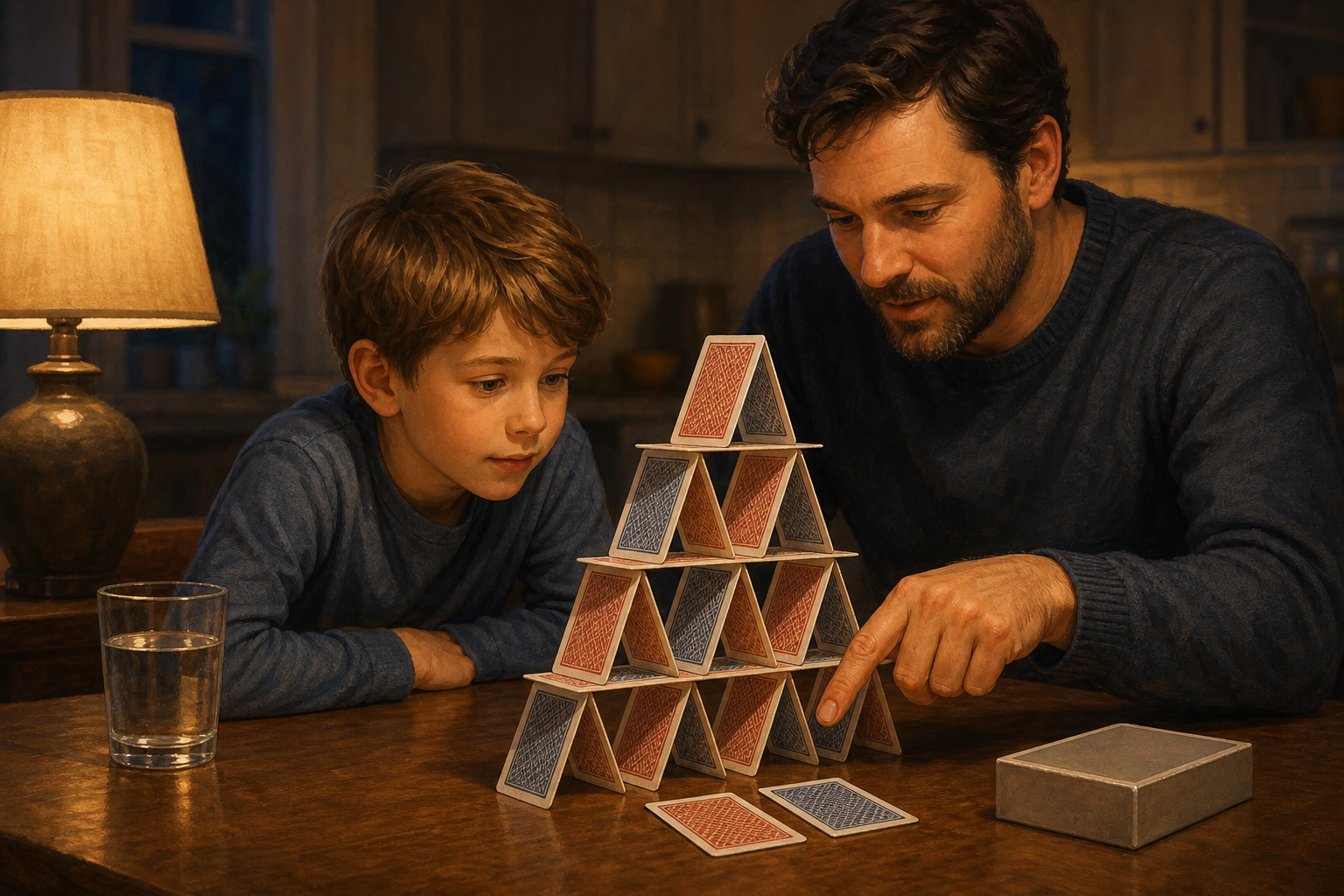
In the common version of pyramid solitaire, the table layout matters as much as the cards themselves. Some cards are blocked by others, and the player can only act on cards that are available. For children, that turns the game into a visible exercise in cause and effect: one move may uncover another card, while a different move may leave the layout stuck.
That is why pyramid patience can sit between a luck-driven pastime and a heavier strategy game. The shuffle affects what happens, but the player still needs to notice options, compare possible moves, and think a step ahead. For family downtime, that balance is useful: there is enough structure to hold attention, but not so much pressure that the activity becomes demanding.
A cooperative way to introduce it
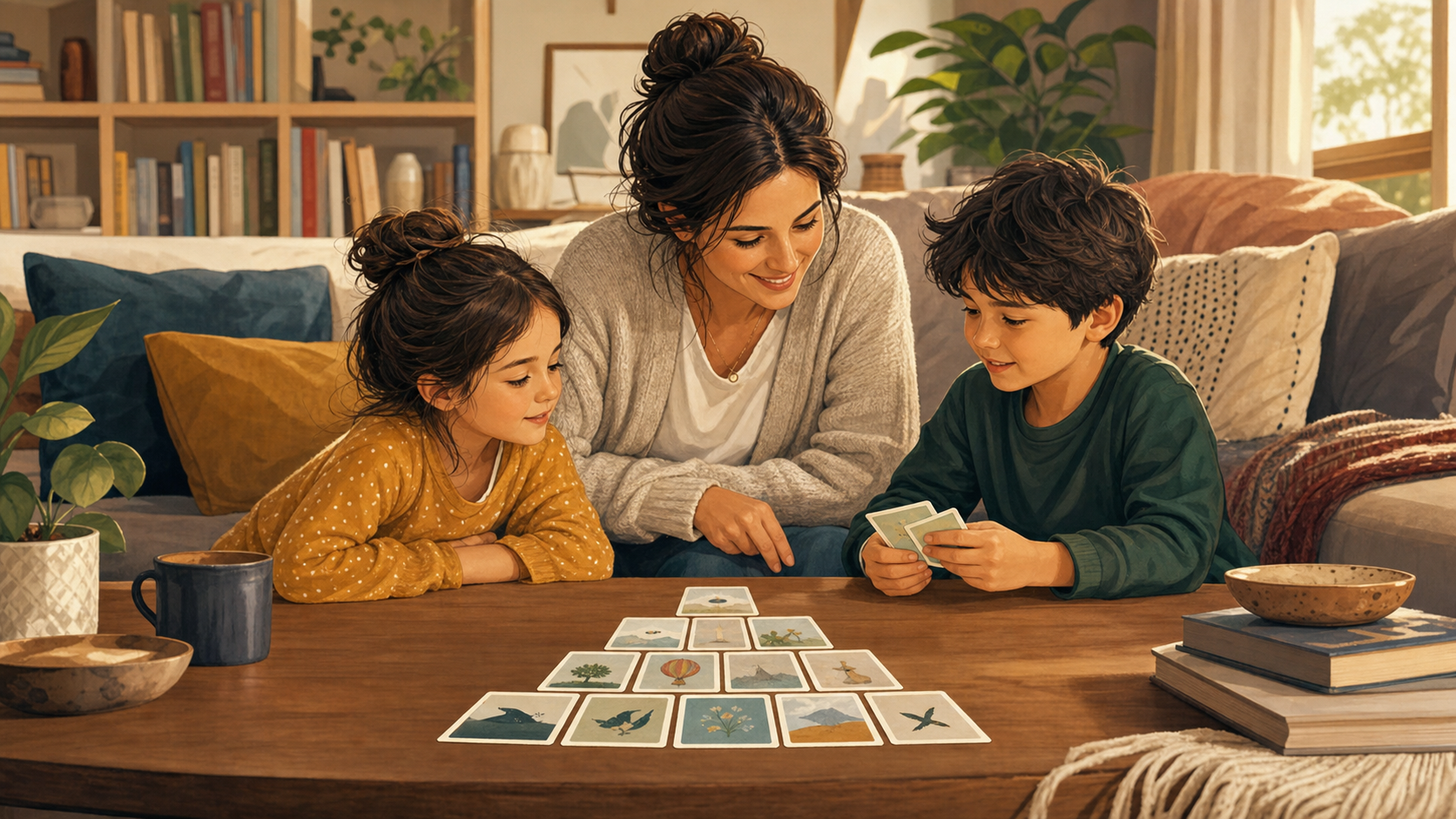
Although patience games are often solo, pyramid patience can be introduced cooperatively. A caregiver can sit beside a child and talk through the layout without taking over the game. The most helpful questions are concrete: which cards are free, which move opens a blocked card, and whether using one card now might limit a later move.
This keeps the activity calm and conversational. Instead of turning the game into a lesson, the adult can model noticing, checking, and revising. If a child is new to the format, the shape of the pyramid is usually easier to understand than a long explanation of every rule before play begins.
When it works best at home
Pyramid patience is most useful when expectations stay small. It does not need to become a scheduled family game night or a competitive activity. Its strength is that it can live in the gaps: after homework, during a rainy pause, before dinner, or when a child wants company but the household needs a quieter rhythm.
A standard deck is enough for the general version of the game, and the setup is compact. That makes it easy to restart, abandon, or return to later. For families trying to create screen-light routines, those practical details matter as much as the rules.
Keep the focus on the rhythm, not the win
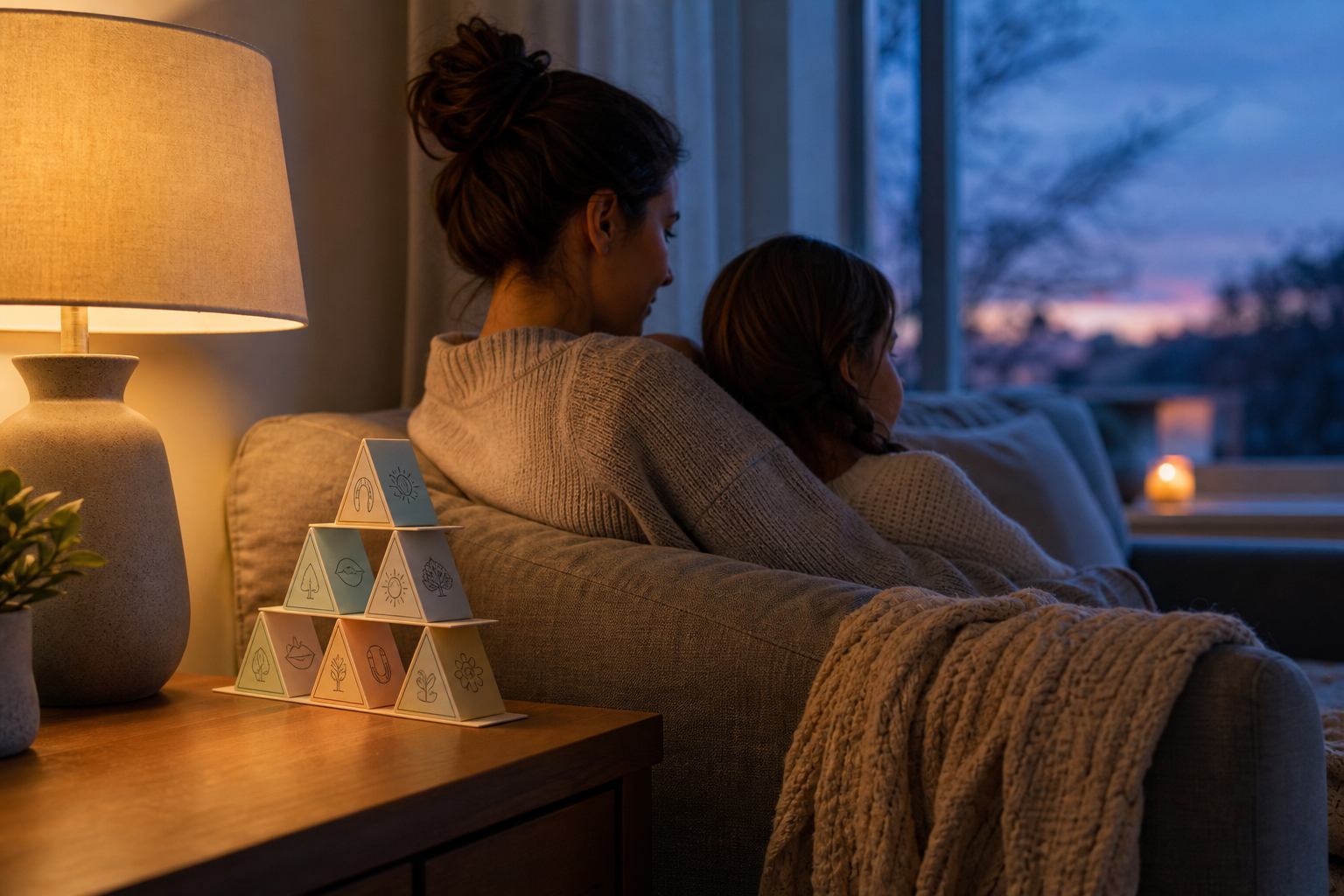
The best use of pyramid patience in family life may be as a gentle reset. The game gives children a visible problem to work through and gives adults a way to join without needing a large group, a long setup, or a noisy activity.
Used that way, pyramid patience becomes less about clearing every card and more about creating a small shared ritual: shuffle, build the pyramid, look carefully, and make the next thoughtful move.