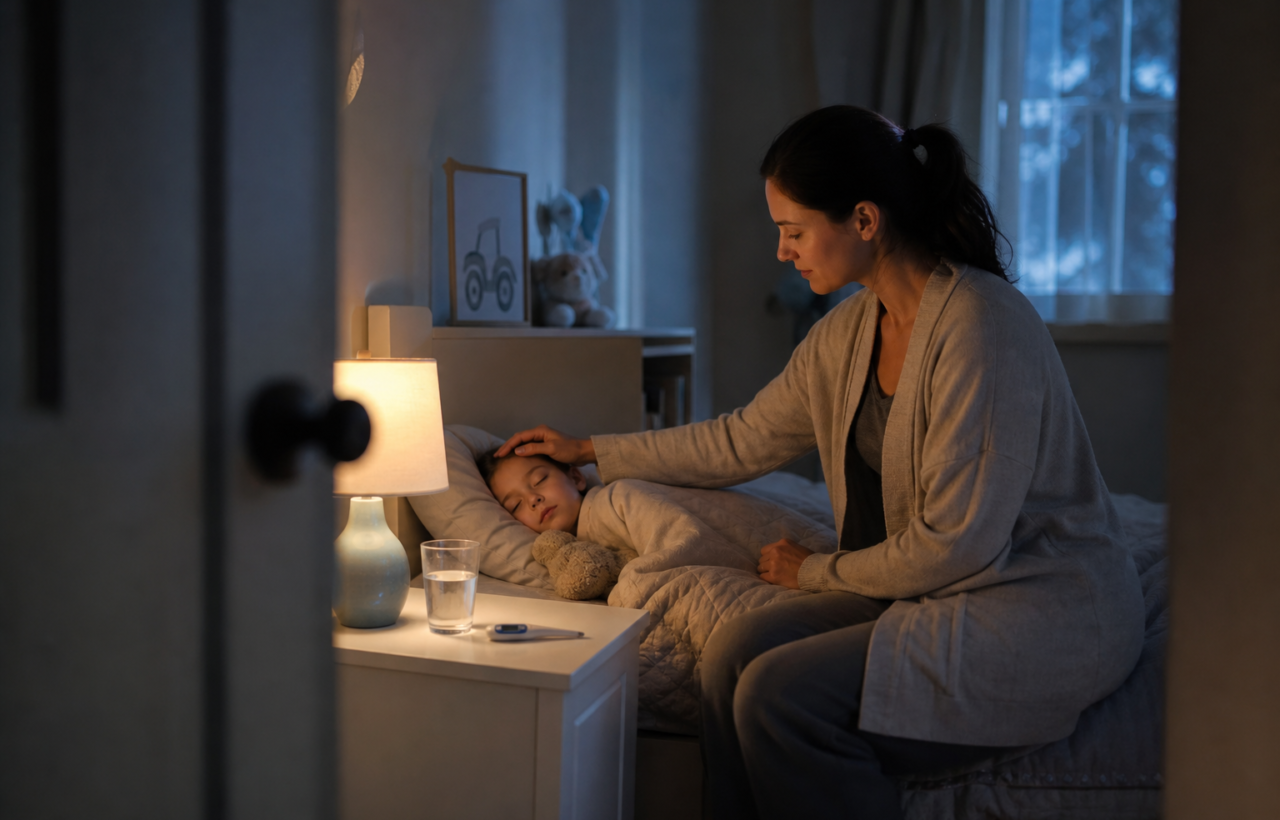
A child’s fever can feel more stressful after bedtime, when the house is quiet and every cough or warm forehead seems more noticeable. Parents frames the issue around two practical questions many caregivers ask: whether sleeping with a fever is dangerous, and whether a child should be woken up for temperature checks.
Because the available source material is brief, this article keeps the guidance broad and careful. It focuses on how to think through nighttime monitoring, what comfort can realistically mean, and when a caregiver should stop guessing and seek medical advice.
Why Nighttime Fevers Feel Different
A fever is not an illness by itself; it is a sign that the body is responding to something. At night, however, a caregiver has fewer distractions and less immediate access to routine support, so the same symptom can feel more urgent.
The Parents source highlights two anxieties that tend to drive bedtime decisions: safety during sleep and how often to check a temperature. Those questions are understandable, but the better starting point is the child’s overall condition. A number on a thermometer is one piece of information, while breathing, responsiveness, comfort, hydration, and the caregiver’s level of concern all matter too.
Should a Sleeping Child Be Woken for a Temperature Check?
Parents specifically raises the question of whether to wake a child to check their temperature. The source material provided here does not include a specific rule, schedule, or threshold, so it would be inappropriate to invent one.
In general terms, caregivers can think about the purpose of the check. If the child is resting comfortably, breathing normally, and there are no other worrying signs, waking them may not add much useful information. If the child seems unusually difficult to rouse, is breathing in a concerning way, cannot keep fluids down, appears dehydrated, or the caregiver has been given specific instructions by a clinician, that is a different situation.
The practical question is not only, “What is the temperature?” It is also, “Would this information change what I do next?” If the answer is yes, or if the caregiver is uneasy for reasons beyond the number, contacting a health care professional is the safer path.
Comfort Comes Before Constant Measuring
Nighttime fever care is often less about chasing a perfect temperature and more about helping the child rest while watching for changes. General comfort measures may include keeping the sleep environment comfortable, offering fluids when the child is awake, and avoiding unnecessary disruption when rest is helping.
Medication decisions should be handled carefully. Caregivers should follow the product label and any instructions from the child’s clinician, especially when the child is very young, has other medical conditions, is taking other medicines, or the caregiver is unsure about dosing. This article does not provide dosing guidance because the source material does not include it and medication advice depends on the child.
Key Takeaways
- According to Parents, the main concerns are whether sleeping with a fever is dangerous and whether a child should be woken for temperature checks.
- The provided source material does not give a specific temperature-checking schedule, so caregivers should avoid relying on a made-up rule.
- A child’s overall appearance, breathing, responsiveness, hydration, and comfort are important context alongside the thermometer reading.
- If symptoms seem urgent, unusual, or hard to interpret, caregivers should contact a health care professional rather than waiting for reassurance from a number.
When to Escalate Instead of Watching the Clock
Some situations call for more than nighttime observation. Without adding unsupported specifics from the Parents article, a cautious general rule is that caregivers should seek medical guidance when a child seems seriously unwell, has trouble breathing, is hard to wake, shows signs of dehydration, has a fever with other concerning symptoms, or when the caregiver’s instincts say something is not right.
Families who have already received instructions from a pediatrician or nurse line should follow that advice. Children with underlying health conditions may also need a different plan from a child who is otherwise healthy.
A Practical Nighttime Mindset
The most useful nighttime plan is simple: support rest, check the child when there is a reason to check, and treat changes in behavior or breathing as more meaningful than routine temperature tracking alone. Parents identifies the right questions; the next step for caregivers is to apply them calmly and, when the situation is unclear, bring in professional help.
Inspired by this post on Parents.