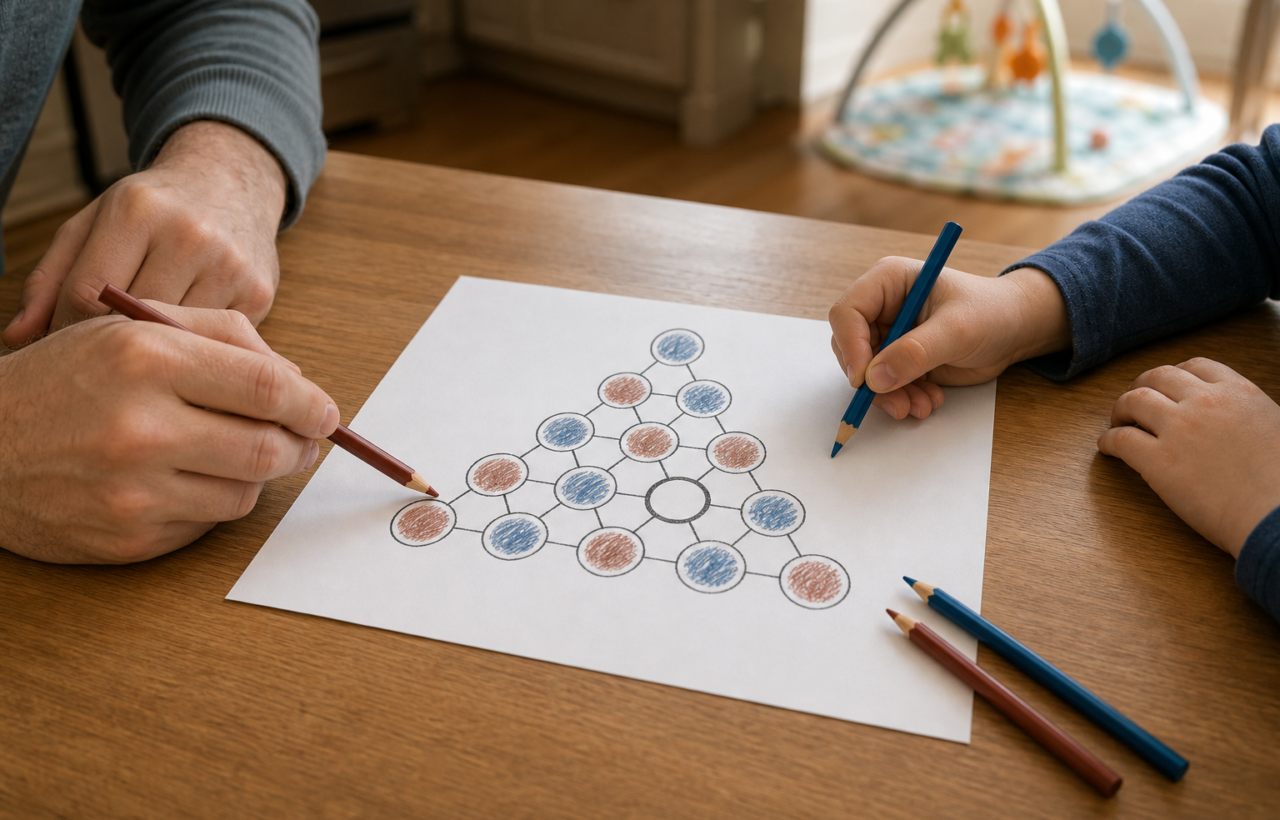
An older child wants your attention just as the baby needs you, and the usual card game has too many pieces to manage. With one sheet of paper and two writing tools, Black Hole gives you a complete two-player strategy game that can stay on the table through interruptions.
Be clear about who it is for. Following two number sequences, planning placements and adding a final score make this a better fit for slightly older children, not babies or young toddlers. In a family with children at different stages, it works well as an older-sibling-and-adult activity while the youngest is nearby. Keep pencils, pens and removable caps out of the baby’s reach.
Key takeaways
- Black Hole is a game for two players.
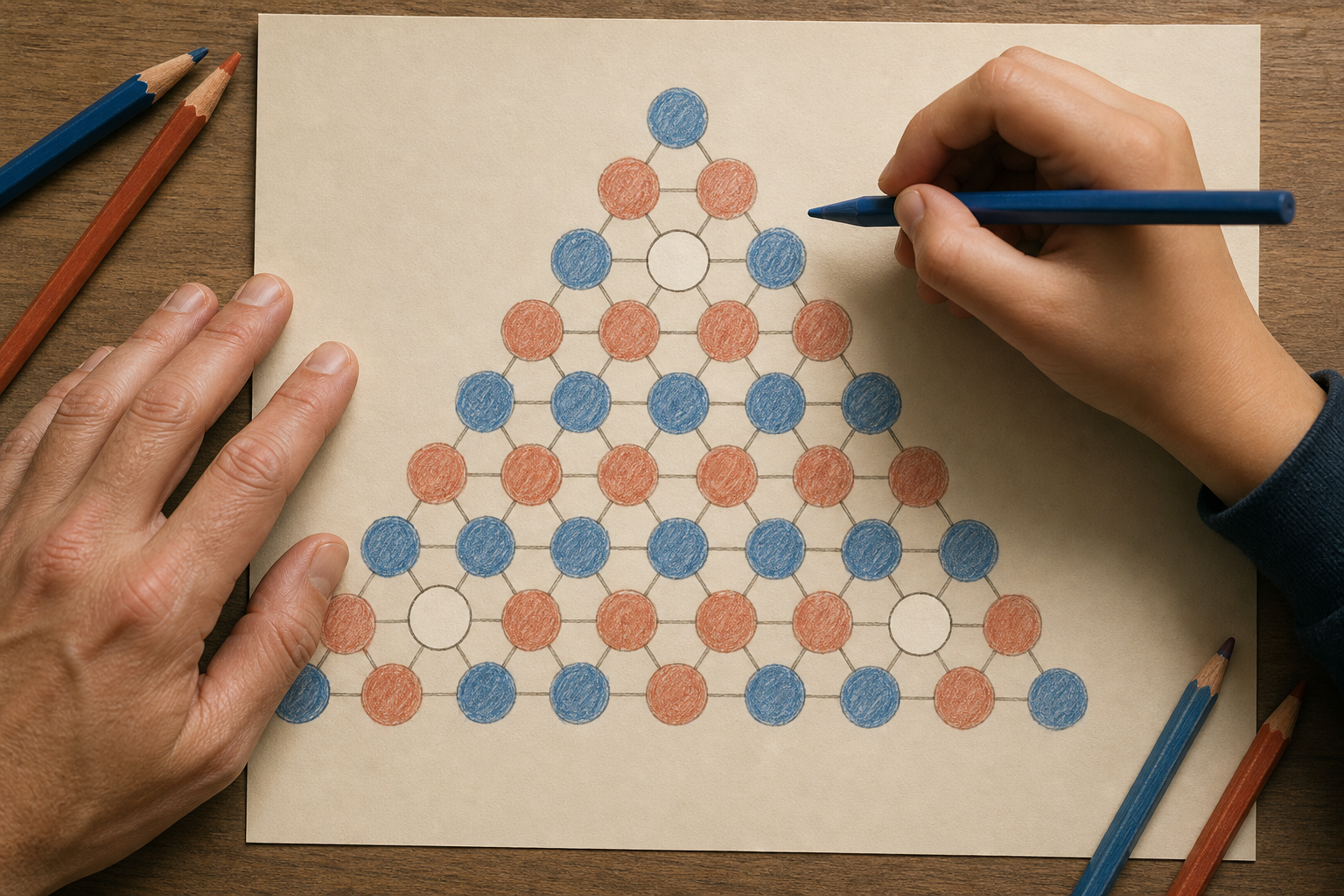
- The board is a triangle of 21 circles arranged in six rows.
- Each player places their own numbers from 1 through 10, in order, with one number added on each turn.
- The only circle left empty becomes the black hole. Each player adds the values of their own numbers immediately beside it, and the lower total wins.
Draw the board so every neighbour is clear
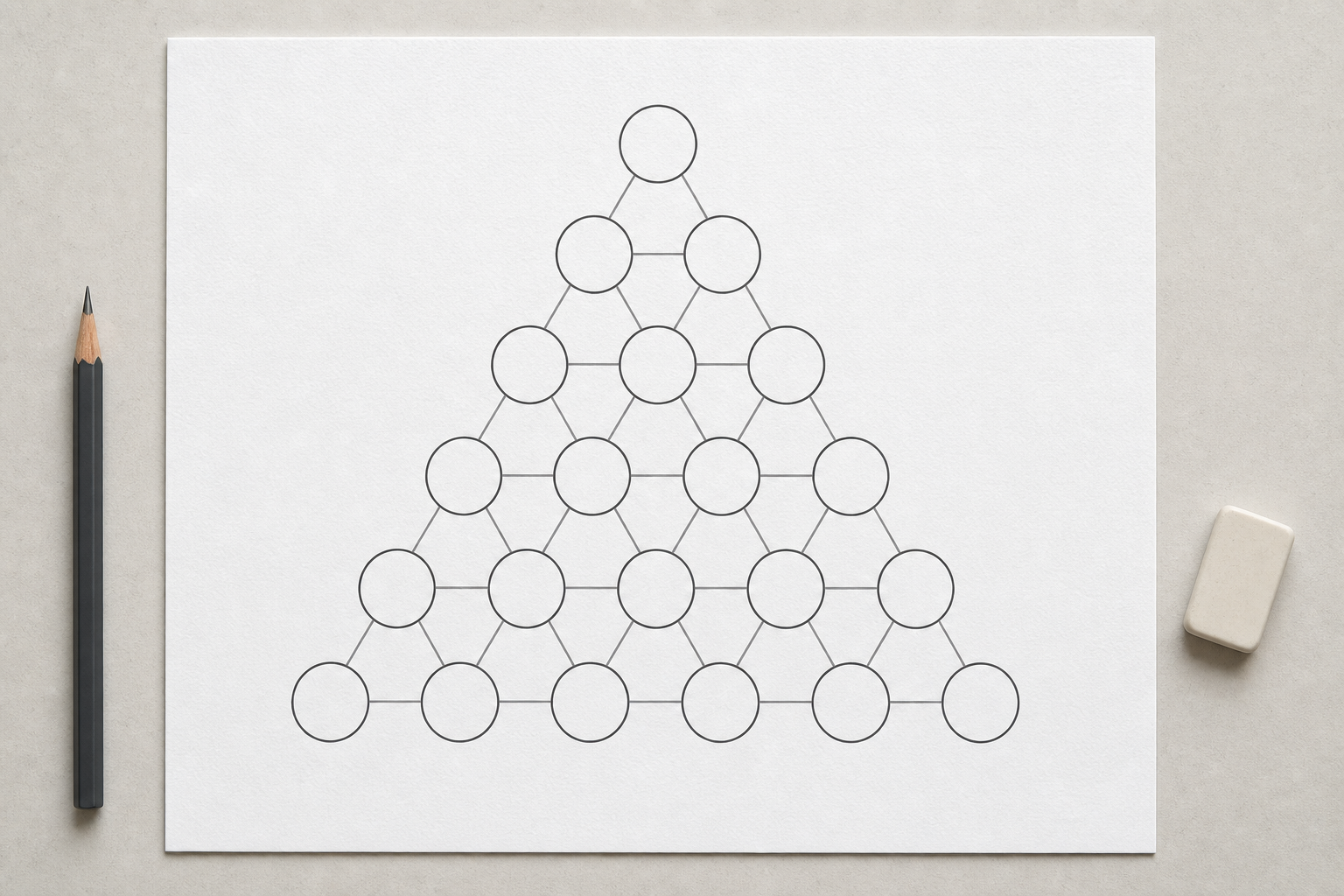
The board matters because the final score depends on which circles are beside the black hole. A loose or uneven drawing can cause an argument at the exact moment you are trying to score the game.
- Draw one circle in the top row.
- Draw two circles beneath it, with the top circle nestled above the gap between them.
- Continue with rows of three, four, five and six circles.
- Keep the rows staggered so the 21 circles form a compact triangle.
- Make each circle large enough to hold a two-digit number.
Think of the circles as coins packed into a triangle. The positions immediately beside one another horizontally or diagonally are neighbours. Circles farther along the same row are not. Before the first turn, point to one circle near the middle and have both players identify its neighbours. If you disagree, redraw the board now rather than negotiating after the scores are visible.
Different-coloured pencils or pens make ownership easiest to see. If you have only one pencil, agree on two unmistakable marks: one player can underline every entry while the other adds a small tick beside theirs. Do not rely on handwriting alone, especially when an adult is playing against a child.
Place two sequences from 1 through 10
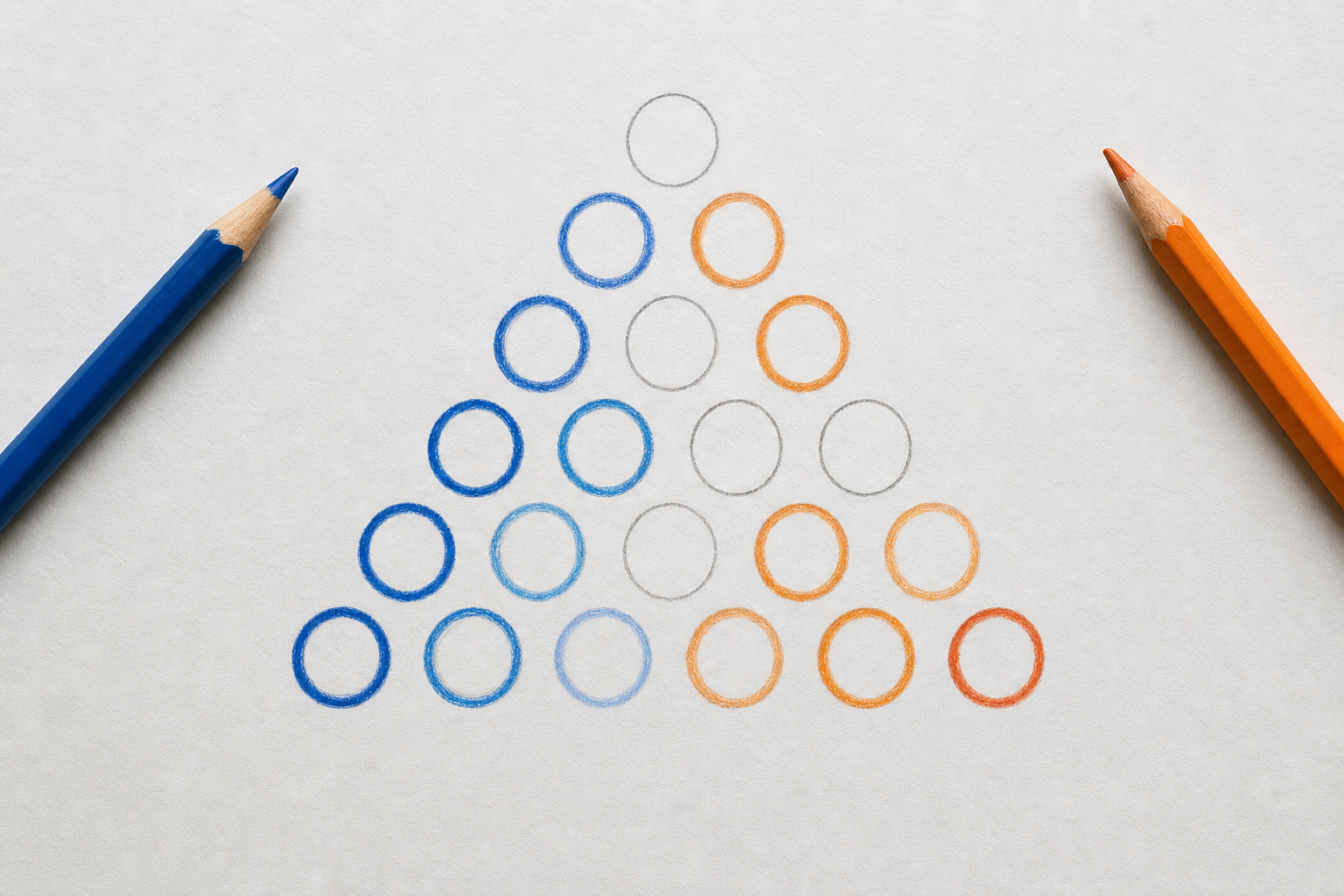
Each player owns a separate sequence of numbers. This is the rule most likely to be misunderstood: the players are not sharing a single set from 1 through 10. Every value will appear once for each player.
- The first player writes 1 in any empty circle.
- The second player writes their own 1 in any other empty circle.
- The first player writes 2 in an empty circle, followed by the second player’s 2.
- Continue alternating in this pattern. Neither player may skip a value, repeat a value or choose a later number.
- After both players have placed 10, stop. Twenty circles will contain numbers and one will still be empty.
The value of a turn is fixed; the choice is where to put it. That small restriction creates the strategy. Early low numbers are easy to place, but every filled circle changes which spaces can remain empty and which numbers might eventually touch the black hole.
You do not need to finish in one sitting. If the baby needs you, write the next player’s initial and next number in the margin before putting the pencil down. Because the entire game state remains on the page, you can resume without remembering a hand of cards or rebuilding a board.
Score only the circles beside the black hole
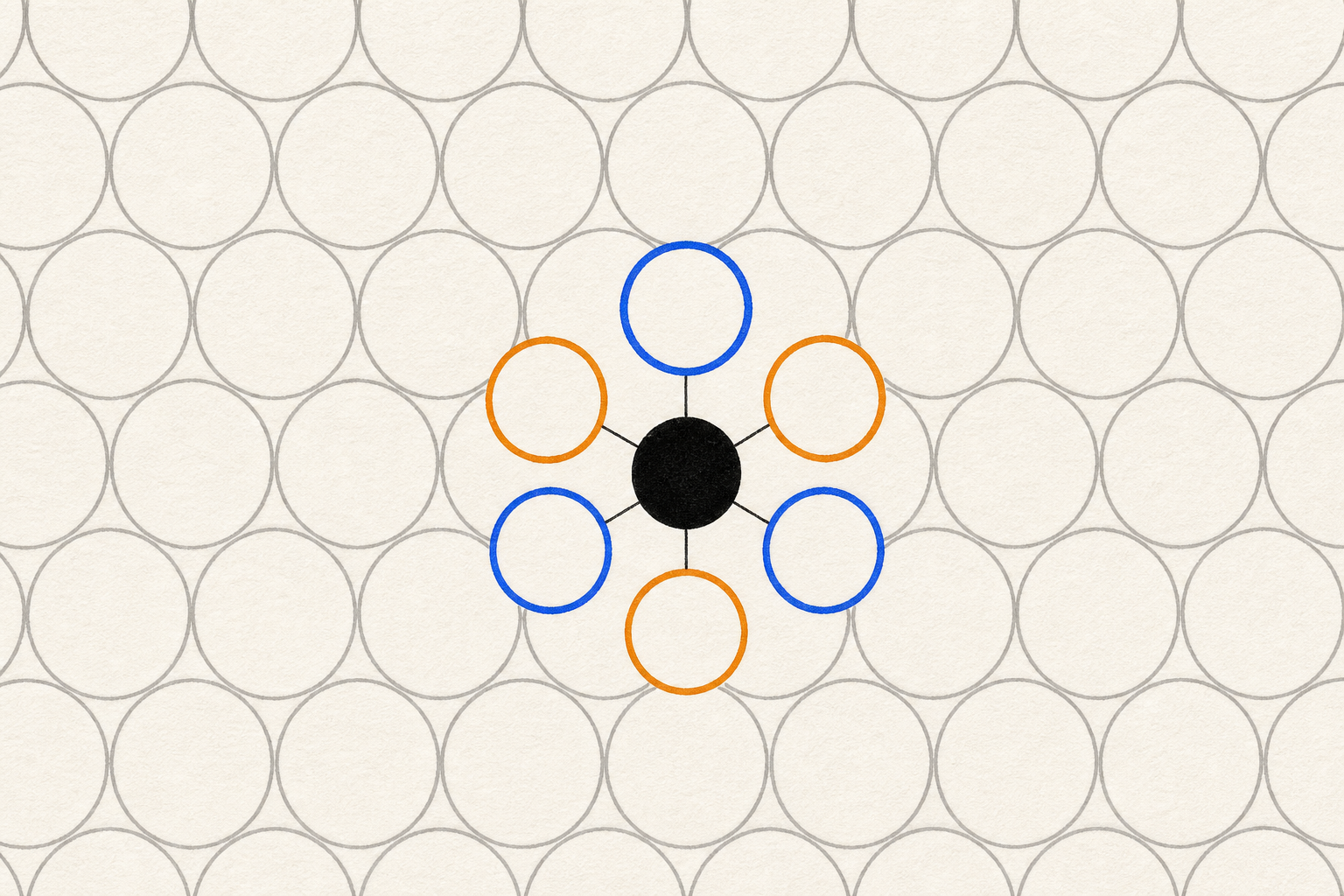
Once both number sequences are complete, darken or label the remaining empty circle. That space is the black hole. Do not fill it with a number.
- Find every circle immediately neighbouring the black hole.
- Separate those entries by player, using their colours or identifying marks.
- Add each player’s neighbouring values to produce two totals.
- Ignore every number that is not immediately beside the black hole.
- The player with the lower adjacent total wins.
The low-score objective is deliberately counterintuitive, so say it aloud before play begins. A player is trying to keep their expensive numbers away from the eventual hole, not collect the largest total.
For a clean scoring check, start at the top of the black hole and move around it in one direction. Call out each neighbouring number and its owner once. This prevents a diagonal neighbour from being missed or the same circle from being counted twice.
Teach the strategy by watching the empty spaces
A new player often watches the numbers already written. The more useful information is the pattern of spaces that are still empty. Until the last turn, any one of those spaces could become the black hole.
- Treat every empty circle as a possible final hole. Before placing a number, look at the current values beside each open space. Notice which possible hole would be costly for you and which would be costly for the other player.
- Give larger numbers a settled neighbourhood. When your required value becomes expensive, look for a circle whose surrounding positions are already filled. A filled neighbour cannot later become the black hole.
- Use the outside of the triangle carefully. Edge and corner positions have fewer neighbouring spaces than positions near the middle. That can reduce the number of possible holes able to capture a high value, but only if the nearby openings are also under control.
- Do not chase a zero score at any cost. You only need the lower total. A possible black hole beside one of your low numbers may still be favourable if it also touches several of the other player’s high numbers.
- Remember that filling a dangerous space removes the threat. If an empty circle would produce a bad score for you, placing your next number inside that circle means it can no longer become the black hole.
When you are teaching an older child, resist choosing the spot for them. Ask two concrete questions instead: “Which empty circle would be worst for you if it became the black hole?” and “What changes if you fill that circle now?” Those questions direct attention to the real decision without turning the adult into a second player on the child’s side.
For the first round, concentrate on getting the turn order and scoring right. On the next board, pause before each of the larger numbers and examine the remaining gaps. That is where Black Hole changes from a number-placement exercise into a strategy game you can return to whenever a quiet, portable activity would help.