When you are assembling dinner around naps, feeds and a toddler who wants to be wherever you are, the wrong kitchen tool creates more work than it removes. The useful question is not which gadget looks clever. It is which repeated summer task keeps slowing you down.
A less-than-$20 ceiling is realistic for simple tools that shorten chopping, keep smaller ingredients from falling through grill grates and make fresh produce easier to prepare. The best purchase solves a nuisance you already have without introducing awkward storage, hidden blades or extra washing.
Start with the bottleneck, not the gadget
Before you shop, think about the summer meals you actually repeat: cut fruit, salads, sandwiches, grilled vegetables, cold drinks or quick plates assembled from whatever is ready. Then identify the part that makes you postpone the meal, choose a less appealing option or leave a bigger cleanup behind.
- Name the recurring job. Is it chopping a pile of produce, rinsing berries, transferring ingredients from the board, keeping vegetables on the grill or refilling cold drinks?
- Notice the current workaround. If you already complete the job comfortably with a knife, bowl or existing strainer, a new version is unlikely to change your day.
- Choose its storage home before buying it. Check the drawer, cupboard, fridge shelf or freezer slot where the tool would live. A bargain that stays on the counter is still clutter.
- Decide what the purchase must replace. It should remove a step, combine jobs or prevent food from being lost. Merely making a familiar task look different is not enough.
This test also protects your budget. If you cannot finish the sentence, “We will use this whenever we make…,” leave the tool on the shelf. Not buying a gadget for a problem you do not have is the easiest kitchen saving available.
Match the tool to the summer job
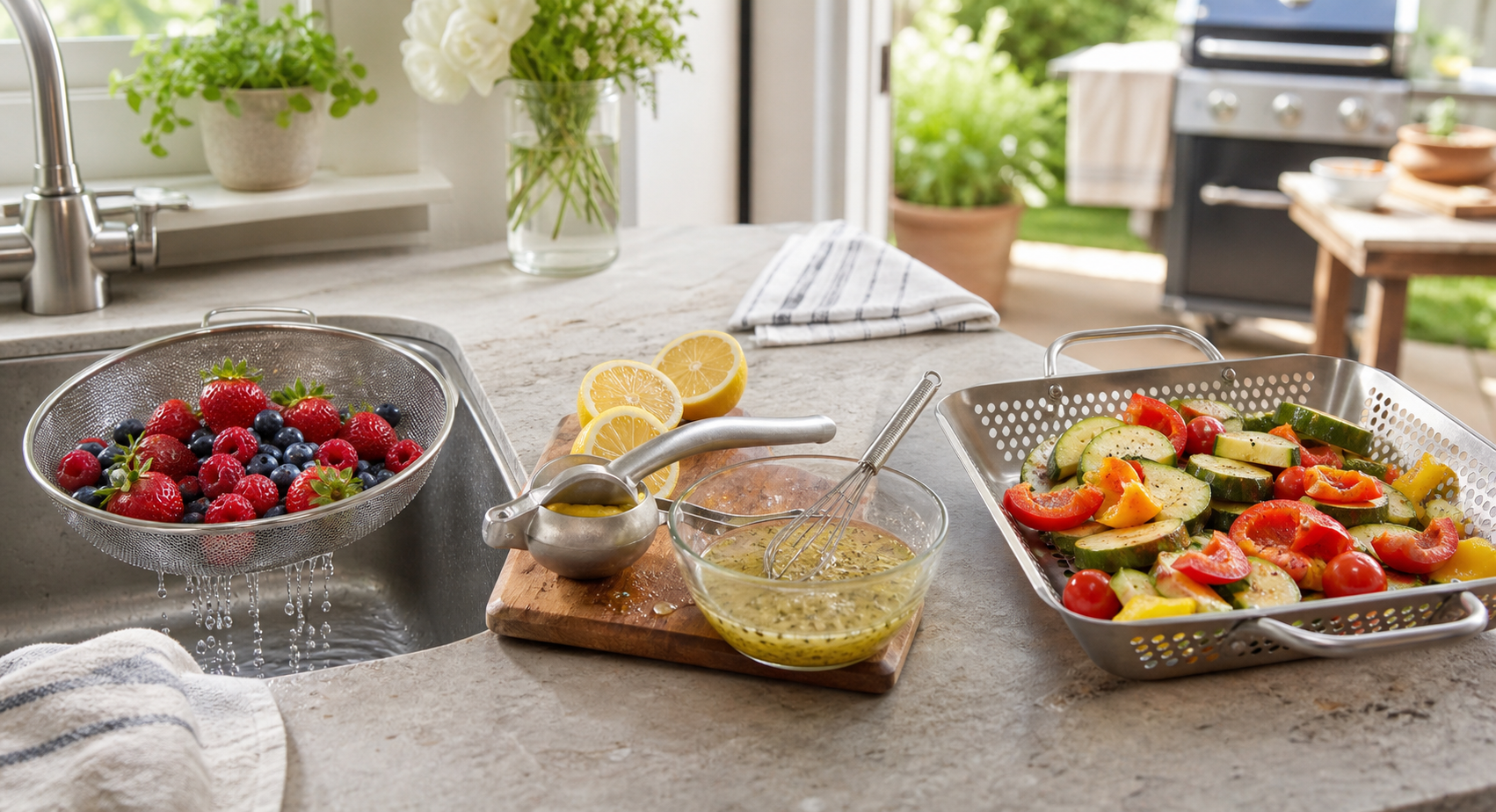
Use the following shortlist as a decision tool, not a shopping list. The right choice depends on what repeatedly happens in your kitchen.
| Recurring friction | Tool type to compare | What to inspect | When to skip it |
|---|---|---|---|
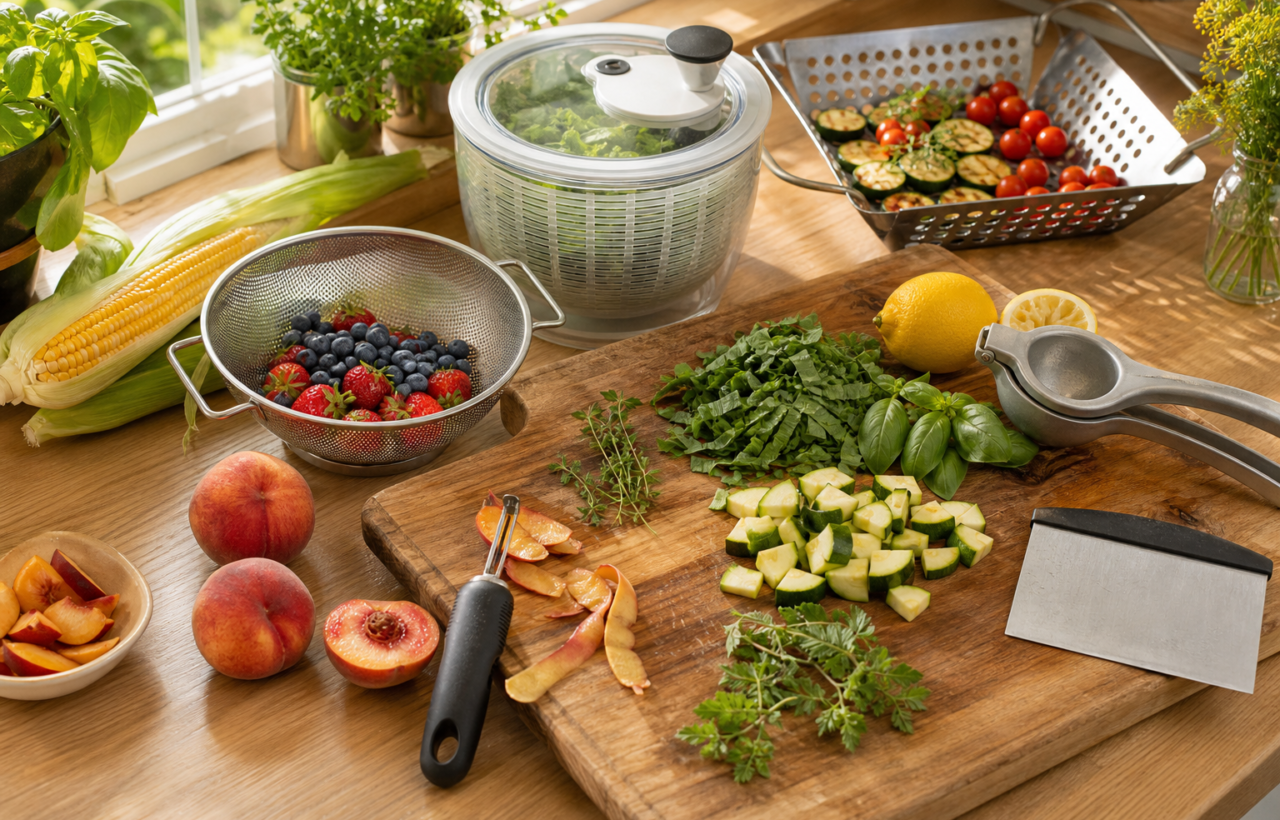
| Repeatedly chopping small amounts of produce | Manual pull chopper, compact vegetable cutter or kitchen shears | Full disassembly, reachable food-contact surfaces, secure blade storage and a size that suits your usual batch | Your knife is already faster, or you cannot store the blade securely |
| Rinsing and draining fresh produce | Nesting colander or compact strainer | Stable footing, openings suited to the food you rinse and a shape that fits an existing bowl or sink | Your current strainer handles the same foods without spills |
| Smaller ingredients falling through grill grates | Grill basket, perforated grill tray or reusable skewers | Explicit grill suitability, openings smaller than the food, a manageable handle and safe storage after use | You rarely grill small pieces or already cook them successfully in a suitable pan |
| Cold drinks taking too much setup | Lidded pitcher, citrus press or flexible ice tray | Fridge or freezer fit, an easy pour, comfortable grip and crevices you can actually clean | Your existing jug and ice tray work without leaking or sticking |
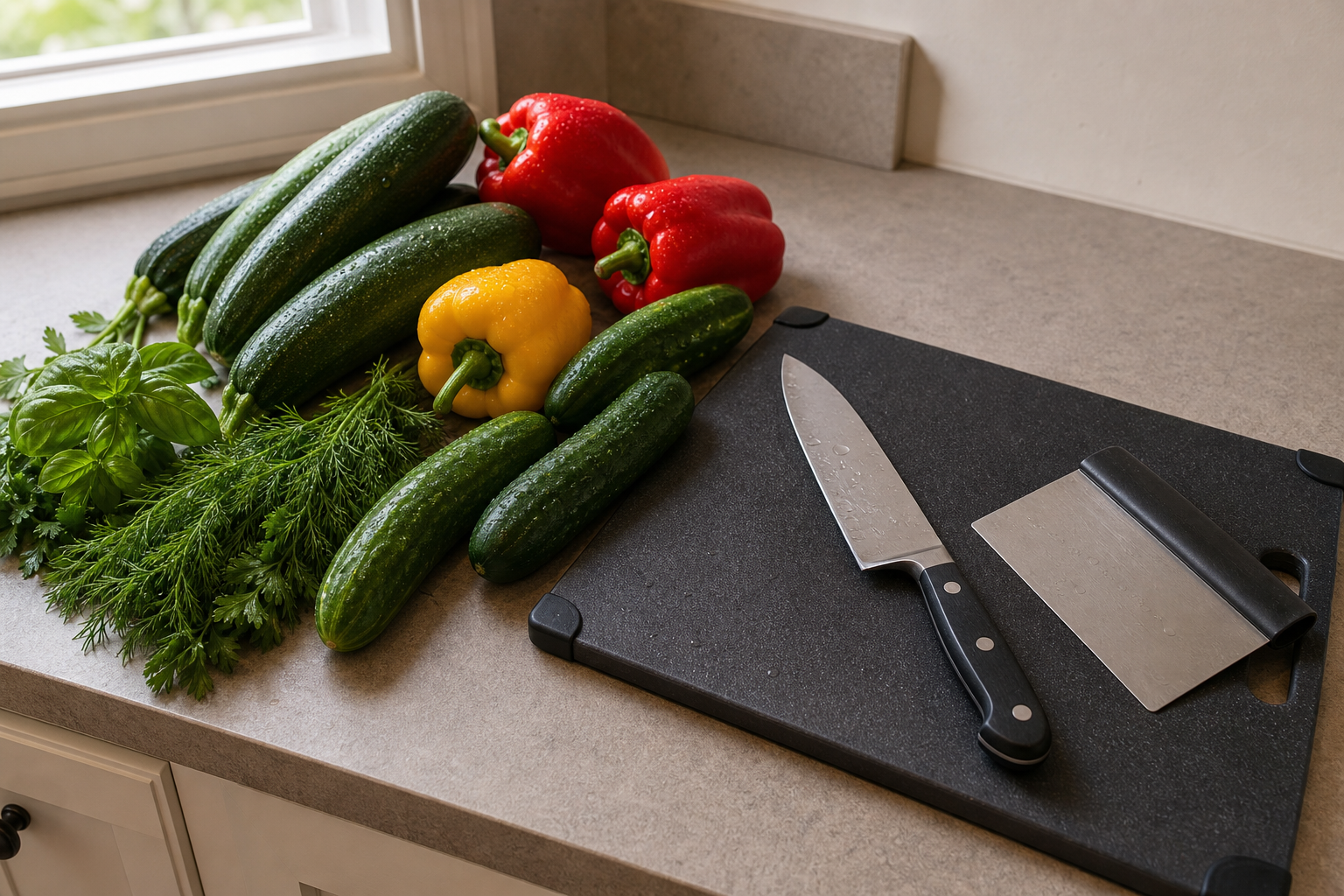
| Chopped ingredients scattering during transfer | Bench scraper | A comfortable handle, a broad edge and a footprint that fits your drawer | You can move food from board to bowl neatly with what you own |
Produce tools: cleanability beats cleverness
A manual chopper can help when the same cutting task appears throughout your week. It becomes a poor purchase when food collects beneath a fixed component or the blade assembly is unpleasant to handle. Before buying, work out how the lid, bowl and cutting parts separate. If you cannot see how every food-contact surface will be reached, choose a simpler design.
Capacity matters too. A tiny bowl forces repeated batches, while an oversized bowl takes up space and may be unnecessary for a small household meal. Think about the amount you normally prepare, not the largest meal you might make someday.
A colander is less exciting but often more useful. Look for one that nests inside a bowl you already own. That gives it a clear storage home and lets you carry rinsed produce without dripping across the kitchen. Check that its openings will retain the smallest foods you commonly wash.
Grill tools: fit the openings to the food
A grill basket or perforated tray addresses a specific problem: pieces small enough to slip between the grates. Compare the holes with the way you normally cut vegetables and other ingredients. Large openings recreate the problem; extremely fine openings may make the tray slower to clean.
Do not assume that any metal basket or pan belongs on a grill. The packaging should explicitly say that the item is suitable for the cooking method you plan to use. Inspect the handle as well. A permanently protruding handle may complicate lid clearance and storage, while a removable one creates another part to keep track of.
Reusable skewers can fill a similar role with less cupboard space, but pointed ends require secure storage in a home with a baby or toddler. If you do not have a locked or inaccessible place for them, a basket with no sharp points is the easier choice.
Cold drink tools: measure the fridge first
A pitcher is only convenient if it fits the shelf where you intend to keep it. Measure the usable shelf height and depth, including the space needed to lift the lid. If the pitcher will live in the door, check that its base is stable there and that the handle does not block neighbouring containers.
For an ice tray, inspect the route from tap to freezer. A rigid tray may be easy to carry but harder to empty; a highly flexible tray may release cubes readily but bend when full. Choose for the part that currently frustrates you. A lid can help with stacking, but only if it fits securely and does not add fiddly grooves that are difficult to wash.
A citrus press earns its place only if squeezing fruit is already part of your routine. Check that the bowl accommodates the fruit you use, that the handles feel comfortable and that pulp cannot become trapped around the hinge. If you squeeze citrus only occasionally, a fork and your hands may remain the more efficient option.
Inspect the tool before the low price makes the decision
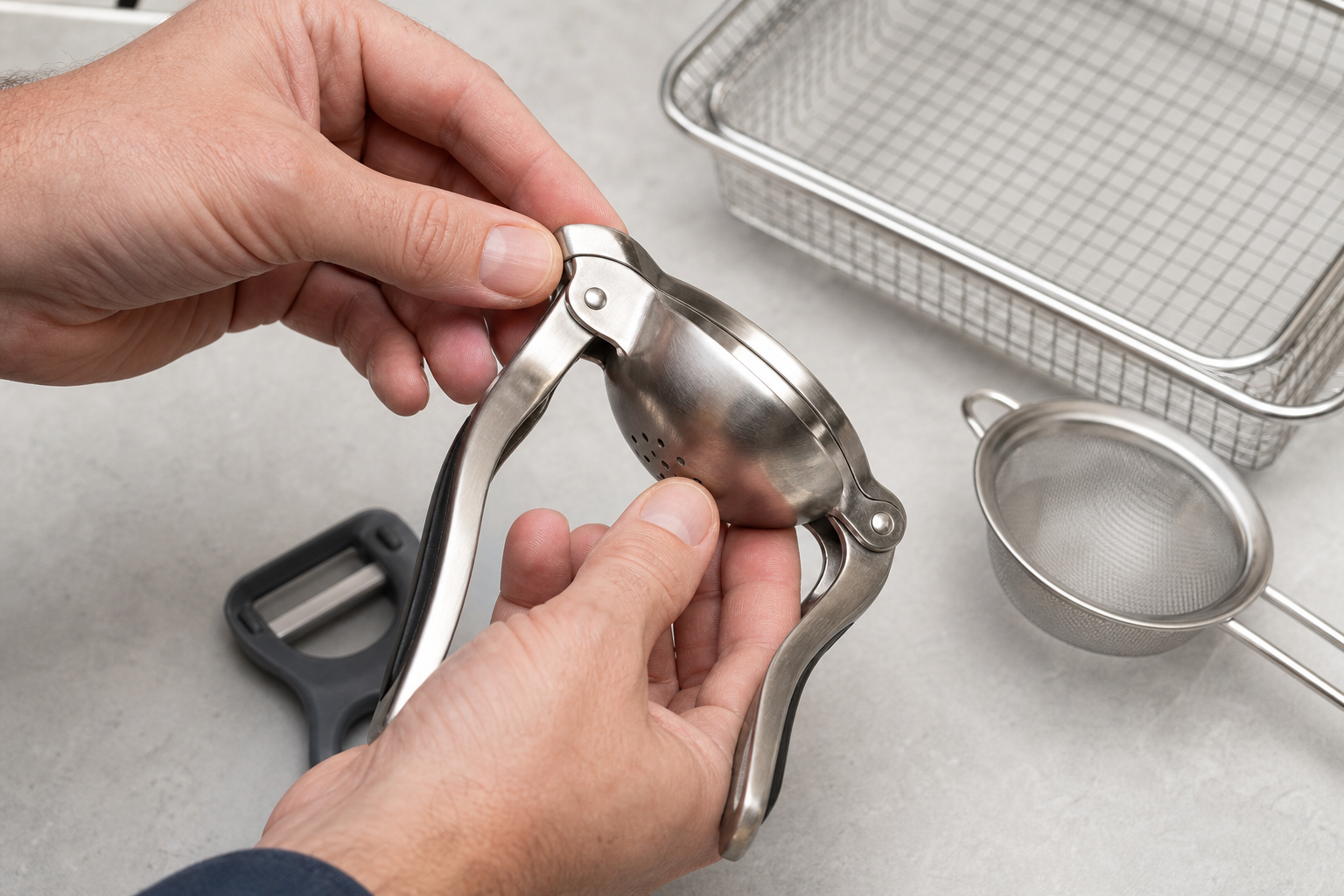
Price tells you whether a tool fits the budget. It does not tell you whether the tool fits your kitchen. Run this shelf test before checkout:
- Trace the cleaning path. Identify every surface food will touch and how you will reach it. Deep seams, enclosed hinges and fixed blade housings can turn a quick task into a slow wash.
- Read the use labels. Dishwasher-safe, microwave-safe and grill-safe are different claims. Look for the one that matches how you intend to use the product rather than assuming “kitchen tool” covers every appliance or heat source.
- Check stability. Bowls, choppers and colanders should sit flat on the surface where you will use them. A tool that rocks or slides demands more attention at exactly the moment you wanted less work.
- Count the loose parts mentally. Lids, inserts, blade guards and removable handles all need storage. If losing a small component makes the entire tool useless, decide where that component will live.
- Compare the stored size, not the display size. Handles, lids and attachments can consume more space than the main container. Picture the complete tool in your actual drawer or cupboard.
- Look for replacement costs. A simple manual tool should not quietly depend on special bags, filters or other consumables unless those supplies solve a problem you knowingly accept.
Be especially cautious with highly specialized cutters. A tool shaped for a single fruit or vegetable may be fast during its narrow task, but it still needs washing and storage after every use. A multipurpose tool is usually the stronger value when it handles several foods you genuinely prepare.
Plan for a kitchen shared with a baby or toddler
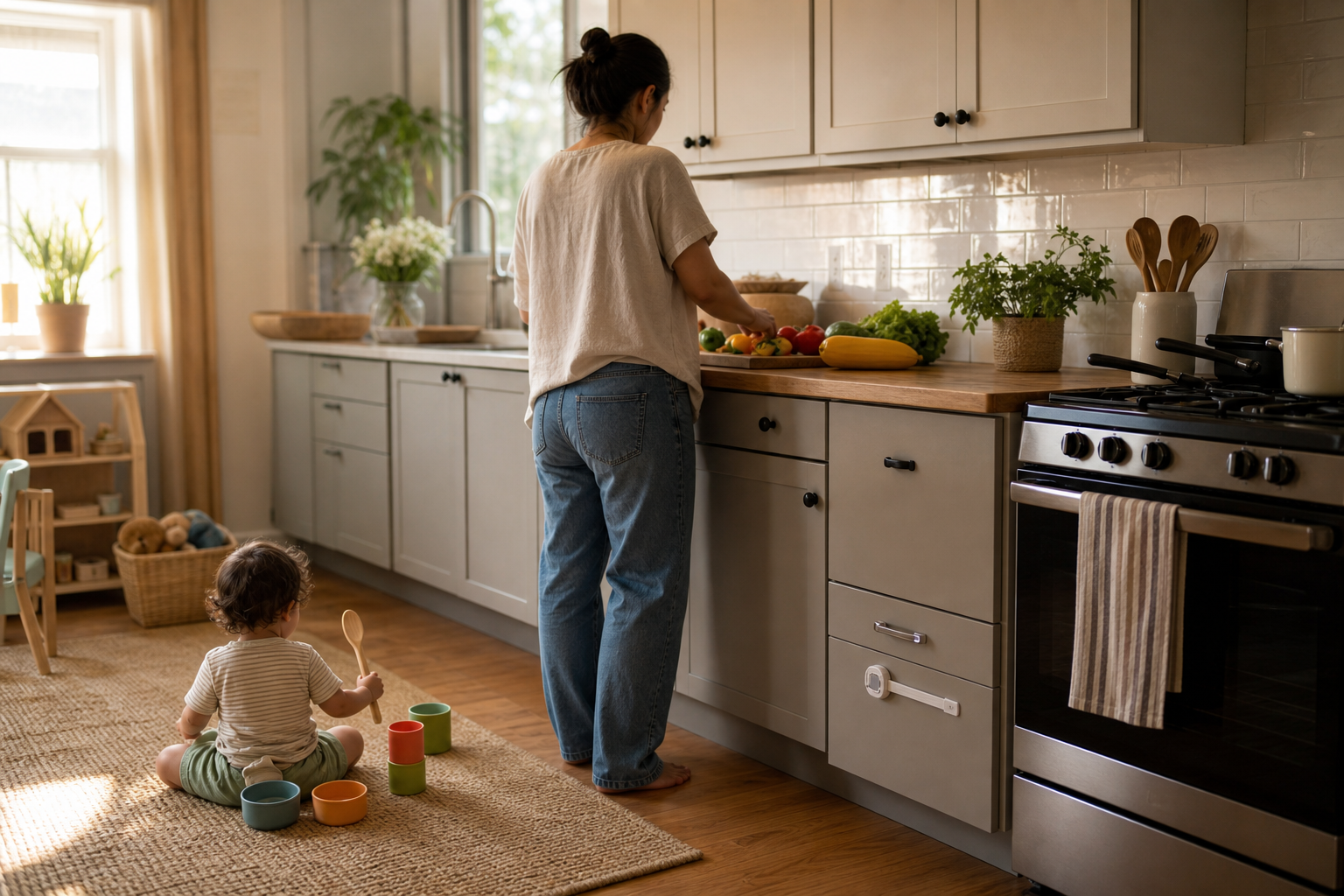
Convenience cannot come at the expense of safe storage. Manual choppers, shears, skewers and some vegetable cutters introduce sharp pieces that may be less obvious than a kitchen knife. Their storage plan belongs in the purchase decision, not in the cleanup after you bring them home.
- Use locked or otherwise inaccessible storage for blades and pointed attachments. Keeping the main bowl in a regular cupboard does not make a loose blade insert safe.
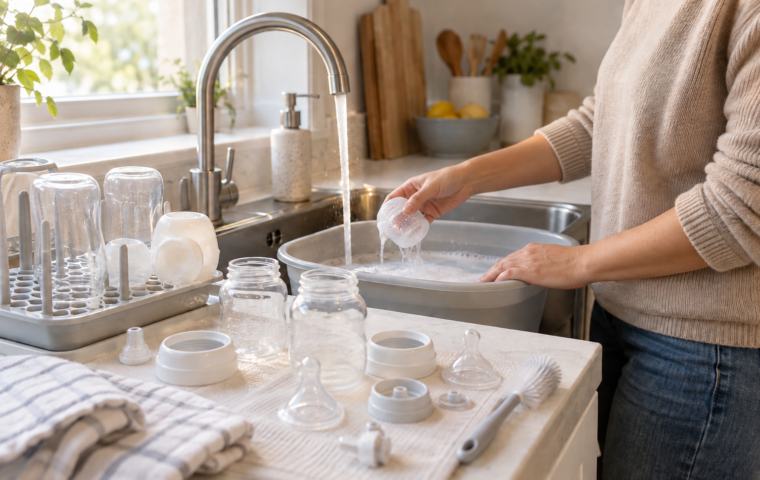
- Clean sharp pieces deliberately. Do not leave a blade or skewer hidden beneath cloudy or soapy water where another adult could reach in without seeing it.
- Create a cooling place for grill equipment. A basket or tray remains a burn hazard after the food comes off. Its cooling spot should be stable and beyond a child’s reach.
- Remove packaging and small detachable pieces promptly. Do not let twist ties, plastic tabs or unused attachments accumulate on the counter while you start cooking.
- Keep tools away from counter edges. A large handle can make a light tool easy for a toddler to pull down, even when the hot or sharp part appears to be out of reach.
If you cannot secure a blade cartridge or sharp attachment, choose a blade-free alternative. A stable colander, bench scraper with a non-sharp edge or lidded pitcher may remove useful friction without adding the same storage concern.
Key takeaways
- Set a price ceiling, then buy for a recurring task rather than an imagined future routine.
- Choose tools that remove a step, prevent food waste or combine jobs you already do.
- For produce-prep tools, favour full disassembly and reachable food-contact surfaces over elaborate mechanisms.
- For grill equipment, verify grill suitability and match the openings to the ingredients you normally cook.
- Measure the drawer, cupboard, fridge or freezer space before you bring a tool home.
- In a home with a baby or toddler, secure blades, skewers, small parts and cooling grill equipment from the beginning.
Before your next shopping trip, open the space where a new tool would live and write down the summer kitchen task you want it to fix. Buy only when the tool, storage spot and recurring job clearly match. That is how a purchase below $20 becomes useful instead of becoming another thing to move around.