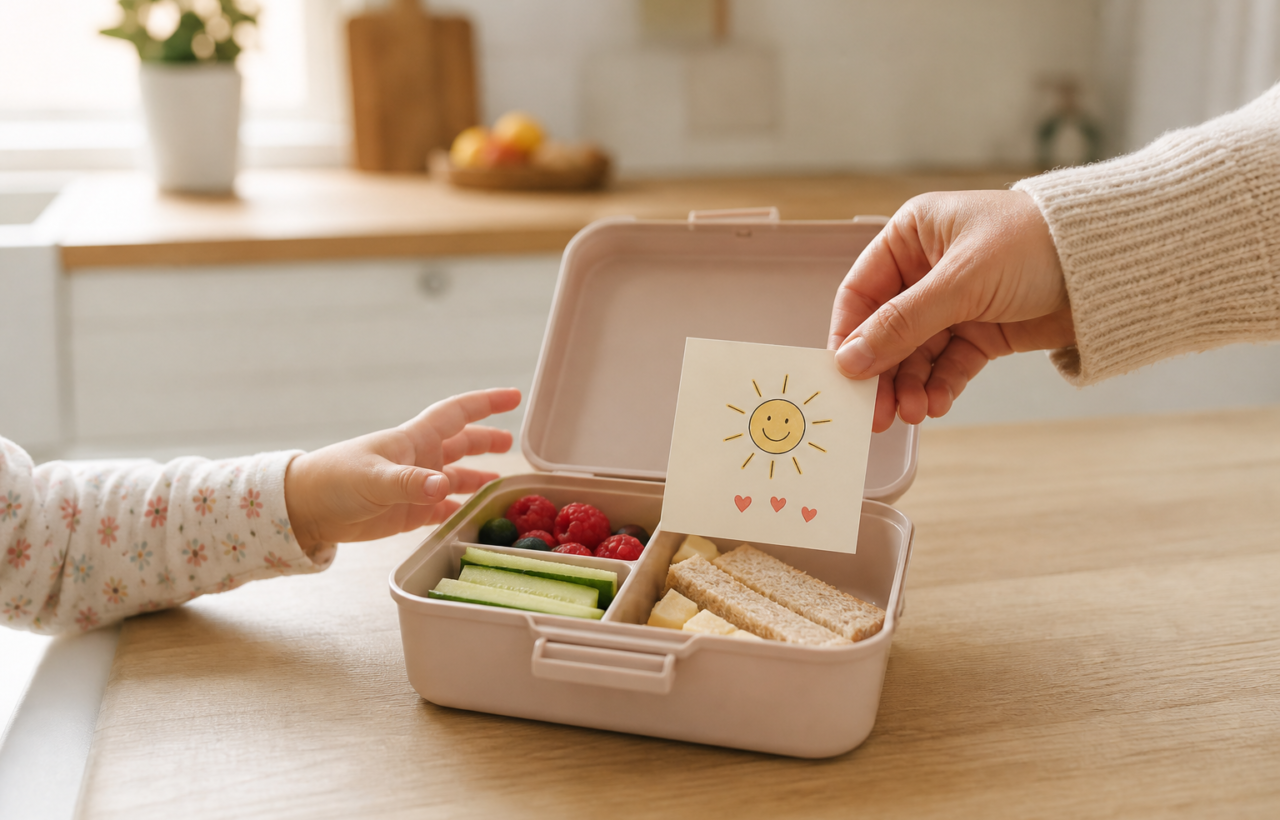
Your toddler cannot read the note you tucked beside lunch, and it may come home crumpled, stained, or apparently unnoticed. That does not make the idea pointless. The right note can work as a picture your child recognizes, a sentence an educator reads aloud, or a familiar cue that connects daycare with home.
A lunch box note is a simple way to bring affection or a little humour into a child’s day. For a child under 36 months, the trick is to make the message understandable without expecting reading, a particular emotional reaction, or a perfectly preserved keepsake.
Key takeaways
- Give the note one job: connection, reassurance, encouragement, or play.
- For a child who cannot read, pair a short sentence with a familiar picture or symbol.
- Use concrete language and make only promises you know you can keep.
- Keep instructions about eating, behaviour, and performance off the note.
- Use plain paper without loose decorations, and follow your daycare’s rules about personal items.
- Let your child’s response determine whether notes become a routine, an occasional surprise, or something you stop.
Make the note work without reading
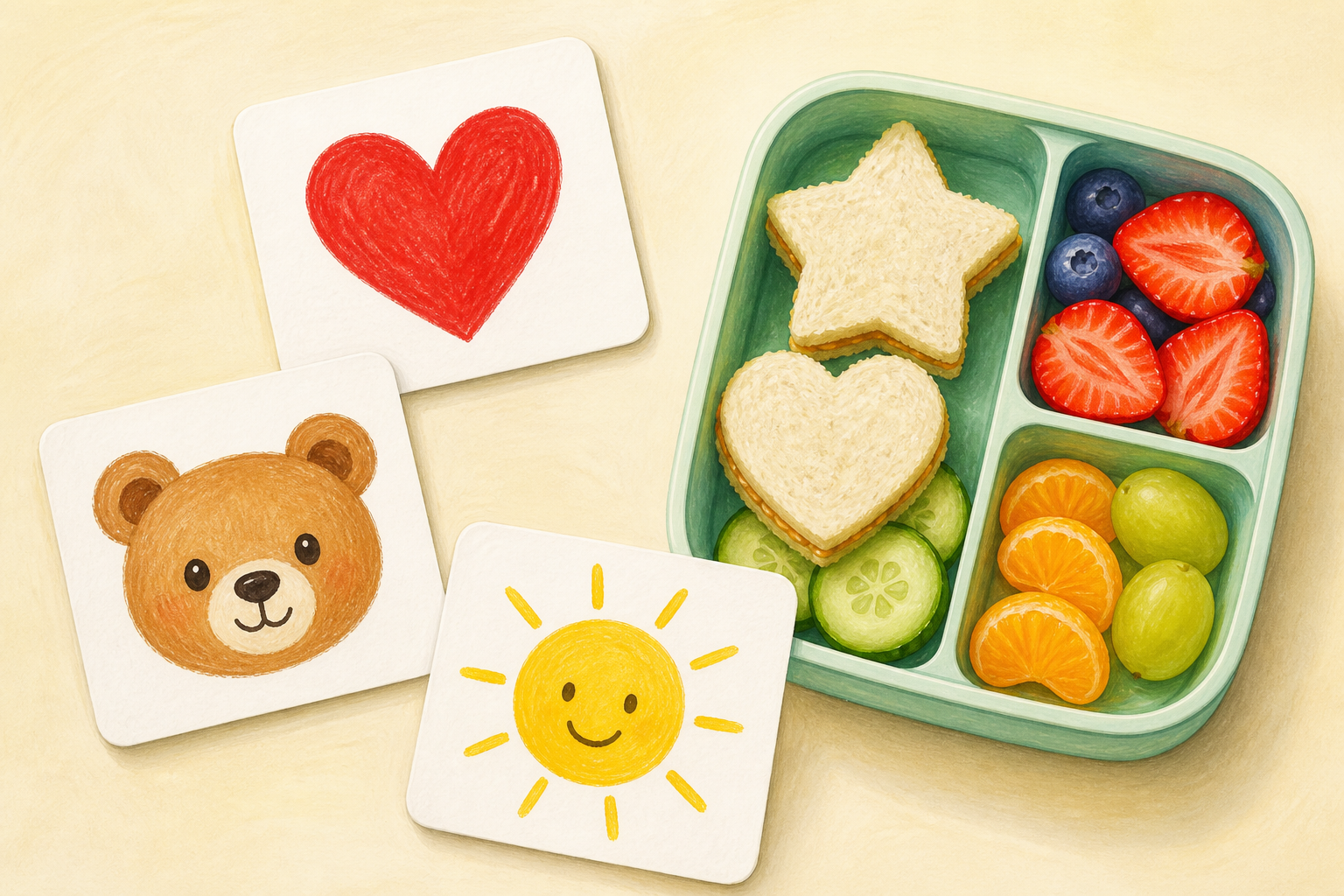
A pre-reader’s lunch note has two possible audiences: your child and the adult helping with lunch. Design it so either one can unlock the message.
Start with a symbol your child already knows. A heart can mean love, a simple face can mean a parent, and a quick drawing of the family pet can mean home. Introduce the symbol before it appears in the lunch box. Draw it together, name what it means, and use the same meaning each time. The picture then becomes part of the message instead of random decoration.
Add one short sentence in clear handwriting. Even though your child is not reading it, an educator may be able to share it during lunch. Ask first rather than making this another task staff must remember. If reading personal notes is not part of the room’s routine, let the picture stand on its own.
Keep the physical note simple. If your child still mouths objects, avoid staples, glitter, buttons, or decorations that can come loose. Use plain paper and place it in the lunch bag’s outer pocket or another location approved by the daycare. Do not put it directly against unpackaged food.
Match the message to what your child needs that day

The most useful question is not, “What sounds cute?” It is, “What should this note do at lunchtime?” Choose one purpose and keep the words aligned with it.
For connection during an ordinary day
Connection notes do not need a lesson. They simply remind your child that home still exists while the two of you are apart.
- I love you at home, and I love you at daycare.
- This heart is our lunchtime hello.
- We are thinking about you.
- A big hug is waiting at home.
- I love your wonderful laugh.
- Draw your family, pet, or a familiar object from home.
Use the names your child uses. Mama, Dad, Nana, or a pet’s name will usually carry more meaning than a polished sentence written for an adult.
For a difficult drop-off or changing routine
A reassuring note should be concrete and true. Avoid vague promises such as “I’ll be there soon” when a toddler does not know what soon means. Name the part of the routine your child already understands, but only if the plan is settled.
- This heart means I love you when we are apart.
- I will see you after daycare.
- Nana will pick you up today.
- Your teacher can help you.
- Home is waiting for you after your daycare day.
Do not put an uncertain pickup plan on the note. If the schedule might change, keep the message focused on love and connection rather than who will arrive or when.
For encouragement without pressure
Encouragement works best when it offers support instead of assigning a performance. A command such as “Be brave” can turn the note into another job. Give your child a usable option instead.
- Take your time.
- You can ask your teacher for help.
- One thing at a time.
- Your words matter.
- You can try again.
- I love you on easy days and hard days.
If you name an educator, use the name your child knows and confirm that the person will actually be present.
For a playful lunchtime surprise
Toddlers do not need a written joke with a punchline. A silly picture or pretend situation is easier to understand.
- Draw a banana wearing an enormous hat.
- Turn a heart into a smiling face.
- Draw the family pet peeking over the edge of the paper.
- Add a sleepy star and invite your child to find it.
- Draw an animal making your child’s favourite sound.
- Make a tiny self-portrait with very messy hair.
Keep food coaching separate. “Eat everything” or “Show me an empty box” changes an affectionate note into a lunch instruction. Share concerns about eating directly with the caregiver rather than placing that responsibility on your child.
Build a routine that takes less than a minute
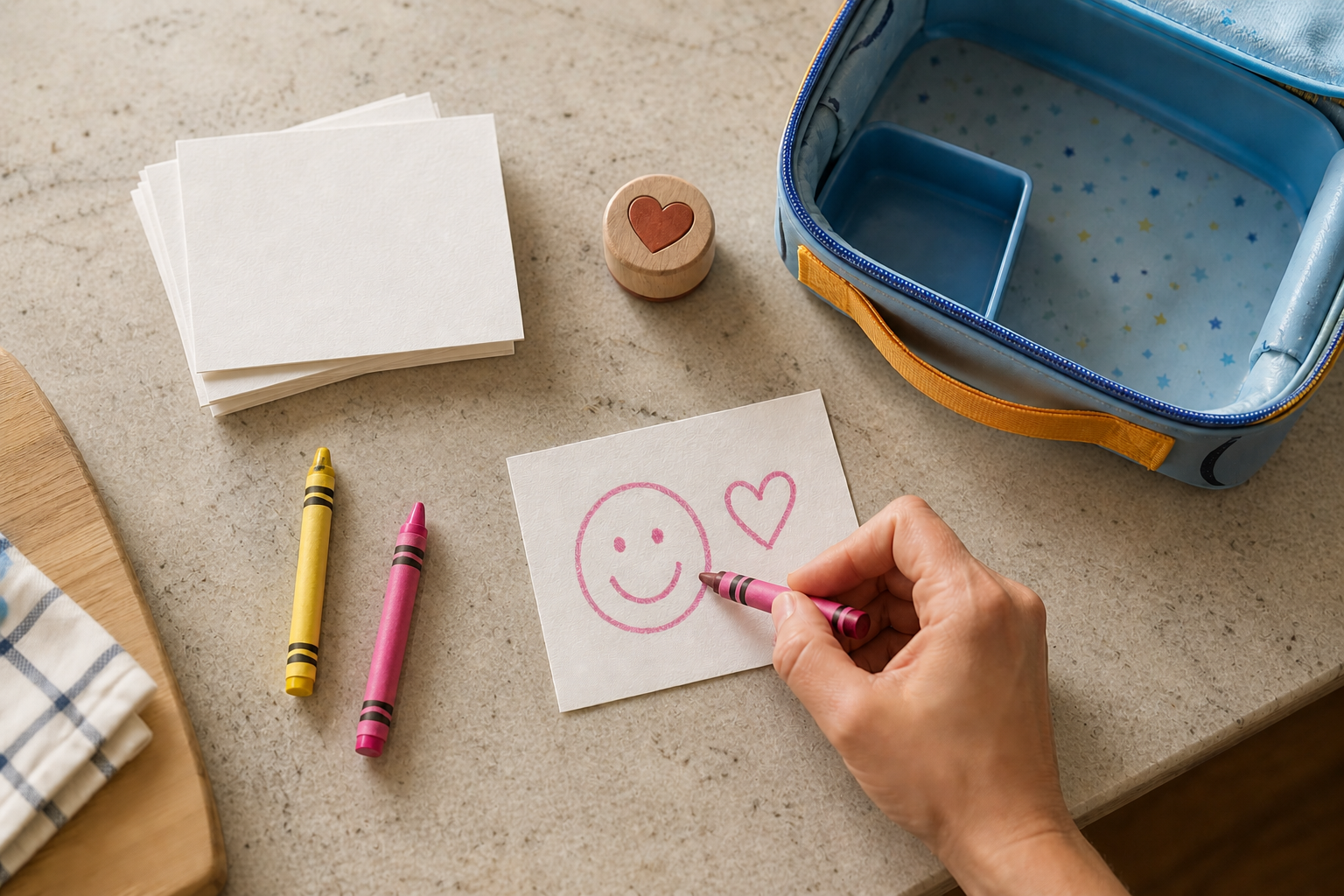
The idea becomes difficult when every note has to be original. A repeatable system is more useful than a daily burst of creativity.
- Choose a shared symbol. Let your child pick a heart, sun, animal, or simple family face.
- Decide what the note is for. Choose connection, reassurance, encouragement, or play before writing.
- Write one short sentence. Use words you would naturally say to your child.
- Add the familiar picture. Reusing the same symbol is useful; novelty is not required.
- Preview the first few notes. Show your child the picture at home and explain what it means before packing it.
- Use the daycare’s approved location. Ask whether the note belongs in an outer pocket, inside the lunch bag, or somewhere else.
Keep a small stack of plain paper beside the lunch bags with a pen or washable marker. You can also prepare blank cards with the familiar symbol already drawn. On a rushed morning, add the child’s name and a few honest words.
You do not need to send one every day. An occasional note may stay meaningful, while a predictable note may help a child who likes continuity. Choose the pattern that fits your child and your mornings; do not create a streak you feel guilty about breaking.
Let your child’s response shape what happens next
Do not quiz your child about the note at pickup. A toddler may have enjoyed the picture without remembering it later, ignored it while focused on lunch, or needed an adult who was too busy to read it. Ask lightly if you are curious, then move on.
Watch what the note does rather than insisting that it should work. If your child wants the same heart again, repetition is fine. If the note becomes a treasured object, choose paper that can travel back and forth safely. If it causes more distress about missing home, pause the routine and ask the caregiver what happened when it appeared.
Assume other people may see anything placed in a lunch bag. Do not include medical instructions, behaviour corrections, family conflict, pickup passwords, or private news. Send information that staff need through the daycare’s normal communication channel.
For tomorrow, choose one familiar symbol and one sentence you already say at home. Draw them on plain paper, show your child what the picture means, and ask the daycare where it can safely go. That is enough for a useful first note.
References