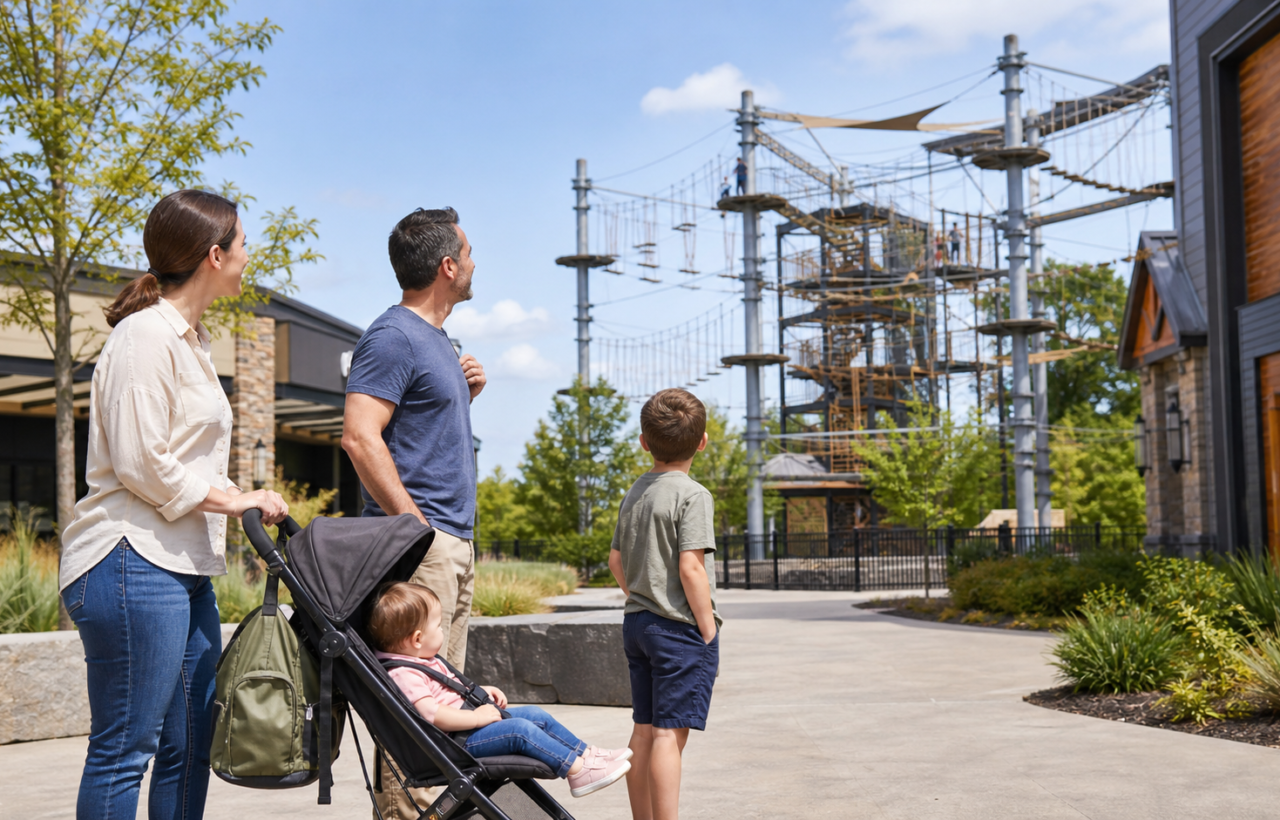
If Hangloose Adventure Bluewater is on your family-day shortlist, the difficult question may not be whether the adventure looks exciting. It is whether the outing will still work when your group includes a baby or toddler who may not be able to participate.
The safest approach is to plan it as a mixed-role day: some relatives may take part, while another trusted adult remains fully responsible for the youngest child. Confirm the venue’s current rules before buying tickets, then organize the booking around supervision, feeds, naps and each child’s willingness to join in.
Start with what the family experience establishes
The standout experience at Hangloose Adventure Bluewater is England’s longest Skywire. Its appeal can cross generations: one family group included three generations, from an adrenaline-loving 11-year-old to a grandfather in his 70s.
That is encouraging if your party contains older children, parents and grandparents. It is not an eligibility rule. It does not tell you whether your particular child or relative meets the current participation requirements, feels comfortable with the activity or needs additional support. It also does not establish that a baby or toddler can participate.
Separate the decision into two questions:
- Who is eligible to take part? Confirm this directly with the venue using each person’s age and any other information its rules require.
- Will the day work for everyone who does not take part? Check spectator arrangements, facilities and supervision before treating the attraction as a whole-family plan.
A clear answer to the first question does not automatically solve the second. A booking can suit the adventurous members of your family while still being impractical for the adult caring for your youngest child.
Build the day around adult coverage
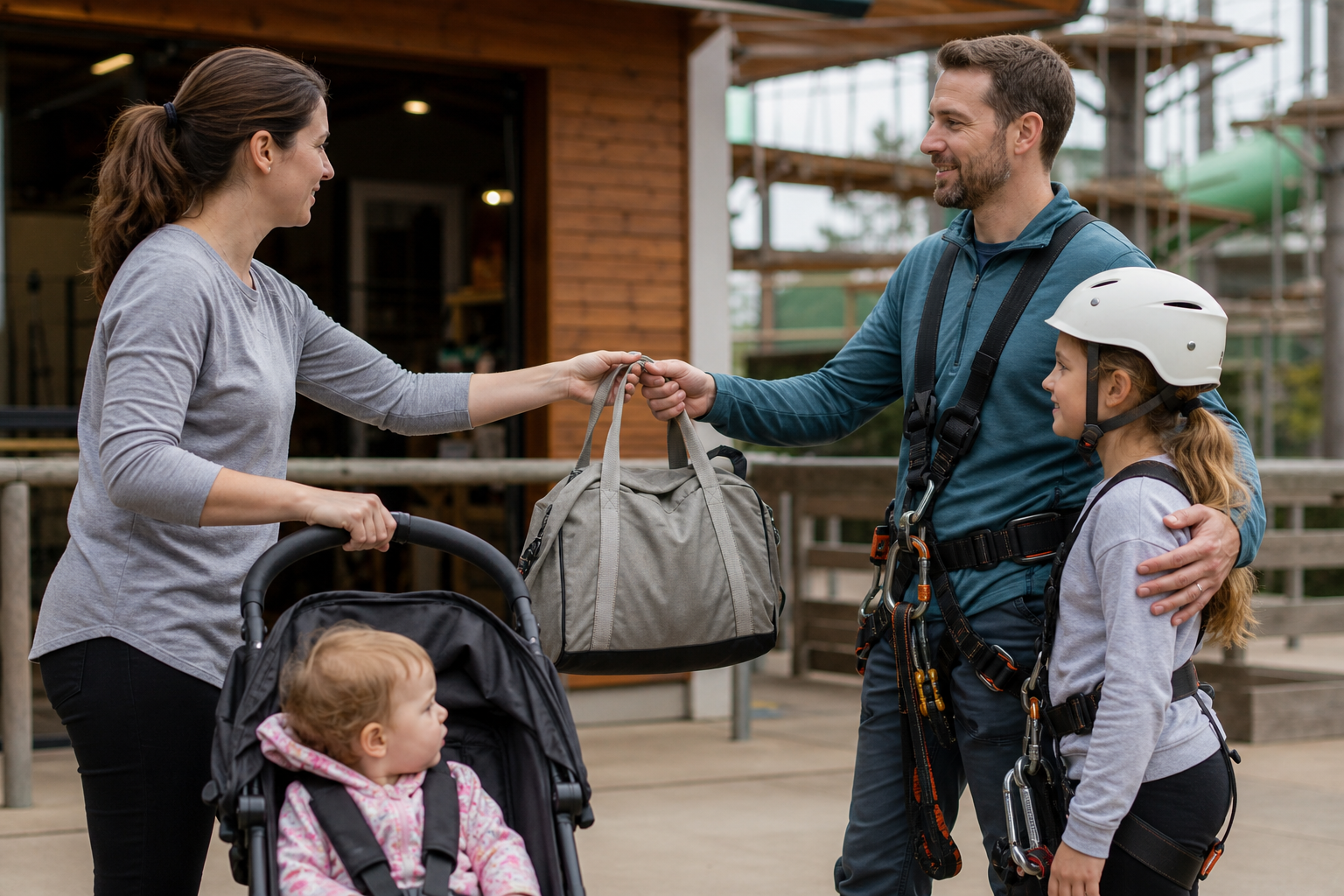
When a baby or toddler may be a non-participant, assign one named adult to be responsible for them throughout every part of the visit. Do this before booking, not after arrival. The arrangement should still work if participating relatives need to check in together, move away from the rest of the family or wait longer than expected.
Use the version of the plan that matches your group:
- Two adults and one young child: decide who participates and who stays with the child. If both adults want a turn, ask whether the venue permits separate booking times or another workable arrangement. Do not assume an on-the-day swap will be possible.
- One adult and one young child: plan to remain a spectator unless you are bringing another trusted adult who can supervise the child. Do not count on venue staff, another visitor or an older sibling to provide childcare.
- Several adults and children: write down which adult covers each non-participating child. A general promise that someone will watch them becomes unreliable as soon as the group separates.
- A multigenerational group: ask each adult whether they want to participate, supervise or simply accompany the family. A grandparent should not become the default caregiver merely because other adults want to take part.
Treat your baby’s least flexible need as the day’s anchor. If a feed or nap normally matters at a particular point, arrange the optional activity around it rather than expecting the child to adapt to an uncertain timetable. Ask the venue how early participants must arrive and how long the complete process may take before choosing a slot.
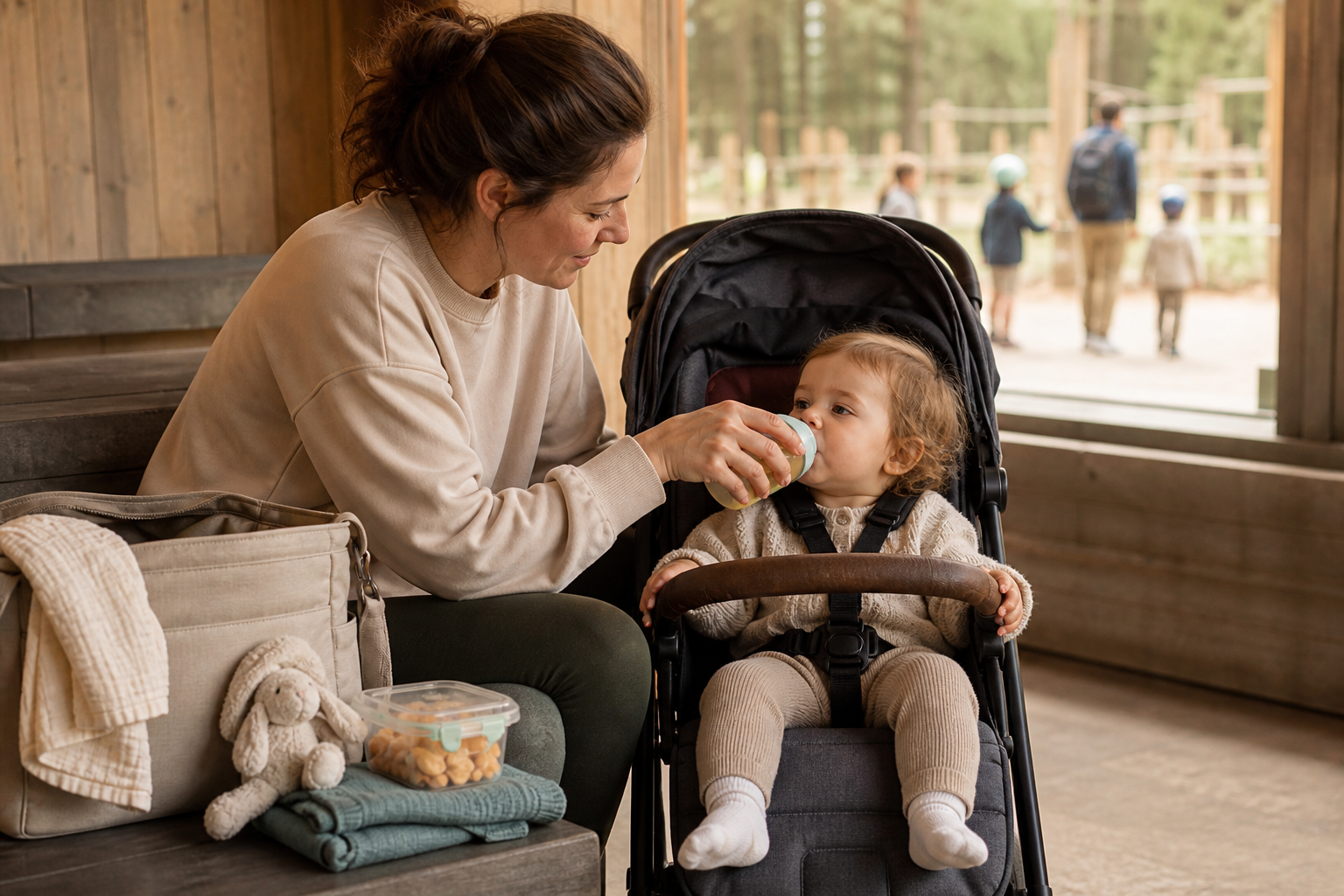
Keep a separate child-care bag with the supervising adult. Include the nappy supplies you ordinarily need, a change of clothes, an age-appropriate drink or feed, a familiar comfort item and suitable layers. The person taking part should carry their own essentials so the child-care bag never has to leave the youngest child.
Give older children a real choice
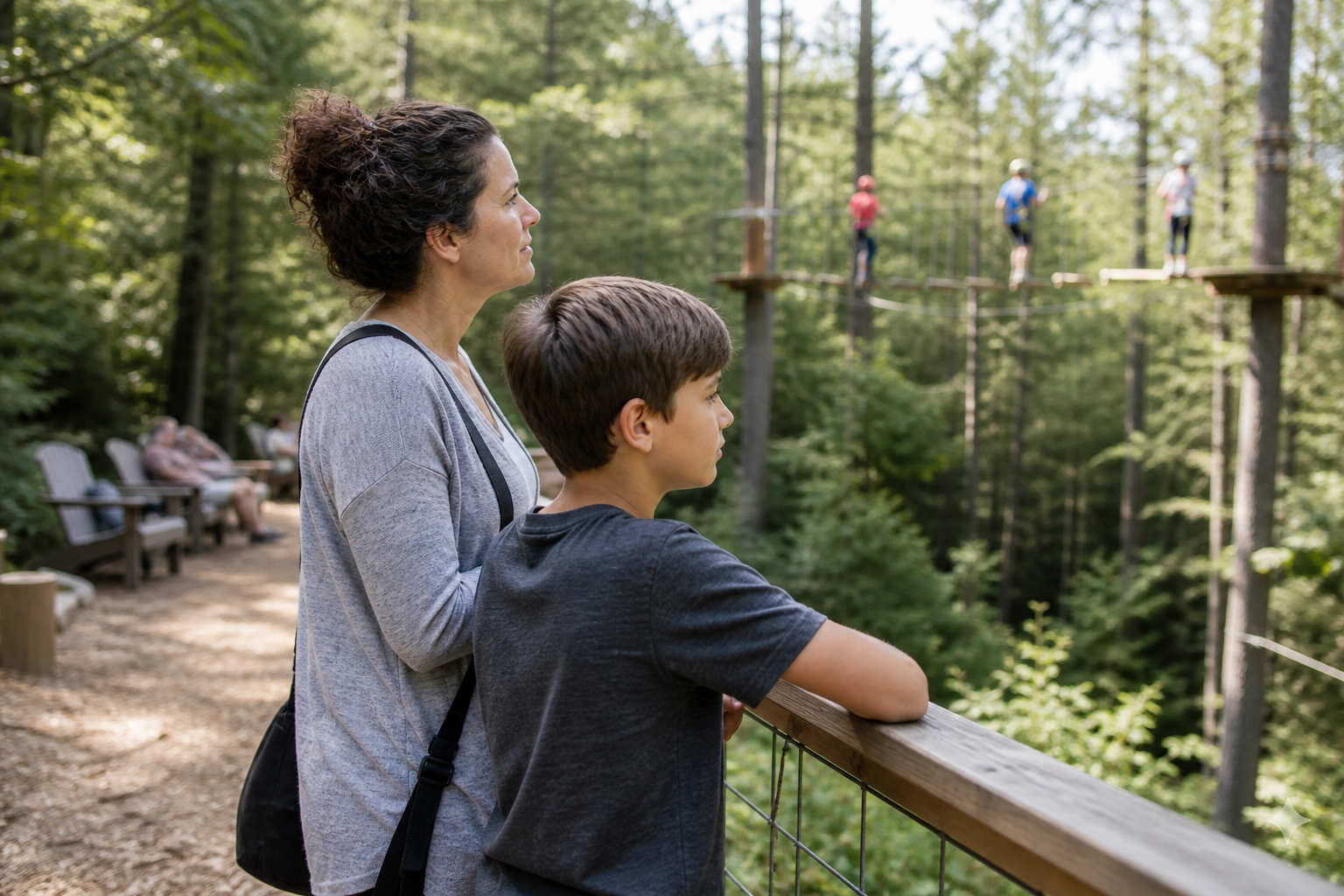
An adventurous 11-year-old enjoying a Skywire does not mean every child of a similar age will want the same experience. Eligibility, confidence and willingness are separate issues. A child can meet the rules and still decide that the activity is not for them.
Before you book, offer an older child three honest positions: take part if eligible, watch if permitted, or opt out. If you tell them they can decide after arrival, first check whether the ticket can actually be changed or cancelled. Otherwise, a supposedly open choice may turn into pressure once money has been spent.
A toddler needs a much simpler explanation. Tell them which trusted adult will stay with them and that some relatives may be doing a separate activity. Avoid promising that they can watch from a particular place until the venue has confirmed spectator access.
Bring one familiar, portable activity for waiting time. Choose something the supervising adult can manage while also handling a pushchair, carrier or changing bag. The goal is not to create a second elaborate day out; it is to give the youngest child something predictable while the family is divided.
Ask these questions before paying

Do not fill gaps in the booking information with assumptions. Contact Hangloose Adventure Bluewater if any answer is unclear, and ask questions about the exact activity your family intends to book.
- Participant eligibility: What are the current age, size or other participation requirements? Does a child need an accompanying participating adult? Are there any health, mobility or equipment restrictions the venue asks families to consider?
- Non-participants: May babies, toddlers and other non-participants enter the relevant area? Is there a designated spectator location, and can the supervising adult remain with the child throughout?
- Pushchairs and carriers: Can a pushchair reach the waiting or spectator area? Are there steps, uneven surfaces or restrictions on baby carriers? Is secure pushchair storage available if it cannot go farther?
- Essential facilities: Where are the nearest toilets and baby-changing facilities? Is there somewhere appropriate to feed a baby or sit with a tired toddler?
- Total timing: How early should the family arrive, and how long should you allow for check-in, preparation, waiting and the activity itself? Ask about the whole visit, not only time spent on the Skywire.
- Split participation: If two caregivers both want to take part, can they reserve different times while exchanging responsibility for the child? Must each adult check in at a separate time?
- Ticket flexibility: What happens if a child declines to participate, someone becomes ill or operating conditions affect the booking? Are spectators charged? Confirm the cancellation and rescheduling terms before payment.
- Personal belongings: What clothing and footwear are required? What happens to phones, glasses, keys and the participating adult’s bag? Is storage provided?
- Arrival route: How far is it from parking or drop-off to reception and the relevant activity area? Is that route suitable for the pushchair or mobility needs in your group?
Save the answers with your booking confirmation. Share them with every adult in the group, especially the person supervising the youngest child. That prevents one parent from discovering at the venue that the spectator plan, pushchair route or adult handoff does not work.
Key takeaways for parents of under-threes
- Do not assume that a cross-generational Skywire experience means every age can participate; verify the current rules for each person.
- Book only when a trusted adult can remain responsible for your baby or toddler whenever the group separates.
- Confirm spectator access, pushchair or carrier arrangements, baby-changing facilities and total visit time before paying.
- Arrange the optional activity around your child’s more predictable feeds and naps.
- Let an eligible older child opt out without turning the ticket price into pressure.
- If the plan contains a gap in supervision, change the group, visit without the youngest child or choose a different family activity.
Your next step is simple: collect the venue’s current answers, write down the adult handoff and test the plan from the youngest child’s point of view. If those pieces fit, Hangloose Adventure Bluewater can be a memorable activity for the relatives who want the thrill without making the baby or toddler an afterthought.
References