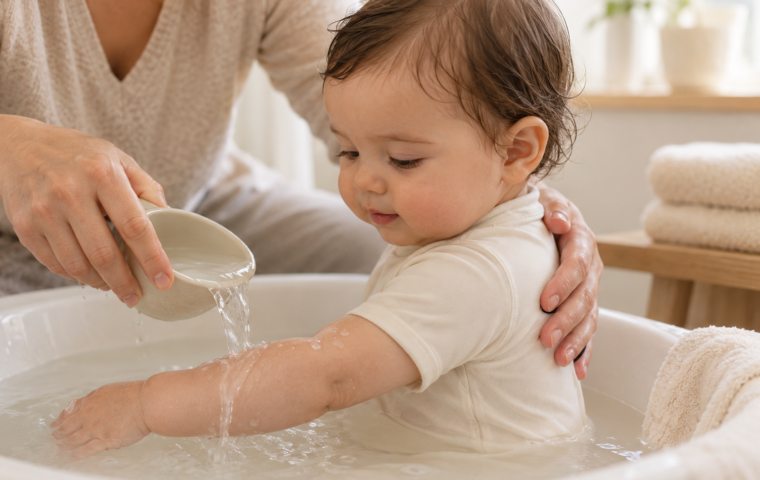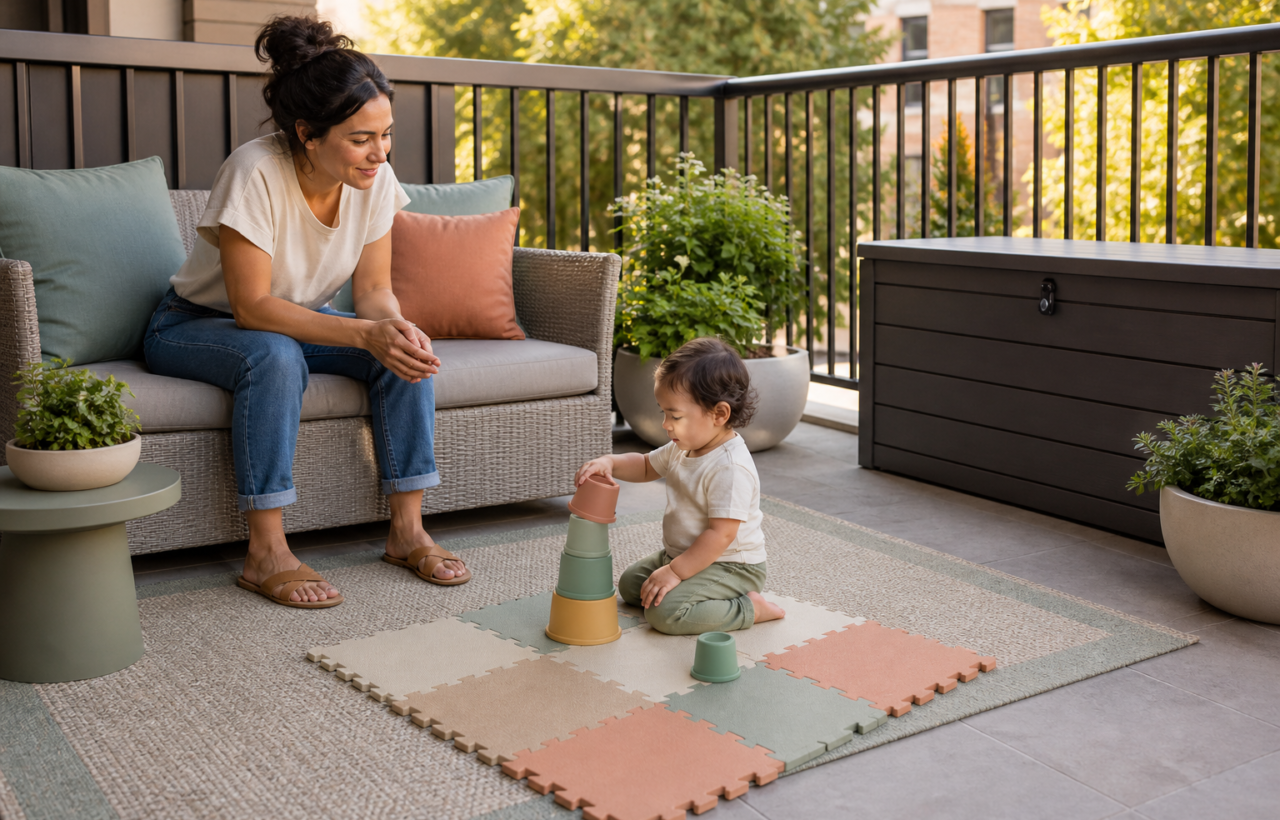
You already have a chair and a table, but the patio still looks like a place where outdoor items were left rather than a space your family uses. Buying another piece of furniture may only make a small balcony or patio harder to move through.
When a baby or toddler shares the space, the best upgrade is not more decor. It is a calmer layout, a few washable finishing pieces, and a clear plan for anything your child could reach, pull, tip, or climb.
Choose the patio’s main job before you buy anything
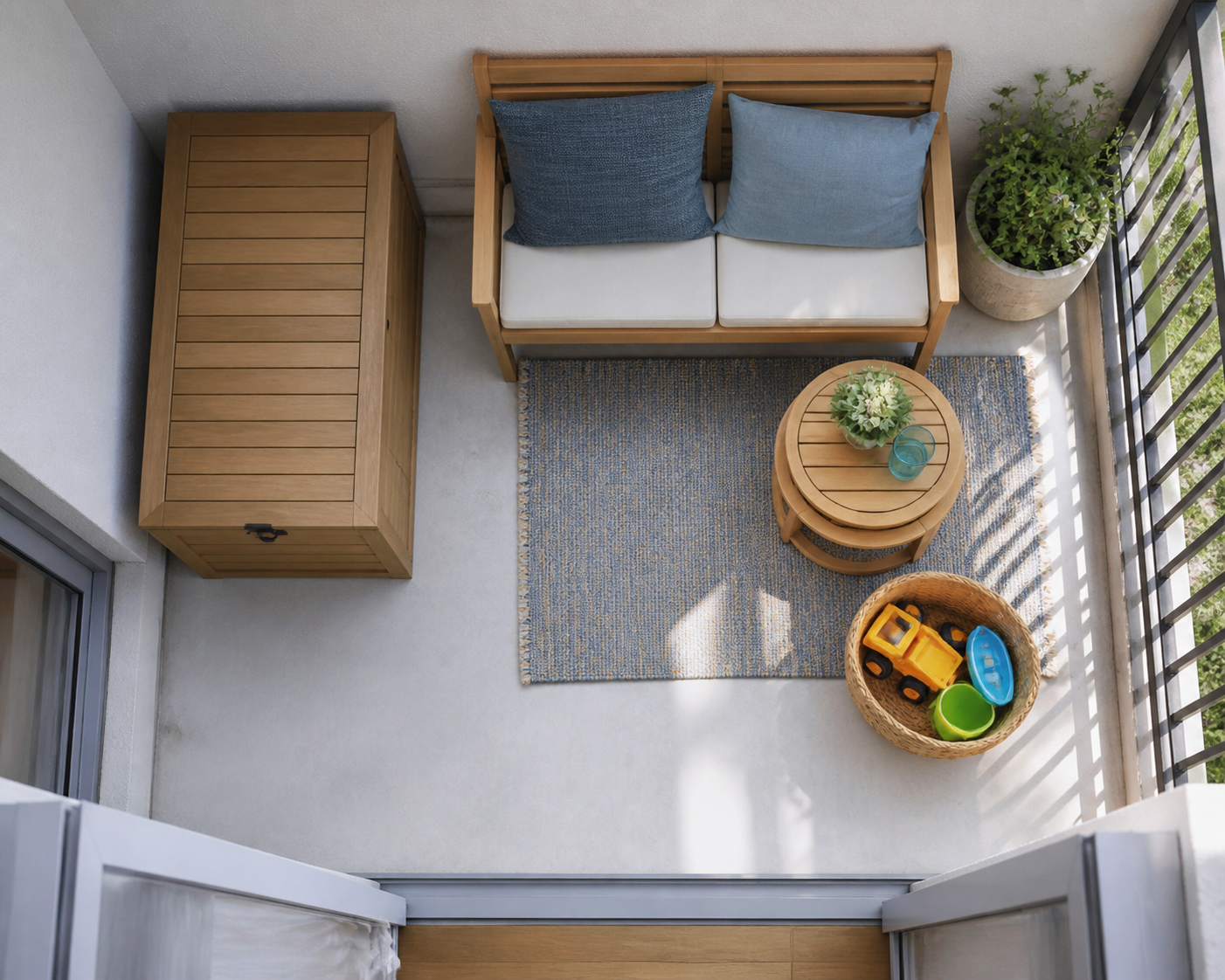
A compact patio rarely works well as a dining room, play area, garden, storage zone, and quiet retreat at the same time. Choose the activity you want it to support most often. That might be having coffee while your baby sits beside you, eating a simple family meal, enjoying a quiet break after bedtime, or giving your toddler a supervised place to play.
Then reset the space around that job:
- Take a photograph from the doorway. The photo makes visual clutter easier to notice than it is when you are standing inside the space.
- Remove every movable item. Clean the floor, furniture, railing, door glass, and empty planters using products appropriate for those surfaces.
- Return only what supports the patio’s main use. A chair that blocks the door or a planter that consumes the only open play area is not essential just because you already own it.
- Identify the one problem that makes the space feel most unfinished. It is often a bare seat, severe lighting, mismatched pots, a tired tabletop, or items with no storage place.
- Measure the available floor area, furniture, doorway, and proposed storage spot before shopping. Save the measurements on your phone so a small-looking item does not become a large patio obstacle.
This reset may reveal that you need less than expected. Cleaning a cloudy door, grouping loose gardening supplies, and changing the furniture arrangement can improve the patio before you spend anything.
Put your budget where the eye notices it
Large furniture is not always the missing ingredient. Seat cushions, gentler lighting, better-looking planters, and a refreshed table surface are small upgrades that can make an unfinished outdoor space feel more complete. Choose the first update by looking at the patio from inside your home: the surface that dominates that view usually deserves attention first.
If the chairs look bare
Add washable outdoor seat pads instead of replacing usable chairs. Check that each pad fits the seat, stays in place, and does not introduce long loose ties within your child’s reach. Store soft goods indoors when they are not being used if you do not have dry, child-safe patio storage.
If the lighting feels harsh
Use a softer outdoor-rated bulb only if it is compatible with the existing fixture. If you cannot safely change a fixed light, use an outdoor-rated portable lantern positioned beyond your child’s reach. Do not bring an indoor lamp outside, alter fixed wiring, or run a loose cord across the walking path.
If plastic pots draw too much attention
You do not have to replace every pot. Clean them, remove dead growth, and group compatible plants so the collection reads as one feature. A weather-suitable outer planter can conceal an unattractive nursery pot, but drainage still needs to remain clear. Place heavier pots on a stable surface where a mobile child cannot pull them over.
If the table is scratched
A washable outdoor tray or fitted placemats can cover the most visible wear while giving cups, snacks, and small toys a defined landing place. Avoid a long tablecloth around a child who can grab and pull it. If the table is unstable, repair or remove it rather than disguising the problem.
Before paying for any finishing piece, ask four questions: Does it fix the problem you identified? Is it suitable for outdoor use? Where will it go when the patio is not in use? Can your child reach, climb, pull, tip, open, or break it? If an item fails one of those tests, its low price does not make it a useful bargain.
Build the layout around your smallest user
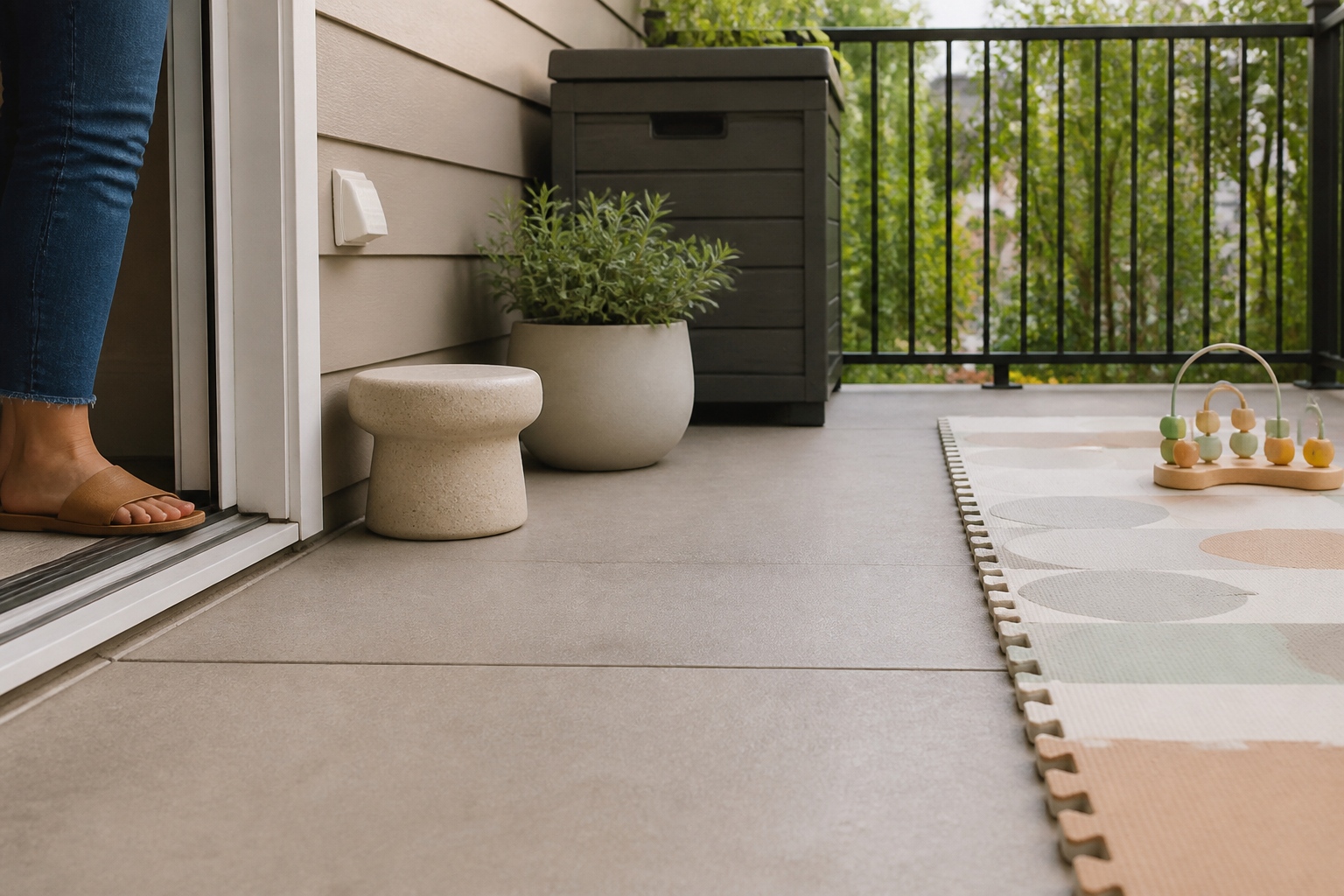
A patio can look polished to an adult while presenting a ladder, handle, or pile of interesting small objects to a toddler. Review the finished layout from your child’s height before calling the project done.
- Protect the route: Keep a clear path between the door and the main seat. Move cords, watering cans, toys, and plant saucers out of that path.
- Keep climbing aids away from edges: Do not position chairs, storage boxes, side tables, or planters beside a balcony or deck railing. A privacy screen is not fall protection.
- Remove reachable hazards: Keep breakable containers, sharp gardening tools, loose hardware, accessible batteries, hot lights, and dangling cords out of reach.
- Check stability: A tall decorative object that tips easily does not belong in a child’s accessible area. Choose a low, stable alternative or keep the item somewhere inaccessible.
- Preserve open floor: A small washable mat may define a supervised play spot, but it should lie flat and must not obstruct the doorway or drainage.
- Inspect the boundary: Decor should never cover damage, looseness, or gaps in a railing. Keep vents and drains unobstructed as well.
Try a reach test once the arrangement is complete. Crouch near floor level, follow the route your child is likely to take, and look for objects that invite pulling or climbing. Move anything questionable before the patio becomes part of the daily routine. A thoughtful layout reduces avoidable hazards, but it does not replace active adult supervision.
Make inexpensive pieces look deliberate
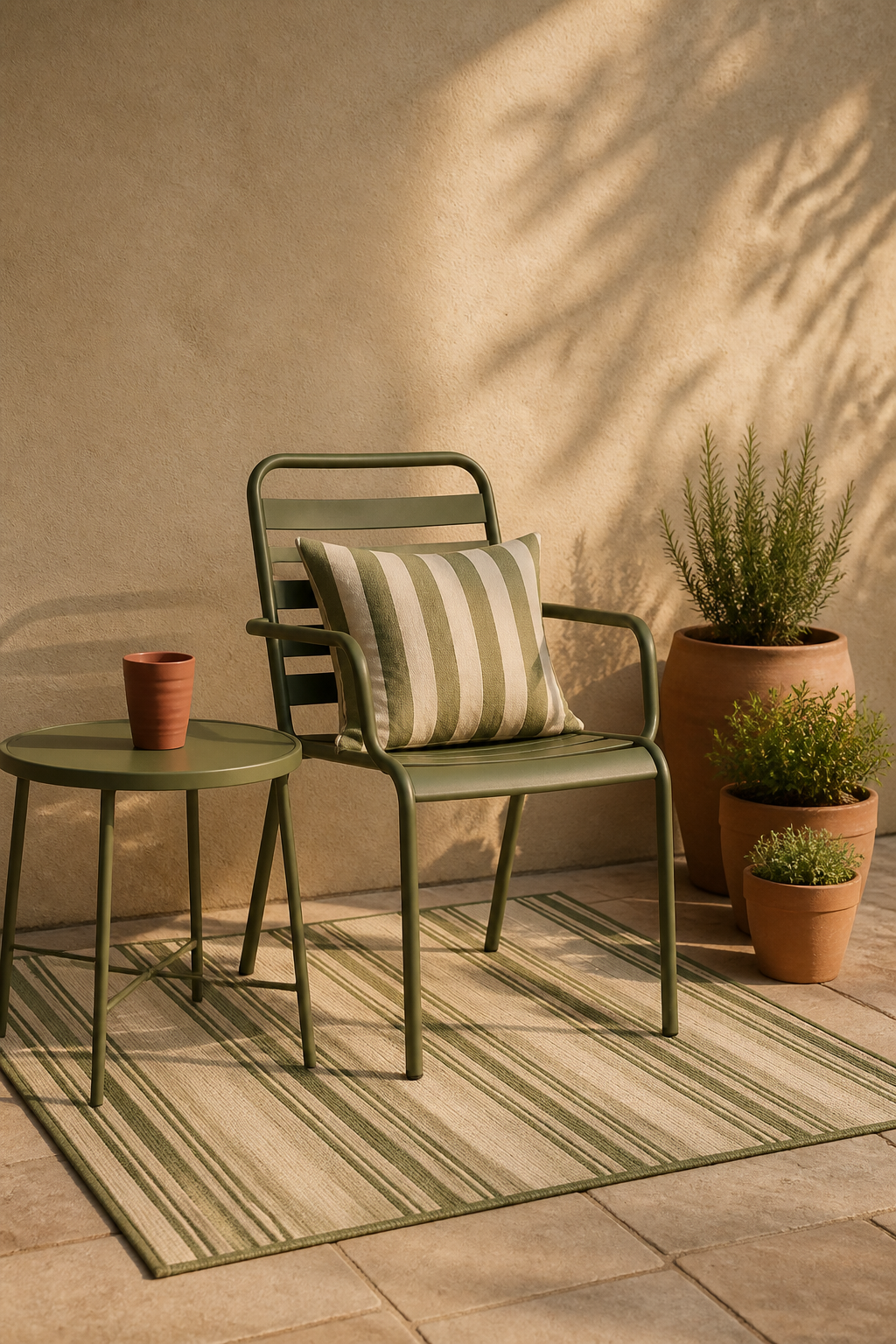
A patio feels coherent when a few details repeat. Matching everything is unnecessary. Choose one quiet base colour already present in the furniture or building exterior, then repeat one accent across a seat pad, planter, tray, or other small element. You are creating a visible relationship between things, not buying a complete collection.
Keep related objects together. Several planters scattered around the perimeter can look like storage; the same planters arranged as a compact group look intentional and leave more usable floor. Gardening tools belong in one caddy. Outdoor toys belong in one portable container that can be taken inside. Cups, wipes, and snacks do not need permanent patio storage if a tray can carry them out when needed.
Empty space is part of the upgrade. It gives you room to carry your baby, guide a new walker, move a high chair, or retrieve the stroller without navigating around decorative objects. Stop adding pieces when the patio supports its chosen job and still feels easy to cross.
A portable patio kit can keep the finished look from turning into daily clutter. Store the seat pads, lantern, tray, and a small toy container together near the door. You can set up the space when you use it and clear weather-sensitive or child-reachable items when you come back inside.
Key takeaways
- Choose one primary use for a small patio before deciding what it needs.
- Clean, clear, arrange, and measure before shopping; the first improvement may cost nothing.
- Upgrade the most visible weak point instead of buying another bulky piece of furniture.
- Prioritize washable textiles, softer outdoor-rated lighting, grouped planters, or a simple tabletop refresh.
- Keep climbable furniture away from railings and remove anything a child could pull, tip, break, or reach.
- Use portable decor and preserve open floor space so the patio remains easy to use with a baby or toddler.
Start by opening the patio door and taking one photograph. Clear the space, decide what you want to do there, and fix the first problem visible in that image. Once that change works in daily family life, you will know whether the patio needs another purchase or simply needs to stay pleasantly uncluttered.
References