You see a worn mixing bowl marked $2. It looks useful, but ordinary. That is exactly where the decision gets tricky: a $2 mixing bowl could be worth more than $250, yet an old appearance alone tells you almost nothing about value.
When you are shopping with a baby or toddler, you probably cannot investigate every bowl, casserole dish, or serving platter in the aisle. You need a quick way to identify the pieces worth researching, reject weak matches, and keep questionable kitchenware away from family meals.
The quick answer: exact identity creates value
Collectors do not pay a premium simply because something is old, faded, or no longer sold in stores. Value usually depends on the exact maker, line, shape, colour, size, condition, and completeness of the piece. A familiar-looking bowl can be common. A nearly identical bowl with a different mark, shape, or colour can be the one collectors want.
This is why visual resemblance is only the start of the process. Your job in the store is not to prove the final value. It is to collect enough identifying information to determine whether an exact match exists.
Key takeaways
- Turn the piece over. A maker’s mark, moulded number, country name, or line name is usually more useful than the decoration alone.
- Match the whole object: mark, shape, size, handles, rim, foot, colour, decoration, and any lid or accessories.
- Use completed sales to investigate market value. An unsold asking price shows what a seller hopes to receive, not what a buyer has paid.
- Check condition before getting excited about a price. Cracks, chips, repairs, heavy wear, and missing parts can change the comparison.
- Keep collectibility and food safety separate. If you cannot identify the material and intended use, do not serve food from the piece, especially to a baby or toddler.
Run this shelf check before you search
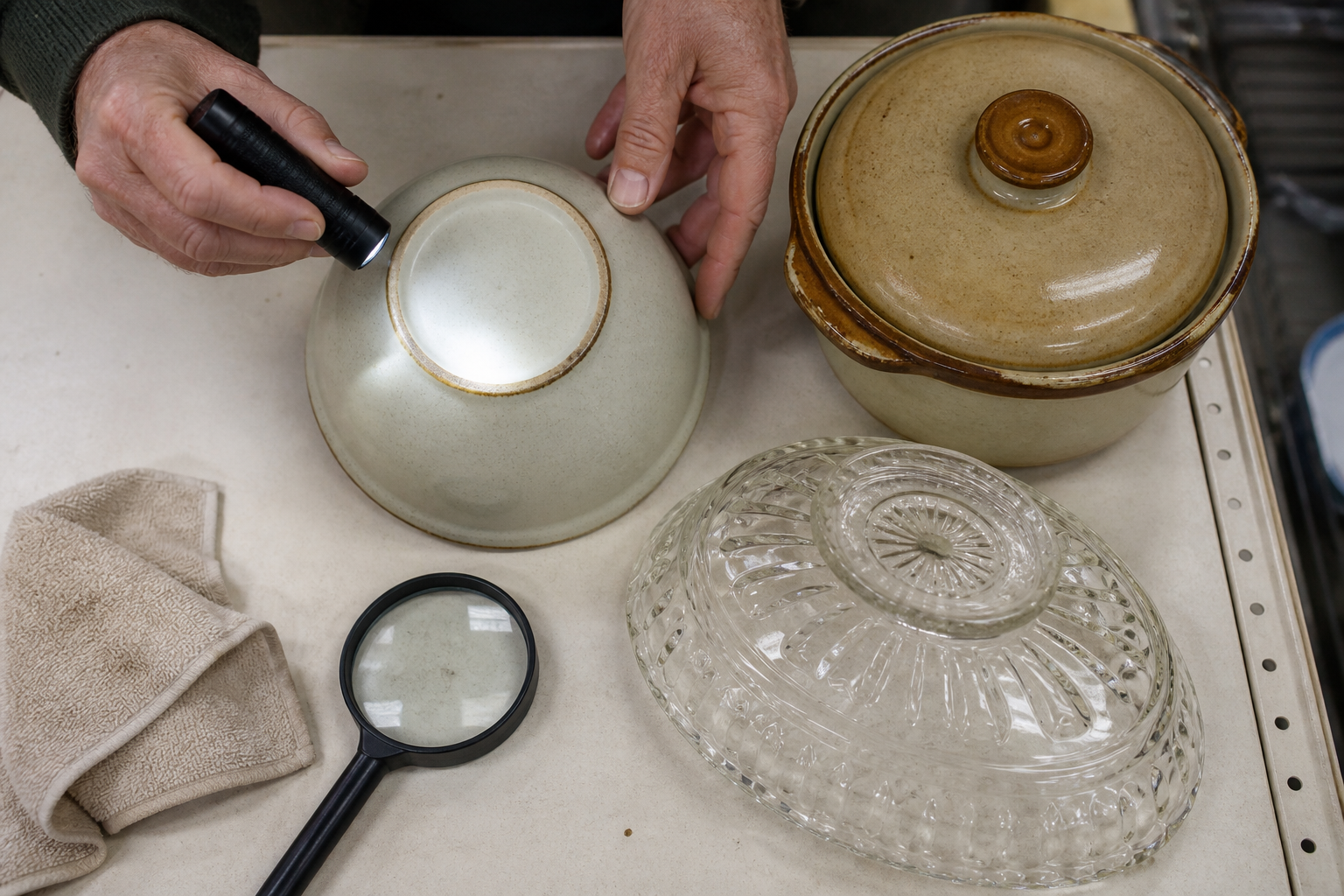
A good shelf inspection should leave you with facts, not a feeling that the object seems vintage. Work through the same sequence every time so an attractive pattern does not distract you from a crack or an identifying mark.
- Read the underside first. Look for printed, impressed, engraved, or moulded words and symbols. Copy every letter and number exactly. If the mark is faint, photograph it from more than one angle rather than guessing.
- Study the construction. Note the profile, rim, base, handles, spout, feet, and lid. These features can separate two pieces that share the same colour or decoration.
- Record the size. Exact measurements are best, but even a clear photo beside a familiar object can help you avoid confusing a small serving bowl with a larger version later.
- Check the decoration closely. Photograph the full pattern, its placement, the border, and any differences between the inside and outside. Do not rely on a broad description such as floral or blue.
- Inspect every surface. Tilt the piece under the available light. Look along the rim, handles, base, corners, and the area where a lid rests. Hairline cracks and old repairs are easier to miss when you look only from above.
- Capture a complete photo set. Take the mark, front, side profile, interior, lid, price label, and every flaw. Those images let you compare the piece accurately without relying on memory.
Do not scrub a mark, peel off an old label, or test an aggressive cleaner in the store. If the item turns out to be collectible, careless cleaning can leave permanent scratches, remove decoration, or erase information you needed for identification.
Price the exact piece, not a look-alike
Start your search with the exact wording from the mark, followed by the object type and its most distinctive physical feature. If the underside gives you a maker, number, and country, use all three. Add a colour or pattern description only after the identifying text.
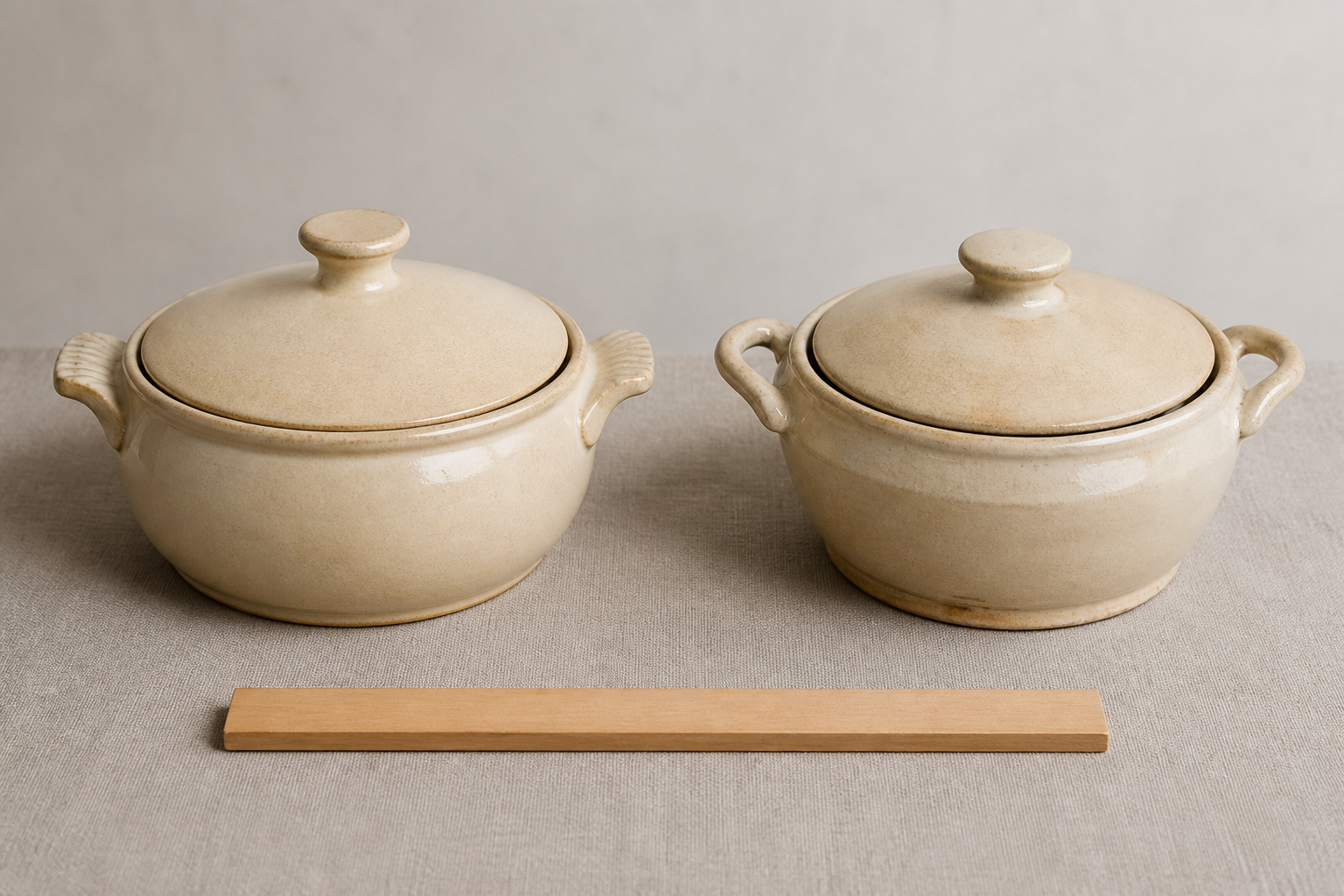
Then make the candidate earn the match. Compare the mark itself, because companies can use different marks across product lines or periods. Compare the silhouette, dimensions, handle design, foot, decoration placement, and lid. If a listing matches only the colour and general shape, it is not a reliable comparable.
- Find an exact identity. Confirm as many independent details as possible rather than accepting the first similar image.
- Look for completed sales. Where a marketplace provides sold records, use them to see whether buyers have actually paid for the same piece.
- Compare condition and completeness. An intact bowl with its correct lid or companion pieces is not equivalent to a cracked, repaired, or incomplete example.
- Check the terms of each transaction. Note whether shipping was separate and whether the sale included several pieces. A set price cannot be assigned to one item without evidence.
- Use a range, not a trophy result. One unusually high sale may reflect exceptional condition, a scarce variation, or a buyer who needed that exact piece. Several close matches are more useful than one dramatic number.
Active listings still have a purpose. They show competing inventory, how sellers describe the object, and whether many similar pieces are sitting unsold. They do not establish the amount you can expect to receive.
Be precise about what you mean by worth. A collector’s replacement price, a quick local-sale price, and your net return from reselling are different numbers. For a resale estimate, subtract selling fees, payment costs, packing materials, shipping you must cover, and the cost of a return. Your time spent identifying, cleaning, photographing, listing, packing, and answering buyers is also part of the decision, even though it does not appear on a receipt.
If you find no comparable sale, do not automatically call the piece rare. It may be uncommon, poorly documented, listed under another name, or simply unwanted. Treat the value as unconfirmed until you can identify the object and find evidence of demand.
Condition and food safety are separate questions
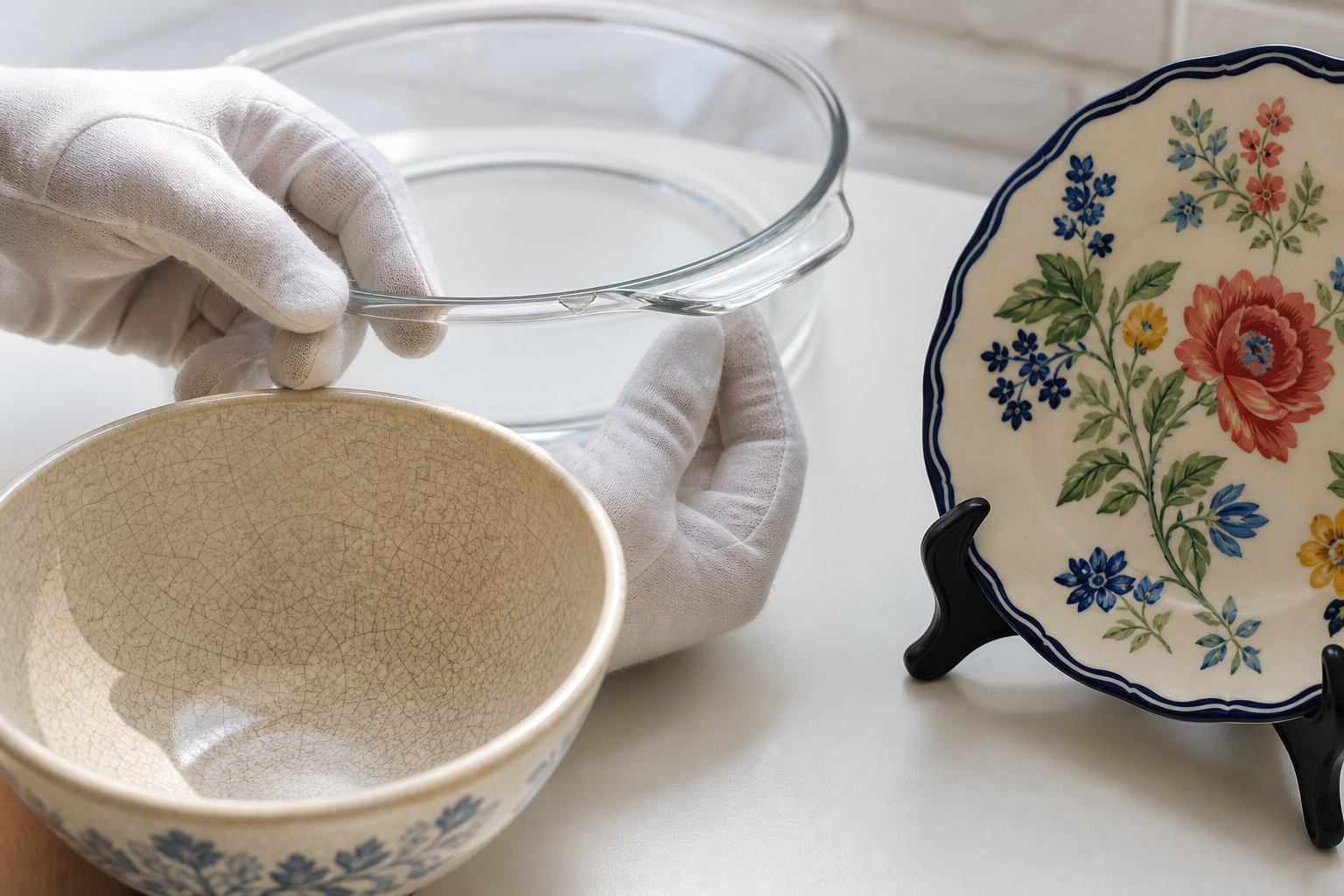
A piece can be collectible without being suitable for your kitchen. It can also be safe and useful while having little resale value. Make those decisions separately.
For condition, examine the object under angled light and run your eyes along every edge. Check for chips, hairline cracks, widespread surface cracking, stains, deep utensil marks, fading, rough repairs, wobbling, and a lid that does not sit correctly. Photograph anything questionable. Do not hide a flaw from yourself because the thrift-store price is low; the same flaw will still exist when you use, display, or sell the piece.
Delay deep cleaning until you know the material and decoration. Avoid abrasive pads, harsh cleaners, prolonged soaking, high heat, and the dishwasher unless reliable, material-specific guidance confirms that the treatment is appropriate. A gentle method for one type of kitchenware may damage another.
For food use, do not assume that a vintage item is suitable simply because its original owner cooked or served with it. If you cannot verify the maker, material, intended purpose, and present condition, keep it out of food preparation and service. This matters particularly for children from birth to 36 months: unknown older kitchenware should remain a display or research piece until its use has been properly verified.
Cracked, chipped, unstable, or poorly repaired pieces also create immediate practical problems. A damaged edge can be sharp, and further breakage can occur during washing or use. Keep heavy and breakable finds in a closed, secure place that a crawling baby or climbing toddler cannot reach, pull down, or knock over.
Use a buy-or-pass rule that survives the excitement
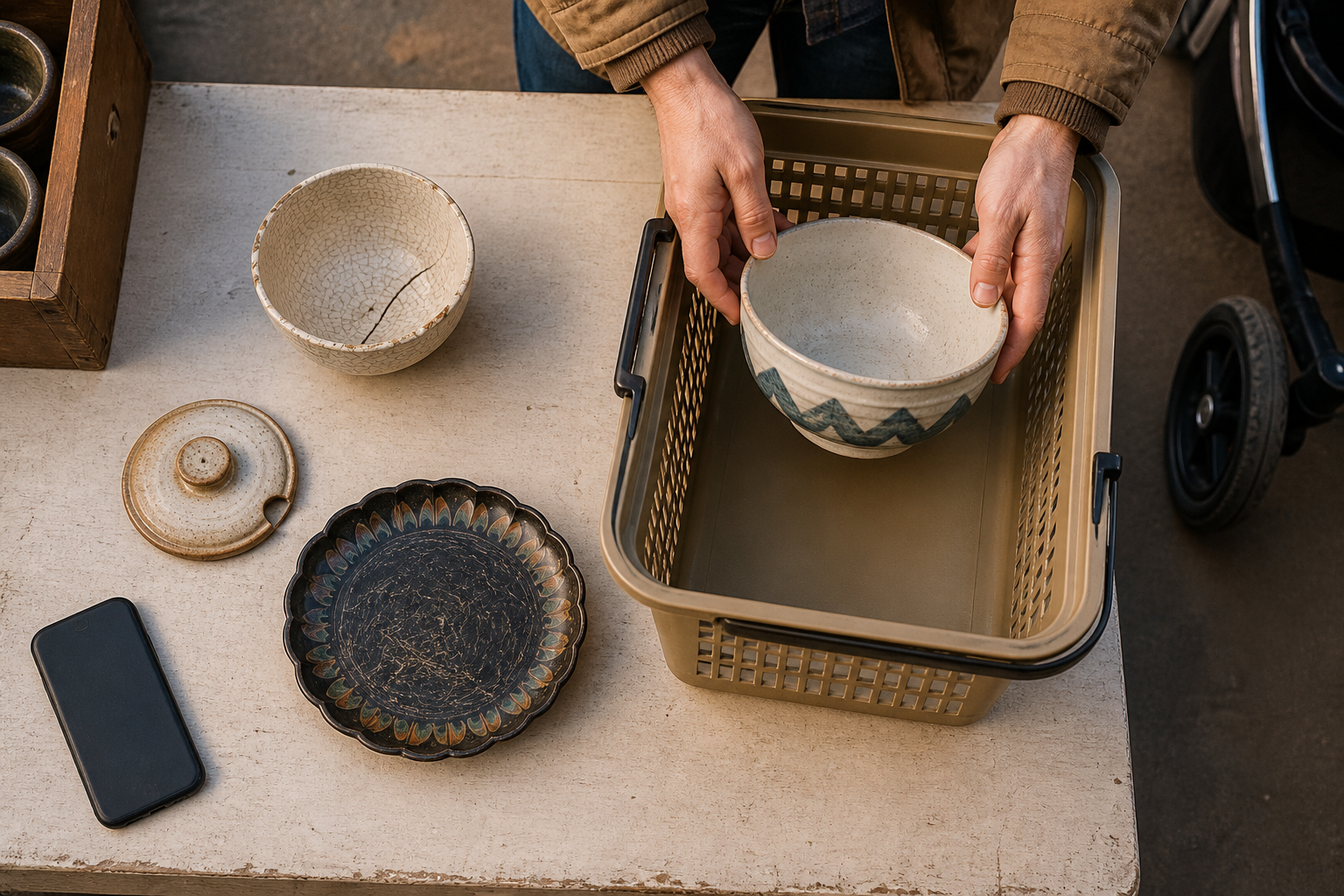
Before you reach the checkout, decide why you are buying the item. A purchase can make sense for your home, a collection, or resale, but each purpose needs a different test.
- For home use: Buy only if you would still want the piece with no resale value, its condition is acceptable, and its suitability for the intended use can be verified.
- For display or collecting: Confirm the identity and decide whether the appearance and condition justify the price to you. Market value matters less if you genuinely want to keep it, but uncertainty should still affect what you pay.
- For resale: Require a defensible identification, relevant completed sales, a complete condition check, and a conservative estimate of your net return. Do not build the calculation around the highest unsold asking price.
- Pass: Leave the item when the identification depends on a guess, damage cannot be assessed, the supposed rarity comes only from a seller’s description, or the purchase would strain money needed elsewhere.
One practical guardrail is to set two ceilings. Your personal-use ceiling is the most you would pay if the resale value proved to be zero. Your resale ceiling is the most you can pay after allowing for selling costs, your time, uncertain demand, and the possibility that your identification is wrong. Use the ceiling that matches your reason for buying, and do not switch reasons at the register merely to justify the purchase.
On your next thrift-store visit, choose one promising piece and take the full set of identification photos before searching. If you can match the mark, form, condition, and completed sales, you have a decision grounded in evidence. If you cannot, leave it on the shelf unless you would happily own it with no financial return at all.
References