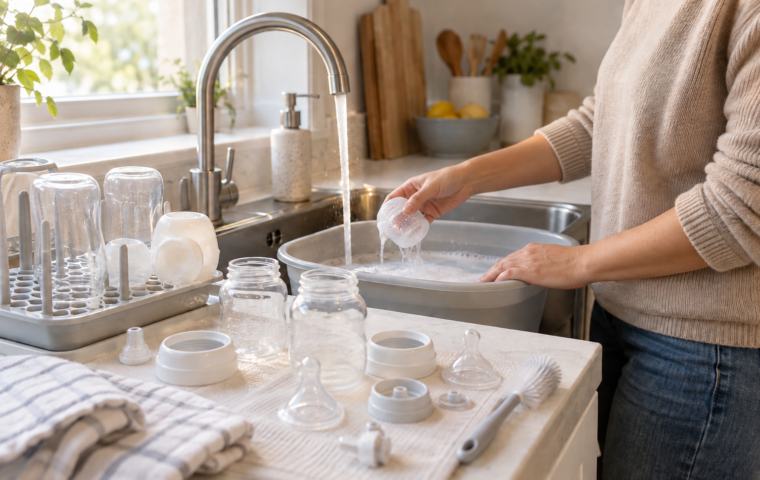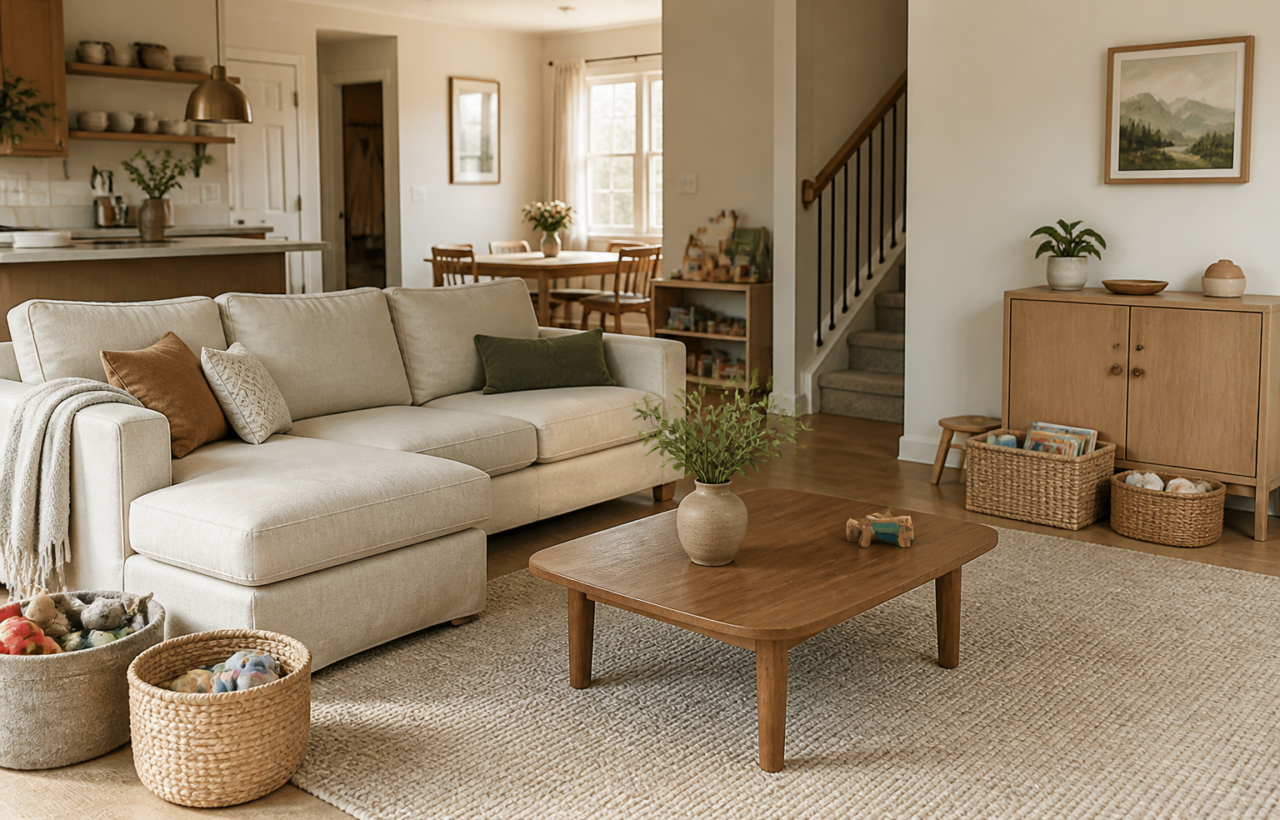
When diapers, wipes, feeding gear, bath supplies, toys, and adult belongings all share the same rooms, the problem can look like a shortage of storage. Often, the more immediate problem is that everyday objects have no clear place to land. Buying more bins at that point gives you better-looking clutter, not an easier home.
A useful budget reset follows a deliberate order: clear what the room no longer needs, assign homes to what remains, choose finishes that reduce cleaning work, and then add one decorative detail. Your money goes toward making repeated routines easier rather than filling the room with organizers you must organize.
Key takeaways
- Give every organizer one job connected to a routine you repeat.
- Measure the available space and the objects going into it before you shop.
- Prioritize narrow, lidded, washable, wipeable, or portable pieces over purely decorative storage.
- Add one focal detail after the clutter has a working home.
- Reject or relocate anything your baby or toddler could pull down, mouth, open, tip, or detach.
Fix the landing zones before buying decor
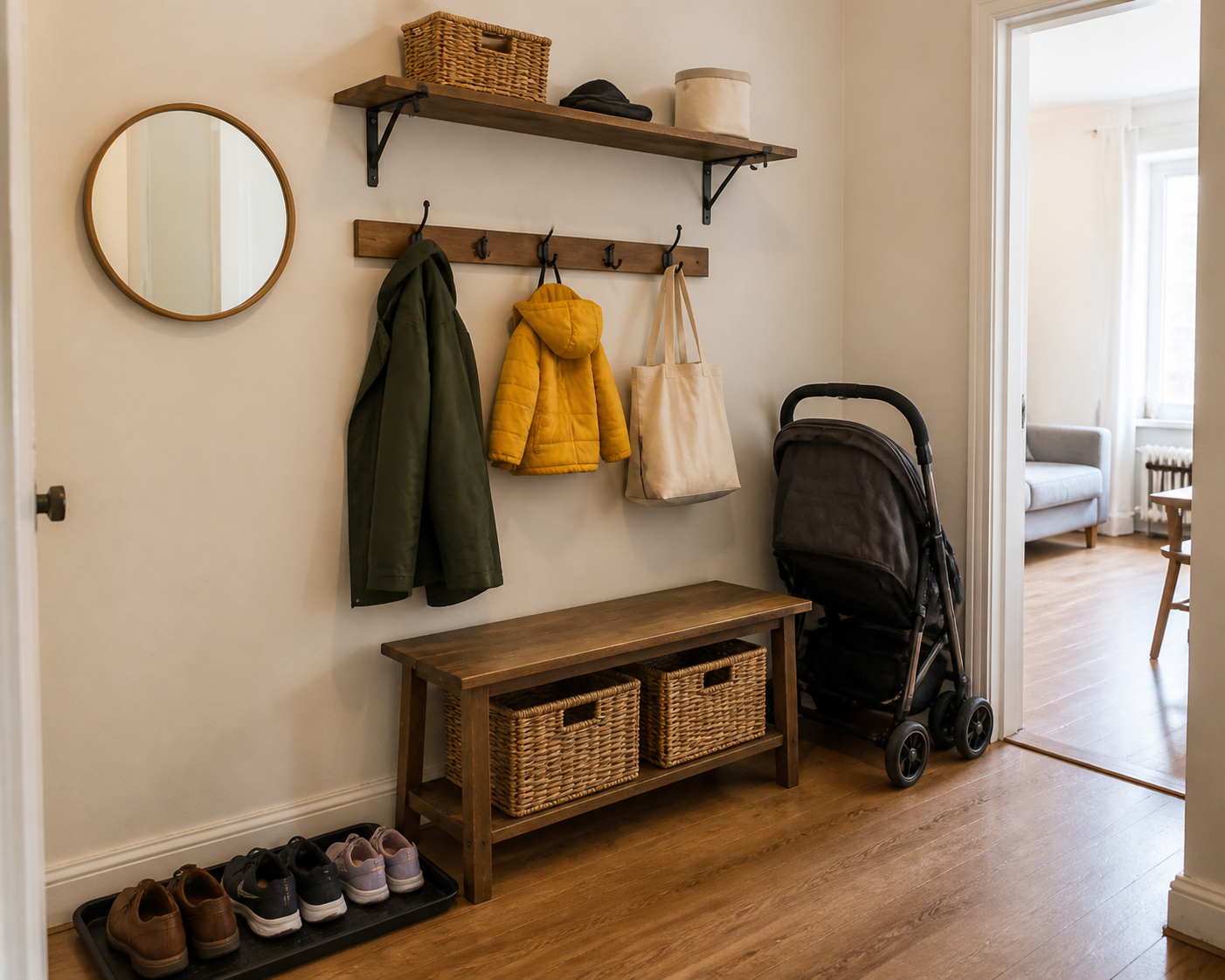
Start with the places where objects accumulate: the end of the kitchen counter, the bathroom floor, the coffee table, the entryway, or the chair that has quietly become a laundry shelf. Do not organize an entire room at once. Pick one crowded surface and identify the activity creating the pile.
- Name the routine. Is this where you change the baby, leave the house, prepare bottles, bathe your toddler, or collect things that need to go upstairs?
- Separate what must stay within adult reach from backup supplies and unrelated items. Move the backups closer to where they are replenished, not where every unit is used.
- Choose the shape of storage the routine needs: a tray for a small group of objects, a narrow basket for an awkward gap, a lidded container for visual calm, or a portable caddy for supplies used in more than one room.
- Try the arrangement during the real routine. If items immediately migrate back onto the surface, the assigned home is probably too far away, too full, or too difficult to open with one hand.
The footprint matters as much as the capacity. A narrow, lidded bathroom basket designed to hold up to 12 toilet-paper rolls and provide two exterior pockets uses the sliver beside a toilet without demanding a wide shelf. That format is useful only if the lid and pockets remain easy for an adult to reach while being inaccessible to your child. Otherwise, a smaller closed cabinet may serve the routine better.
Trays work differently from bins. A tray creates a visible boundary for the few things allowed on a surface. It can hold a tissue box and other child-safe essentials on a coffee table, or collect dish soap and brushes by the sink. If the tray starts overflowing, edit its contents rather than buying a larger one. The boundary is doing its job by showing you that unrelated objects have joined the pile.
Inside cabinets and drawers, the first improvement may be the surface rather than the container. A nonadhesive floral liner with an oil-resistant, wipeable surface can conceal existing wear and make routine cleanup simpler. Because it is not glued down, you can lift it to clean underneath or remove it when your needs change.
Choose easy-care finishes that reduce future chores
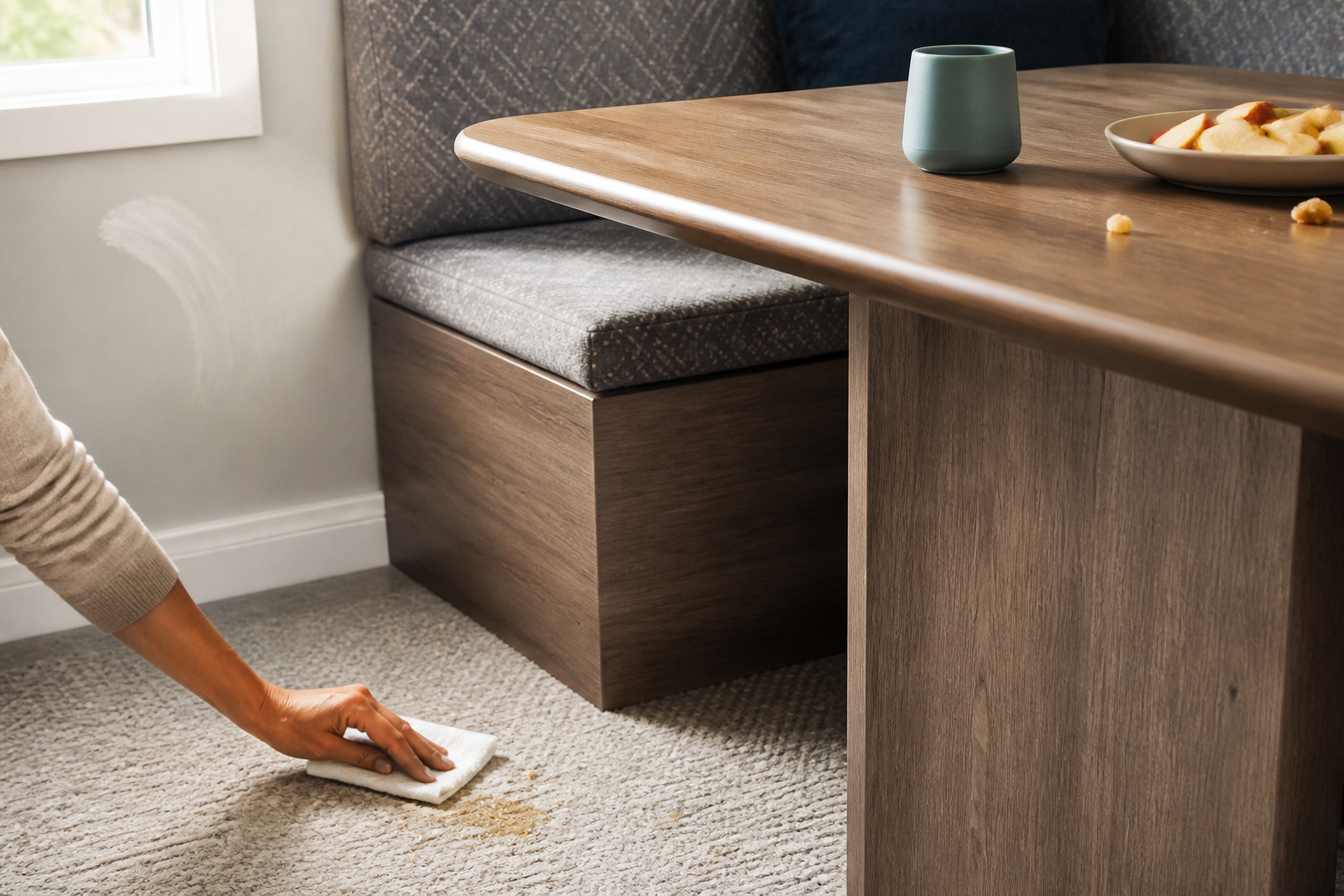
With a baby or toddler, decor is successful only if it survives the way the room is actually used. Before buying anything, ask how you will clean it, what happens when liquid reaches it, whether it catches on doors or wheels, and whether you can move it without dismantling the room.
A hallway or kitchen runner is a good example. A washable runner with a low pile and nonslip underside combines pattern with practical features: the low profile is less likely to interfere with a door, while the washable construction makes routine messes less intimidating. Still, inspect the rug on your own floor. A nonslip backing is a design feature, not a guarantee that the rug cannot shift, curl, or become a tripping edge.
Around the kitchen faucet, a stone-style mat designed to catch splashes and hold sink tools can replace the damp collection of cloths, bottles, and brushes that often spreads across the counter. Make sure it fits around your faucet before ordering, and lift it regularly so you can clean the mat and the surface beneath it. No quick-drying accessory eliminates the need to check the hidden area.
Peel-and-stick finishes can deliver a larger visual change without the labour of replacing a floor. Water-resistant adhesive floor tiles sold in packs covering 10 square feet may suit a small, dated area. They are not a risk-free shortcut, however. Surface compatibility varies, so read the installation instructions, obtain permission if you rent, test a sample in an inconspicuous place, and confirm that the edges remain firmly attached before allowing a crawling child into the area.
Soft furnishings can offer a lower-commitment update. Textured throw-pillow covers sold as a pair let you change the look of cushions you already own instead of replacing complete pillows. Check the care label, closure, seams, and fabric against your household’s real messes. A cover that requires fussy maintenance is not an affordable choice if it spends most of its time hidden from sticky hands.
Give each room one deliberate focal point
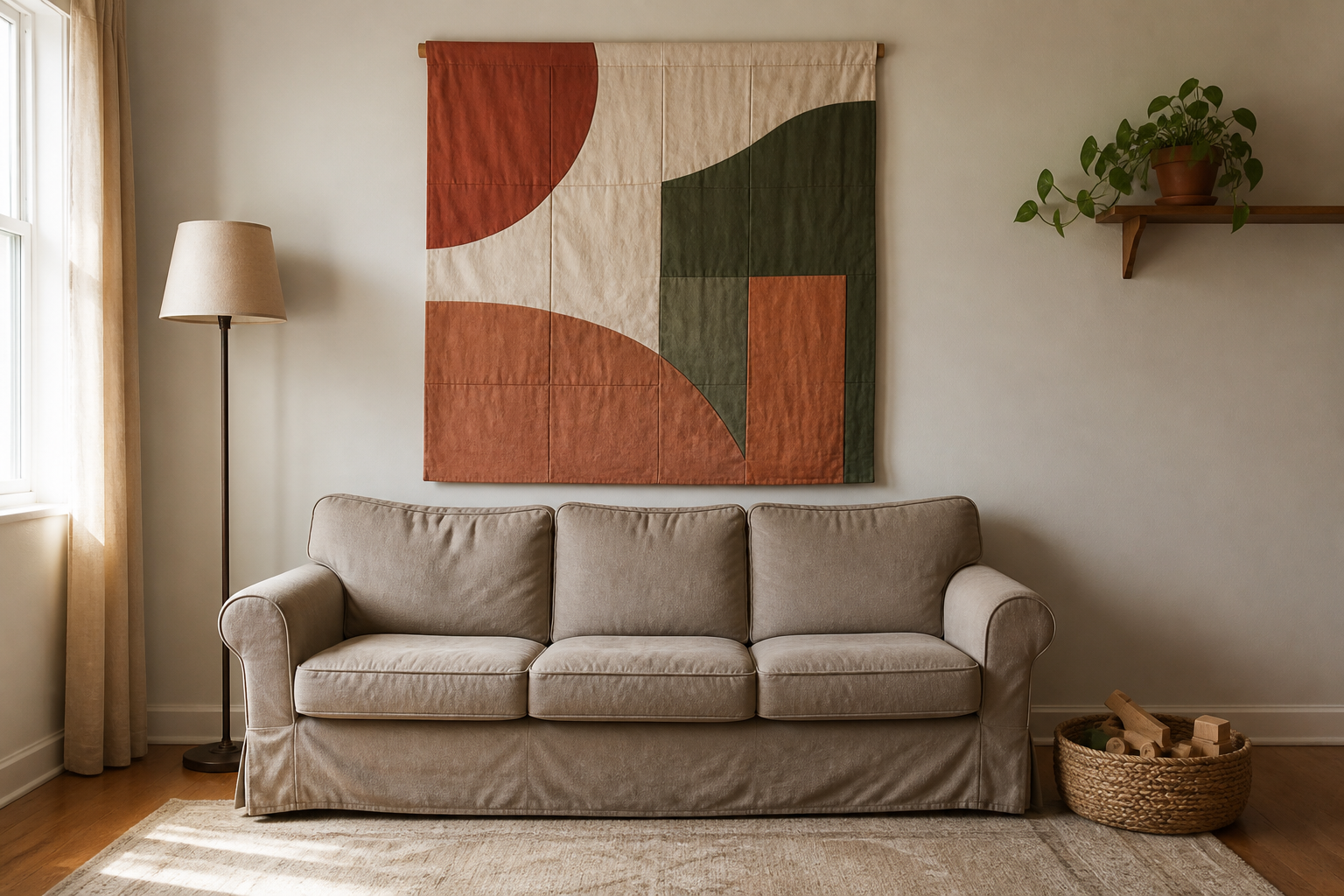
Once the room functions, resist decorating every newly cleared surface. Empty space is part of the result. Choose one focal point and let the practical storage recede around it.
In a hallway, that focal point might be the patterned washable runner. In a living room, it could be textured pillow covers in a colour already present in the rug or curtains. In a kitchen, the pattern might appear only when you open a lined drawer. At a window, privacy film made to resemble stained glass can introduce colour without adding another object to a tabletop.
Lighting can also supply the decorative finish. A floral night-light with a sconce-like shade, dusk-to-dawn sensor, and adjustable brightness adds detail while serving a practical purpose. Use it only in an outlet and location permitted by its instructions, and keep both the light and outlet inaccessible to your child. Decorative lighting is not worth creating an object a curious toddler can grab.
Use a simple purchase test to keep the budget under control. An item should solve recurring friction, replace a more expensive change, or complete the room’s single focal point. If it does none of those things, leave it. Even when an accessory appears in a collection of home upgrades listed below $25, verify its current price, measurements, materials, installation requirements, and return terms before treating it as a bargain.
Keep budget fixes compatible with a mobile child
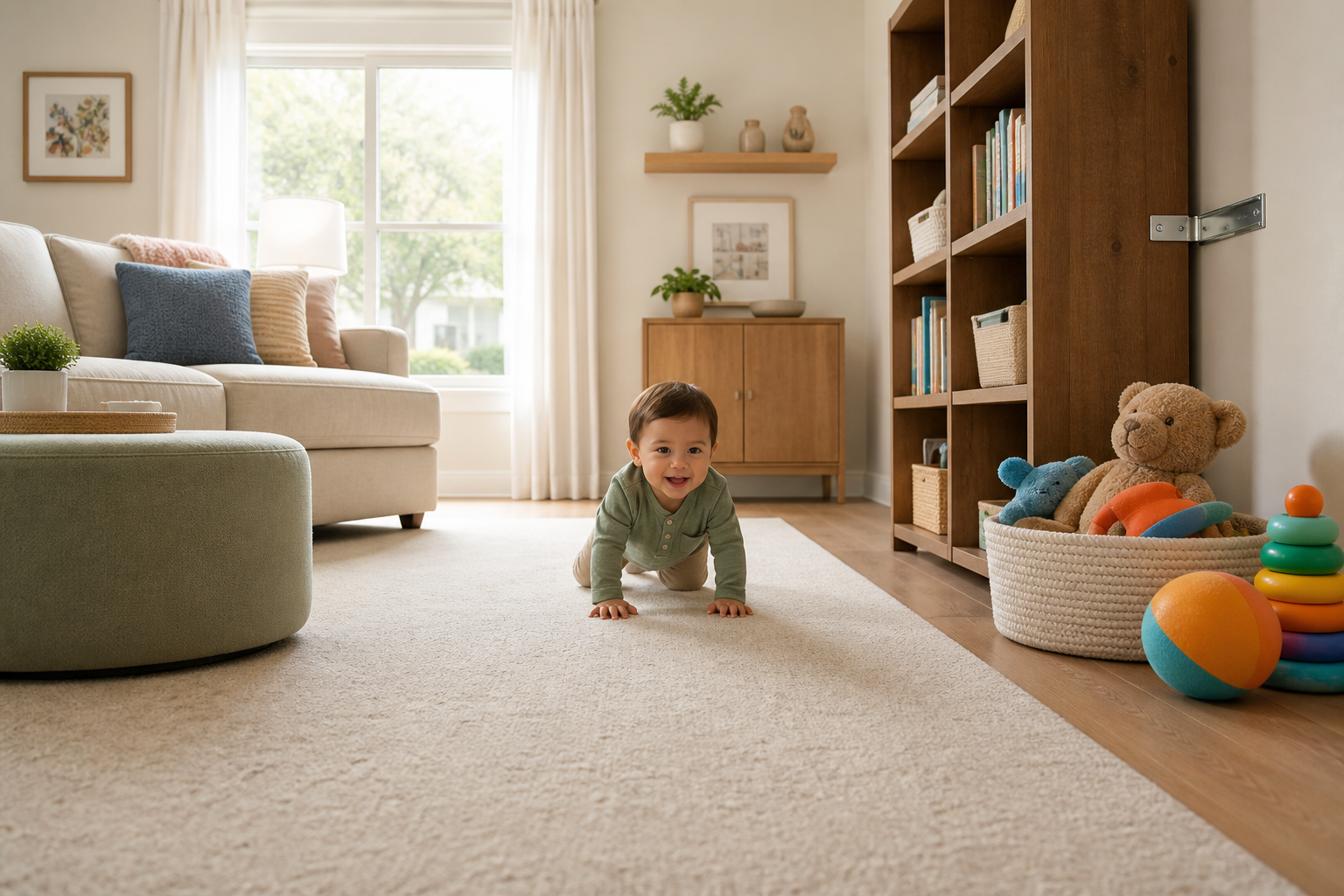
A room can look calmer while becoming less suitable for a baby who has started rolling, crawling, pulling up, or climbing. Recheck every new organizer and decorative item from your child’s height. If the item can be pulled, tipped, opened, mouthed, or taken apart, move it out of reach or choose a safer alternative.
- Do not treat a cover as a lock. A knife set supplied with matching blade guards still belongs in locked or otherwise inaccessible adult storage. The guards protect stored blades; they do not make knives safe for children.
- Keep dried botanicals, floral curtain ties, magnetic chimes, remote controls, rechargeable lights, and their detachable parts well beyond your child’s reach. Do not assume a magnet or adhesive attachment will withstand repeated pulling.
- Avoid reachable table runners and hanging textiles that a child could use to pull objects from a surface. A beautiful table is not improved by an accessible fabric handle.
- Press down rug and adhesive-tile edges, inspect them as the room is used, and act as soon as an edge lifts or curls.
- Follow the manufacturer’s placement, installation, cleaning, and maintenance instructions. If those instructions conflict with the location you planned, change the location rather than improvising the installation.
Start with the place where your hand hesitates during a daily routine. Clear that one hotspot, give each necessary object a reachable adult-only home, and use the arrangement before buying its decorative finish. When the setup keeps working through ordinary family life, you have found a change worth paying for.
References