
You want a name with a little wonder in it, but you also need a name you can say at bedtime, write on a form, and introduce without quietly second-guessing it. The difficult part isn’t finding magical-sounding options. It is separating the names you enjoy reading from the name you will enjoy using.
Start by choosing the kind of storybook feeling you want. Then test a small shortlist against your surname, your preferred nicknames, and the amount of spelling or explanation you are willing to handle. The names below give you several distinct directions without forcing every whimsical choice into the same fairy-tale mould.
Decide what “storybook” means to you

A storybook name can be botanical and woodland-like, familiar but gently old-fashioned, connected to myth, or simply unusual enough to sound as though it belongs to a character. Those moods overlap, but they are not interchangeable. Someone drawn to the clean simplicity of Finn may not want the elaborate quality of Delphine, even though both can feel at home in an illustrated tale.
Before building your shortlist, finish this sentence: “We want a name that feels _____ without feeling _____.” You might want lyrical without ornate, nature-inspired without being an obvious noun, or distinctive without requiring an explanation every time. That single contrast will eliminate more unsuitable names than a long popularity list.
- Choose the connection you want. Must the name remind you of a particular character or tradition, or does it only need to create a storybook mood?
- Choose the emotional tone. Soft, bright, mysterious, grounded, and strong will lead you toward different names.
- Set your familiarity limit. Decide whether you are comfortable repeating, spelling, or explaining the name when someone meets your child.
- Separate sound from meaning. A meaning can settle a close decision, but you will use the sound of the name far more often than you will explain its origin.
A storybook name bank, sorted by mood
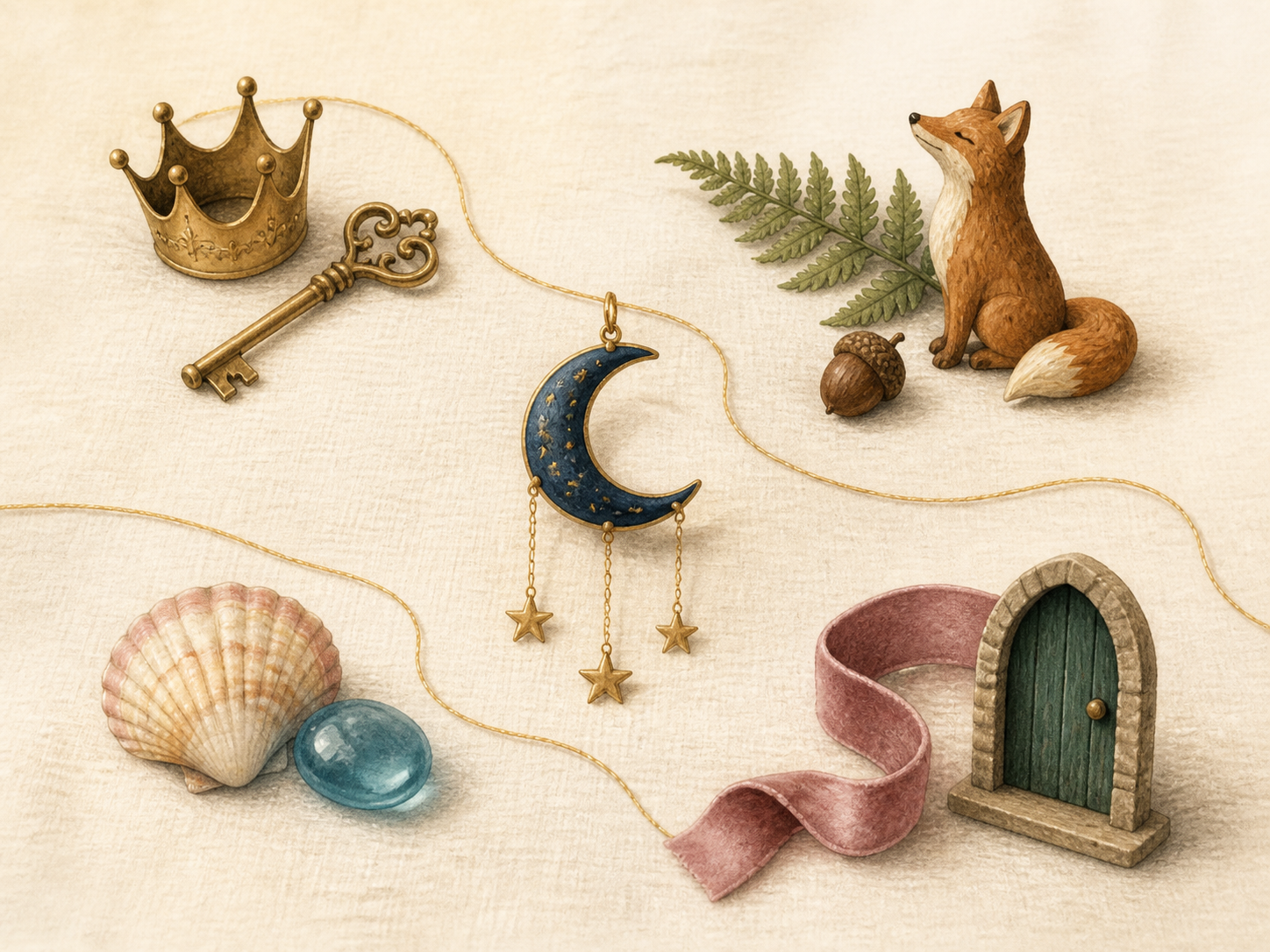
Read by mood first, rather than scanning alphabetically. It is easier to recognize your taste when related options sit together. These groupings describe the atmosphere of the names, not rules about who can carry them.
Woodland and botanical names
- Briar means a thorny bush of wild roses. It combines a soft sound with imagery that is not entirely delicate.
- Clover refers to the green plant associated with luck. The image is cheerful and immediately recognizable.
- Heath means land covered with heather and grass. It carries a landscape connection without functioning as an obvious decorative word.
- Hollis means near the holly trees. It offers botanical roots in a name-like form.
- Meadow evokes a grassy clearing. It is one of the most visibly nature-based choices in this group.
- Elowyn means elm tree. Its flowing spelling adds to its fairy-tale atmosphere.
- Finch is a compact bird name. Its single syllable keeps the nature reference crisp.
- Bram can mean bramble or father of a multitude. The bramble meaning gives the short name a slightly wild edge.
- Oliver can mean olive tree or ancestor’s legacy. It is a way to keep the botanical thread inside a more familiar-sounding name.
If this is your preferred group, decide how literal you want the imagery to be. Meadow and Clover announce their natural associations immediately. Hollis and Oliver carry related meanings more quietly. Put each contender beside your surname and check whether the combined image sounds intentional or accidentally descriptive.
Soft and grounded names
- Alice means noble. It has the clarity of a familiar name while still fitting a literary or fairy-tale mood.
- Asa can mean healer or doctor. Its brevity gives it a calm, uncluttered sound.
- Emile can mean rival, eager, or industrious. Consider which meaning matters to you, if any, rather than treating one interpretation as definitive.
- Finn can mean fair or blessed. It is concise and light without being a word name.
- Hugh can mean understanding or bright mind. The meaning is expansive, while the spoken name remains compact.
- Ivan means God is gracious. It brings an established, old-world tone to the list.
- Kit means pure. It can suit someone who wants the lightness of a storybook nickname as the name itself.
- Pippa means lover of horses. The lively sound may matter more in daily use than the specific meaning.
Begin here if you want whimsy without making the theme obvious. These names can sit naturally in an imaginative nursery and still feel relatively grounded when you picture an older child or adult introducing themselves.
Mythic, lyrical, and overtly whimsical names
- Avalon means island of apples. It has an unmistakably legendary atmosphere.
- Delphine comes from the Greek word delphis, meaning from Delphi. Delphi was associated with Apollo’s oracle and was described in Greek mythology as the centre of the world.
- Fable is a word name built around storytelling itself. Choose it because you like that direct association, not merely because it looks unusual on a list.
- Isolde can mean ice battle, iron ruler, or fair one. Its different interpretations give it both strength and softness.
- Lenore can mean light or bright one. Its sound is more shadowed than its luminous meaning.
- Lyra means lyre or harp. The musical meaning reinforces its light, lyrical sound.
- Odette means wealthy. It has an ornate quality without being a literal word name.
These names carry the theme most visibly. That can be exactly what you want, but it makes the real-life test more important. Ask someone you trust to read each name aloud without coaching. A hesitation is not an automatic rejection; it tells you what kind of pronunciation or spelling conversation you may need to accept.
Quietly strong names
- Atticus means from Attica, a region in Greece. Its sound feels substantial even though the meaning is geographic.
- Bron has British and Dutch roots and can mean spring, in the sense of a water source, or brown. It is short but less expected than many single-syllable choices.
- Evander can mean good man or benevolent ruler. The expansive meaning matches the name’s heroic tone.
- Everett means strong as a boar. Its meaning is rugged, while its sound remains polished.
- Holden means deep valley. It has a landscape meaning without sounding explicitly botanical.
- Leander means lion man. It suits a shortlist that needs something lyrical but not fragile.
- Soren can mean strict or stern. If you love the sound but not the meaning, be honest about which one will influence your decision more.
This group is useful when “storybook” means a protagonist rather than a fairy. Do not assume that a forceful meaning automatically makes a name feel strong in your family. Say it with the surname and listen to the whole rhythm before reading the definition again.
Test the full name in ordinary life

A name can look perfect in a notes app and feel awkward when spoken. Move your finalists off the page before you commit. Use the exact first, middle, and last name your child would have, including the actual order of multiple surnames.
- Write the full name in plain text. Check its initials, repeated sounds, and the point where one name runs into the next.
- Say the first and last name in an introduction. Then say the first name in the ordinary tones you would use at breakfast, at bedtime, and while calling across a room.
- Ask a trusted person to read the written name aloud without hearing you say it first. Then say it aloud and ask that person to write it. This reveals the corrections the name may invite.
- List the nicknames you like, the ones you can tolerate, and the ones you strongly dislike. If an obvious shortening bothers you now, do not assume you will control whether other people use it.
- Check the name beside the names of parents, siblings, and other close relatives. You are looking for accidental confusion, not a perfectly coordinated family set.
- Imagine using the name with no storybook explanation attached. If it still appeals to you as a sound and as your child’s everyday identifier, it has passed the most important test.
When two names remain close, compare the friction rather than inventing more symbolism. Which spelling correction would you rather make? Which nickname would you rather hear? Which full name is easier for you to say naturally? A small practical preference is a legitimate deciding factor.
Notice the trade-offs behind the prettiest choices

The most evocative name is not automatically the best fit. Each style asks you to accept something different, and naming becomes easier once you identify the trade-off you genuinely do not mind.
- With a direct word name such as Fable, Meadow, Clover, or Briar, the image will arrive before anyone learns why you chose it. Make sure you like the ordinary meaning as much as the atmosphere.
- With a spelling-led choice such as Elowyn, decide whether the exact written form is central to your love of the name. Test it aloud and in writing so you know what you are choosing.
- With a lore-heavy name such as Avalon, Delphine, or Isolde, separate your attachment to the backstory from your response to the spoken name. Both can matter, but the name should not depend on a full explanation to feel right.
- With a compact name such as Kit, Finn, Hugh, Bram, Bron, or Finch, listen carefully to the join with your surname. A short name can sound clean, clipped, or repetitive depending on what follows it.
- With a striking meaning, ask whether it delights you or merely looks impressive on paper. Your child is not required to embody noble, strict, bright, strong, or any other definition attached to a name.
It also helps to distinguish a private association from a public one. You may choose a name because it recalls a beloved story, a particular landscape, or an idea you hope to share with your child. Other people may hear only the name. If you are comfortable with both experiences, the association is serving you rather than carrying the whole decision.
Key takeaways
- Define your version of storybook before collecting more names: woodland, grounded, mythic, or quietly heroic.
- Use meanings to deepen or settle a choice, not to rescue a name you do not enjoy saying.
- Test the exact full name aloud, in writing, through its initials, and with likely nicknames.
- Treat spelling and pronunciation corrections as trade-offs to evaluate, not automatic reasons to reject a distinctive name.
- Keep the name that works without an explanation as well as it works with its story attached.
Copy the names you keep returning to and cut the list to a few genuine finalists. Use each one in ordinary sentences, write the complete name, and notice which choice stops feeling like a character you admire and starts feeling like the name of your child.
References