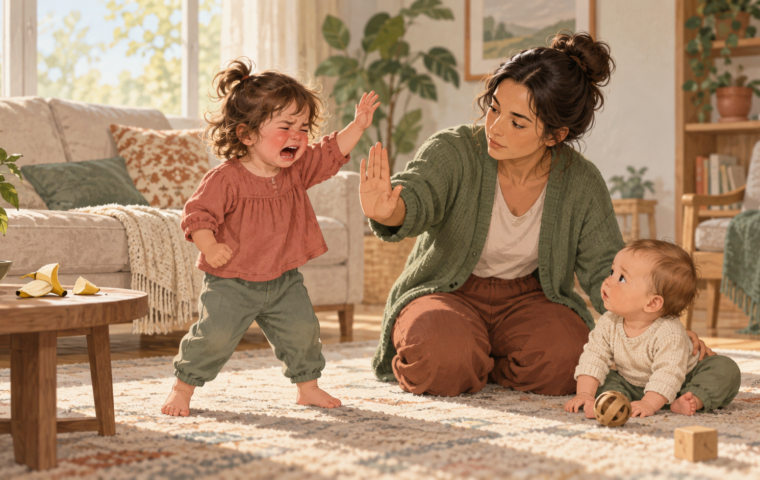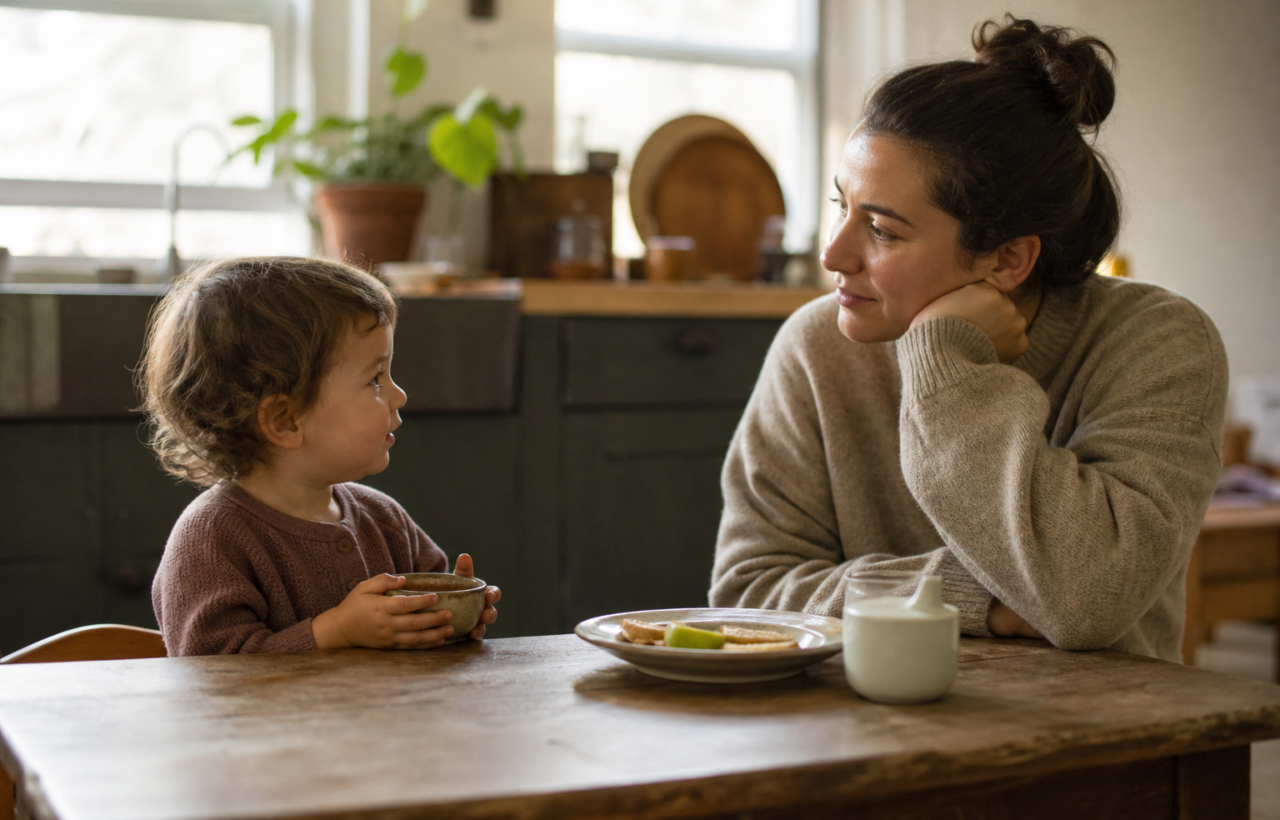
You offer your toddler a snack, and they immediately demand a different one. They open a present, barely look at it and reach for the next package. In that moment, it is easy to wonder whether you are raising a child who expects too much.
But a baby or toddler is not a miniature adult with polished manners. Your job during these first three years is not to produce gratitude on command. It is to make appreciation visible, give your child simple ways to participate and hold calm boundaries when they want more.
Teach the meaning, not a performance
Gratitude, politeness and obedience are different things. Gratitude is noticing that someone gave, helped or cared. Politeness is the social form used to acknowledge it. Obedience is following an instruction. A child can repeat “thank you” because you demanded it without understanding the meaning, just as a quiet toddler may appreciate a gift without having the language to show it.
Match your expectation to what your child can currently communicate:
- With a baby, narrate care and let them hear you thank other people. Expect no response.
- When your toddler begins using gestures, signs or single words, invite a wave, a smile, a sign or an approximation of “thank you.” Treat the attempt as communication, not a recital that must be repeated correctly.
- When your older toddler can use short phrases, help them connect the person, the action and the result: “Nana brought your boots. Now your feet can stay dry.”
This progression is not a test. Language, temperament and comfort in social situations vary. A useful response is one your child can genuinely make, even if it is only handing over a card or looking at the person who gave the gift.
Avoid turning “thank you” into the price of receiving ordinary care. Food, affection, clean clothes, comfort and help with sleep are not rewards that a young child must earn by sounding appreciative. You can name the care without making your child indebted for it.
Use a four-step appreciation routine in ordinary moments
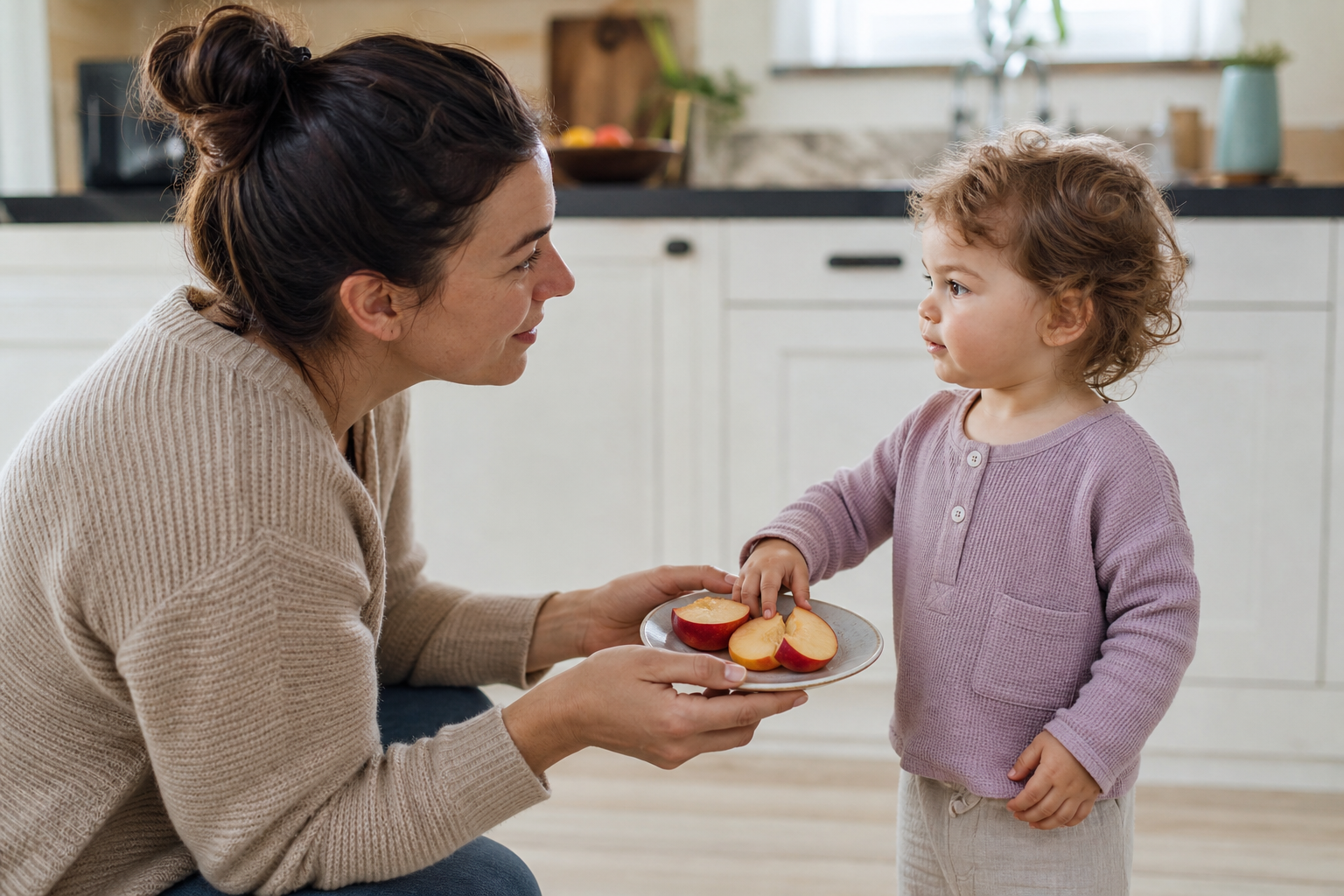
Gratitude is easier for a toddler to understand when it is tied to something concrete. Instead of asking an abstract question such as “What are you grateful for?”, walk your child through one real moment.
- Pause. Give your child a moment to notice what happened before moving to the next activity.
- Name the person and action. Say, “Grandpa filled your water cup.”
- Connect the action to its effect. Add, “Now you have a drink with lunch.”
- Offer a manageable response. Say, “We can tell him thank you. You can say it, sign it or wave.” If your child does nothing, model the thanks yourself and continue.
Use the routine in places where care might otherwise disappear into the background. Thank the person who prepared the meal, carried the stroller, found the missing toy or washed the pajamas. Let your child hear you thank a partner, relative, caregiver and service worker without announcing that you are teaching a lesson.
Model appreciation for your child as well. “Thank you for bringing me the book” teaches more than “Good job” because it identifies the helpful action and its effect. It also shows that gratitude moves in every direction; adults do not only demand it from children.
If you want a bedtime ritual, keep it concrete. Ask, “Did you like the bubbles or the bear book today?” Then help your child notice the care attached to the answer: “You liked the bear book. Dad found it for us at bedtime.” One small moment on most days keeps the pattern familiar without turning every pleasure into a lesson.
Put boundaries around gifts without making gifts shameful
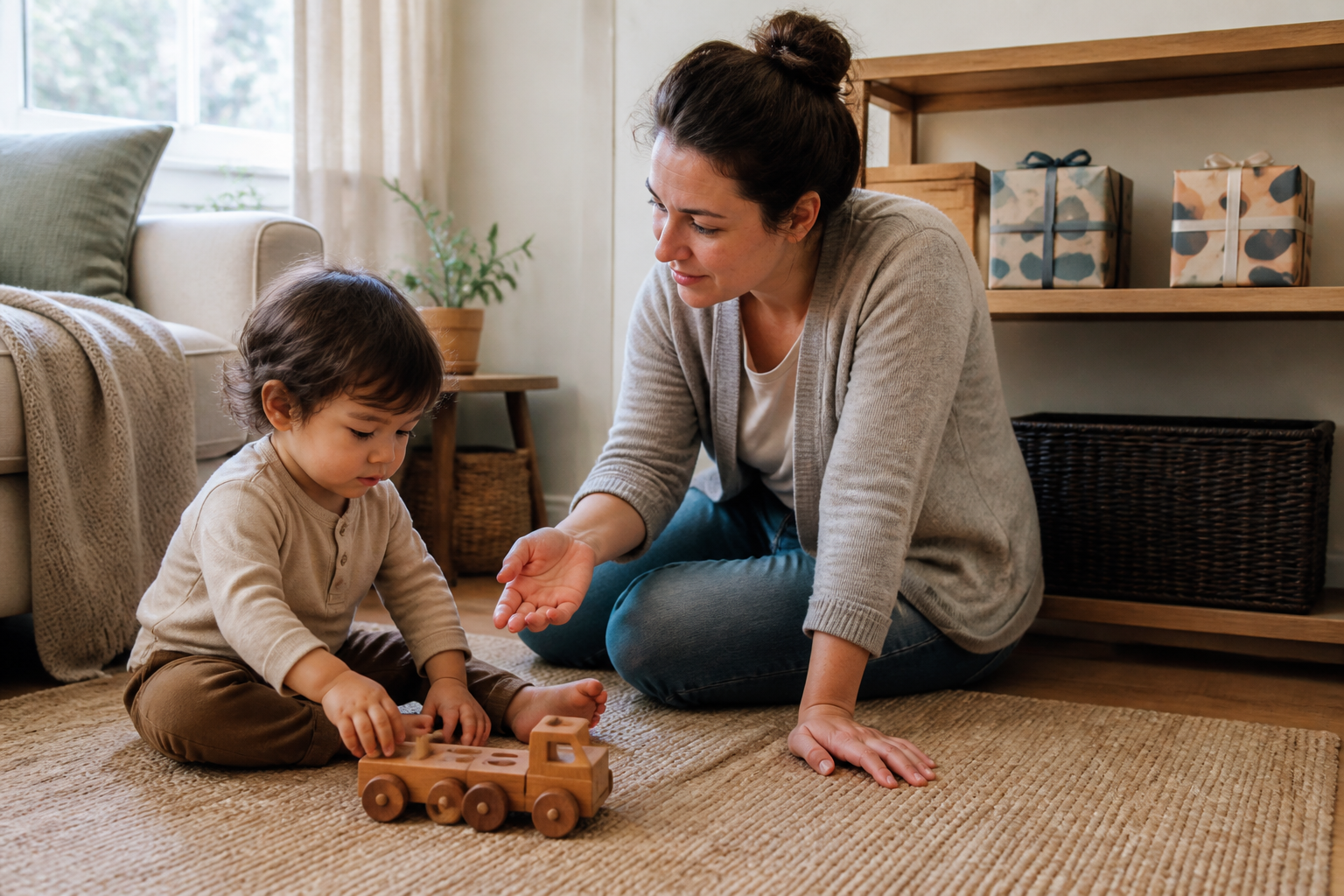
You can make your child happy without making every want an emergency. That is the practical balance behind preventing spoiling while raising appreciation: pleasure is welcome, while adults still decide what is bought, when it is opened and how people are treated.
Before entering a shop, state the boundary in language your toddler can understand: “We are buying groceries today. We are not buying a toy.” If they point to something, you can acknowledge it without opening a negotiation: “You like that truck. We can take a picture, but it is staying at the store.” A calm no is more useful than a long speech about how much your child already owns.
During birthdays or holidays, slow the sequence down. Let your child open one package, look at what is inside and notice who gave it before another package appears. You might say, “Auntie chose this puzzle for you.” Avoid immediately asking, “Do you love it?” That question pressures a toddler to perform enthusiasm rather than notice another person’s thought and effort.
Your child does not owe anyone a hug, kiss or false declaration of love in exchange for a present. Offer choices that respect both the giver and your child’s limits: a wave, a spoken thank-you, a signed thank-you, a mark on a card or help carrying the gift to a safe place. If your child cannot respond, handle the social moment yourself: “Thank you for thinking of her. She is still learning what to say.”
If a gift is unwanted, separate honesty from unkindness. Your toddler does not have to pretend to like the object, but you can stop throwing, insulting or grabbing. Say, “You do not want to play with it right now. We still use gentle hands.” Deal with exchanges or duplicates later, away from the celebration.
Do not manufacture gratitude by withholding basic care, threatening to give away a treasured possession or comparing your child with children who have less. Those tactics create fear, shame or confusion around receiving. The lesson you want is simpler: good things can be enjoyed, other people matter and wanting more does not automatically change the answer.
Let your toddler contribute, not just receive
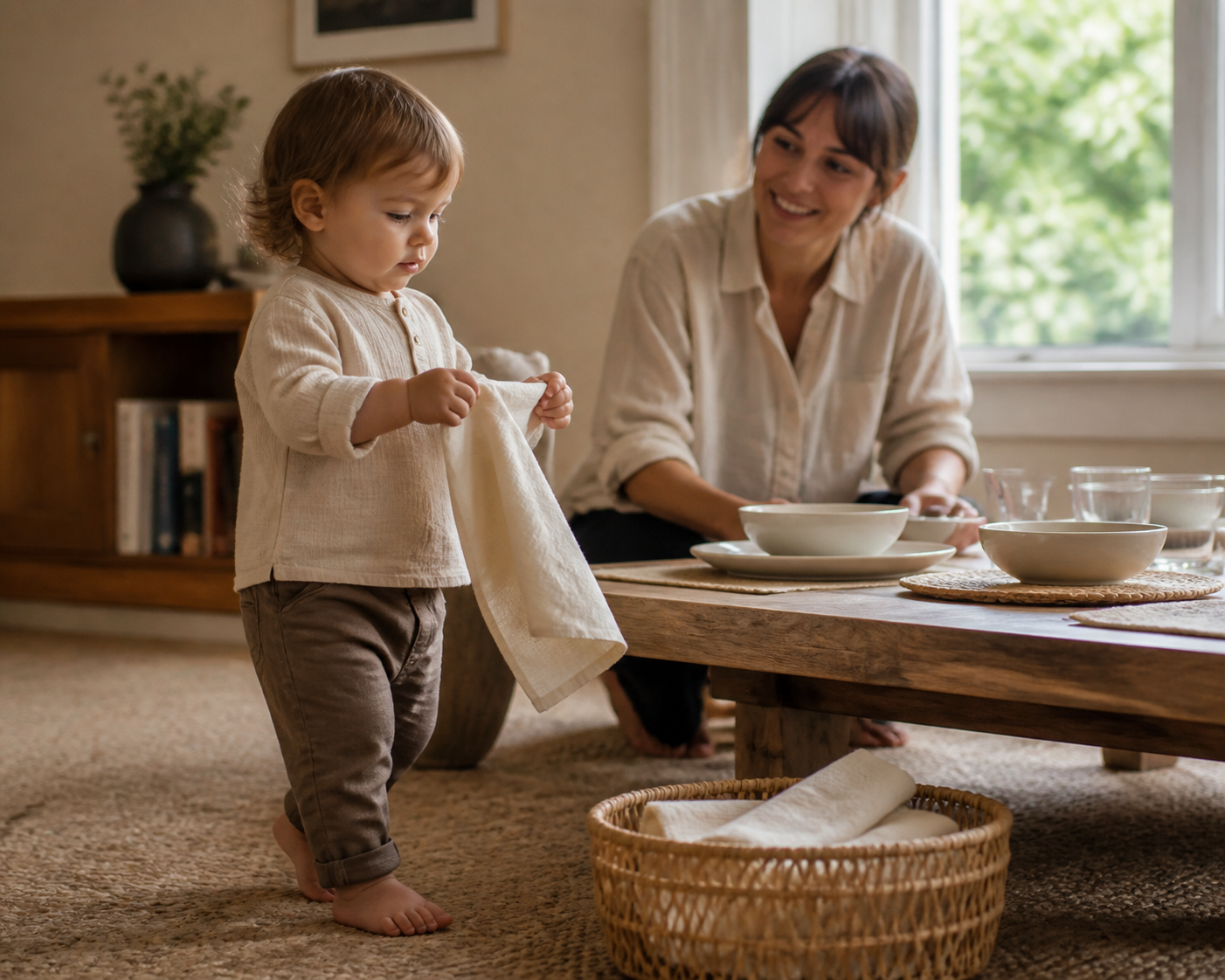
Young children receive a great deal of care because they need it. A small family job lets your toddler experience the other side of that relationship: their action can make life easier for someone else.
Choose work that is real, short and safe. Depending on what your child can manage, they might:
- carry a bib or napkin to the table;
- put a board book back in its basket;
- hand you clean socks while you sort laundry;
- bring their hat to the door before an outing;
- choose a sticker for a thank-you card; or
- place family-selected donation items into a bag.
Name the result instead of relying on a broad label such as “good helper.” Say, “You put the spoons on the table. Now we are ready to eat” or “You carried the card to Grandma. She has it now.” The connection between action and effect is what makes contribution understandable.
Accept an imperfect result when it is safe to do so. If you instantly redo every job in front of your toddler, the role can feel decorative rather than meaningful. Give one clear direction, show them where the object belongs and help only as much as needed.
Do not use forced sharing as proof of generosity. Keeping a favourite toy close is not evidence of ingratitude. Before another child visits, put especially precious toys away and choose which toys will be available for shared play. In the same way, let your toddler help pack items the family has already decided to donate; do not demand that they surrender a beloved possession to demonstrate goodness.
Key takeaways for the moments that test your patience
When a toddler is tired, excited or disappointed, appreciation may disappear from view. Use a short boundary and a short model. Save the teaching for a calmer moment.
- When your child demands more: “You want more crackers. The crackers are finished.” Acknowledge the want without changing the boundary or calling the child greedy.
- When food is rejected or thrown: “You do not have to eat it. Food stays on the table. Put it here.” Gratitude does not require eating something unwanted, but the limit on throwing still stands.
- When your toddler grabs a gift or another child’s toy: “I will not let you grab. Put it back. You can point and ask.” Stop the behaviour, then show the usable alternative.
- When a thank-you is refused: Invite it once: “You can say thank you or wave.” If your child does neither, thank the person yourself and move on. Repeated demands turn the moment into a contest.
- When your child dislikes a present: “You are not ready to play with it. We can still be gentle.” Thank the giver on your child’s behalf and practise a kind response later.
- When a denied purchase causes a meltdown: “You wanted the truck. We are not buying it. I will help you leave.” Hold the decision without adding a lecture about being spoiled.
- When you feel embarrassed: Correct the action, not your child’s character. “I will not let you throw the present” gives a clear limit. “You are ungrateful” gives a young child a label but no next step.
Start with one daily appreciation moment and one boundary you can hold consistently. Thank your child for a real contribution, name one act of care they received and let that pattern become part of ordinary family life.
References