
Maybe you and your partner are joining two family histories. Maybe you have found a beautiful name from a language you don’t speak. Either way, the difficult part isn’t finding more options. It is learning what a name actually means, how people use it, and whether your child can carry it comfortably.
You don’t need a universally familiar name. You need a choice you can explain honestly: where it comes from, what its spelling represents, how it should sound, and why it belongs in your family.
Start with the kind of meaning you want the name to carry

A name’s meaning is rarely just the English word printed beside it. Several layers can sit underneath the same spelling:
- Literal meaning: the direct meaning of a word, root, or chosen character.
- Etymological meaning: the older language or name from which the current form developed.
- Cultural association: the stories, people, faith traditions, or qualities a community connects with the name.
- Current use: how the name sounds to people who use it now, including whether it feels traditional, contemporary, formal, affectionate, or unusual.
- Family meaning: the person, place, value, or shared history that makes the name matter to you.
Those layers don’t always match neatly. A Dutch short form may trace back to a name from another language. A Hebrew name can carry both a word meaning and a scriptural association. An Arabic name written in English may have several reasonable spellings. With some Korean names, the meaning can depend on the syllables and written characters chosen rather than on the Romanized spelling alone. That is why a one-word definition should begin your checking, not end it.
Here are five examples that show different kinds of meaning. Treat them as starting points rather than a ready-made shortlist.
| Language or naming tradition | Example | What the meaning line tells you | What still needs checking |
|---|---|---|---|
| Korean | Haneul | Commonly presented as sky or heaven | The family’s preferred Romanization, pronunciation, and whether the name will be written in Hangul only or associated with any additional written form |
| Hebrew | Tamar | Date palm or palm tree | Pronunciation, scriptural or family associations, and the form used in your community |
| Welsh | Seren | Star | The Welsh pronunciation and whether you are comfortable teaching it to people who apply English sound rules |
| Dutch | Daan | A Dutch short form of Daniel | Whether you want Daan as the complete name or Daniel with Daan used familiarly |
| Arabic | Noor or Nur | Light | Your preferred transliteration, pronunciation, and how the name is used in the relevant region or family |
Notice that the Daan row doesn’t force an English dictionary definition onto a Dutch form. Its immediate naming story is that it is a short form of Daniel. That distinction matters: a name’s linguistic root, the culture in which a form developed, and its present-day use can all be different facts.
Verify the meaning before you become attached to it
A baby-name list is useful for discovery, but it cannot capture every regional pronunciation, written form, or family association. Once a name reaches your serious shortlist, make a small name record and check it systematically.
- Identify the exact form. Record the spelling you intend to use, the language or culture you associate it with, and any variant spellings you are considering. Don’t silently combine information from similar-looking names.
- Keep the original writing when it matters. If the language uses a script other than the Latin alphabet, save the relevant spelling or characters beside the Romanized form. A transliteration helps readers pronounce or type a name; it does not replace the original form or settle every question about meaning.
- Label each claim accurately. Write whether a definition is a literal word meaning, an older root, a translation, a short-form relationship, or a cultural association. If different explanations exist, retain the difference instead of choosing the most attractive sentence.
- Ask a fluent speaker for context, not just approval. Ask how they would pronounce it, what age or generation they associate it with, whether it has an obvious nickname, and whether the spelling changes their interpretation. If the language varies substantially by region, seek someone familiar with the variety relevant to your family.
- Record what you confirmed. Keep the pronunciation, meaning, original script, preferred spelling, and family reason in one place. That gives you a reliable explanation to share with relatives now and with your child later.
Be especially careful with pages that give one polished definition for every name. Some names do have direct word meanings. Others inherit a meaning through an older form, allow several character combinations, or carry associations that cannot be compressed into one English word. A shorter but accurate explanation is better than a poetic one you cannot verify.
Check how the name works inside its naming tradition
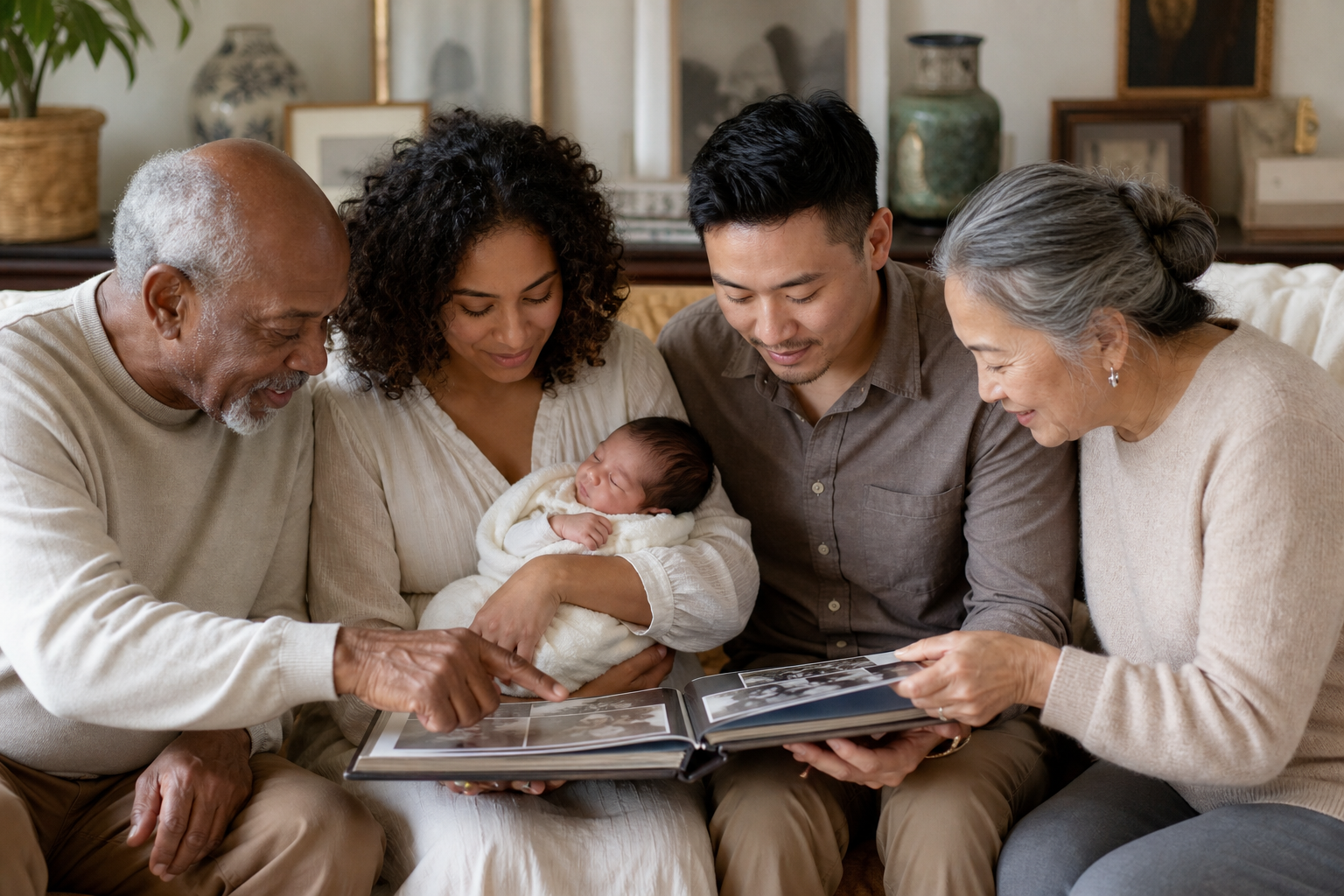
Cross-cultural naming goes wrong when a name is treated as a decorative word detached from the way people actually use it. You don’t need to master an entire culture, but you should investigate the features that affect your particular choice.
For a Korean name, confirm the written and Romanized forms
A Korean name written in Roman letters may appear joined, hyphenated, or spaced, and similar-looking syllables can be associated with different meanings. Some names derive their meaning from selected characters, while others use native Korean words. Korean name meanings therefore need to be checked against the intended written form, not inferred from English letters alone.
If Korean heritage is part of your family, ask whether relatives follow a generational or shared-syllable custom before choosing finalists independently. Then decide which Romanization you will use consistently. Keep the Hangul spelling with your name record so pronunciation and identity do not depend entirely on the English form.
For a Hebrew name, separate word meaning from inherited association
A Hebrew name may be a recognizable word, a name carried through scripture or family tradition, or both. Hebrew options include names with direct meanings and names whose histories add another layer. Decide which layer matters to you and make sure you can describe it without blurring them together.
Pronunciation can also shift between Hebrew and the language spoken where your child lives. Ask your family which version feels natural, then test whether you are comfortable with both the family pronunciation and the likely local one.
For a Welsh name, learn the Welsh sound pattern before respelling it
Welsh spelling follows Welsh pronunciation rules, so a reader applying English rules may not arrive at the intended sound. Use a pronunciation attached to the Welsh name itself, then confirm it with a Welsh speaker if the name becomes a finalist.
Don’t alter the spelling automatically just to prevent every possible mistake. First compare the cultural value of retaining the Welsh form with the amount of correction your family is genuinely willing to do. If you choose an Anglicized or simplified variant, record that as a deliberate variant rather than presenting it as the original spelling.
For a Dutch name, decide whether you want the short form or its longer relative
Dutch naming includes compact forms such as Daan that may be introduced elsewhere merely as nicknames. That creates a practical decision: do you love the concise form itself, or do you want a longer name that leaves your child both options?
Write both choices beside your surname and say them aloud. Don’t choose the longer version solely because it looks more complete in English, and don’t choose the short version unless you are happy to use it in formal as well as familiar situations.
For an Arabic name, choose the transliteration rather than drifting into one
Arabic names move into the Latin alphabet through transliteration, so more than one spelling may represent the same or a closely related pronunciation. Arabic options such as Noor illustrate why the English spelling and the underlying meaning should be recorded separately.
Ask which spelling the relevant family or community recognizes most easily, how the vowels and consonants should sound, and whether regional usage changes the name’s feel or gender association. If Arabic is not part of your own background, also ask whether the name has religious, historical, or communal weight that a translation does not reveal.
Run every finalist through the same real-life tests

Meaning may bring a name onto the shortlist, but daily use determines whether it stays there. Give every finalist the same tests and mark each one comfortable, manageable, or unresolved. That keeps one dramatic objection or one enthusiastic relative from controlling the whole decision.
- The introduction test: say the full name as if you were introducing your child, making an appointment, and correcting a pronunciation. Notice where you hesitate.
- The hearing test: say the name without showing the spelling and ask someone to repeat what they heard. A mismatch isn’t an automatic rejection; it tells you what your child may need to clarify.
- The spelling test: ask someone to write the name after hearing it. Decide whether likely variants are acceptable or whether one recurring mistake would bother you.
- The household-language test: say the name in every language regularly spoken by close family. Check the pronunciation, rhythm with the surname, and any obvious unwanted word or nickname.
- The full-identity test: inspect the complete name, initials, planned middle names, likely nicknames, and the order your family will use. A beautiful given name can still create an avoidable problem in combination.
- The explanation test: finish this sentence plainly: We chose this name because… Your answer should be about the name’s real meaning, family connection, or cultural relationship, not merely its exotic or unusual sound.
If you and your partner disagree, identify the exact concern. Pronunciation, cultural connection, spelling burden, family expectations, and personal taste are different problems. Only the first four can be investigated. Taste has to be negotiated.
A useful naming brief can keep that negotiation focused. For each finalist, record the preferred spelling, simple pronunciation cue, language or tradition, original script where relevant, verified meaning, expected nickname, family reason, and any unresolved concern. The broader goal is to balance tradition with distinctiveness without treating either as a requirement.
Key takeaways
- A translated meaning is only one layer; check the name’s root, written form, present use, and cultural associations.
- Save the exact spelling and original script or characters when they affect pronunciation or meaning.
- Ask fluent speakers specific questions about sound, generation, nicknames, and regional use instead of asking only whether they like the name.
- Decide consciously among transliterations, short forms, Anglicized variants, spaces, and hyphens.
- Test the complete name in ordinary situations and keep a written record of what you verified.
Choose your strongest finalists and make a one-page name record for each. Say the full names in the situations your family will actually encounter, then investigate only the concerns that remain unresolved. The strongest choice isn’t necessarily the name nobody will ever mispronounce. It is the name whose meaning, cultural context, and everyday tradeoffs you understand well enough to pass on to your child.
References
- Parents — 50 Korean Baby Names and Their Meanings
- Parents — 52 Hebrew Baby Names and Their Meanings
- Parents — 52 Welsh Baby Names and Their Meanings
- Parents — 50 Dutch Baby Names and Their Meanings
- Parents — 52 Arabic Baby Names and Their Meanings
- Parents — Finding the Perfect Baby Name: Mix Tradition with Uniqueness