If travelling alone before your baby arrives sounds restorative, the important question is not whether the trip is ambitious enough. It is whether the experience will create space for you or become another project to manage.
A good solo babymoon fits your pregnancy, your appetite for company and the amount of uncertainty you can comfortably carry. Start with the kind of rest you need, get an individual health decision before paying, and choose the least demanding version of the trip that can deliver what you want.
Decide what you want to be alone from
“Solo” can describe who you travel with without requiring you to spend the entire trip alone. You might want privacy after months of other people’s questions, freedom from household decisions, time away from work, or gentle company with people who understand pregnancy. Those needs point to different trips.
- An independent quiet break: You choose your accommodation and leave most of the schedule open. This works when privacy and control matter more than organised support.
- A pregnancy retreat: You travel without a partner but join a structured group. Some retreats in Spain and Portugal bring together birth preparation, prenatal yoga, massage, rest and time with other expectant mothers. This can suit you if you want a change of scene without designing every part of the experience yourself.
- A light hybrid: You book a comfortable base and one or two suitable activities, leaving the rest undecided. This is often the simplest way to balance independence with a little structure.
Complete this sentence before opening booking tabs: “I want to come home feeling more ______ because I had less ______.” A useful answer might be “settled because I had fewer decisions” or “connected to myself because I had less social noise.” If your proposed trip does not directly serve that sentence, its attractive extras are distractions.
Then test your social preference honestly. A retreat may include communal meals and scheduled conversations. A hotel stay may mean solving meals and transport by yourself. Neither is inherently more restful. Choose the kind of effort that feels light to you, not the version of a babymoon that looks most complete from the outside.
Get the health decision before the destination decision
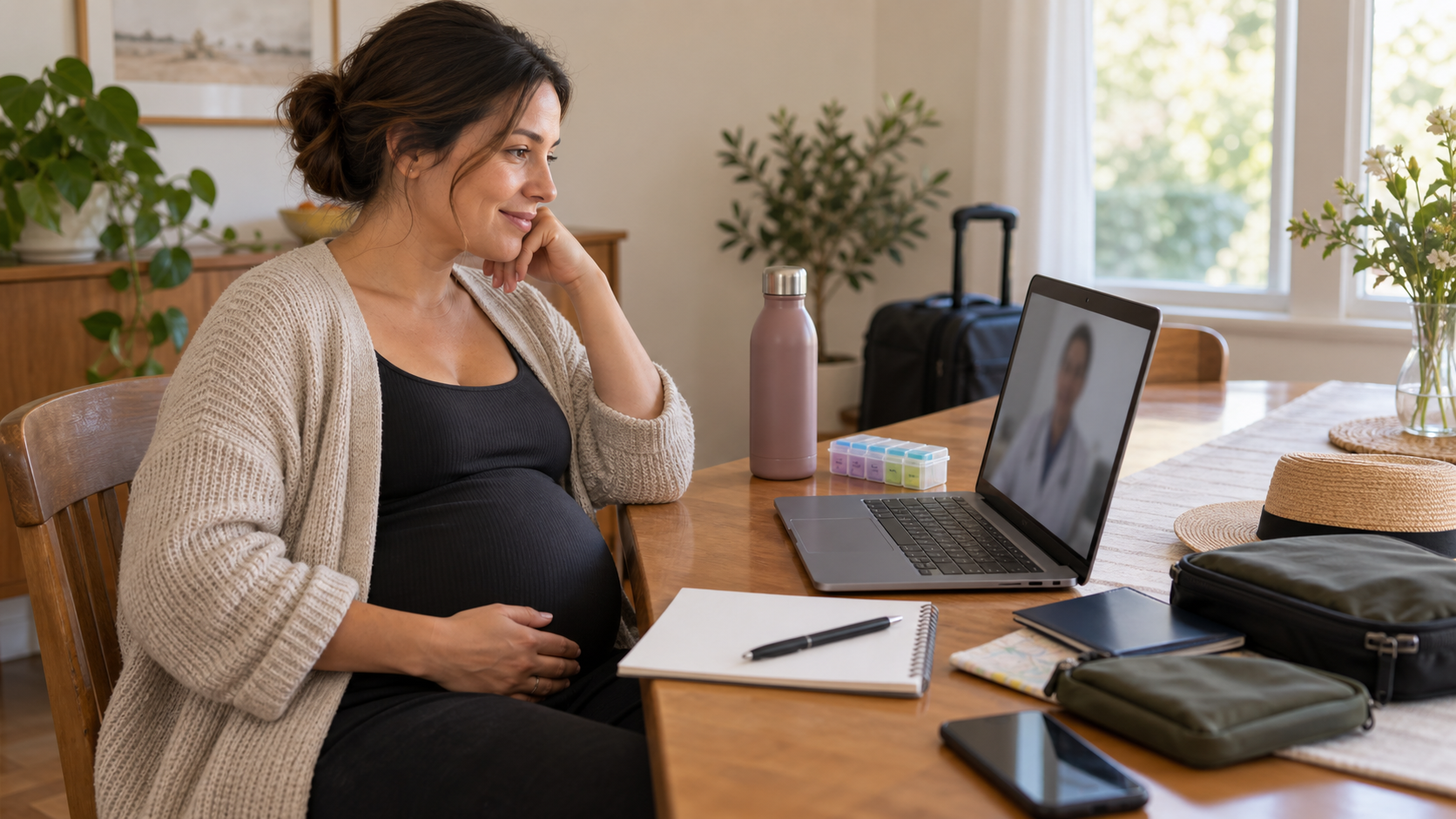
Pregnancy makes travel planning individual. A general rule, another traveller’s experience or a retreat’s prenatal label cannot tell you whether a particular journey or activity is appropriate for you. Your prenatal care professional needs the actual plan, not the vague phrase “a relaxing trip.”
Have that conversation before you make non-refundable commitments. Bring the proposed dates, destination, journey, accommodation and activities. Then ask direct questions:
- Is this travel plan appropriate for my pregnancy and health history at the proposed time?
- Are the journey and destination reasonable, or would a closer option materially reduce risk or strain?
- Are the named activities, including prenatal yoga or massage, suitable for me?
- What change in my health or pregnancy should trigger another call, postponement or cancellation?
- If I become unwell while away, whom should I contact first and what information should I have with me?
Treat the answer as time-specific. If your health changes between booking and departure, contact your care team again. If you are advised not to travel, a wellness setting does not make the journey a safe workaround.
Health approval is only one part of the safety check. Read your travel insurance wording for pregnancy-related care, exclusions and cancellation requirements instead of assuming you are covered. Confirm what documentation the insurer may require. Check how you would reach appropriate care from the accommodation and how you would change your return journey if necessary.
Keep a short trip note on your phone and share it with one trusted person. Include your accommodation, travel details, insurance contact, prenatal care contact, medications or supplements you use as directed, and your planned route to care. The purpose is not to predict every emergency. It is to remove avoidable searching and decision-making if you need help.
Choose for the body and energy you may have then
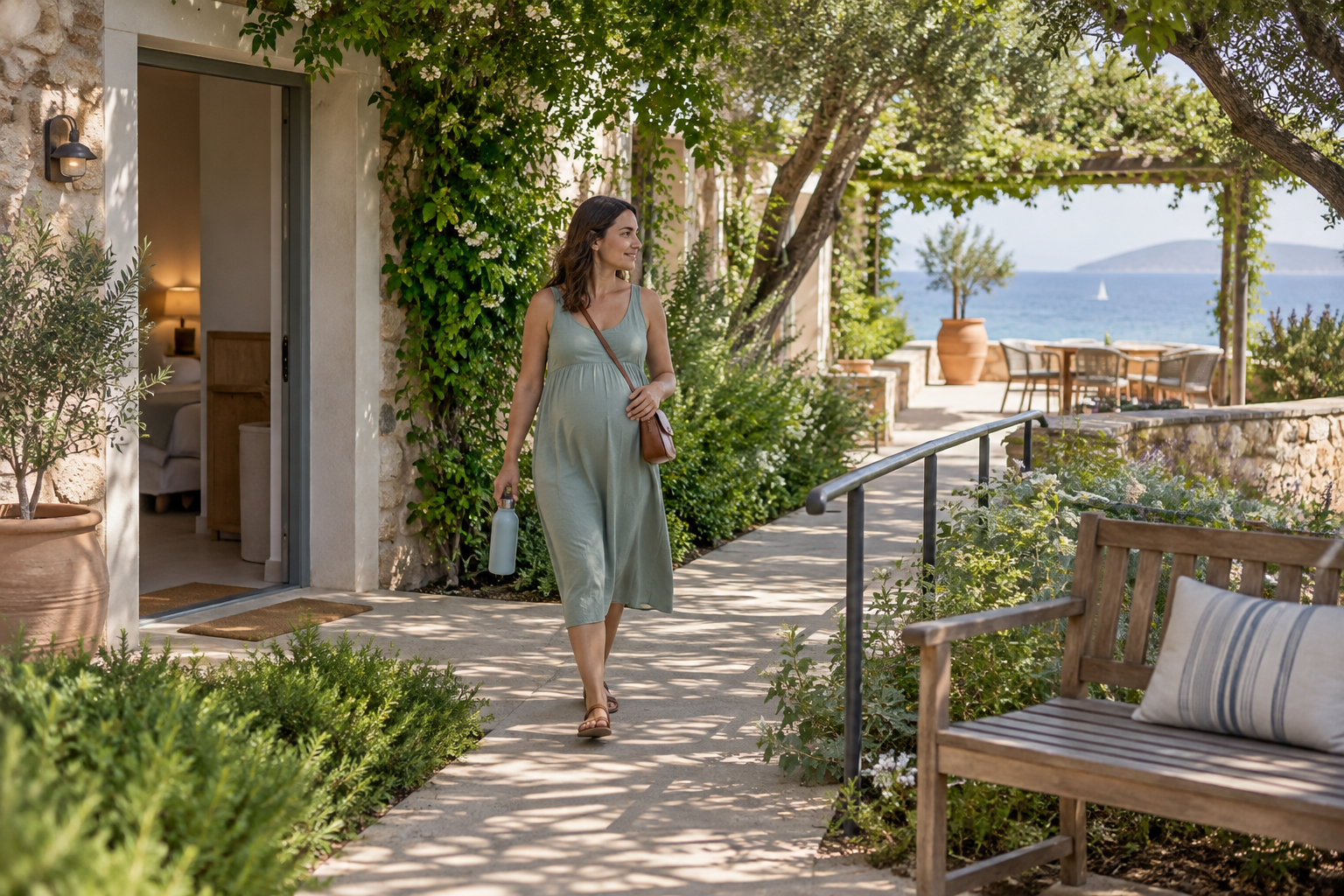
A destination can be appealing and still be wrong for this trip. The common planning trap is choosing for your energy on booking day. A more useful test is whether the trip would still work if you wanted more breaks, less walking, earlier nights or fewer activities by the time you left.
Compare possible destinations on these practical points:
- The journey: Count transfers, long waits and difficult connections, not just travel time. Every handoff creates another task and another place for disruption.
- Daily effort: Check the distance between your room, meals, activities and transport. “Everything nearby” should mean nearby in a way that works for you.
- Room comfort: Confirm the room type, bathroom arrangement, lift access if relevant, noise conditions and whether you can rest there during the day.
- Food access: Find out when and where you can eat, whether your needs can be accommodated, and what happens if you do not want to leave the property for a meal.
- Access to care: Know what help is locally available and how you would reach it. Ask your care professional or insurer what kind of facility is appropriate rather than relying on the nearest search result.
- Booking flexibility: Read the cancellation and date-change terms for transport, accommodation and activities separately. A flexible hotel does not help if the journey cannot be changed.
You can make the comparison concrete by marking each point “easy,” “manageable” or “taxing.” Reject an option that is taxing in a category you cannot avoid. A less glamorous destination with a simple journey, food on site and a genuinely comfortable room may give you much more of the rest you are paying for.
Ask retreats what the brochure does not answer
A pregnancy retreat can reduce planning, but only if its structure remains optional and its support is credible. Before booking, ask for the real daily schedule and clear answers to the following:
- Who leads the prenatal sessions, what are their relevant qualifications, and how are activities adapted for individual participants?
- What happens if your care professional advises you to skip an activity?
- Can you miss a class, meal or group session without pressure or additional administration?
- Are massage and movement sessions discussed with you individually before participation?
- How much of the day is scheduled, and how much is genuinely unscheduled?
- Is a private room and bathroom included, and what accessibility features are available?
- How are dietary needs handled outside fixed meal times?
- What is the procedure if a guest becomes unwell, and how is transport to care arranged?
- What are the cancellation or transfer terms if pregnancy-related circumstances change?
Vague replies such as “everything is pregnancy-friendly” do not resolve these questions. You need to know who makes decisions, what is optional and what practical support exists. If the retreat cannot explain those basics before payment, do not rely on it to become clearer after arrival.
Build an itinerary that lets you change your mind

Rest is difficult to schedule by filling every available space with restful activities. Treatments, classes, restaurant reservations and excursions still require you to be somewhere at a certain time. Use a lighter structure that protects choice.
- Choose one anchor for the day. It might be a prenatal session, a meal reservation or a gentle outing that your care professional has said is appropriate.
- Add one optional idea. Do not prepay unless losing the money would genuinely be acceptable.
- Protect an empty block. Give it no aspirational label. It is time you may use to sleep, read, sit quietly or do nothing.
- Make arrival and departure deliberately plain. Those days already contain transport, timing and decisions. They do not need a signature experience attached.
Set your home boundaries with the same care. Decide who will have your itinerary, when you will check in and what warrants an immediate call. Turn off notifications you do not need. If you want to share photos, you can do it after the trip rather than turning the experience into a live update.
If you already have a young child, the caregiving handoff is part of the babymoon plan. Put routines, care information, medications if applicable, important contacts and decision-making authority in one clear note. Agree on which situations require your input. Constant remote management defeats the purpose of arranging trusted care at home.
Pack for continuity rather than every imaginable scenario. Bring identification, insurance information, your care contacts, required travel documents, and enough of any medications or supplements you have been instructed to use. Keep essential items accessible during the journey. Confirm any destination-specific health or documentation needs through your care professional, insurer and travel provider rather than relying on a generic packing list.
Finally, leave some breathing room around your return if your circumstances allow it. Coming home directly to a dense workday, major appointment or complicated family handoff can spend the calm you just created. The babymoon includes the landing, not only the nights away.
Key takeaways
- A solo babymoon can be private, group-based or a mixture of both. Choose according to the kind of effort and company you actually want.
- Give your prenatal care professional the dates, journey, destination and named activities before making non-refundable commitments.
- Choose the lowest-friction trip that meets your goal. Transfers, food access, room comfort, nearby care and flexible terms matter more than a long activity list.
- A prenatal label is not personal medical clearance. Ask who leads each activity, how it is adapted and whether participation is genuinely optional.
- Plan one daily anchor, one optional idea and protected empty time instead of filling the schedule.
- Share a concise safety plan with one trusted person, then set communication boundaries that let you be away.
Your next step is small: write the one-sentence outcome you want, send a specific proposed plan to your prenatal care professional, and compare two realistic destinations on effort rather than appeal. If neither works without pushing your health, energy or budget, choose a closer stay or wait. The right solo babymoon is the one that gives you room before the baby arrives, not another standard to meet.
References