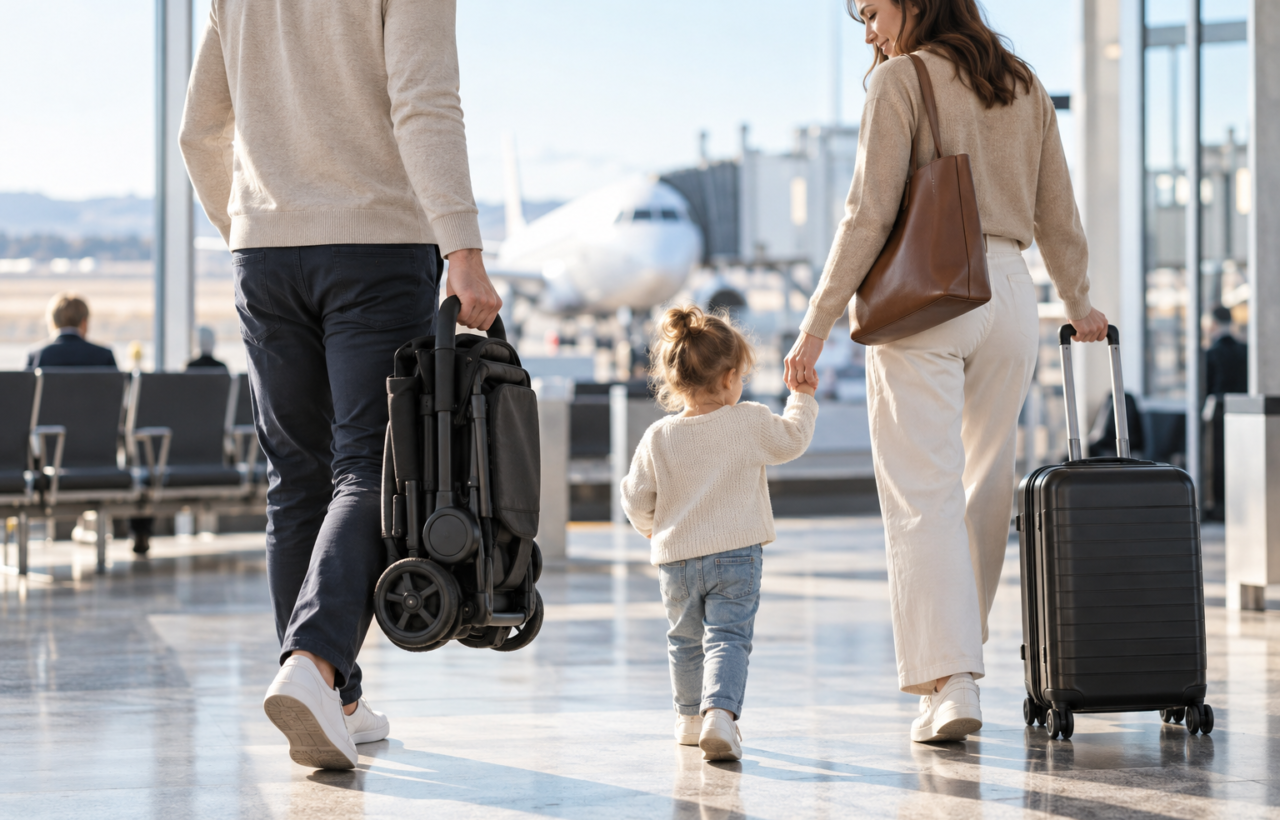
You are probably looking at the Nuna VIAA cabn because travelling with a full-size stroller can turn every doorway, transfer and boarding queue into a small logistics problem. The useful question is not simply whether this stroller is compact. It is whether its kind of compactness will make your particular trips easier.
The short answer is that the VIAA cabn looks most promising as a travel-first stroller for parents who value portability above cargo space and all-terrain versatility. Its lightweight, compact design is intended to reduce the friction of travelling with a young child. That makes it worth considering, but the name alone does not prove that it will be accepted as cabin baggage on your flight.
Quick verdict: a promising travel companion with checks attached
The Nuna VIAA cabn has a clear purpose: give you less stroller to manage when space and carrying effort matter. That is especially relevant if your journey includes airports, trains, taxis, small hotel rooms or a crowded car trunk.
We would put it on the shortlist for a parent seeking a secondary stroller for trips or compact everyday storage. We would be more cautious about buying it as the family’s only stroller until its seat support, child limits, storage, wheel performance and weather protection have been checked against daily life at home.
There is also an important limit to any verdict: no exact folded dimensions, product weight, child limits or airline approvals are established here. Those details can decide whether a travel stroller works for you, so confirm them in the current Nuna manual or official product specification before ordering.
Key takeaways
- The VIAA cabn is most compelling for travel, tight storage and journeys with frequent transitions.
- Its central advantages are its lightweight and compact positioning, not a documented claim that it replaces every full-size stroller.
- Do not treat “cabn” as a guarantee that an airline will allow it in an overhead bin.
- Confirm the folded measurements, total carrying weight, child limits and newborn suitability before buying.
- Use the return window to test the fold, steering, lifting and storage with the belongings you actually travel with.
Where a compact stroller can genuinely improve a trip
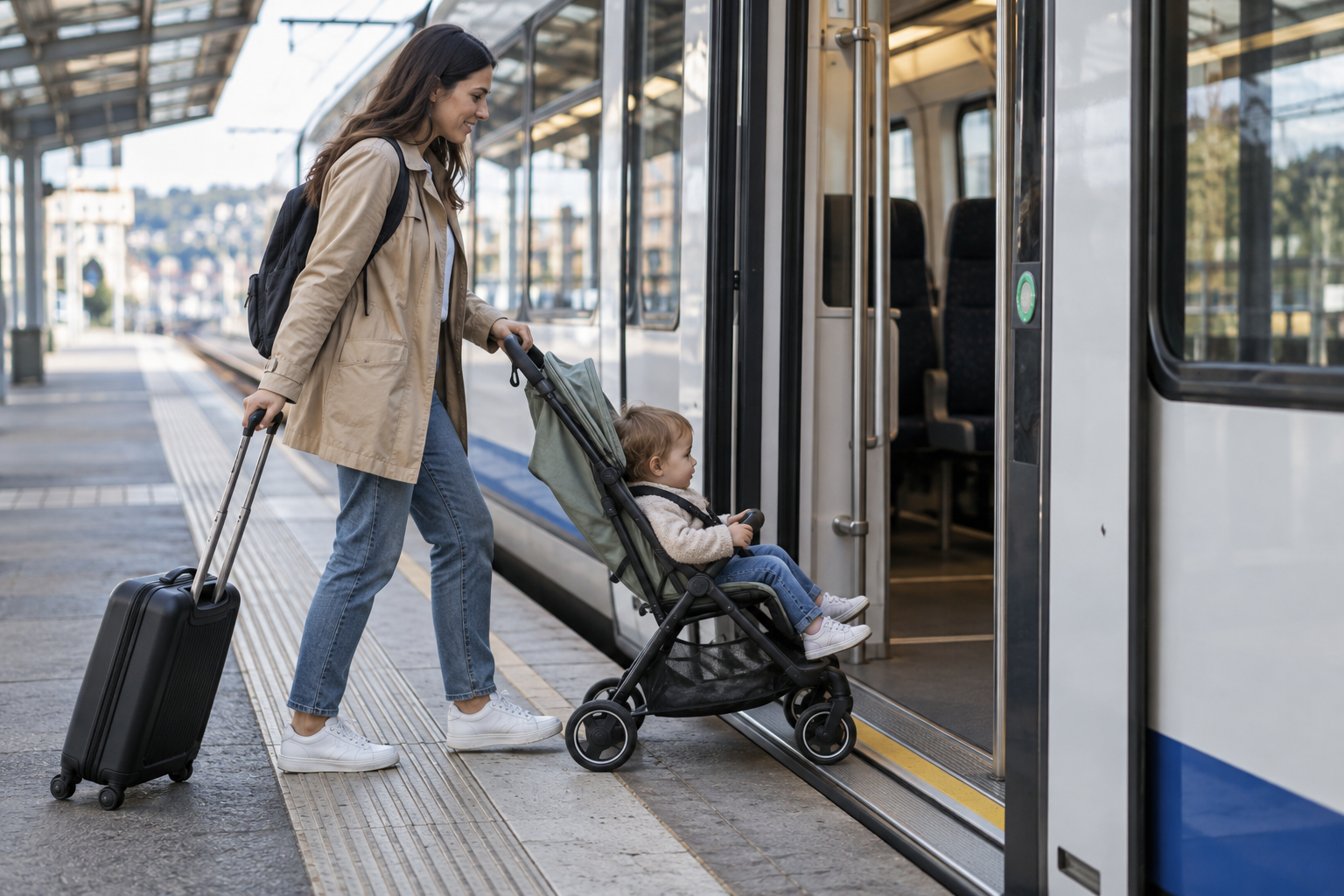
A travel stroller earns its place during transitions. Picture the points at which you stop pushing and start handling: lifting it into a vehicle, passing through security, climbing steps, finding room beside luggage or putting it away in unfamiliar accommodation. A smaller, lighter stroller can reduce the effort at each handoff.
That does not mean the smallest stroller is automatically the best. Portability matters only if you can fold it reliably, lift it without an awkward grip and reopen it while keeping your child somewhere safe. A slightly larger folded package that you can control confidently may serve you better than a smaller one with a fiddly sequence.
Think through your usual journey from beginning to end:
- Home to vehicle: Will the folded stroller fit beside your luggage rather than forcing you to repack the trunk?
- Vehicle to terminal or station: Can you carry it while managing your bag and keeping your child secure?
- Security or boarding: Can you empty permitted storage and fold the stroller without loose items spilling onto the floor?
- Arrival: Can you reopen it promptly when your child is tired, or will you still need another adult to help?
- Accommodation: Is there a practical place to store it without blocking a doorway or consuming the room’s limited floor space?
If these transitions are the hardest part of your current setup, the VIAA cabn’s travel-focused design addresses the right problem. If your real difficulty is pushing over rough ground, carrying a large changing bag or keeping a child comfortable through long daily walks, compactness may not be the deciding feature.
Cabin-friendly is not the same as cabin-guaranteed
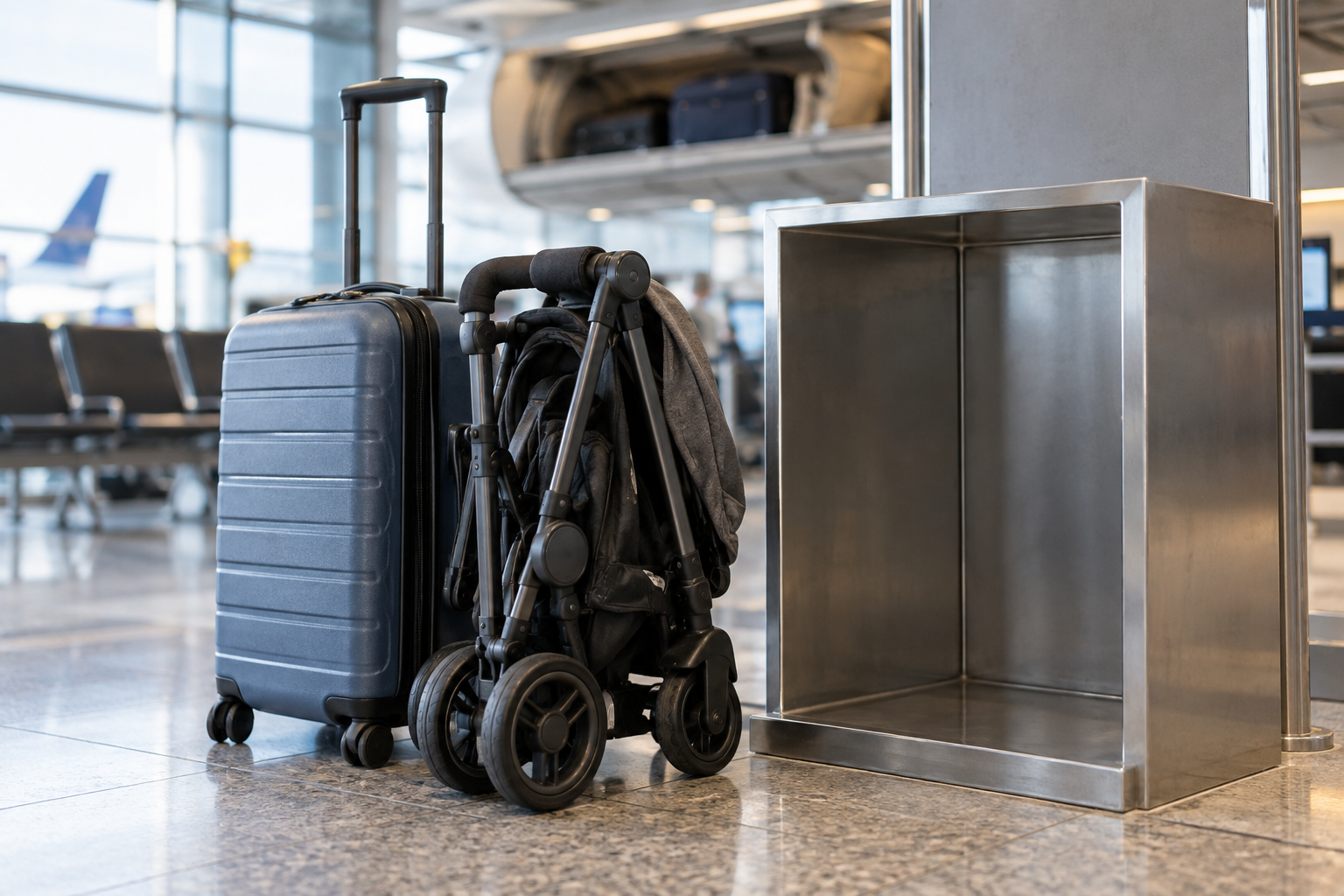
The product name may suggest air travel, but your airline decides what enters the cabin. Check the rules for the operating airline, your route, your fare and the aircraft where that information is available. A general statement about accepting strollers is not the same as permission to place a particular folded stroller in an overhead bin.
Before relying on the VIAA cabn as hand luggage, compare the airline’s current allowance with the stroller’s official folded measurements. Make sure the stroller measurement includes any parts that remain attached when folded, such as wheels or a bumper bar. Check its total carrying weight in the same configuration you intend to bring.
Then make a backup plan for checking it. Ask where it will be tagged, whether it is collected at the aircraft door or baggage claim, and whether a protective travel bag is appropriate. Keep medication, feeding supplies, identification and anything needed during the flight in a separate permitted bag. They should never be left in a stroller that might be taken from you at boarding.
- Find the VIAA cabn’s current official folded dimensions and weight.
- Open the baggage and stroller policy for the airline operating your exact flight.
- Ask the airline directly if the wording is unclear, and keep its response accessible during travel.
- Pack on the assumption that the stroller could be checked, even if its dimensions appear acceptable.
This check is more useful than relying on photographs, the product name or another traveller’s experience. Airline handling can differ between journeys, and available cabin space is not something a stroller manufacturer can guarantee.
What to verify before you buy
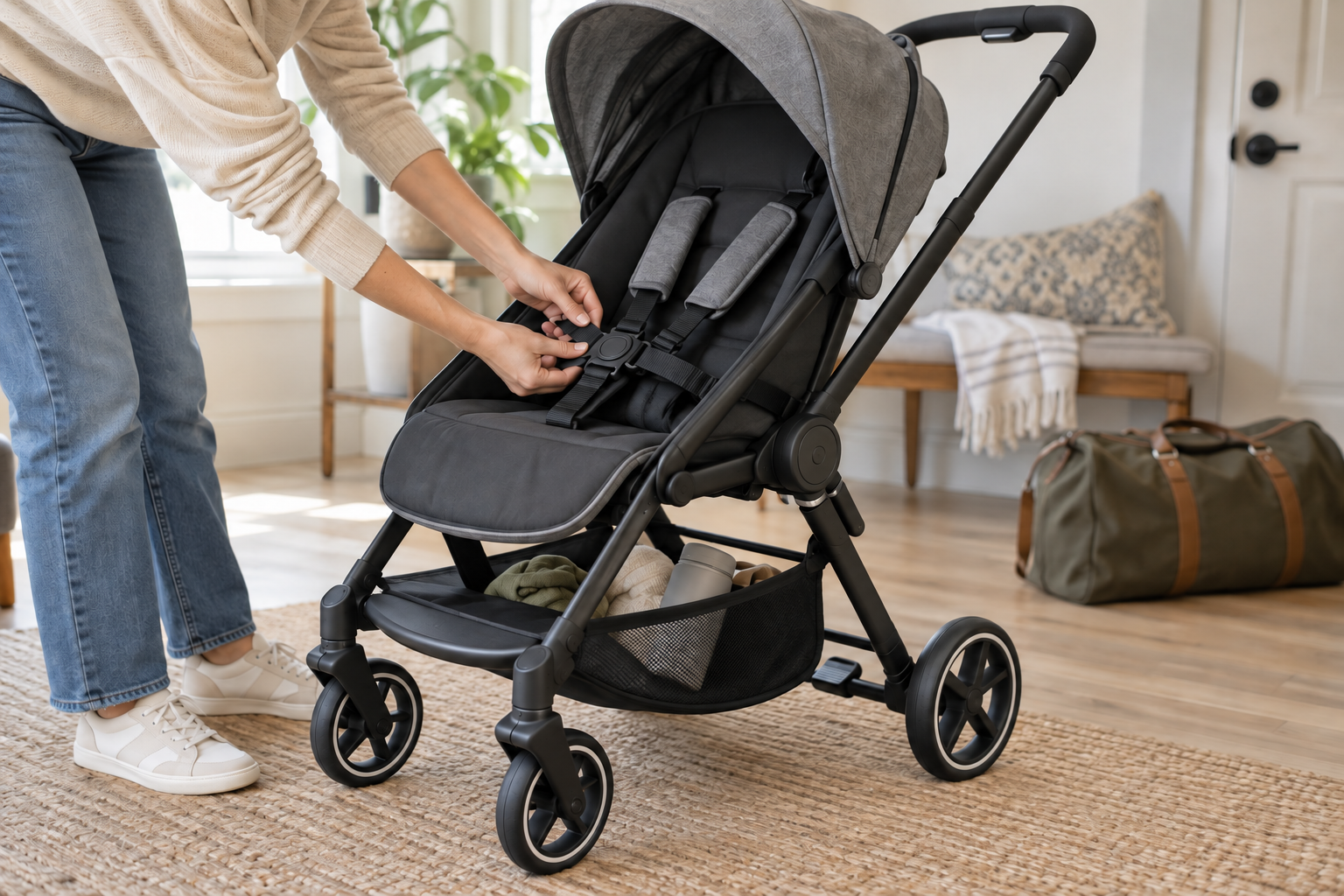
A compact fold answers only one part of the purchase decision. Use the current product manual and retailer information to settle the following questions before the return period begins.
- Child eligibility: Confirm the minimum and maximum limits and whether suitability depends on developmental stage as well as weight.
- Newborn use: Do not assume a seat is suitable from birth because it appears to recline deeply. Look for an explicit manufacturer statement and any required accessory or compatible infant seat.
- Folded package: Check the complete folded measurements and whether accessories must be removed first.
- Carrying weight: Verify what the published weight includes. A figure for the frame alone may not describe what you will actually lift.
- Fold procedure: Establish whether the process works for your dominant hand and whether it requires you to touch a wheel or the ground.
- Harness and brake: Make sure both are intuitive enough that every caregiver can use them correctly without guessing.
- Seat and canopy: Check the available recline, upright position, leg support, ventilation and coverage against naps, weather and the way your child prefers to sit.
- Storage: Compare the basket opening and permitted load with your normal changing bag. Do not plan to hang an unapproved bag from the handle, because extra weight there can affect stability.
- Wheels and route: Consider the surfaces you encounter most. Airport floors and smooth sidewalks place different demands on a stroller than snow, gravel, broken pavement or park paths.
- Support after purchase: Confirm the return conditions, warranty, replacement-part availability and whether travel damage is covered or excluded.
These checks also expose the difference between a dedicated travel stroller and an everyday workhorse. The VIAA cabn can still be the right choice if it makes intentional compromises. You simply need those compromises to match the job you are buying it to do.
Test it like you are already travelling
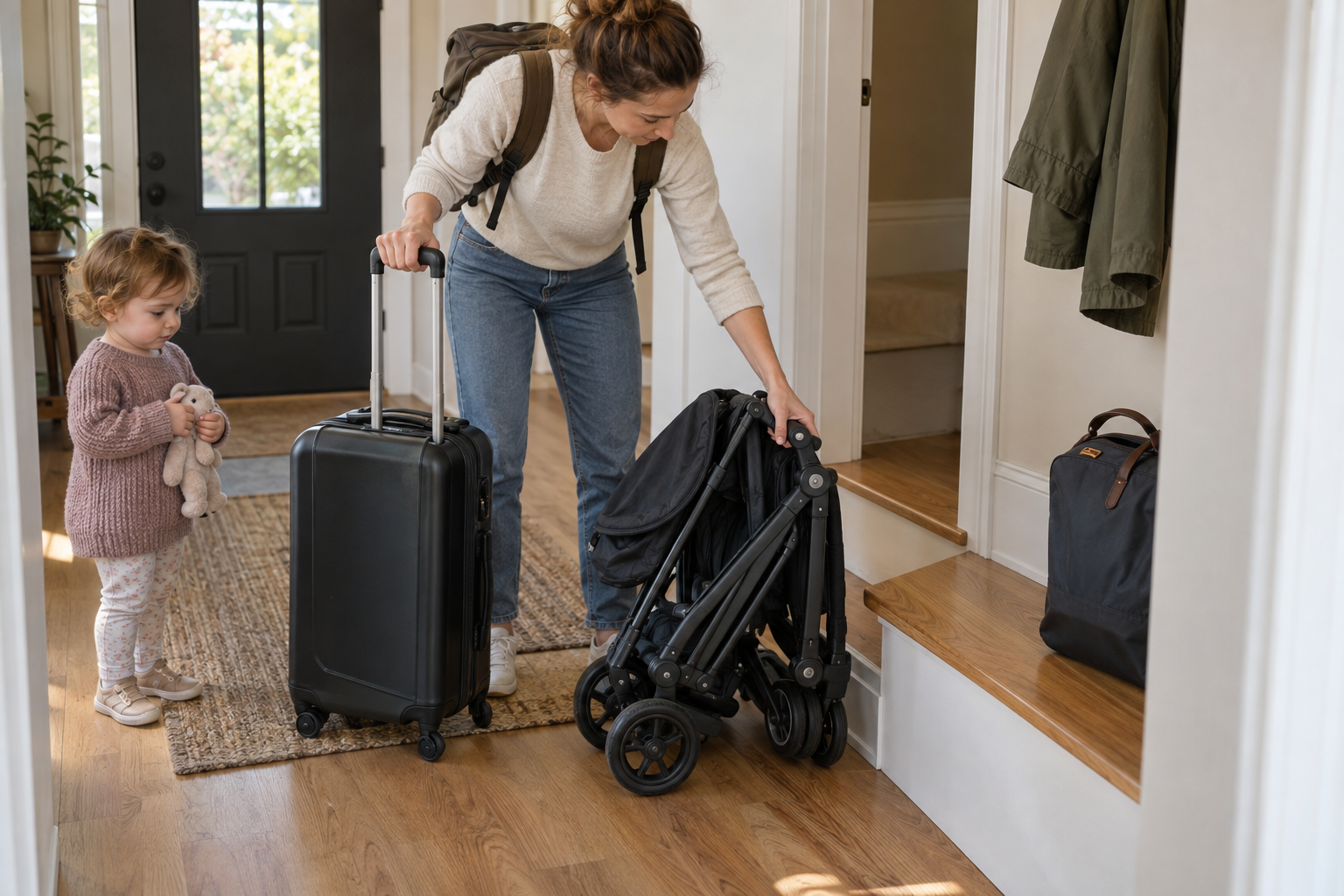
If you can see the stroller in a store, bring the bag you normally carry and wear the coat or backpack you are likely to use on a trip. If you order it at home, preserve the packaging and understand the return rules before taking it outdoors.
- Set it up using the manual rather than intuition. If the instructions are unclear to you now, they will not become easier in a busy boarding queue.
- With your child secured and within the manufacturer’s limits, check the harness fit, seating position, canopy and access to the basket.
- Push it one-handed briefly on a safe, level surface while your other hand holds your usual bag. This is a handling check, not permission to use a phone or carry hot drinks while pushing.
- Turn through a narrow doorway and manoeuvre around furniture to see how quickly it responds in confined spaces.
- Place your child safely with another adult or in an appropriate secure space before practising the fold. Never fold or adjust the stroller with your child in it.
- Fold and reopen it in the clothes you travel in, then lift it as if placing it in a trunk or onto a luggage rack.
- Put the folded stroller in its intended storage space. Measure the actual folded package if cabin compatibility matters.
- Have every regular caregiver repeat the setup, harness, brake and fold without coaching.
Shortlist the VIAA cabn if it makes those tasks noticeably simpler and the verified specifications suit your child and route. Pause if you need proven newborn accommodation, substantial carrying capacity, regular rough-surface performance or a guaranteed overhead-bin fit and cannot confirm those requirements in writing.
Before ordering, put the official stroller specification beside the rules for your next journey. If the measurements work and the real-life handling test feels manageable for every caregiver, you have a practical reason to choose it rather than merely an appealing travel label.
References