

A nursery chair can look perfect online and still be wrong where it matters: your feet do not reach the floor, the arms sit too low for feeding, or the recliner blocks a drawer every time it opens.
You can avoid most of those problems before the chair enters your home. Start with the work it needs to do, measure its full range of motion, and test how easily you can sit down and stand up while one arm is occupied.
Decide what the chair needs to do before choosing a style
Begin with the moments you expect to use it: feeding, settling, cuddling, reading, or sitting with an older child later. Then consider every adult who will use it regularly. A seat that suits one caregiver can leave another with unsupported feet, raised shoulders, or an awkward climb out.
Make three short lists: must have, nice to have, and unnecessary. That separation matters because nursery chairs can now combine swivelling, gliding, rocking and reclining in the same frame. A longer feature list is useful only when you will use those movements and have space for them.
- Must have: The non-negotiable qualities that affect daily use, such as supportive arms, easy-to-clean upholstery or a movement you already know you prefer.
- Nice to have: Features you would enjoy but would trade for a better fit, quieter mechanism or simpler care.
- Unnecessary: Functions that add cost, bulk, cords or moving parts without solving a problem in your routine.
Also decide which side will hold your water, phone, burp cloths or feeding supplies. Sit in the planned position and reach toward that side without twisting your back. If the chair swivels, confirm that the turning motion helps rather than knocking into the table.
Measure the moving chair, not just its resting footprint
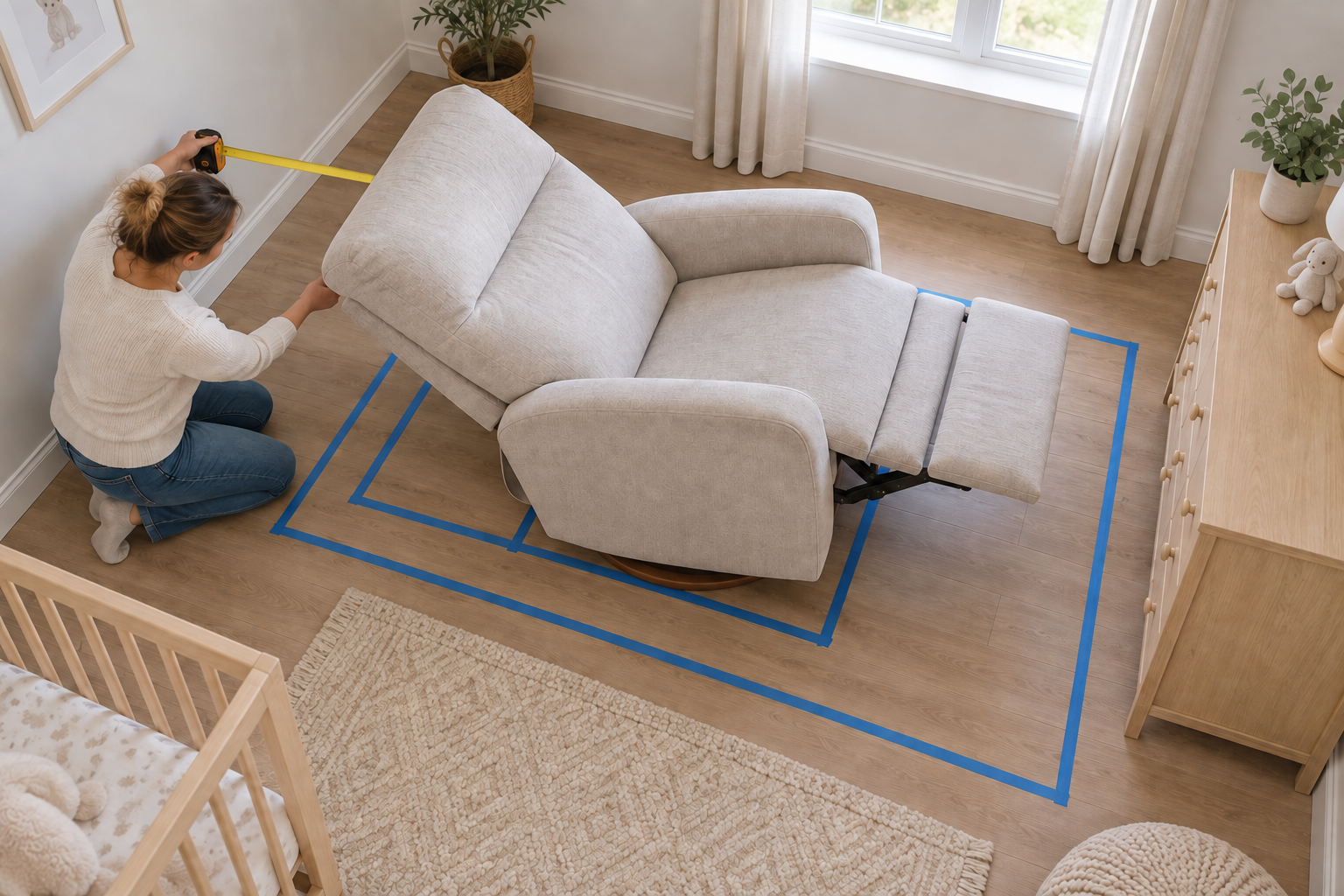
A product’s listed width and depth usually describe the chair in one position. Your room has to accommodate the chair while it glides, rocks, rotates or reclines. The required clearance varies by model, so do not rely on a general rule or a photo of a similar chair.
- Mark the chair’s resting width and depth on the floor with removable painter’s tape, using the exact model’s measurements.
- Find out how far that model travels in every direction you plan to use. Add its rocking or gliding path, swivel radius and fully reclined depth to your floor plan.
- Open nearby doors, drawers, closet doors and window coverings. Nothing should enter the chair’s movement zone.
- Walk the route between the chair, the room entrance and the baby’s sleep space. Leave a clear path that does not require you to step around a footrest or squeeze past a side table.
- Measure the delivery route as carefully as the nursery. Check the narrowest doorway, hallway turn, stair landing and elevator, then compare them with the packaged dimensions and the manufacturer’s instructions about removable parts.
- If the chair uses power, identify a suitable outlet and plan a cable route outside the walking path and away from a child’s reach. Do not use an extension arrangement unless the chair’s instructions permit it.
If you are testing a floor model, ask to position it near a wall and operate every function. A recliner that looks compact while upright can demand substantially more floor area when open. Some models also limit which motions work together, so test the chair while upright and reclined rather than assuming every advertised function is always available.
Test the chair with a tired body in mind
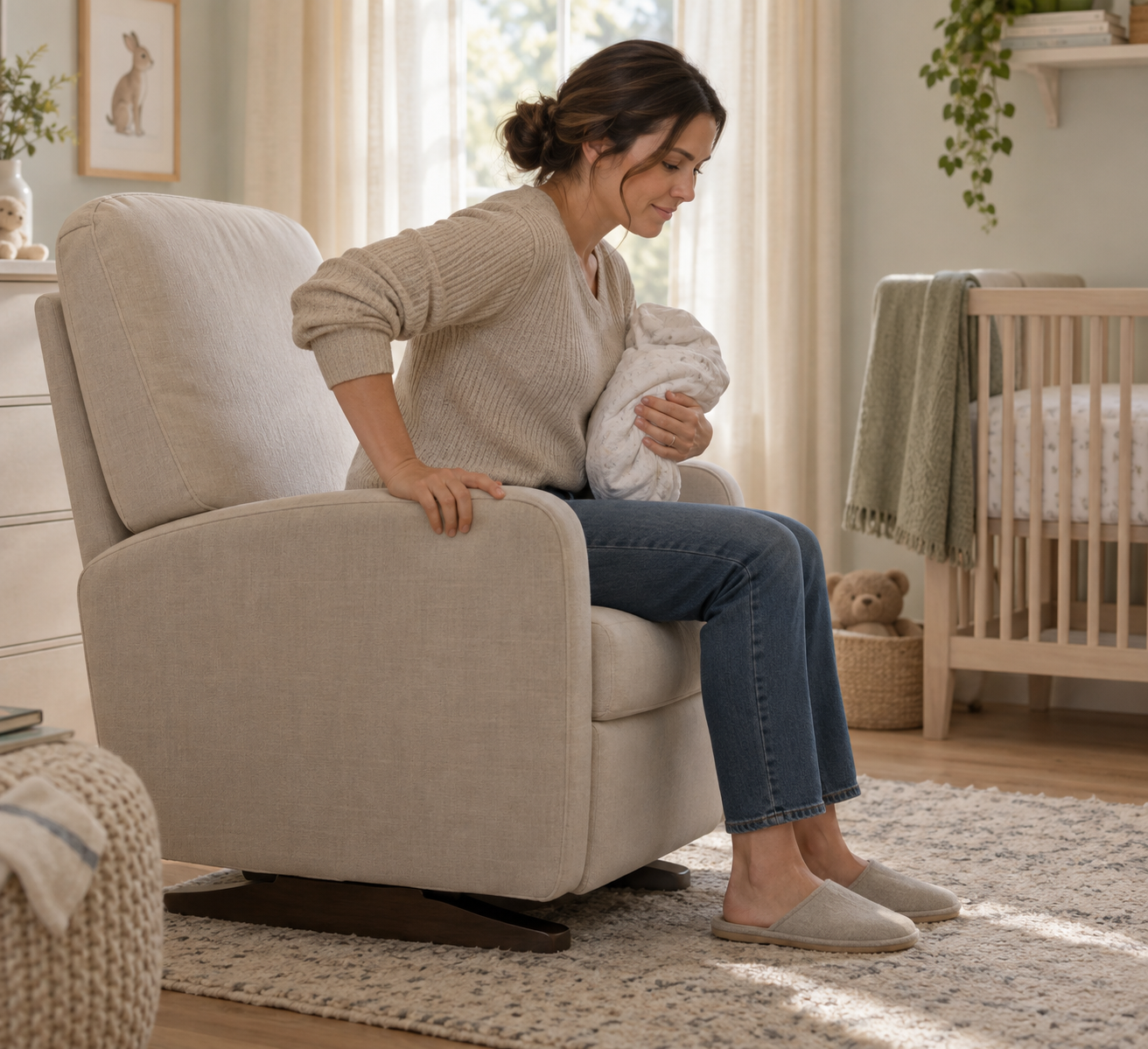
The first impression of a plush cushion can hide poor body support. Stay seated long enough to notice where your weight settles, then evaluate your position from feet to shoulders.
- Feet: Your feet should rest securely rather than dangle. If more than one caregiver will use the chair, test each person instead of assuming a separate footstool will solve every mismatch.
- Seat: The seat should give you room to adjust your position without being so deep or wide that you lose back and arm support.
- Lower back: Lean into the backrest as you would during a long feed. Notice whether there is an unsupported gap or a cushion that pushes you forward.
- Head and neck: Check where the backrest meets your head when you look forward and when you relax against it.
- Arms and shoulders: Rest your forearms as if you were supporting a baby. If you have to shrug, hold your elbows away from your body or lean sideways, the arm height is working against you.
- Exit: Stand up while pretending one arm is unavailable. Reject a chair that requires a forceful heave, both hands on the arms or a struggle with the footrest.
If you expect to use a feeding pillow, bring it to the store when possible. The pillow, armrests and your torso all compete for the same space. A chair can feel generous when empty but cramped once those pieces are in place.
Operate the controls without looking down. You should be able to reach them from your normal sitting position without leaning over the side. On a manual recliner, open and close the footrest yourself. On a powered model, listen to the motor, locate the controls and confirm what the manual says about operation during a power interruption.
Choose movement, upholstery and mechanics as one system
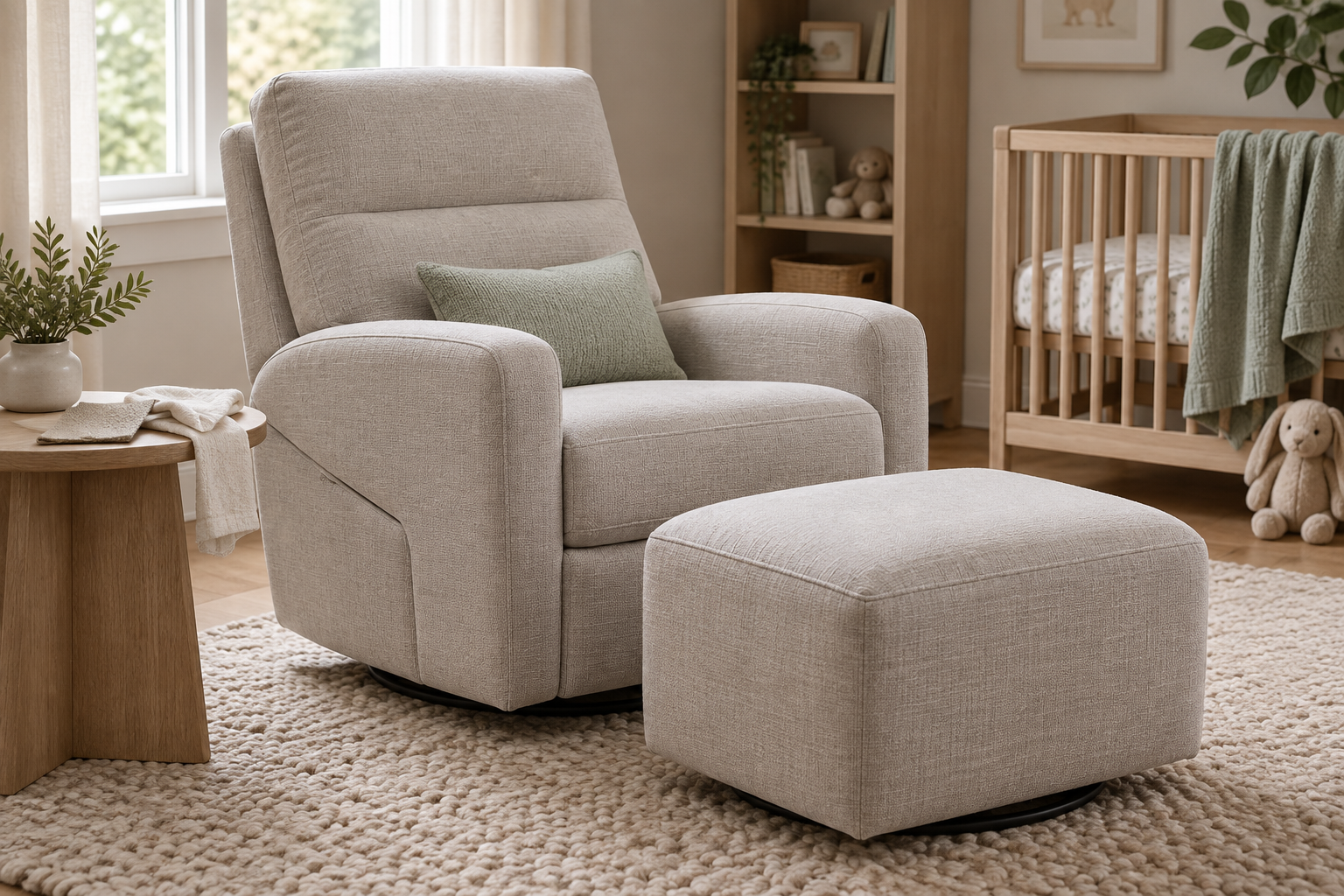
A glider and a rocker may both provide repetitive movement, but they do not feel identical. Try each rather than deciding from the label. Pay attention to how easily the motion starts, whether it stops when you want it to, and whether you feel balanced while getting in and out.
- Gliding or rocking: Choose the motion that feels natural to the regular caregivers. Check the full travel path on the exact chair.
- Swivelling: Useful when you need to turn toward a side table or change your view without dragging the chair. It also creates a wider moving zone that must remain clear.
- Reclining: Worth considering if adult comfort justifies the additional depth and mechanism. Confirm how the footrest closes and whether the chair can still glide, rock or swivel while reclined.
- Powered controls: They can change how the chair operates, but they also require an outlet, cable planning and attention to the manufacturer’s instructions.
Next, inspect the upholstery as a cleaning surface rather than a colour choice. Read the care label before buying. Ask which covers can actually be removed, which parts are washable, and which stains require professional cleaning. A zippered cushion is not automatically machine washable, and a fabric described with a reassuring marketing term still needs clear care instructions.
Look closely at piping, tufting, seams and the gap between the seat and back. Those details can trap crumbs and dried spills. If a fabric sample is available, take it home and assess it in the nursery’s light. Follow its stated care directions if you test cleaning; an improvised cleaner can create a stain of its own.
Noise deserves a separate test. On a level floor, sit down, stand up and run every movement slowly and then at your normal pace. Listen for rubbing, clicking, motor noise and a footrest that shuts abruptly. A busy showroom can mask sounds, so place your ear closer to the mechanism if necessary. If the display chair already makes a distracting noise, do not assume a delivered chair will be silent.
Moving furniture also creates pinch and crush zones. Before every use, make sure a child, pet, toy or blanket is not under or behind the chair, and keep hands away from the mechanism. Follow the model’s instructions for clearance, operation and maintenance. A glider or recliner is adult seating, not a baby’s sleep surface; if you may drift off, move the baby to the appropriate sleep space rather than treating the chair as part of the sleep setup.
Finally, read the parts of the purchase policy that matter after delivery: returns, restocking or pickup fees, upholstery coverage, and warranty terms for the frame, mechanism and motor. Keep the receipt, model information and manual together. If a problem develops, those details are more useful than the product name alone.
Nursery chair FAQ
Do you need a chair sold specifically for nurseries?
No label can substitute for fit. A chair earns its place in the nursery when it supports the caregivers, fits through the delivery route, moves safely in the available space, has practical care instructions and works quietly enough for the room. A non-nursery chair may meet those needs, but test it by the same standards.
Is a glider better than a rocking chair?
Neither movement is universally better. The useful distinction is how the specific chair feels to you and how much space its motion requires. Try both with your feet and back in their normal positions, then choose the one you can start, control and stop comfortably.
Is a reclining nursery chair worth the extra space?
It can be if the regular caregivers find the reclined position comfortable and your measured layout accommodates the open footrest. It is a poor trade if reclining blocks a route, hits other furniture or adds a function you rarely use. Test the closing action as carefully as the reclining position.
Can you confidently buy a nursery glider online?
You can reduce the risk, but you cannot confirm body fit from measurements alone. Before ordering, compare the exact dimensions with your taped floor plan, check the moving clearances and delivery path, read the care instructions, and understand the return costs. If you cannot sit in the model first, a practical return policy is part of the product’s value.
Before you buy, take your room and delivery measurements with you and test the chair as the least-rested version of yourself: feet supported, shoulders relaxed and one arm unavailable. The right chair is the one that still works under those ordinary constraints.
References




