
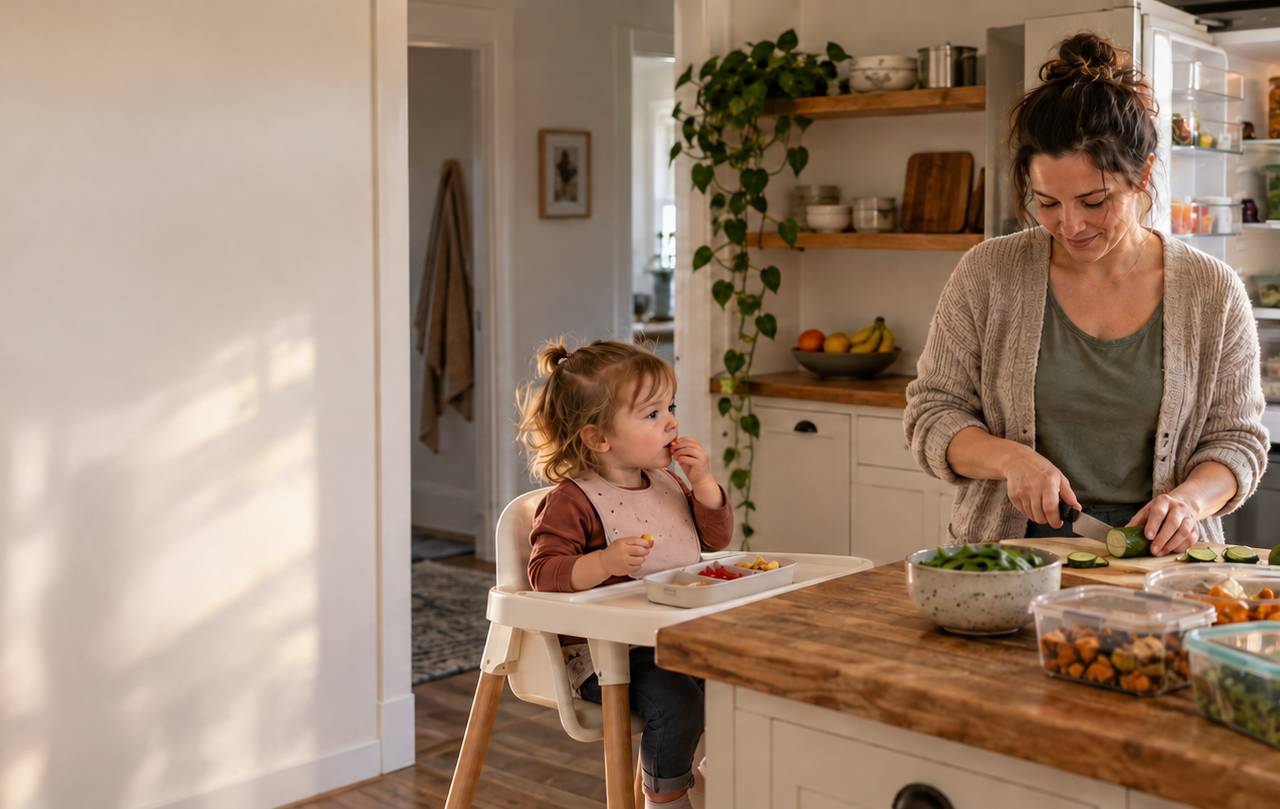
A grocery plan stops being useful when your toddler rejects dinner, the baby needs feeding at the same time, and the easy option is not the meal you intended to cook. If your total keeps climbing, you do not need a perfect menu. You need a system that still works on a tired night.
With families facing rising grocery bills, it is tempting to start by cutting favourite foods or chasing every promotion. Start somewhere more productive: find the food you pay for but do not use, then make the food you already own easier to serve.
Find the expensive habit hidden in your receipts
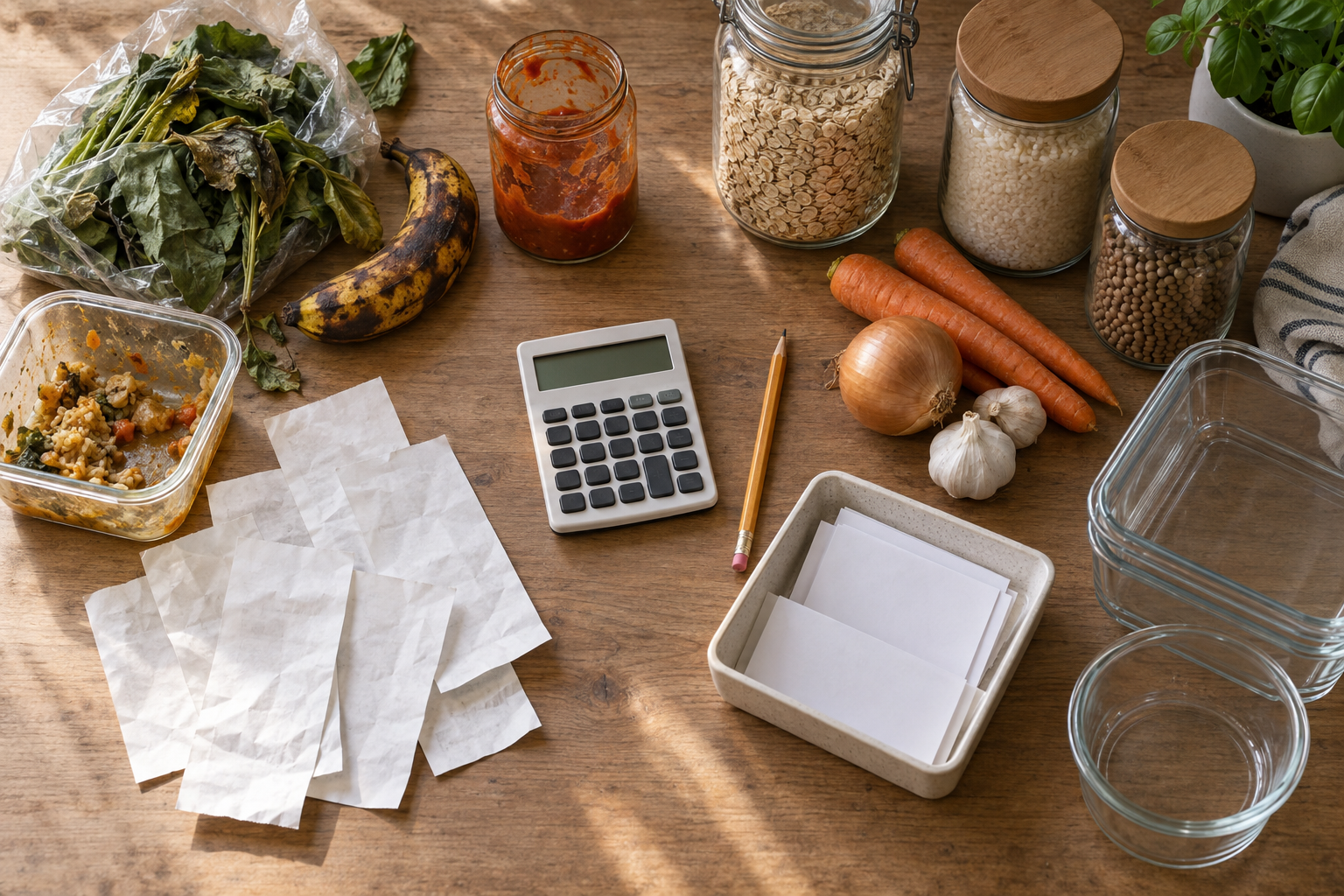
A high grocery bill is rarely caused by one dramatic purchase. It is usually a mix of small leaks: produce that spoils, a second jar bought because the first was hidden, ingredients purchased for an ambitious recipe, snacks added without a plan, and emergency meals bought when dinner falls apart.
Review your recent grocery receipts alongside what is still in the fridge, freezer, and pantry. Do not judge the foods themselves yet. Sort the spending by what happened after you brought each item home:
- Used completely: the household ate it and would reasonably buy it again.
- Partly wasted: some was eaten, but the rest spoiled or was discarded.
- Still waiting: it has no clear meal attached to it.
- Bought twice: you already had enough but could not see or remember it.
- Emergency spending: it replaced a meal that was too slow, complicated, or unpopular to serve.
- Unplanned extra: a discount, display, craving, or request put it in the cart.
Choose the largest repeatable leak, not the item with the highest price. One unused specialty ingredient may be a one-off mistake. Produce discarded every shopping cycle is a system problem. Fixing that pattern will do more than banning a single treat.
Set your grocery ceiling from the amount your household can carry after essential expenses, then decide what that ceiling includes. Food, formula, diapers, cleaning products, and toiletries often appear on the same receipt. Separating those categories prevents a diaper purchase from looking like a food-budget failure. If the ceiling requires you to skip necessary infant feeding products or medically required foods, the ceiling is too low; those needs belong in the protected part of the budget.
Plan from the food you have, not from an empty calendar
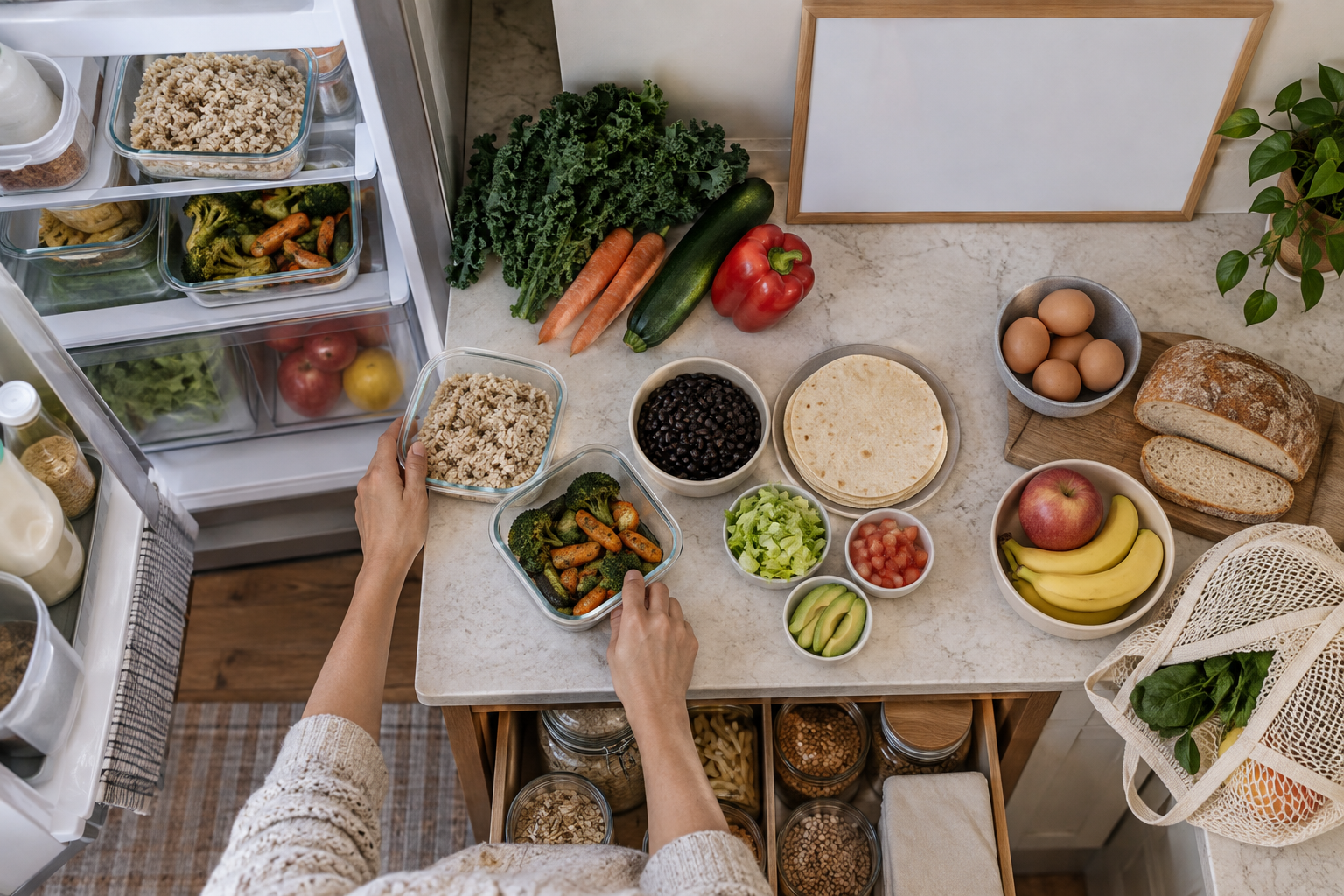
Recipe-first planning often creates a long list of unrelated ingredients. An inventory-first plan turns food already paid for into meals. Use this sequence before opening a grocery app or walking into a store:
- Open the fridge and identify what needs to be eaten soon.
- Check the freezer for proteins, bread, cooked food, and vegetables that can anchor a meal.
- Scan the pantry for meal bases such as rice, pasta, oats, beans, lentils, canned tomatoes, or other staples your family actually eats.
- Choose meals that share ingredients, especially the perishable ones.
- Put fragile produce and opened packages earlier in the plan; save frozen and shelf-stable options for later.
- Check the family calendar for nights when cooking time will be short.
- Write down only the missing ingredients needed to complete those meals.
Keep a visible use-first area in the fridge. This can be a clear container or one designated shelf for opened yogurt, cut fruit, cooked ingredients, and produce nearing the end of its useful life. Before anyone opens a new package, they can check that area. Visibility does the work that memory cannot reliably do during a busy morning.
Ingredient overlap should not mean eating the same dinner repeatedly. A familiar protein, bean, grain, or roasted vegetable can move into different formats: a bowl, wrap, pasta dish, soup, omelette, or snack plate. The goal is to reuse the ingredient without making every meal feel identical. Prepare each child’s serving in a texture and shape appropriate for their developmental stage.
It is also reasonable for breakfast and lunch to repeat. If your family reliably eats oatmeal, eggs, toast, yogurt, fruit, sandwiches, or leftovers, those dependable meals make buying easier and reduce half-used packages. Save your planning energy for the meals that usually trigger extra spending.
Shop for usable value, not the lowest sticker price
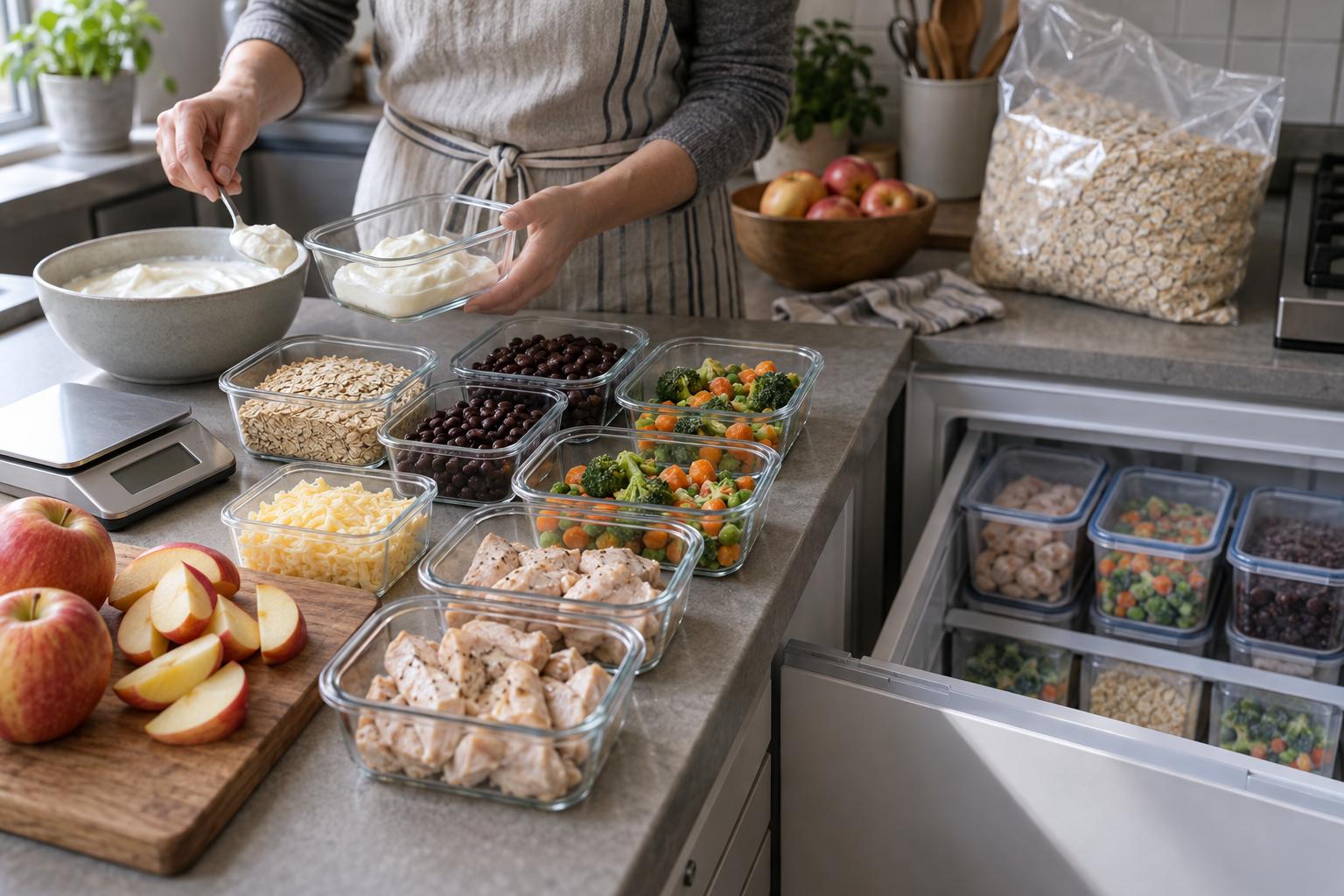
The cheapest package is not always the least expensive choice. A larger container costs more if part of it spoils, a tough cut is poor value if nobody will eat it, and a bargain ingredient is not a saving when it needs several extra purchases to become a meal.
Use these rules while you shop:
- Compare unit prices when package sizes differ. Check that the units are the same before deciding which product offers better value.
- Compare usable quantity as well as package weight. Bones, peels, preparation losses, and likely waste affect what reaches the plate.
- Choose store brands by ingredient needs and household acceptance, not by packaging. Test a smaller amount before committing to a bulk purchase.
- Buy in bulk only when you already use the item, can store it safely, and will finish or freeze it before quality declines.
- Treat a coupon as a discount on a planned purchase. It is not a saving if it adds an unnecessary product to the cart.
- Compare fresh, frozen, and canned versions according to the job. Frozen produce can be useful when you need small amounts without leaving the rest to spoil; check labels when sodium, added sugar, or another ingredient matters to your household.
- Keep a short price list for the staples you buy repeatedly. A sale label is less persuasive when you know the usual price.
- Give substitutions a purpose. Swap a costly or unavailable ingredient only when the alternative will still work in the planned meal.
Before buying a promoted product, ask three practical questions: Which planned meal will use it? What purchase will it replace? Can you store all of it? If you cannot answer those questions, leave it. A low price does not turn an unneeded product into savings.
Convenience deserves a more honest calculation. Pre-cut vegetables, frozen components, prepared sauces, or a dependable freezer meal may cost more per unit than cooking from scratch. They can still fit a tight budget if they prevent food waste or replace a much more expensive last-minute meal. Pay for convenience where it solves a recurring problem, not merely because it is available.
Make the plan work with babies and toddlers
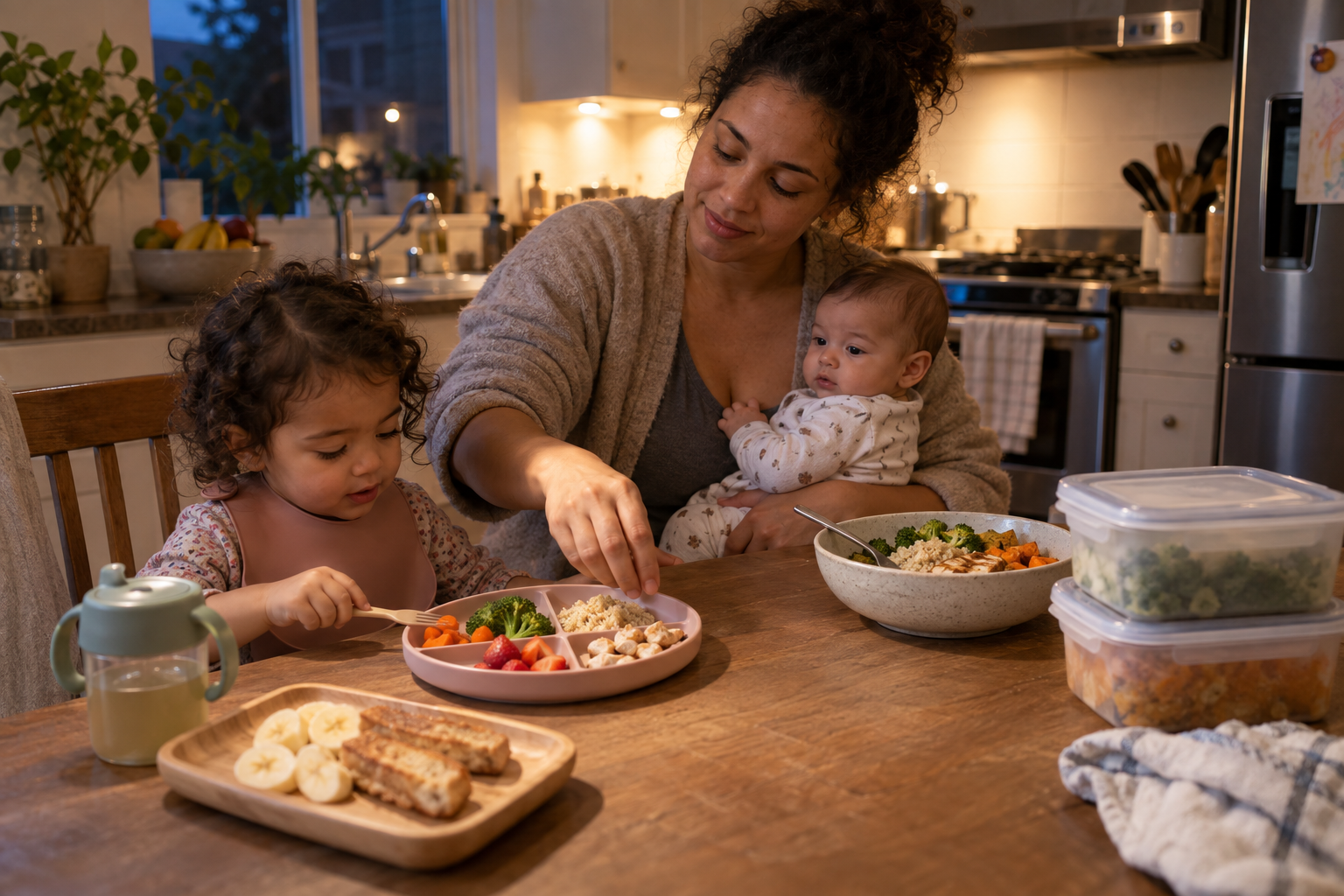
Young children make demand unpredictable. Appetite changes, a familiar food may suddenly be refused, and the amount served is not always the amount eaten. Build that uncertainty into the system instead of treating every unfinished portion as a planning failure.
- Serve a modest first portion and offer more when your child wants it. Food that remains in the serving dish is easier to store safely than food left on a used plate.
- Offer meals in components when practical. A child may reject a mixed dish but accept part of it, while the adults can combine the same ingredients.
- Buy a smaller amount when introducing an unfamiliar food. Bulk value matters only after you know the household will use it.
- Keep a dependable backup meal made from foods you normally stock. It should be fast enough to compete with an unplanned purchase.
- Freeze suitable extras in practical portions and label them clearly. Follow storage, thawing, and reheating instructions rather than relying on memory.
- Choose flexible staples that can serve adults and children, adapting the texture, shape, and preparation to the child’s feeding stage.
Do not reduce infant-formula costs by diluting formula or changing the package’s water-to-formula ratio. Follow the preparation directions exactly. If your baby uses a specialized formula or has medical feeding needs, do not substitute on price alone; ask the clinician or pharmacist who knows the feeding plan. A grocery budget should adapt around a necessary feeding product, not compromise it.
The same principle applies to choking safety and medically required diets. A cheaper preparation is not a useful substitution if its texture, shape, ingredients, or serving method is unsuitable for your child. When you are unsure whether a food fits your child’s developmental stage or health needs, use guidance from their health-care professional.
Plan for the night when nobody has the capacity to cook. Keep a pantry or freezer meal that your family accepts, requires little cleanup, and uses ingredients you replace routinely. The backup is part of the budget, not evidence that the meal plan failed.
Key takeaways
- Look for repeated waste, duplicate purchases, and emergency spending before cutting foods your family relies on.
- Plan from the fridge, freezer, and pantry outward, putting food that will spoil first at the front of the schedule.
- Compare unit price, usable quantity, storage space, and likely waste before choosing the largest or cheapest-looking package.
- Use promotions only when they replace a purchase already on your list.
- Pay selectively for convenience when it prevents a predictable takeout order or discarded ingredient.
- Protect formula directions, medical feeding needs, and age-appropriate food preparation from budget cuts.
Before your next shop, review one recent receipt and choose one leak to fix. Then build the next list around the most perishable food you already own. A small rule you can follow during a difficult week is worth more than an ambitious plan you abandon at dinner time.
References




