
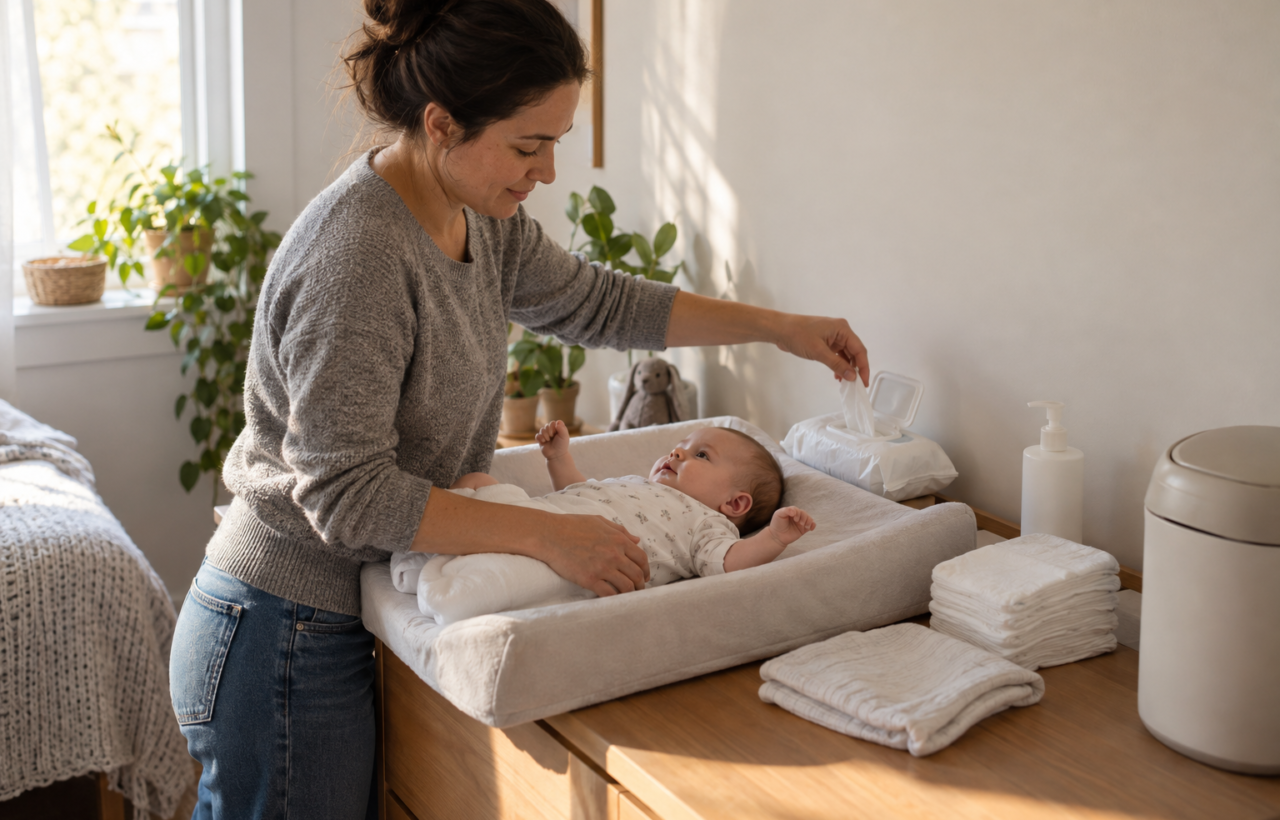
At 2 a.m., the best diaper is not the one with the longest promise on the package. It is the one that fits your baby, contains the mess, leaves their skin comfortable, and can be changed without sending you across the room for a missing wipe.
Choosing that product is harder than it should be. Diaper and wipe labels mix material facts, safety credentials, performance claims, and soft-sounding marketing language. Here is how to separate those things, test a product in real life, and build a changing routine that is practical as well as safe.
Buy for the routine you actually have

Start with expected use, but treat the numbers as shopping estimates rather than care targets. During the newborn period, one commonly cited estimate is eight to 12 diapers and 20 to 30 wipes per day. At that rate, a theoretical seven-day supply is 56 to 84 diapers and 140 to 210 wipes.
That does not mean you should immediately buy several cases. Babies can outgrow a size quickly, and a diaper that works beautifully for one body shape may gap or pinch on another. Wipes can also feel different on your baby’s skin than they did on your hand in the store.
A sensible starter setup contains:
- A small or moderate pack of diapers in the current size, rather than the largest available carton.
- One wipe formula at a time, so you can identify the cause if irritation appears after a change.
- A washable or disposable changing-surface cover.
- A complete spare outfit, not just an extra bodysuit.
- A waste bag and a place to put used supplies without leaving the baby.
- A hand-cleaning plan for both your regular changing area and your diaper bag.
Once the diaper has passed a real-life trial, keep one unopened buffer if your storage space and budget allow. Reorder before opening that buffer. This gives you time to replace supplies without committing to months of a size or formula that may stop working.
Read every label, but read it literally
You do not need to treat every unfamiliar ingredient as dangerous. You do need to know which statements describe the product and which ones merely position it. Read the exact package for the exact variant you are buying; claims for one diaper or wipe in a brand’s range do not automatically apply to the rest.
- Ingredient and material disclosures: Wipes should identify the ingredients in their cleansing solution. Diaper information may appear as a materials list rather than a conventional ingredient list.
- Free-from claims: These tell you that a named substance is absent. They do not establish that the whole product is safer for every baby.
- Testing and certification: A named standard gives you something specific to verify. Check that the credential covers the exact product and, when possible, what was actually assessed.
- Performance language: Phrases such as “up to 100% leakproof protection” describe an advertised maximum, not a promise that every fit, movement, and bowel movement will be contained.
- Comfort language: Words such as soft, gentle, premium, and cashmere-like are not substitutes for a material disclosure, testing information, or your baby’s skin response.
For example, Pampers describes Swaddlers as hypoallergenic, dermatologist approved, free of several named materials, and OEKO-TEX STANDARD 100 certified and tested against more than 1,000 substances. Those are several distinct claims. None guarantees that a particular baby cannot develop irritation, that the diaper will fit every body shape, or that it will never leak.
Percentages also need context. Pampers Aqua Pure Wipes are advertised as 99% purified water and free of fragrance, parabens, elemental chlorine, and natural-rubber latex. The 99% figure is useful, but it still leaves other ingredients to identify. Their presence is not automatically alarming; it simply means “water-based” is not a complete ingredient list.
The same discipline applies to terms such as microbiome friendly or dermatologically accredited. Treat them as prompts for follow-up questions: Who assessed the product? What criteria were used? Does the claim refer to irritation, moisture management, materials, or something else? A reassuring phrase should narrow your questions, not end them.
Let fit and skin response decide whether a product stays
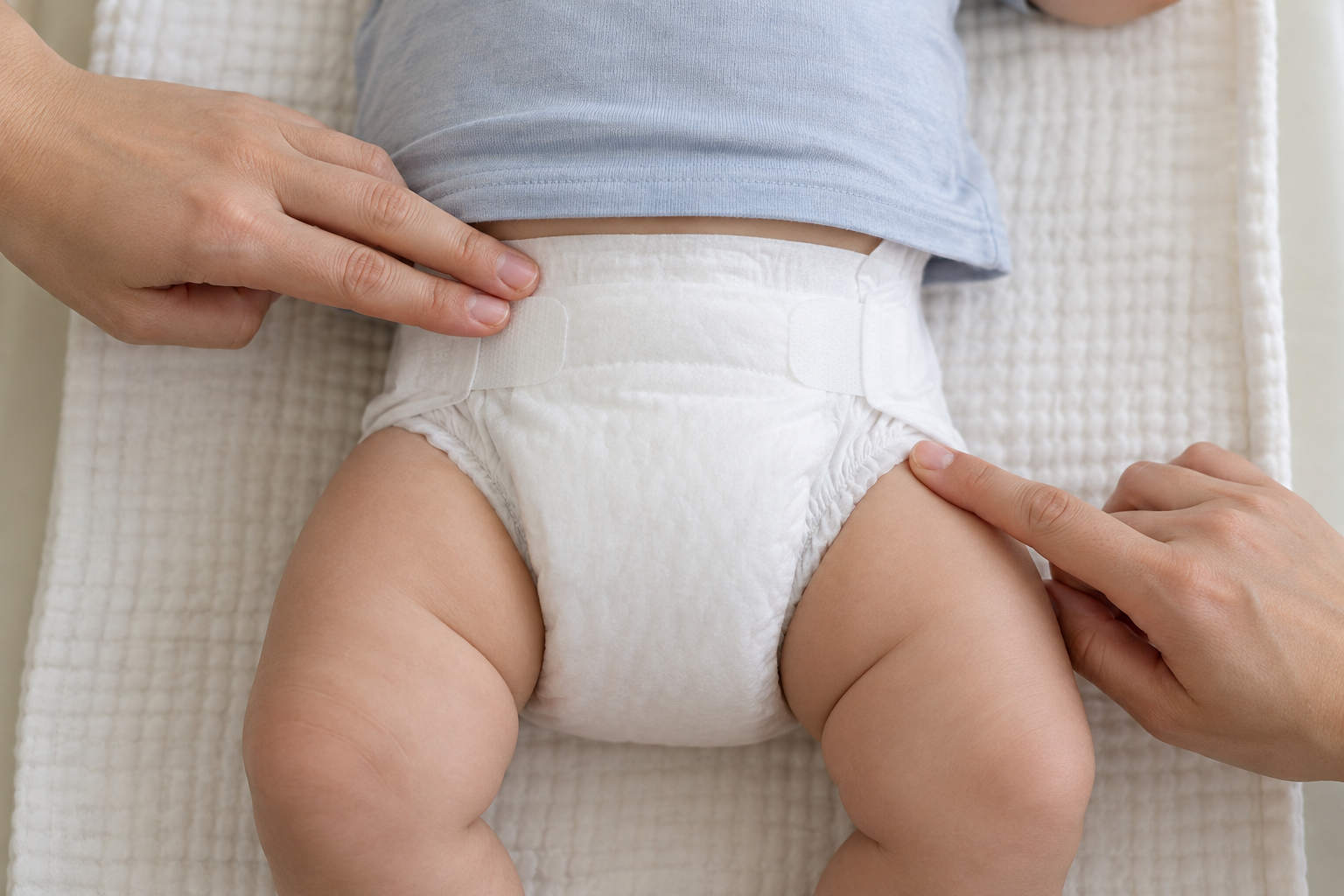
A diaper can be highly absorbent and still leak if its cut leaves a gap at the leg or back. It can also contain every mess and still be a poor choice if it repeatedly leaves pressure marks or irritation. The package gets a product into your cart; the next several ordinary changes determine whether you buy it again.
Check four things during the trial:
- Fit: Fasten the tabs evenly, make sure the leg cuffs are unfolded, and look for gaps. The diaper should stay in place as your baby moves without pinching or leaving persistent deep marks.
- Containment: Notice where repeated leaks occur. Leg leaks, back leaks, and a diaper that shifts all point to potentially different fit problems. Before rejecting the product, confirm that it is positioned and fastened correctly.
- Skin: Look at the covered area at each change. Note when redness began, where it appears, and whether it followed a new diaper, wipe, cream, medicine, or change in stooling. Do not assume the newest product is the cause, but do not ignore the timing either.
- Cleaning: Use gentle strokes and enough clean wiping surface to lift away the mess without repeatedly rubbing the same area. Let the skin dry before fastening the new diaper when the situation allows.
Test absorbency during your baby’s normal routine. Do not deliberately leave a wet or soiled diaper on longer to see when it fails, and do not leave a soiled diaper in place for the sake of comparing brands.
If irritation appears after introducing something new, pause that product when practical and keep the packaging or a photograph of it, including the exact name and lot code. That information is more useful than remembering only the brand. Redness can have several causes, including prolonged moisture, friction, stool contact, or sensitivity, so persistent or worsening irritation deserves advice from your baby’s health-care professional. Seek prompt medical guidance if the skin is broken, blistering, oozing, rapidly worsening, or your baby seems unwell.
Make the changing setup safer than the product pitch
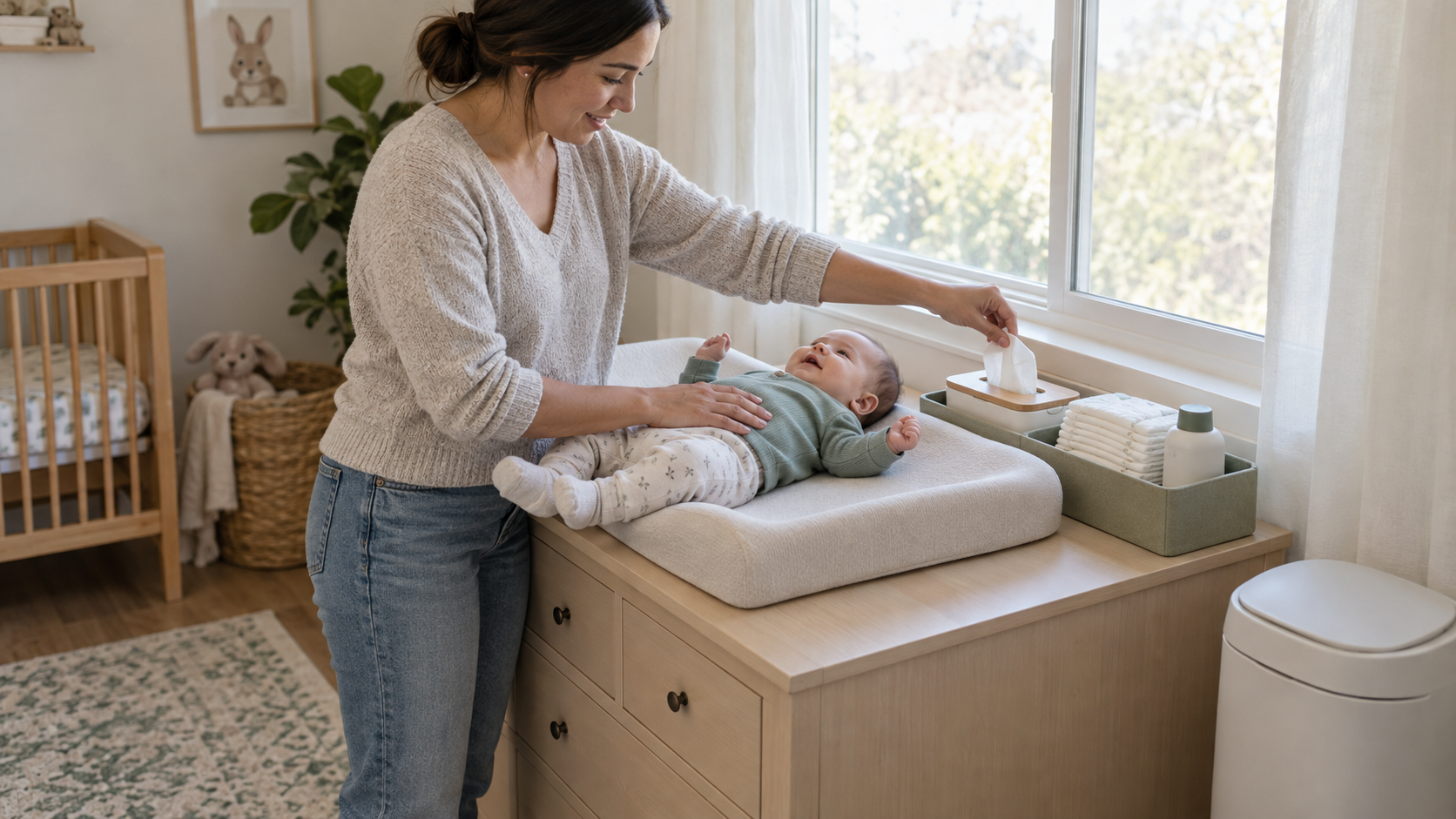
No diaper feature compensates for an unsafe changing surface. The routine matters because you will repeat it while tired, distracted, away from home, or dealing with a baby who has suddenly learned to twist and roll.
- Gather everything first. Put the clean diaper, wipes, spare clothing, changing cover, and waste container within one-hand reach before opening the dirty diaper.
- Use a stable surface. If the surface is elevated, keep one hand on the baby. Use the supplied restraint correctly when there is one, but never treat it as permission to step away. A clean mat on the floor is the safer fallback when you cannot control an elevated setup.
- Open the clean diaper before removing the dirty one. That small step shortens the part of the change when you are most likely to discover something is missing.
- Clean without moving stool toward the genitals. Work from front toward back, switch to a clean area of the wipe as needed, and avoid scrubbing irritated skin.
- Finish the whole hygiene routine. Fasten the clean diaper, secure the waste, wash or clean your hands, and clean the changing surface with a product intended for that surface.
Baby wipes are convenient cleansers, but they are not automatically hand sanitizers, food-surface cleaners, or disinfectants. A wipe may remove visible mess from a stroller or tray without disinfecting it. Follow the package’s intended-use instructions and use an appropriate surface product when disinfection is actually needed.
Your away-from-home kit should reproduce the same sequence on a smaller scale: diapers that currently fit, the wipe formula you already know, a cleanable mat, a full change of clothes, a secure waste bag, and a way to clean your hands. Keep wipes sealed so they do not dry out, retain a photograph of the package details if you transfer them to a travel container, and keep plastic bags and other loose supplies out of your child’s reach.
Key takeaways
- Use newborn consumption estimates to plan a short buffer, not as a reason to buy months of one size or as a target for your baby’s output.
- Compare exact products and variants. A claim attached to one diaper or wipe does not describe an entire brand.
- Read “hypoallergenic,” “dermatologist approved,” percentages, certifications, and free-from statements as separate pieces of information, not guarantees.
- Trial one new diaper or wipe at a time and judge it by fit, containment, cleaning, and your baby’s skin response.
- Prepare every supply before starting, and never leave a baby unattended on an elevated changing surface.
- Keep the exact product name and lot code when a reaction or repeated product problem needs to be discussed or reported.
Before your next order, photograph the front and back of the products you currently use, check the diaper’s fit at the legs and waist, and restock one complete changing station. If the exact products still work for your baby, reorder with confidence. If they do not, change one variable and run the same practical check again.
References
- Scary Mommy – The Parenting Routine You’ll Repeat Thousands Of Times
- Scary Mommy – Choosing Baby Essentials With Intention Starts Here
- Scary Mommy – Why Reading Every Ingredient Label When It Comes To Your Baby Products Makes All The Difference




