

You wake for a feed and realize your clothes and sheets are damp, even though the room is cool. Or a wave of heat suddenly moves across your face and chest while everyone around you seems comfortable. In the first weeks after birth, this can be part of the normal postpartum hormone shift – and breastfeeding can make the pattern last longer.
That hormonal explanation is useful, but it should not become a reason to dismiss every sweat, chill, or overheated feeling. You need to know what a typical hot flash feels like, how to make it less disruptive, and which accompanying symptoms deserve medical attention.
Key takeaways
- Postpartum hot flashes usually begin in the weeks after birth and are often most noticeable around the two-week point. They can continue for several months.
- Estrogen and progesterone fall sharply after delivery. Because lactation can delay ovulation and the return of higher estrogen production, breastfeeding may extend the period in which hot flashes occur.
- Cooling your environment, replacing fluids, testing possible food and drink triggers, and preparing for nighttime sweating can reduce the disruption.
- Fever, persistent chills, chest pain, shortness of breath, breast redness or tenderness, lower abdominal pain, bad-smelling discharge, or significant emotional symptoms should not be written off as ordinary hot flashes.
Why breastfeeding can keep hot flashes around
During pregnancy, estrogen and progesterone rise substantially. Once the baby and placenta are delivered, those hormone levels drop quickly. Your body does not return to its pre-pregnancy hormonal rhythm immediately, and that abrupt fluctuation can temporarily affect temperature regulation.
Breastfeeding adds another part to the hormonal picture. Prolactin, which supports milk production, is associated with lactation and a delayed return to ovulation. Estrogen generally remains low during this period. The longer ovulation and regular estrogen production are delayed, the longer hormonal hot flashes may continue.
This does not mean that everyone who breastfeeds will have hot flashes for the entire nursing period. Bodies, feeding patterns, and menstrual cycles vary. Hot flashes may ease when regular ovulation and menstruation return, including when that happens during continued breastfeeding. After nursing ends, a period may return within about six to eight weeks, but that is a general pattern rather than a deadline for your body.
The connection also does not establish that you need to wean. It explains why symptoms may persist; it does not make weaning a required treatment. If the discomfort is affecting your feeding goals, discuss it with your health care provider or a qualified breastfeeding-support professional before changing your plan.
Separate a typical hot flash from a warning sign
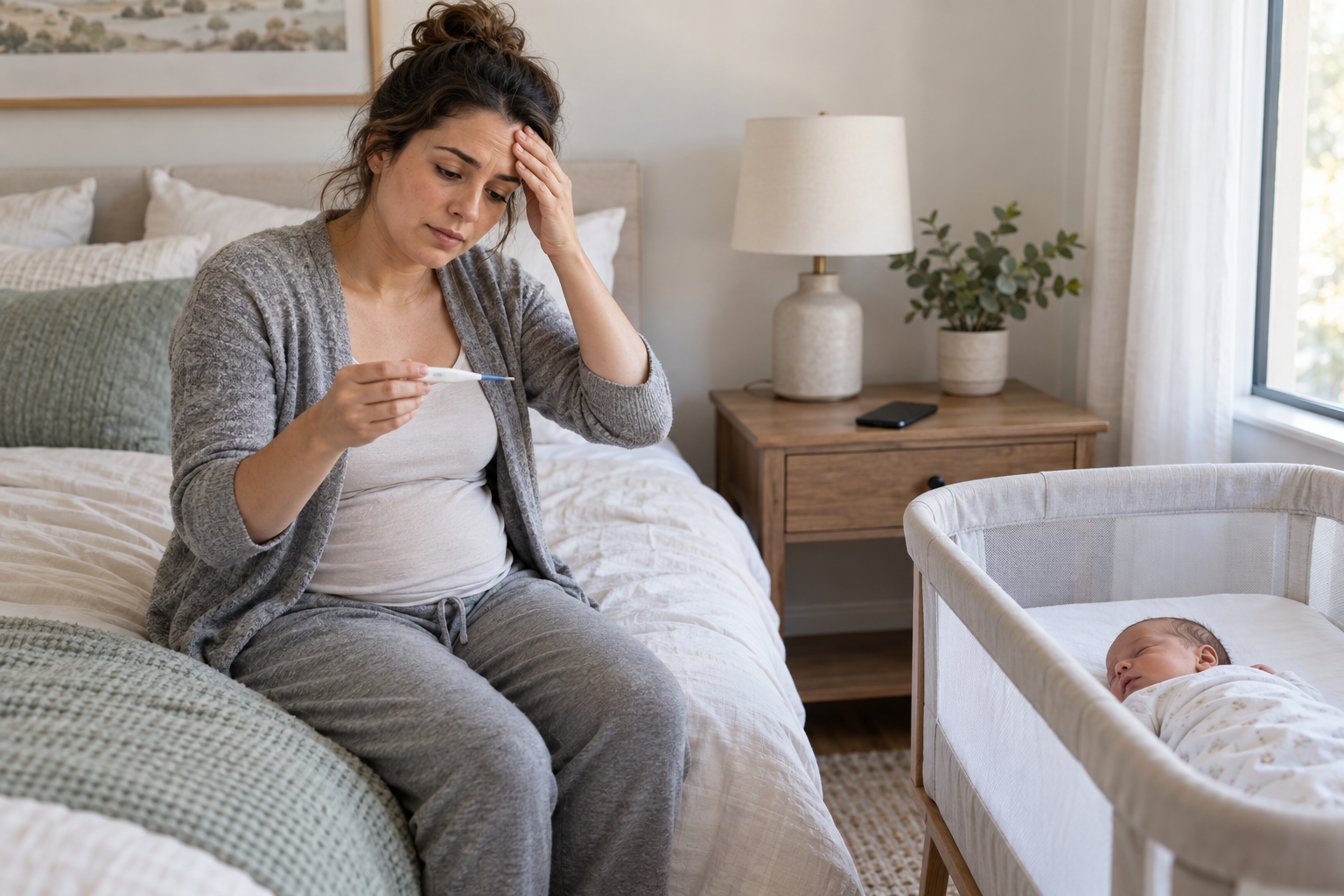
A typical hot flash comes on suddenly. You may feel heat moving from the inside out, particularly across your face, neck, shoulders, or chest. Sweating and skin redness can follow, and you may feel chilled as the episode passes. When this happens during sleep, you may wake hot and wet even though the room itself is not warm.
Keep a thermometer within reach if the episodes are hard to interpret. A measured temperature cannot tell you the cause on its own, but it helps you distinguish a sensation of heat from a fever. Chills can follow heavy sweating, yet chills also appear among the symptoms that warrant medical review. Do not rely on the sequence alone if you feel unwell.
Contact your health care provider when hot flashes or night sweats persist, concern you, or occur with any of the following:
- Fever or chills.
- A sore breast lump, breast redness or tenderness, or breast symptoms occurring with cracked nipples.
- Pain in the lower abdomen, bad-smelling vaginal discharge, or pain while urinating.
- A productive cough, persistent headache, chest pain, or shortness of breath. Chest pain or significant trouble breathing requires prompt medical care.
- Unexplained weight loss or loss of appetite.
- Anxiety, emotional problems, or possible symptoms of postpartum depression.
Hot flashes can also have causes unrelated to routine postpartum hormone changes, including infection, medication effects, anxiety, low blood sugar, obstructive sleep apnea, diabetes, hyperthyroidism, and postpartum thyroiditis. A clinician can assess those possibilities. Do not stop or alter a prescribed medication on your own because sweating appears on a list of possible side effects.
Build a relief plan around feeds and sleep

You do not need an elaborate routine. Arrange the things you will want during an episode before you sit down to feed or go to sleep.
- Prepare the places where you spend the most time. Put a fan near your usual feeding chair, lower the room temperature when practical, or open a window when conditions allow. Dress in light, breathable layers that are easy to remove. Moisture-wicking sleepwear and bedding can keep sweat from sitting against your skin.
- Make nighttime changes quick. Place an absorbent towel over your sheet and keep a dry top beside the bed. If you wake soaked, you can remove the towel and change the damp layer without rebuilding the entire bed during a night feed.
- Keep water at your feeding spot. Sweating adds to the fluid demands of the postpartum period, and hydration also matters while breastfeeding. Keep a filled bottle where you normally nurse or pump, drink regularly, and refill it when you leave the chair. If a clinician has told you to limit fluids for a medical reason, follow that individualized advice.
- Test triggers instead of banning everything at once. Caffeine, alcohol, spicy food, large meals, and very hot food or drinks can aggravate hot flashes for some people. Note what you consumed before an episode, then change one suspected trigger at a time. This gives you a clearer answer than starting a broad, restrictive diet while recovering from birth and feeding a baby.
- Reduce the stress around the episode. Slow breathing, mindfulness, or another brief relaxation practice may help when stress is part of the trigger. Treat it as a comfort tool, not a cure for persistent symptoms or a substitute for medical assessment.
Be cautious with supplements marketed for hot flashes
Many hot-flash supplements are promoted using evidence from menopause, not the postpartum period. Plant-based isoflavones and other products with estrogen-like effects have not been well established as postpartum remedies, and a natural label does not show that a product is safe during breastfeeding. Check with your health care provider before using a supplement or making a major dietary change, especially while nursing.
Use the timeline as a guide, not a deadline
Postpartum hot flashes tend to be strongest around two weeks after childbirth, but they can continue for several months. Breastfeeding may lengthen that window because ovulation and estrogen production can take longer to resume. The calendar therefore cannot tell you by itself whether your experience is normal.
What matters is the whole pattern: whether the episodes are easing or intensifying, how much they disturb sleep and daily functioning, and whether anything else happens with them. A short symptom note can make a conversation with your provider more useful. Record:
- When the heat started and how often it happens.
- Where you feel it and whether it includes flushing, heavy sweating, or chills.
- Your measured temperature when you suspect a fever.
- Food, drinks, stress, sleep disruption, and medications that may be relevant.
- Any breast, urinary, abdominal, breathing, appetite, weight, or emotional changes.
If the episodes are gradually becoming easier and no warning signs are present, keep using the comfort measures that work for you. If they persist without improvement, become more intense, or arrive with another concerning symptom, call your health care provider rather than waiting for menstruation to return. For tonight, put water, a dry layer, a towel, and a thermometer where you feed or sleep so the next episode is easier to assess and manage.
References




