
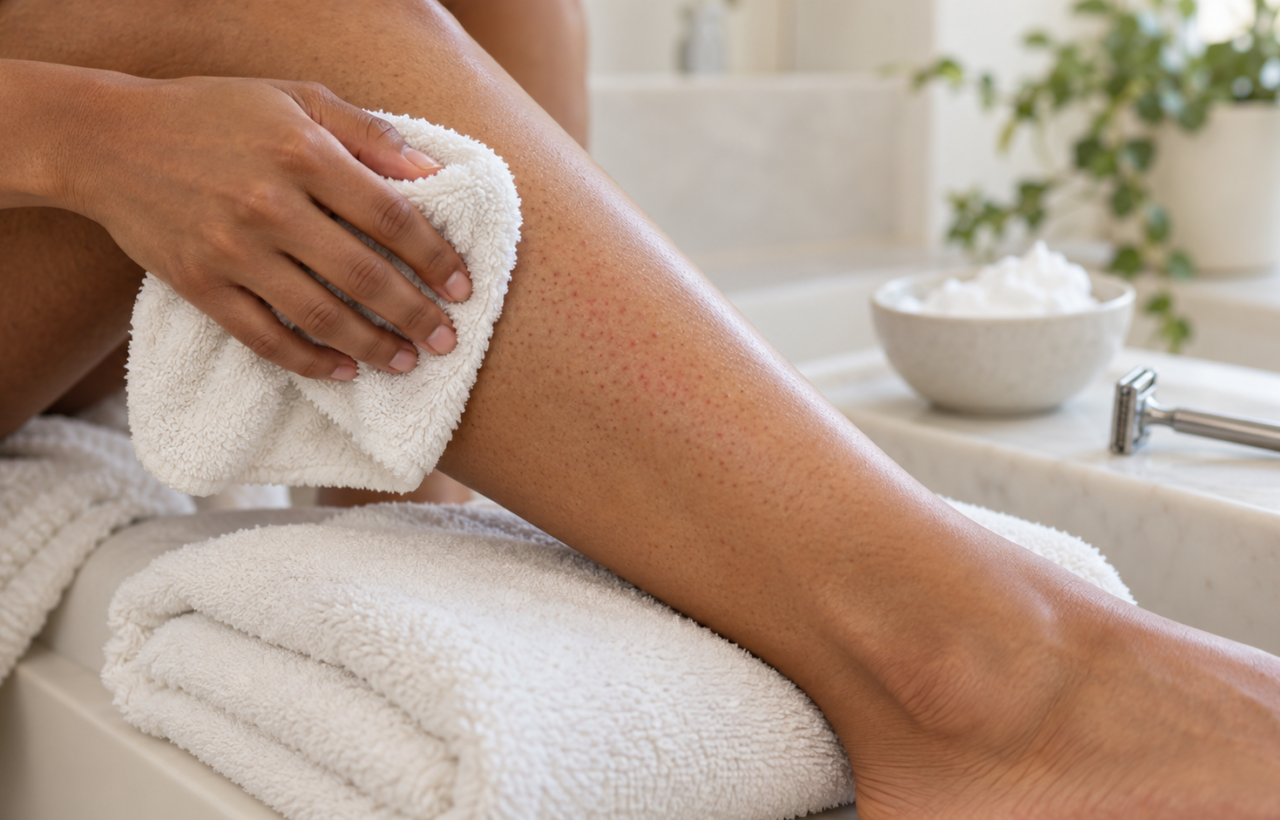
You finish a quick shave or wax, then notice a tender bump in the same place you were trying to smooth. The most useful next move is usually not another pass with the razor or a search for the hair with tweezers. Give the skin a break first.
Red bumps and inflammation after shaving or waxing are common. You can lower the chance of them by removing hair less closely, using less pressure and friction, and leaving an existing bump alone long enough to settle.
Check whether the bump behaves like an ingrown hair
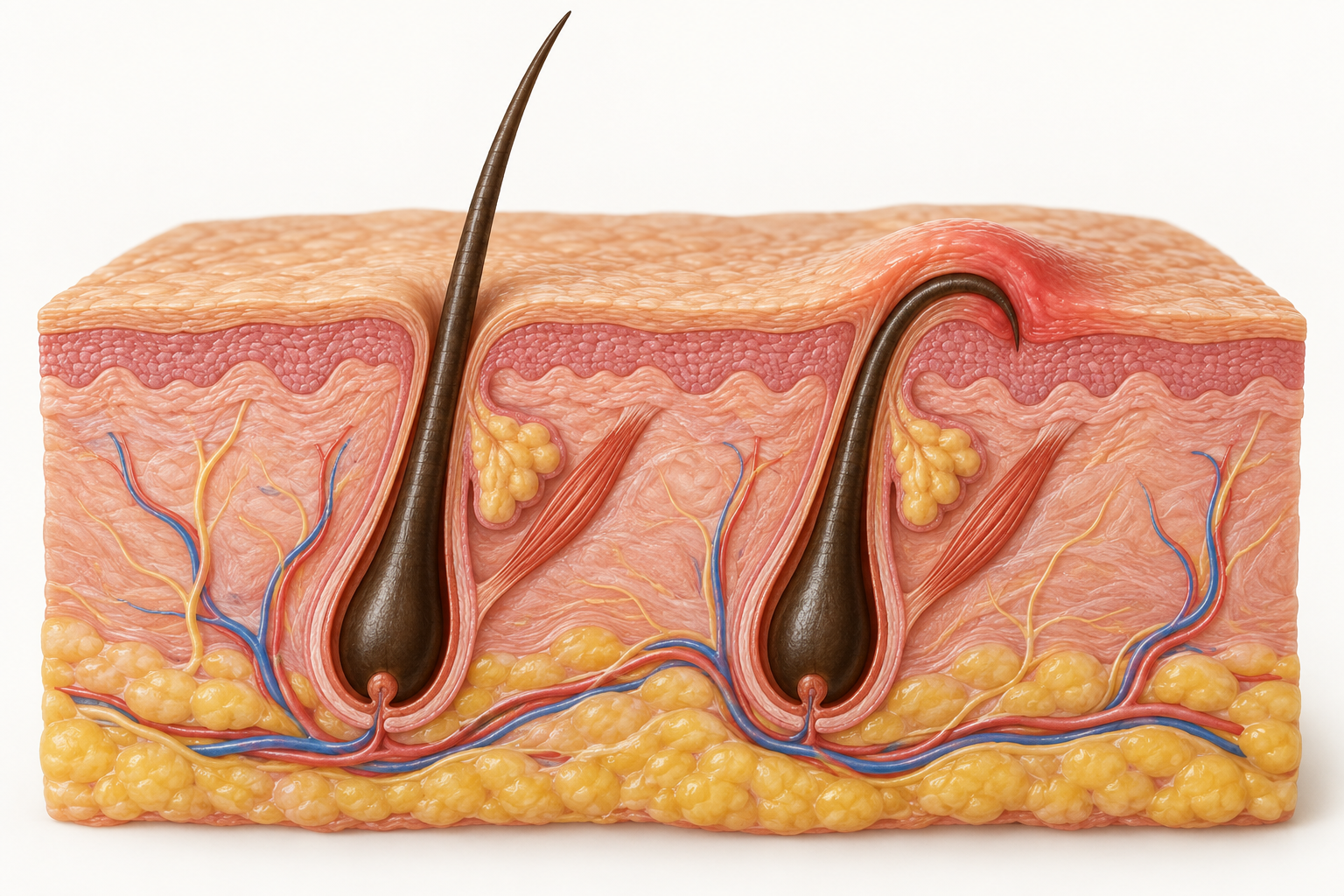
An ingrown hair develops when a hair grows into the surrounding skin instead of emerging normally. It may look like a small raised bump, and you might see a curved hair or dark point beneath the surface. The area can feel itchy, tender, or sore. Inflammation does not always look bright red; it may appear purple, brown, or simply darker than the surrounding skin.
Not every bump that appears after hair removal is an ingrown hair. Friction, a newly introduced product, or inflammation around a follicle can look similar. A widespread rash, blisters, rapidly increasing pain, or a bump with significant drainage should not be treated as a routine trapped hair.
Avoid digging to confirm what is underneath. A needle, fingernail, or pair of tweezers can break the skin, add bacteria, and turn a minor bump into a wound. If no hair is clearly visible at the surface, treat the skin gently and watch how it changes.
Build a lower-friction hair-removal routine
The closer the result you chase, the more passes, pressure, and skin stretching you are likely to use. That can leave the area irritated while a newly cut or removed hair begins to grow again. No routine prevents every ingrown hair, but you can remove several avoidable triggers.
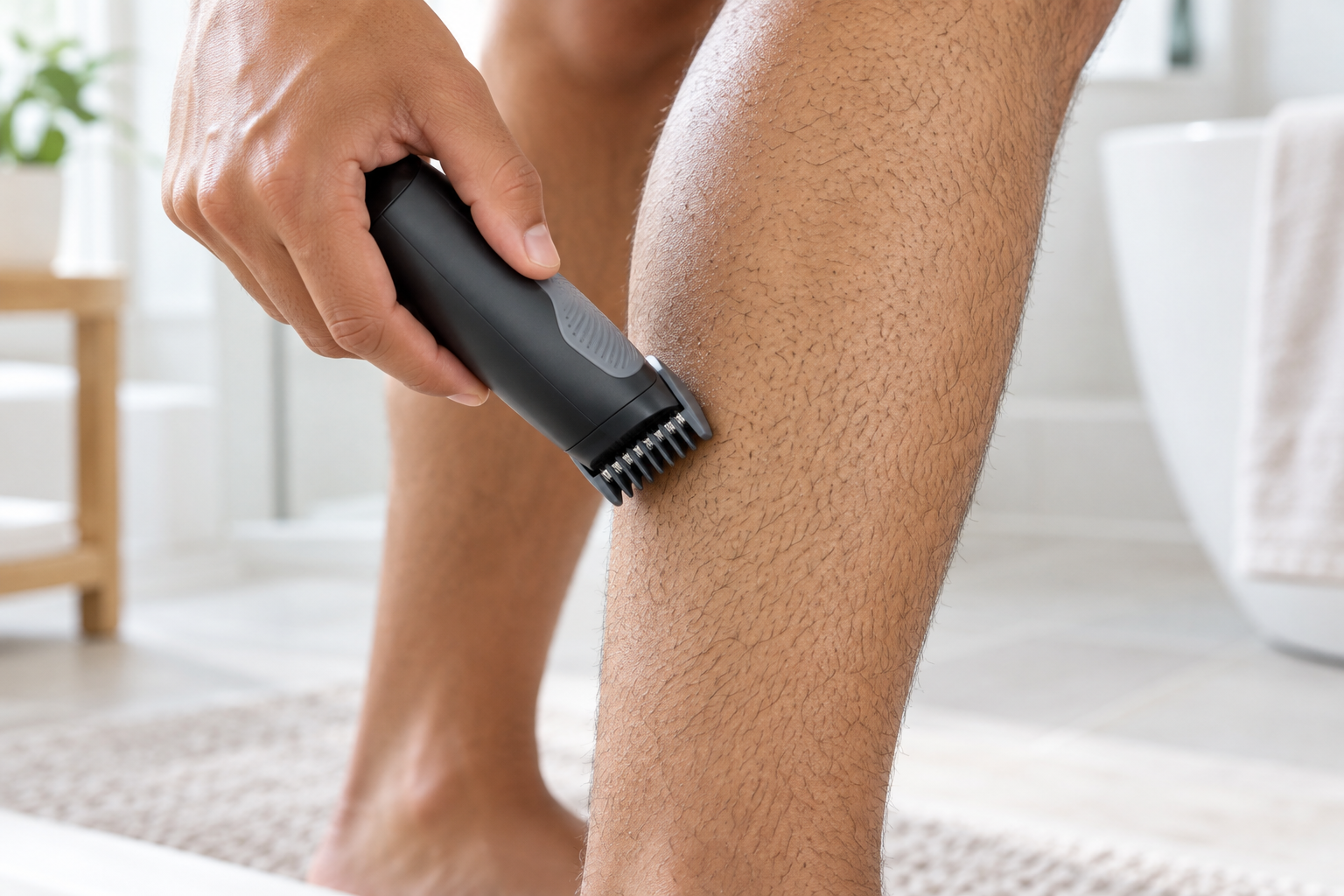
- Decide how close you actually need to go. If bumps keep returning, use an electric trimmer with a guard rather than removing hair at skin level. Body hair does not need to be removed for cleanliness.
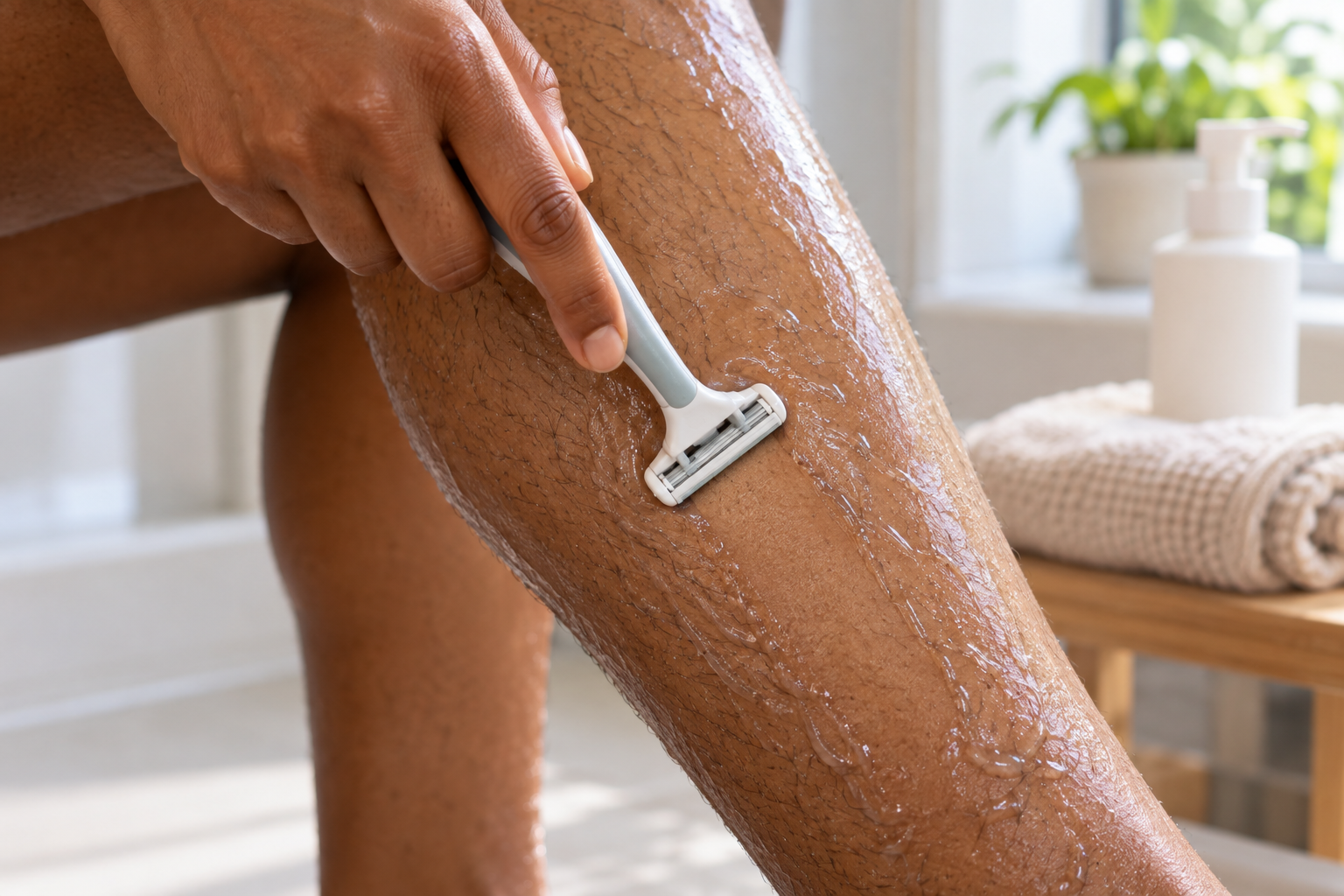
- Soften the area first. Use comfortably warm water and gently clean the skin before shaving. Dry shaving creates more drag and makes repeated strokes tempting.
- Use a clean, sharp tool. A damaged or dull blade that tugs at hair encourages extra pressure. Rinse it as you work, store it so it can dry, and do not share it with another person.
- Add enough slip. Apply a shaving gel, cream, or another product intended for shaving. If the blade begins dragging, add more product instead of pressing harder.
- Map the direction of growth. Hair can grow in more than one direction, especially in the underarm and bikini area. Run your fingertips over the hair before shaving so each section can be approached with its growth pattern in mind.
- Reduce friction afterward. Pat rather than rub the skin dry. If the area feels tender, avoid tight waistbands, snug underwear, or other clothing that repeatedly rubs it.
When you shave
Shaving against the direction of growth can produce a closer finish, but it also demands more from already sensitive skin. Start by shaving with the direction of growth. Use light pressure, short controlled strokes, and as few passes as the job reasonably allows.
- Do not stretch the skin tightly while the blade passes over it.
- Rinse the blade frequently so hair and shaving product do not obstruct it.
- Do not keep scraping one resistant spot. Trim the remaining hair or leave it for another session.
- Stop when a blade begins to tug. Extra pressure is a sign to replace or change the tool, not a solution.
If your grooming time is squeezed between childcare tasks, simplify the result rather than rushing a very close shave. One gentle pass or a guarded trim is usually kinder to the skin than several hurried passes.
When you wax
Waxing removes hair from the root, but the skin still needs protection from repeated pulling and rubbing. Do not wax over broken, inflamed, or freshly picked skin. Follow the product’s directions and avoid repeatedly waxing the same patch in an attempt to catch every hair.
Afterward, leave the area alone while it feels tender and choose clothing that does not rub it. If waxing predictably leads to painful bumps, changing the method is more useful than repeating the same routine more carefully. A guarded trim is a reasonable alternative when preventing another flare matters more than achieving a completely smooth result.
Care for an existing bump without making it a wound
The goal is to let inflammation settle and allow the hair to reach the surface naturally. Trying to force that process usually creates more irritation.
- Pause hair removal. Do not shave, wax, or pluck directly over the bump while it is sore or swollen.
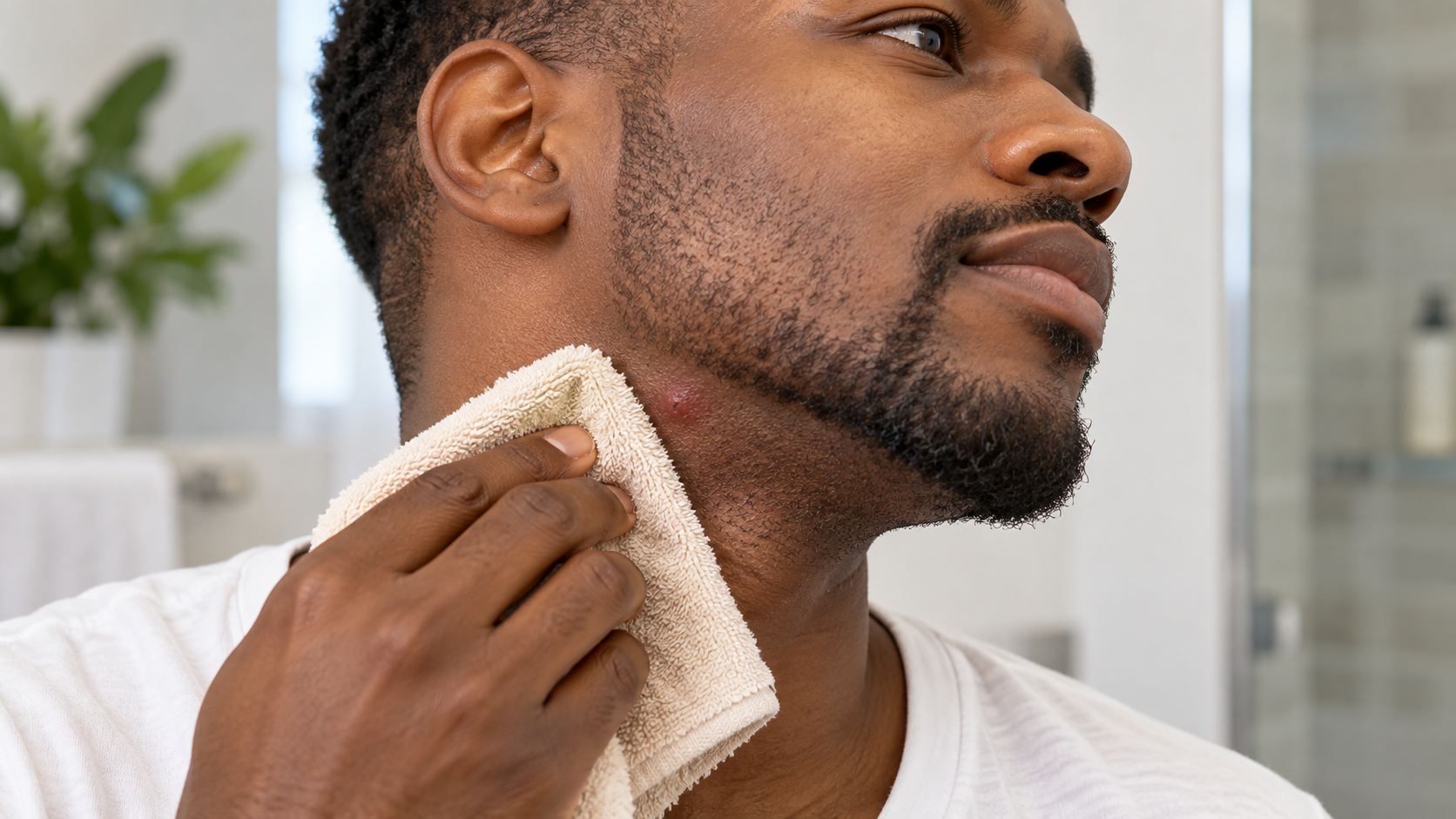
- Use comfortable warmth. Hold a clean, comfortably warm washcloth over the area until the cloth cools. It should feel soothing, never hot enough to burn.
- Wash gently. Use your fingertips and a mild cleanser rather than a rough scrub, cleansing brush, or vigorous rubbing.
- Exfoliate only if the surface is intact and calm. A single light pass with a soft washcloth may help remove loose surface skin. Stop if it stings, increases pain, or causes bleeding. Do not exfoliate broken or markedly inflamed skin.
- Limit rubbing. Looser clothing and a break from activities that repeatedly chafe the exact spot can prevent the bump from being reopened.
- Keep your hands off it. Do not squeeze the bump, cut the skin, or insert a needle. If the end of the hair eventually appears on its own, do not dig underneath or pluck the hair from its root.
A product labelled for ingrown hairs is not automatically appropriate for every part of the body. Follow its directions, keep it away from eyes and internal genital tissue, and do not apply it to broken skin unless the label specifically permits that use. If you are pregnant or breastfeeding, ask a pharmacist or clinician before using a medicated or exfoliating active you have not used before.
Key takeaways and signs that need medical care
- An ingrown hair is more likely after hair removal, but not every post-shave bump contains a trapped hair.
- The simplest prevention change is to stop chasing the closest possible result. Trim with a guard or shave once with the direction of growth.
- Warm water, adequate shaving product, light pressure, and fewer passes reduce avoidable friction.
- Pause shaving or waxing when a bump appears. Do not squeeze, pierce, or excavate it.
- Repeated deep bumps, infection warning signs, or lasting scars deserve assessment rather than more home treatment.
Seek prompt medical advice if discoloration or redness is spreading, the area is becoming hotter or more swollen, pain is worsening, drainage is increasing, or you develop a fever or feel unwell. A concerning bump on or near a healing birth injury or surgical incision also needs professional assessment rather than home extraction.
Make a non-urgent appointment with a family doctor or dermatologist if bumps recur despite changing your hair-removal routine, leave scars or persistent dark marks, or develop as deep, painful lumps. Those patterns can have causes that require a proper diagnosis and should not be assumed to be ordinary ingrown hairs.
At your next grooming session, change two things: choose a less-close finish and remove the extra passes. If the skin settles, keep that simpler routine. If painful bumps continue, pause the method that triggers them and get the area assessed before trying another product or tool.
References



