
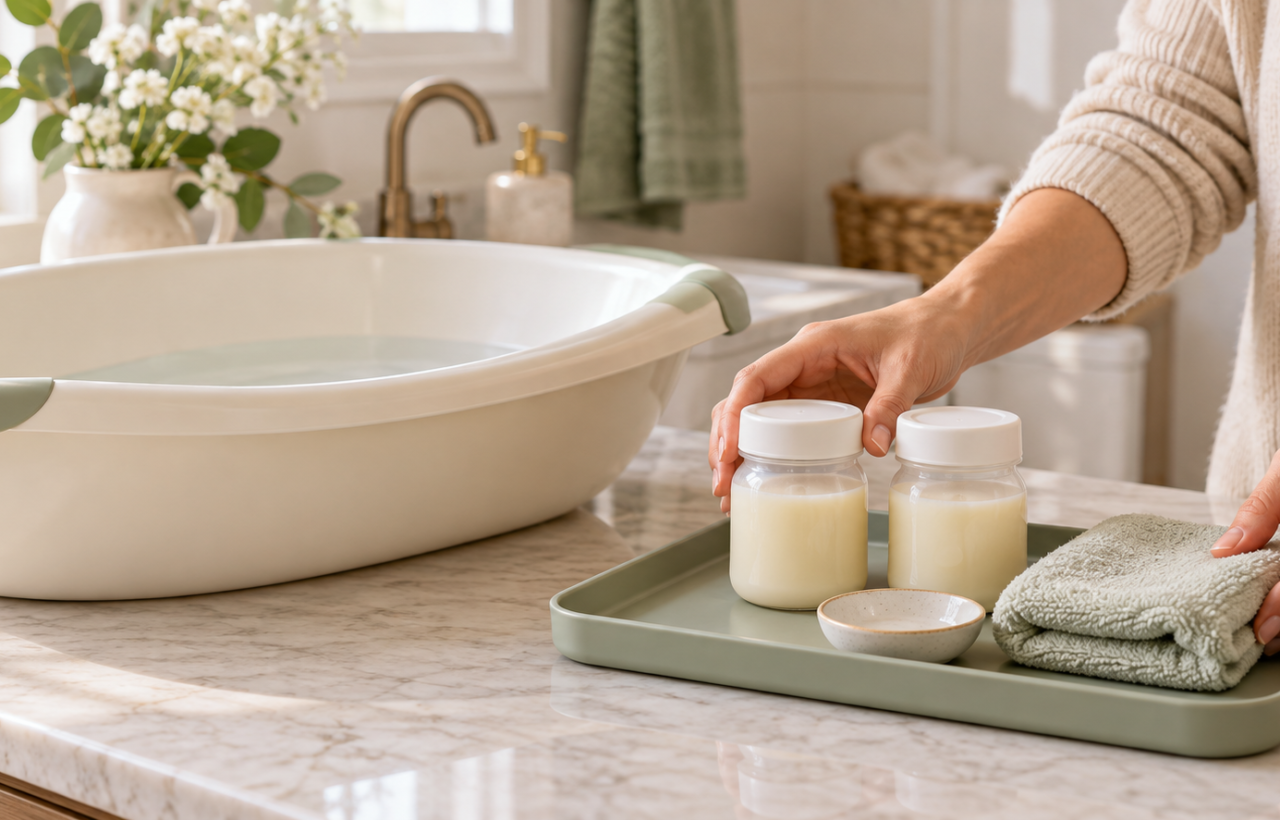
That bag in the fridge or freezer represents time and effort, so discarding it can feel wasteful. Before you turn extra milk into an eye drop, rash treatment, or bath, keep one important distinction in mind: breast milk contains protective components, but it is not sterile. Even fresh, unpasteurized milk can carry bacteria, fungi, and viruses.
The safest non-feeding lane is narrow. You can consider a small, patch-tested cosmetic use on intact skin, but you should keep breast milk out of eyes, ears, contact lenses, and any broken or infected skin. If the milk is still suitable for feeding, storing or donating it will usually preserve more of its value.
Sort the milk before choosing another use
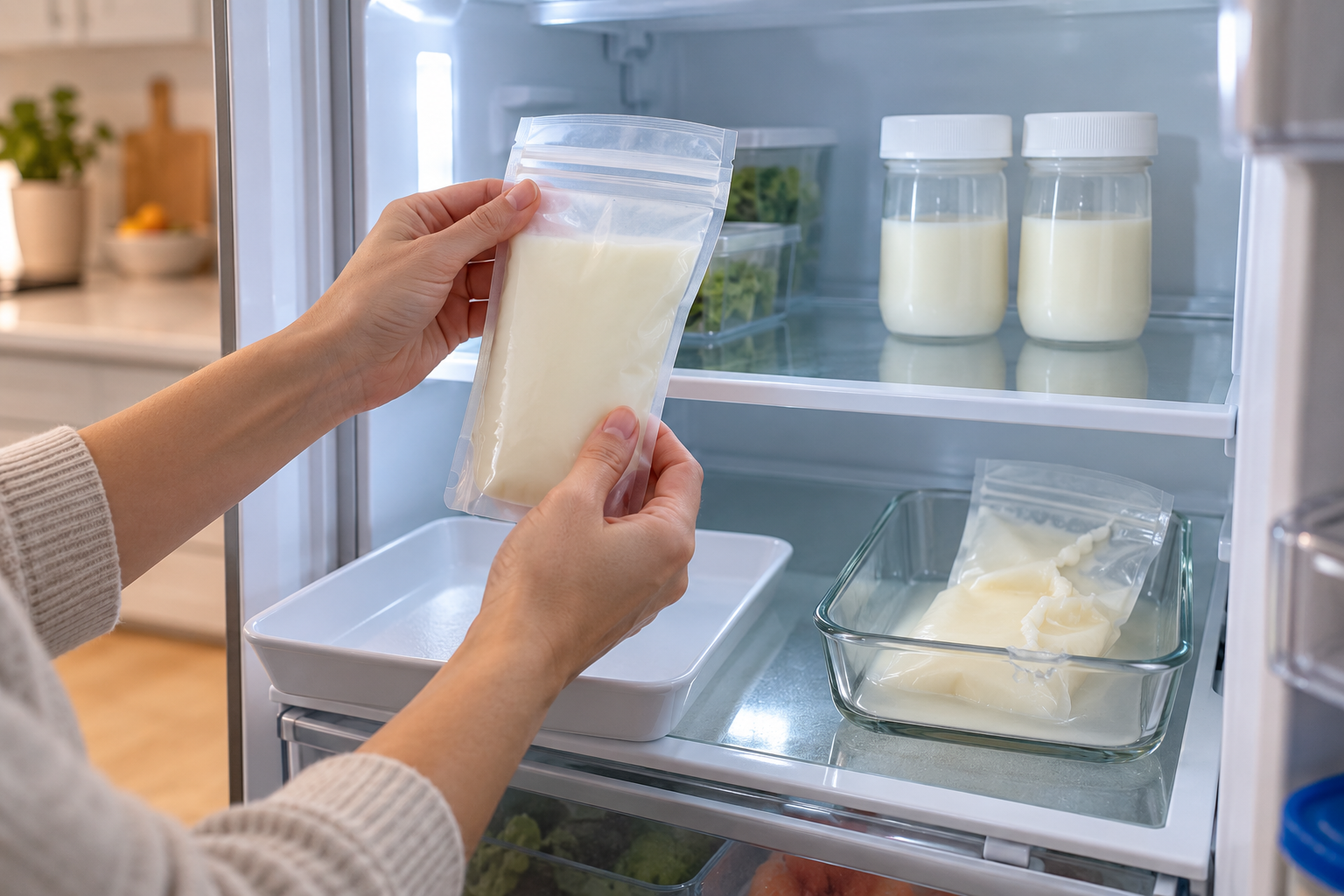
“Extra” describes how much milk you have, not whether it is still safe to use. Start by placing the milk into one of three practical categories:
- Still suitable for your baby: Keep it in your feeding plan if you expect to need it. A non-feeding project does not offer a proven advantage over its primary use as food.
- Properly stored surplus: Ask an accredited milk bank whether it can accept the milk. Milk intended for medically fragile babies is screened and pasteurized before medical use, so informal sharing is not equivalent to milk-bank donation.
- Questionable, contaminated, or spoiled milk: Discard it. Milk that is no longer appropriate for feeding does not automatically become safe skincare.
Do not try to judge uncertain milk by appearance alone. If you do not know how long it was stored, how it was handled, or whether it contacted a used bottle or unclean container, a bath or topical remedy does not remove that uncertainty. Follow the storage guidance supplied by your health-care provider or milk bank rather than trying to rescue the milk for another purpose.
Keep optional skin uses small and low-risk
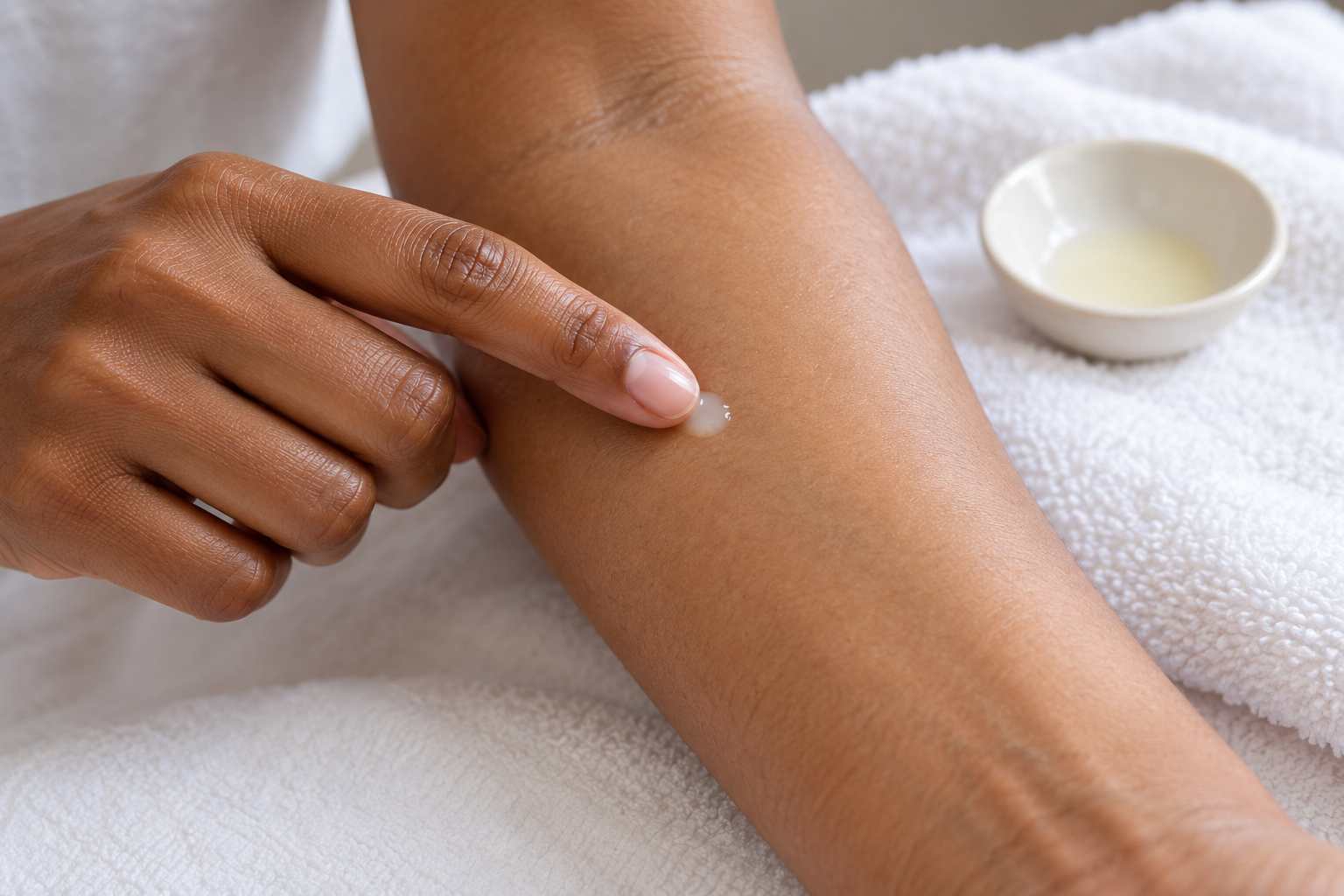
Breast milk has been used on diaper rash, eczema, itchy bites, sore nipples, and dry skin. It has also been used as a skin wash, moisturizer, and makeup remover. These are traditional or home-remedy uses for which more research is needed. Treating them as optional skincare experiments, rather than proven medical treatments, keeps expectations and risks in proportion.
For a baby’s intact skin
If you want to try breast milk on a mild patch of dry-looking skin, intact diaper-area redness, or an uncomplicated insect bite, begin with one small area. Wash your hands, pour a few drops into a clean separate container, and apply them without rubbing hard. Watch the area during your normal diaper changes or skincare routine. Stop and gently rinse the skin if redness, swelling, itching, or discomfort increases.
A milk bath is another cosmetic use some families consider. If you choose one, use only a small portion of milk with a known handling history, keep it away from your baby’s eyes and mouth, and use it only when the skin is intact. A milk bath should not be treated as therapy for widespread eczema, a severe diaper rash, or a rash that is blistering, bleeding, weeping, or crusted.
For your own skin and nipples
You can use the same small-area approach if you want to test breast milk as a moisturizer, skin wash, or makeup remover. Use your own milk, keep it away from your eyes, and do not reuse the portion that touched your hands, skin, or applicator.
Sore nipples need an extra distinction. Mild irritation on intact skin is different from a crack, blister, bleeding area, or possible infection. Do not place unpasteurized milk into damaged tissue. Persistent nipple pain also deserves attention because the underlying problem may involve feeding position, latch, pump fit, skin damage, or infection. A lactation consultant or health-care professional can help identify the cause instead of merely covering the symptom.
Skip remedies involving eyes, lenses, ears, or wounds
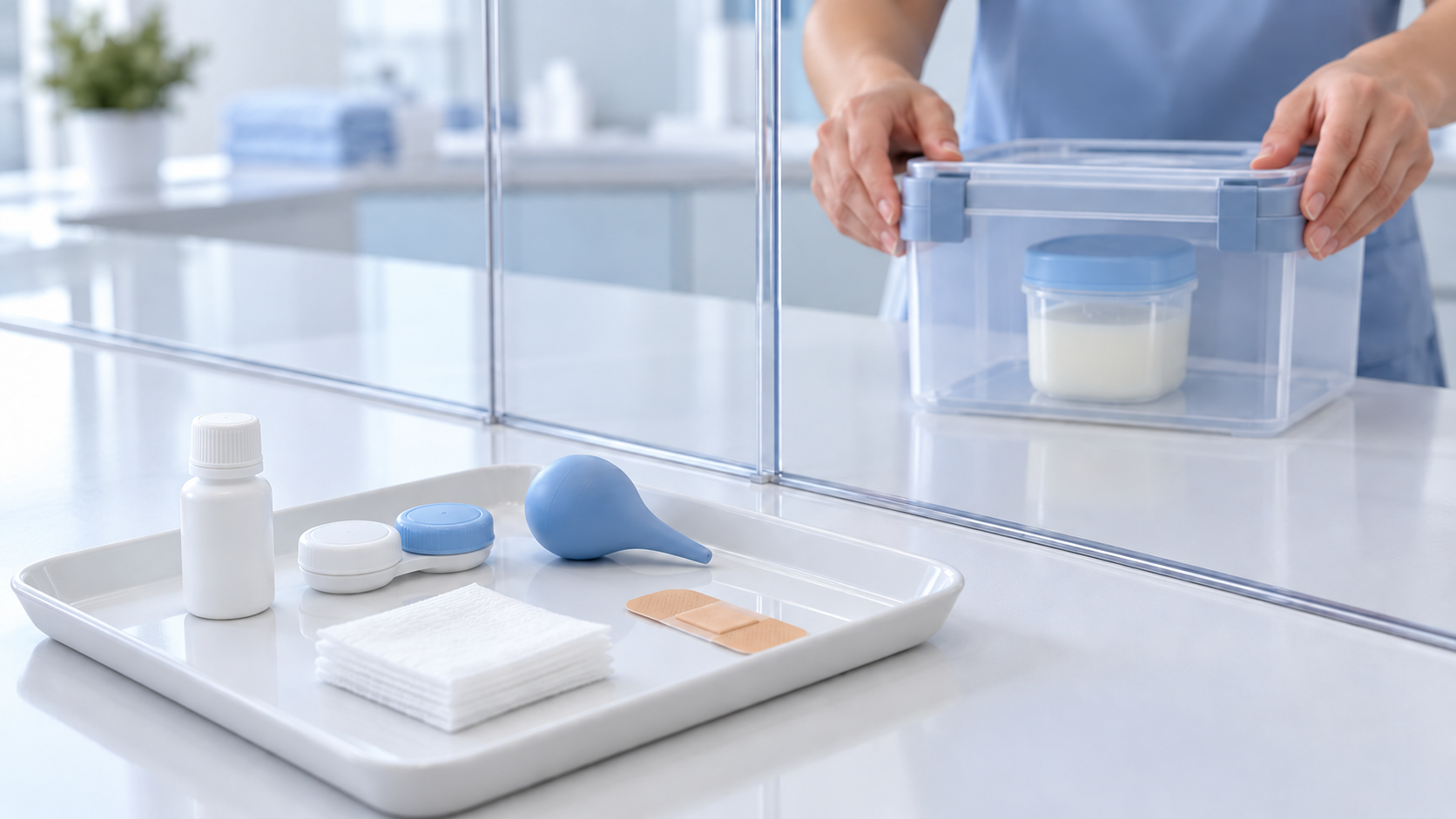
The presence of antibodies does not make expressed milk a disinfectant. The American Academy of Ophthalmology does not support using breast milk to treat pink eye. An eye infection or irritation can have several causes, and putting milk into the eye can introduce additional microorganisms without addressing the cause.
- Do not put breast milk into an eye or ear. Contact a health-care professional for suspected infection, injury, discharge, significant pain, or persistent redness.
- Do not use it to clean or store contact lenses. The College of Optometrists advises against using human milk as contact-lens solution because evidence does not support the practice.
- Do not apply it to cuts, burns, open eczema, surgical sites, circumcision sites, or bleeding nipples. An opening in the skin provides a route for contamination.
- Do not rely on it to treat an infection, wart, severe sting reaction, or ongoing skin condition. A home remedy can delay an assessment while the actual problem worsens.
Seek medical help if a baby seems generally unwell or has fever, rapidly spreading redness, marked swelling, blisters, pus, increasing pain, or a rash that does not improve. Trouble breathing or swelling of the face or mouth after a sting or possible allergic reaction requires urgent help. Breast milk is not a substitute for medical assessment in any of these situations.
Handle milk for skincare as a separate product
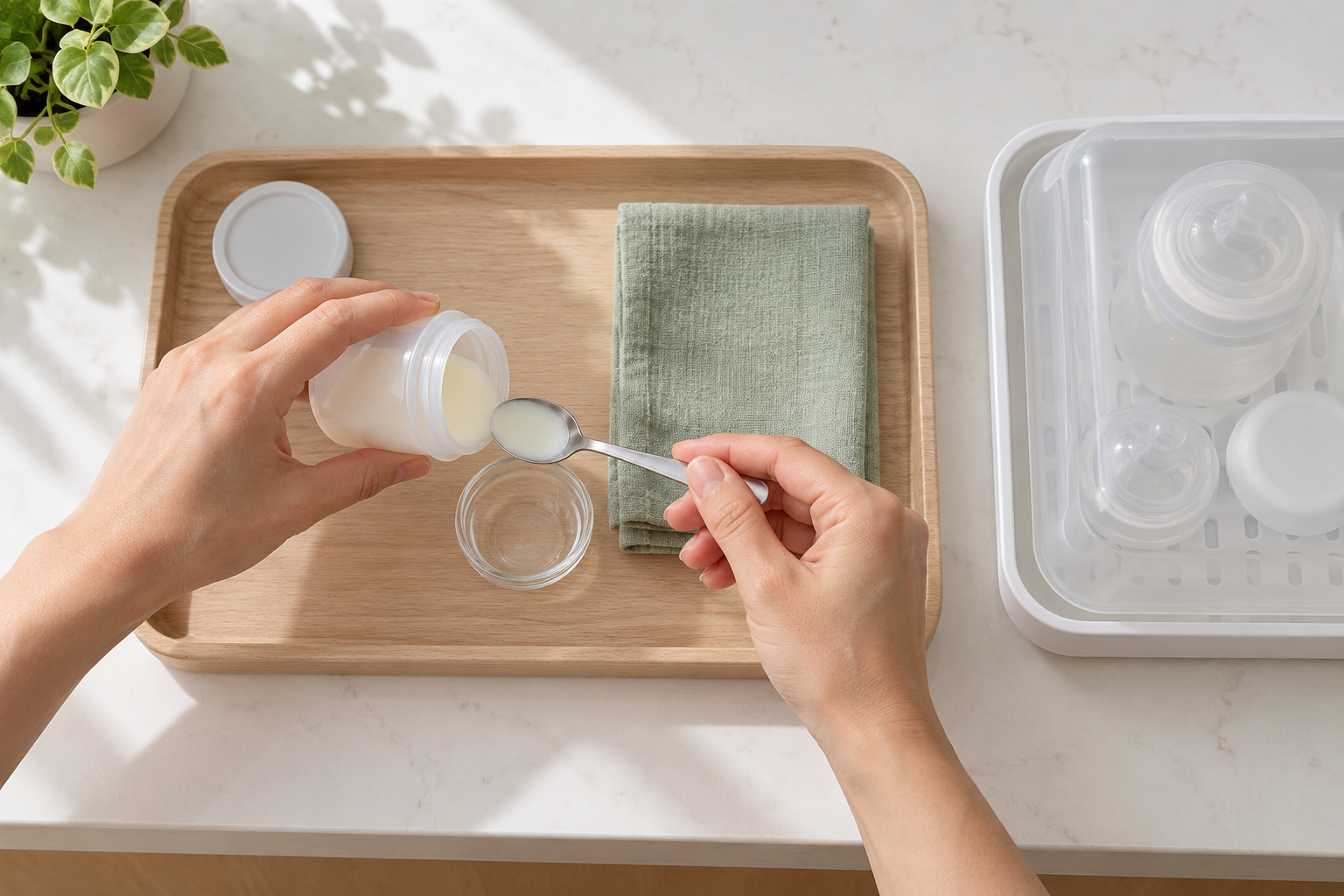
If you decide to use feeding-safe surplus on intact skin, separate it from the feeding stash before you begin. This prevents a partially used or contaminated portion from accidentally returning to a bottle.
- Label it clearly. Mark the container “not for feeding” and keep it apart from bottles and stored feeding portions.
- Decant only what you need. Pour a small amount into a clean container instead of repeatedly dipping fingers, cloths, or cotton pads into the main supply.
- Use clean hands and an intact application area. Do not apply the milk over broken, bleeding, blistered, or infected-looking skin.
- Do not share unscreened milk. Milk-bank screening and pasteurization exist for medical donor milk; a household skincare experiment does not provide those safeguards.
- Discard the used portion. Once milk has contacted skin, bathwater, an applicator, or a used container, do not return it to your feeding supply.
- Stop if the skin becomes worse. Rinse the area and arrange appropriate care rather than repeating the application or using more milk.
These steps reduce cross-contamination, but they do not turn breast milk into a sterile treatment. If the milk’s storage or handling history is uncertain, disposal is the safer choice.
Key takeaways: a 30-second decision guide
- If the milk is still suitable for feeding, save it for your baby or ask a milk bank about donation.
- If it is spoiled, contaminated, or of uncertain history, discard it instead of repurposing it.
- If the intended use involves an eye, ear, contact lens, mouth, open wound, broken rash, or surgical site, do not use breast milk.
- If you want to try it cosmetically on intact skin, start with a small patch, use a separate clean portion, and stop if irritation develops.
- If you are trying to treat an infection, persistent rash, significant pain, or a worsening symptom, contact the appropriate health-care professional.
Your next step is simple: label the surplus now. Keep feeding milk, potential donation milk, and anything marked for disposal or optional skincare clearly separate. That one decision prevents most of the confusion later.
References




