

Your baby is congested, and you are trying to make one practical decision: watch at home, call the doctor, or seek help now. With RSV, the useful distinction is not how dramatic the cold sounds. It is whether your baby’s breathing, feeding, hydration, or ability to settle is changing.
RSV often starts with cold-like symptoms. In a baby, however, inflammation can affect the lower airways and lead to bronchiolitis or pneumonia. Because there is no reliable way to predict which baby will become seriously ill, you need a short list of visible warning signs and a prevention conversation before your baby gets sick.
Key takeaways for parents
- Rapid nostril flaring, pulling in at the neck or ribs, fast breathing, or new noisy breathing can signal that your baby is working too hard to breathe. Seek prompt medical assessment.
- Feeds and wet diapers are practical hydration checks. A clear decline from your baby’s usual pattern is a reason to call their clinician.
- A healthy, full-term baby can still develop serious RSV. Birth history alone cannot tell you whether an infection will remain mild.
- Beyfortus is a preventive monoclonal antibody, not a vaccine. It does not guarantee that a baby will avoid RSV; its purpose is to reduce serious lower-respiratory illness.
Why RSV deserves closer attention in babies
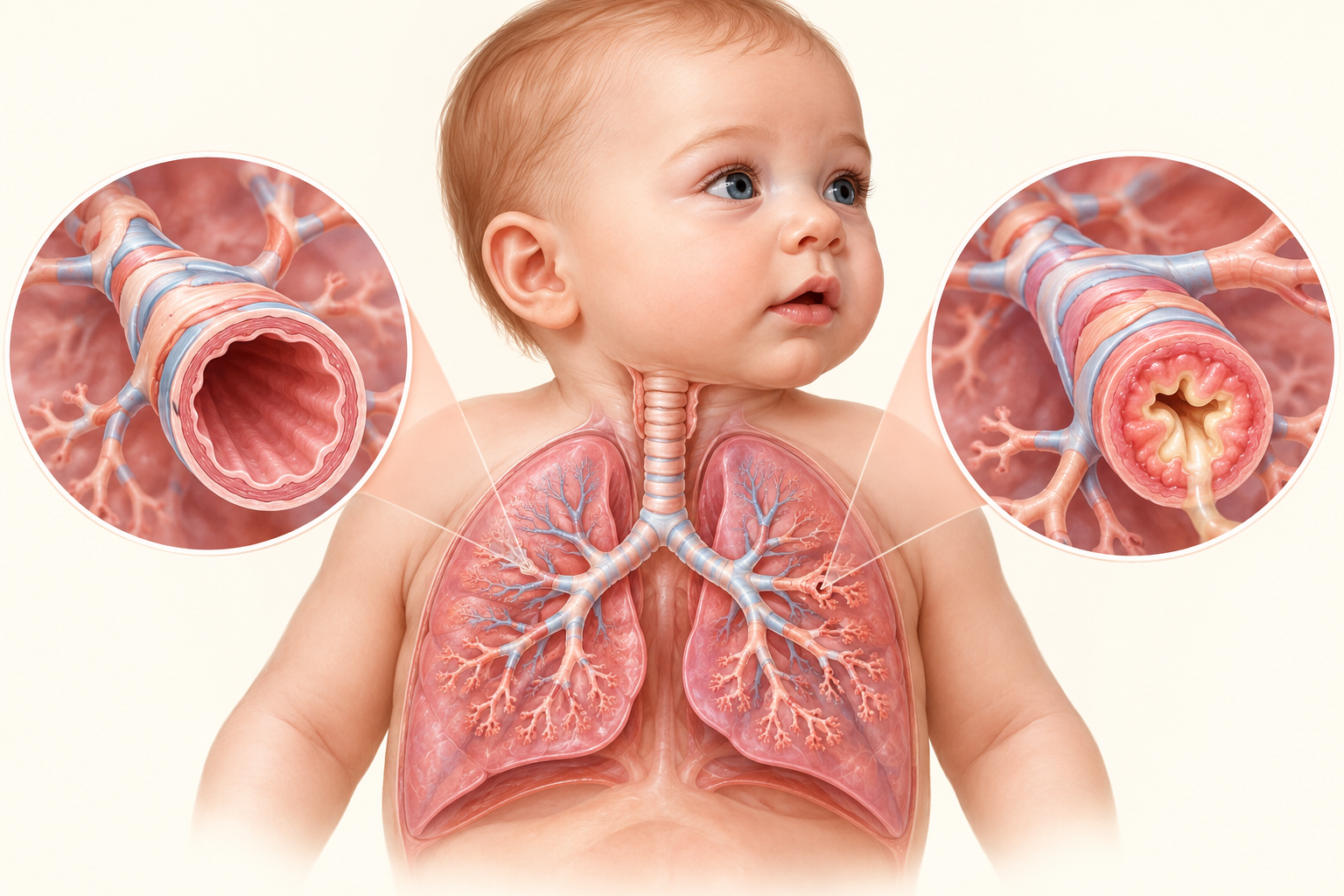
For an older child or adult, RSV may resemble a particularly unpleasant head cold. A baby’s lower airways can become significantly inflamed, making breathing harder and increasing the risk of bronchiolitis or pneumonia.
Exposure is also common. About two in three babies get RSV by their first birthday, and RSV is a leading cause of hospitalization in babies under one. Among hospitalized babies in the figures cited by pediatrician Mona Amin, more than 75 percent had been healthy and had no pre-existing condition.
Those numbers do not mean that most babies with RSV will need hospital care. They do mean that healthy and full-term are not reasons to dismiss a change in breathing or hydration. The course of illness, rather than your baby’s health history alone, should guide how closely you watch and when you call.
The warning signs that change what you should do

A stuffy nose by itself may be manageable at home when your baby is feeding normally, making their usual wet diapers, responding to clinician-approved fever care, and settling with comfort. Keep reassessing, though. Early RSV can look like an ordinary cold before lower-airway symptoms become apparent.
- Watch the nostrils. Rapid flaring in and out can mean your baby is putting extra effort into each breath.
- Look at the base of the neck. Skin pulling inward just above the breastbone is a breathing warning sign.
- Look between and around the ribs. Visible tugging with fast breathing suggests increased work of breathing.
- Listen for a change. New noisy breathing, especially when paired with visible effort, needs medical attention.
- Track feeds and wet diapers. Trouble taking breast milk, formula, or other age-appropriate fluids, or a noticeable fall in wet diapers, can point to dehydration.
- Notice whether your baby can be soothed. A persistent fever combined with a baby who remains inconsolable should be assessed.
Visible difficulty breathing is urgent. Contact a medical professional promptly, and if your baby appears to be struggling for breath, seek emergency assessment instead of waiting to see whether it passes. You do not need to see every warning sign before acting.
Fever advice and medication safety depend on a baby’s age. If you have not already received age-specific instructions, call your baby’s clinician rather than borrowing advice intended for an older child. Even when you have a fever plan, a stubborn fever with an inconsolable baby warrants a medical check.
Build prevention around protection and simple habits

RSV is highly contagious, so no household routine can promise that your baby will never encounter it. Prevention is better treated as layers: discuss medical protection before the season, reduce everyday germ spread, and know what you will monitor if illness begins.
- Ask before RSV season. If you are pregnant, ask your obstetric clinician which RSV-prevention options apply during pregnancy. Once your baby arrives, ask the baby’s clinician about infant protection. A useful question is: My baby will be this age during RSV season. Which protection are they eligible for, and when should it be given?
- Understand what Beyfortus is. A vaccine prompts the immune system to produce antibodies. Beyfortus is a monoclonal antibody that gives a baby antibodies directly. It is given as one dose without a booster and is intended to cover roughly five to six months of an RSV season. It can be given from the newborn period; if your baby is under eight months, ask whether and when they qualify.
- Set the right expectation. Beyfortus is not meant to guarantee that a baby will never catch RSV. Its goal is to reduce the risk of lower-respiratory infections such as bronchiolitis and pneumonia, along with the medical visits and hospitalizations those illnesses can cause.
- Keep household habits realistic. Have everyone wash their hands, particularly before feeding or handling food. Protect your baby’s normal sleep as much as possible, and continue age-appropriate nutrition: breast milk or formula for infants, followed by a varied diet once solids are established.
Do not add an immune supplement simply because RSV is circulating. Evidence for many supplements given to young children is limited, and an unnecessary product may be unsafe. If your baby’s clinician suspects a deficiency, they can decide whether testing and a specific supplement are appropriate.
Like other medicines, Beyfortus can cause side effects and may not be appropriate after a previous reaction. Eligibility, timing, availability, and your baby’s medical history should therefore be reviewed with their clinician rather than decided from general information online.
Use a 24-hour record when your baby is sick

You do not need to diagnose RSV at home. You need to notice whether your baby is stable or moving in the wrong direction. A simple record makes that easier and gives the clinician more useful information if you call.
- Check breathing while your baby is calm. Record any nostril flaring, pulling at the neck or ribs, fast breathing, or new breathing noise. Crying can make breathing look different, so reassess once your baby settles if it is safe to do so.
- Write down feeds and wet diapers. Note when your baby drinks and when you change a wet diaper. Compare the pattern with your baby’s normal day rather than relying on a generic number.
- Record temperature and comfort. Note the temperature, whether your baby can be soothed, and the time and dose of any medicine already approved by their clinician.
- Escalate based on the warning sign. Call for a meaningful decline in feeding or wet diapers, persistent fever with inconsolability, or any uncertainty about an infant’s condition. Treat visible breathing difficulty as urgent.
A baby becoming ill does not mean you failed to clean enough or prevent every exposure. RSV spreads easily. Focus on the next decision: check breathing, check hydration, and get medical help when the pattern changes.
Before your next prenatal or well-baby appointment, write down two questions: What RSV protection is appropriate for this baby, and which symptoms should send us to the office versus emergency care? Getting those answers while everyone is well gives you a clearer plan for a tired, congested night.
References



