
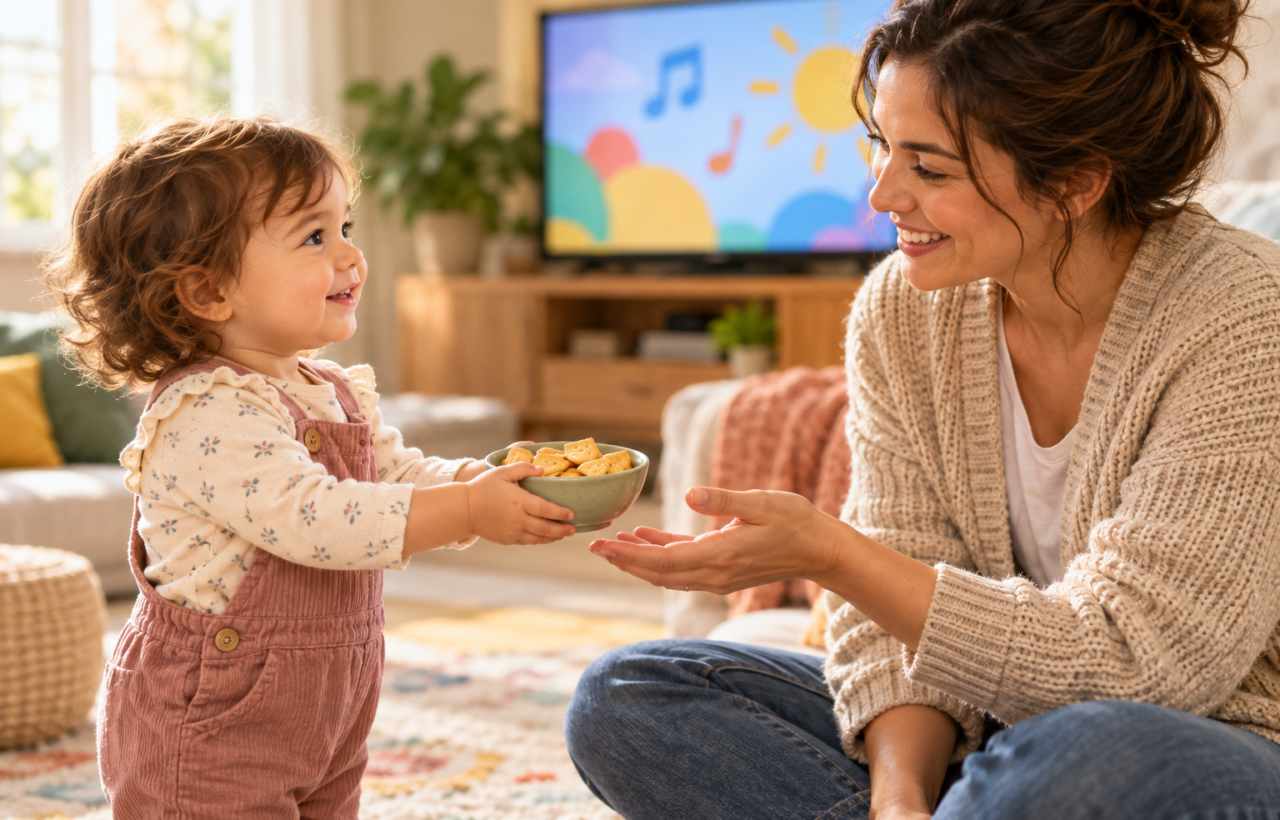
Your child can sing along with a manners song and still grab the cracker, refuse to greet Grandma, or forget every polite phrase at snack time. That doesn’t make the song useless. It means hearing the lesson and using it in real life are different skills.
The useful part of a CoComelon song is the short, repeatable script it gives you. Your job is to connect that script to one ordinary moment, show your child what it looks like, and give them a manageable way to join in.
Start with one manner your child can actually practise
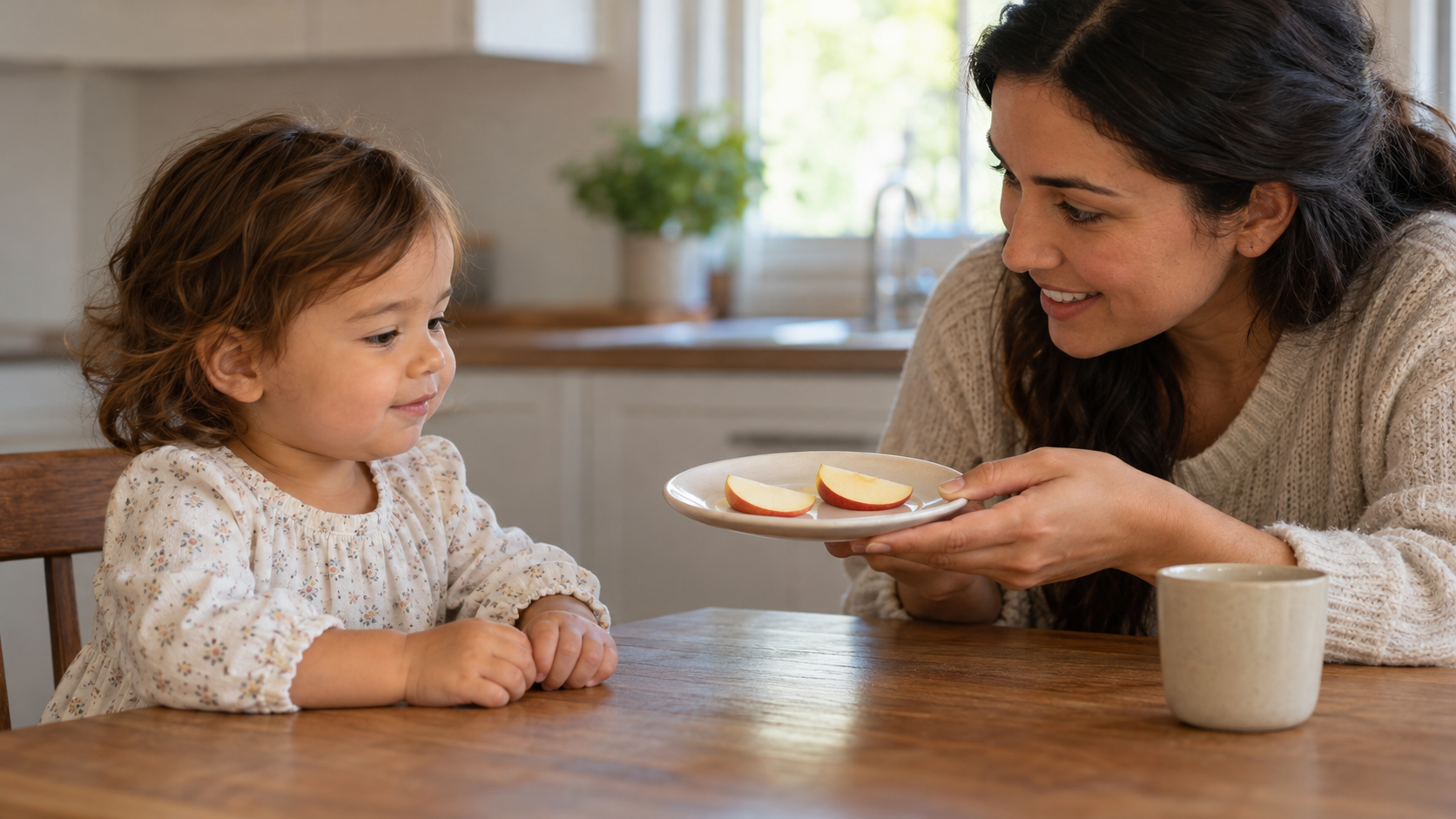
CoComelon has at least 15 songs focused on everyday manners. You don’t need to work through them as a curriculum. Choose the song that matches the situation causing friction in your home right now.
Turn a broad goal such as “be polite” into something you can see or hear. A young child cannot act on a character judgment, but they can practise a specific action:
- Wave, nod, or say hello when someone arrives.
- Use a word, sign, or pointing gesture to ask for something instead of grabbing.
- Pause while another child takes a turn.
- Say, sign, or gesture thanks after receiving help.
- Help repair a problem by returning an object, checking on someone, or helping clean up.
Next, attach that action to a predictable part of the day. A song about requesting politely belongs before snack or mealtime. A turn-taking song belongs before playing with a desirable toy. A greeting song belongs before a visitor arrives or before you enter daycare.
This timing matters. If you play a manners song at random, your child may remember the tune without recognizing when to use the behaviour. Playing it near the relevant routine creates a clear connection: this is the song, and this is the moment when we practise it.
Turn watching into a watch-pause-practise loop
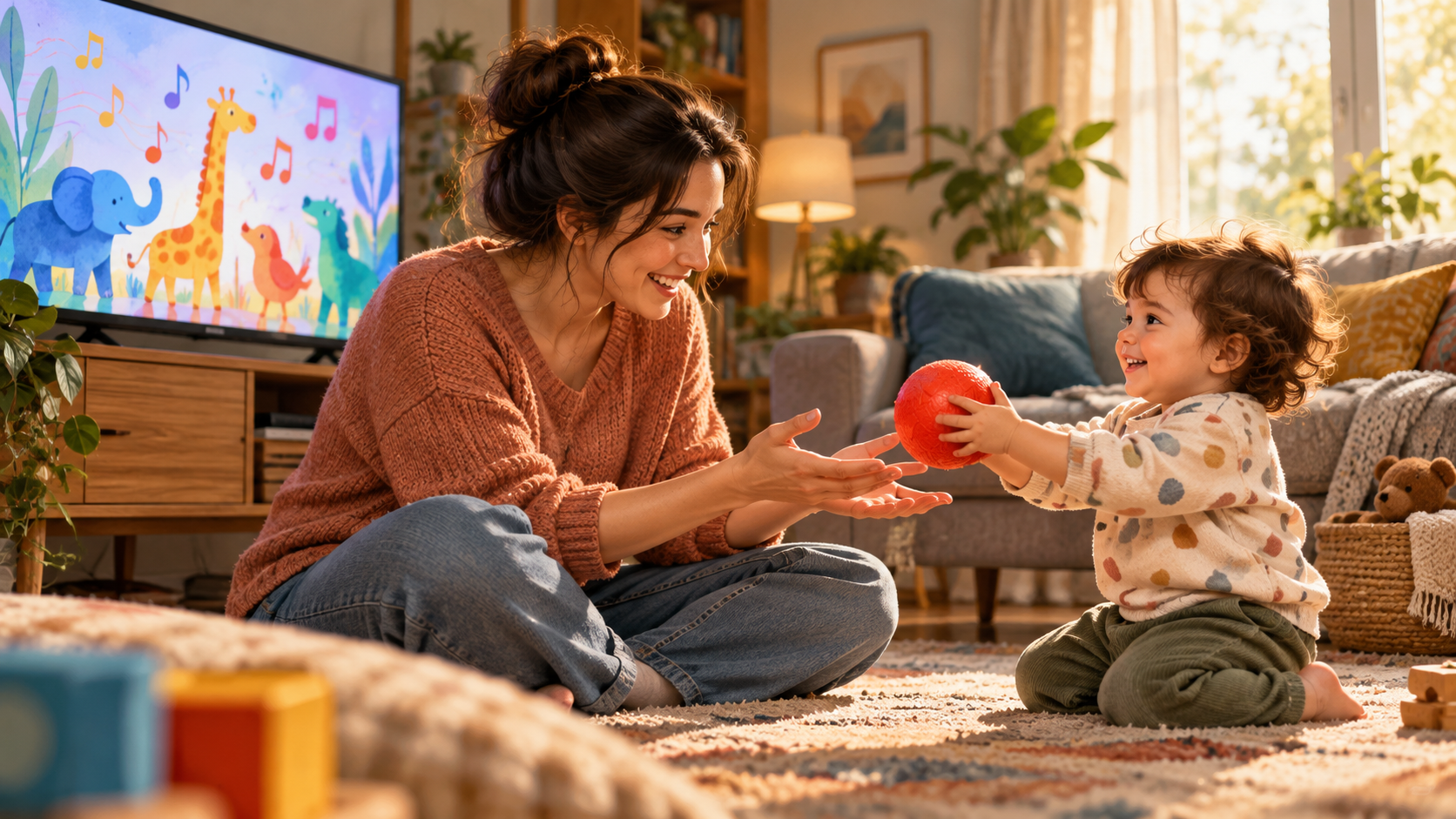
Background viewing asks very little of a child. Active practice gives the song a job. Sit with your child for the selected song and focus on the single moment that matches your goal. You don’t need to explain every lyric or test whether they understood the story.
- Watch: Let the relevant part play and name the action plainly: “They’re taking turns” or “She is asking before she takes it.”
- Pause: Stop briefly before or after the key phrase. Repeat the useful words slowly, or demonstrate the gesture you want your child to notice.
- Practise: Recreate the moment with a toy, cup, spoon, or stuffed animal. Give your child a low-pressure chance to copy the word or action.
- Use it: Bring the same short cue into the next real situation. Say “your turn, then my turn” rather than retelling the whole lesson.
If pausing the video frustrates your child, let the song finish and practise immediately afterward. The important part is the connection, not control of the playback. You can also sing or speak the useful line yourself later; the screen does not need to be present every time the skill is used.
Keep your prompt short enough to use under pressure. “Ask first,” “gentle hands,” “their turn,” and “let’s help” are easier to process than a long explanation delivered while two toddlers are pulling on the same toy.
Match participation to the way your child communicates
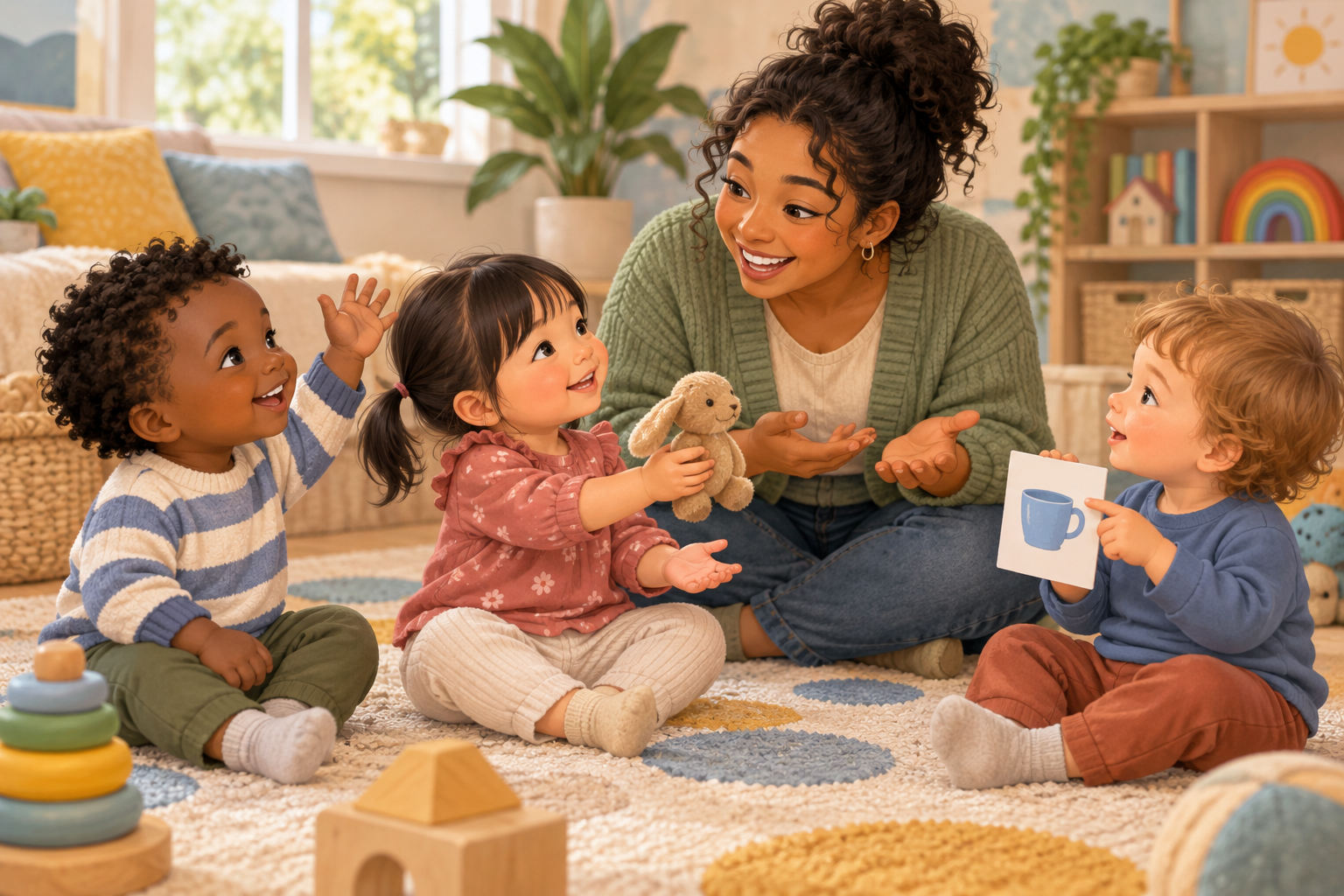
Manners do not have to begin as perfectly pronounced words. A child who is not speaking yet can wave, point, nod, hand over an object, or use a familiar sign. Accepting those attempts lets your child practise the social purpose of the manner before they can produce the full phrase.
For a new talker, accept an approximation and model the fuller version without demanding a repeat. If your child says “peas” while reaching for water, you might respond, “Water, please. Here you go.” They hear the complete phrase while learning that communication works.
An older toddler may benefit from an exact script when emotions or excitement make words hard to find. Instead of asking, “What do you say?” offer the words directly: “You can say, ‘Can I have a turn?'” That turns the moment into help rather than a quiz.
Greetings deserve particular flexibility. Some children need time before responding to a new person or a busy room. Model the greeting, offer a wave as an option, and move on without calling your child rude. A hug or kiss should never be the price of being considered polite; a wave, smile, or spoken hello is a complete greeting.
Your own manners are part of the lesson. Let your child hear you say please, thank them for helping, wait for an answer, and apologize when you make a mistake. If adults interrupt, grab, or ignore a child’s refusal while expecting perfect courtesy in return, the song and the daily example teach different rules.
Correct the behaviour without turning manners into a battle
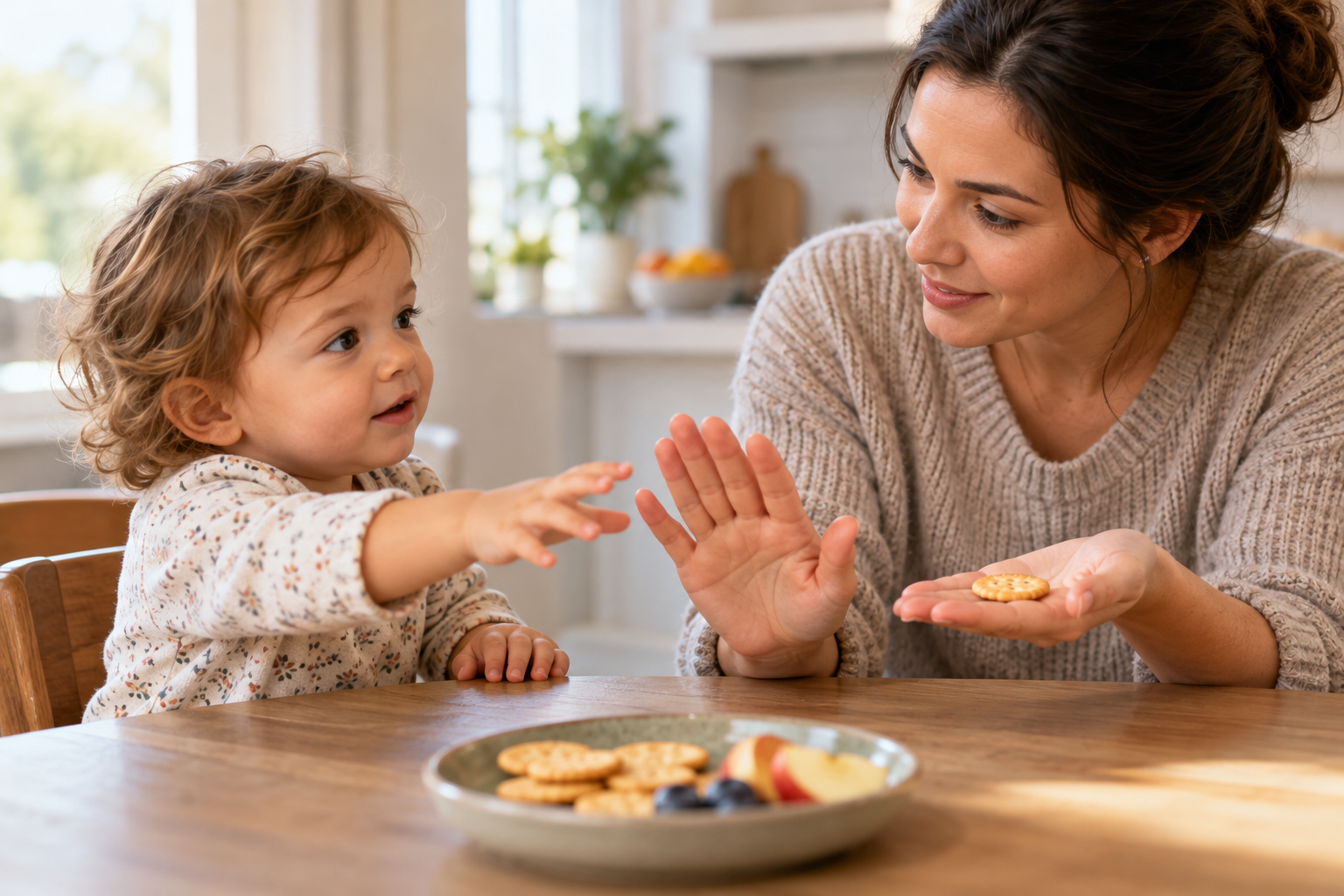
A manners song is best used during a calm rehearsal, not as evidence against your child later. “You watched the song, so you know better” adds shame but does not supply the missing skill. In the difficult moment, use a simple pattern: stop what is unsafe or unfair, provide the words or gesture, and offer a chance to try again.
- If your child grabs: Hold the object steady and say, “I won’t let you grab. You can point or ask for it.” Respond when they make a reasonable attempt.
- If your child forgets to thank someone: Prompt without interrogating: “You can wave or say thank you.” If they do not respond, model it yourself and continue.
- If your child will not greet someone: Say, “You can wave when you’re ready. I’ll say hello for us.” Do not force physical affection.
- If your child hurts someone: Stop the action and attend to the person who was hurt. Then guide a concrete repair, such as returning the toy, bringing something helpful, or giving the other child space.
- If your child refuses the script: Keep the boundary, but drop the performance demand. You can prevent grabbing or hitting without forcing a particular word.
Avoid withholding food, comfort, or necessary help until a very young child says the expected phrase. You can model “please” while still meeting the need. Manners should make communication clearer and relationships more respectful; they should not become a password for basic care.
Forced apologies can also miss the point. A toddler may repeat “sorry” without understanding what needs repair. Model the apology, name what happened in neutral language, and guide the useful action: “The block hit Sam. Let’s check if Sam is okay and move the blocks farther away.” The word can be learned alongside the responsibility rather than replacing it.
Key takeaways
- Choose one song that matches one recurring situation in your child’s day.
- Define the manner as an observable action, not a label such as “good” or “polite.”
- Watch together, highlight the key moment, practise it with an object, and reuse the same short cue in real life.
- Accept words, signs, gestures, and age-appropriate approximations as genuine participation.
- Set firm limits on grabbing or hurting without forcing affection, gratitude, or an apology performance.
For your next viewing, pick the one manner that would make today’s routine easier. Practise it once with your child, then use the same words at the next natural opportunity. The goal is not a toddler who performs politeness on command. It is a child who gradually gains a reliable way to ask, wait, respond, and repair.
References



