

Your child reaches past you for Grandma, races to Grandpa at the door, or spends the ride home asking to go back. You can be glad they have that bond and still feel a sting – especially when you are the one handling the night waking, meals, diapers, limits, and rushed mornings.
A strong grandparent preference usually isn’t a verdict on your parenting. Once you understand what may be driving it, you can support the relationship without competing for affection or surrendering the routines and boundaries your family needs.
What grandparent preference does – and does not – mean
Young children can have close relationships with several trusted adults. Affection is not a fixed supply, so a bond with a grandparent does not take something away from the parent-child relationship.
Grandparents can also occupy a distinctive place in a child’s life. They may arrive with focused attention, familiar games, and fewer of the everyday demands associated with getting dressed, leaving the playground, or going to bed. That combination can help explain why a child becomes especially enthusiastic about a grandparent.
Excitement is not the same thing as a ranking. Your child may run to Grandpa because his arrival is an event. You are already there, woven into the ordinary structure of the day. A dramatic greeting tells you what feels exciting in that moment, not who matters most.
The same caution applies when your toddler asks for Grandma immediately after you set a limit. The request may mean that Grandma feels comforting. It may also mean your child hopes a different adult will produce a different answer. You do not need to investigate which explanation is correct before responding. Acknowledge the wish and hold the boundary: You want Grandma. You love being with her. I am here, and it is still time to put the toy away.
Try not to turn affection into a test. Questions such as Who do you love more? ask a young child to manage an adult’s feelings. Avoid joking that a grandparent has stolen your child, too. Even when the words are playful, they frame a healthy relationship as a competition.
Build the bond around repeatable rituals
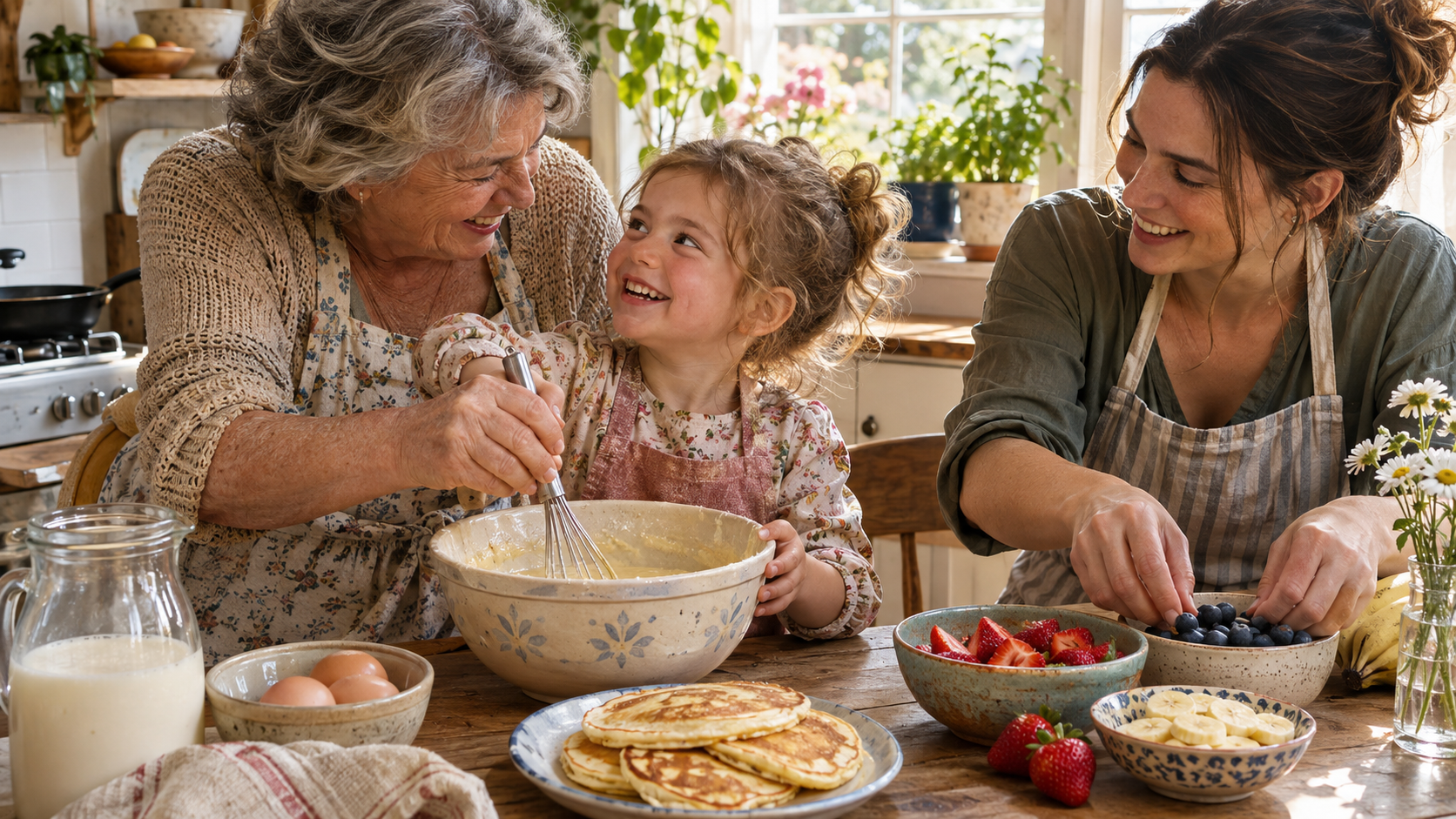
Grandparent relationships grow through familiarity. An elaborate outing can be lovely, but it is not required. A small ritual that happens repeatedly gives a young child something recognizable to join and anticipate.
For a baby who is still warming up
Let the grandparent begin from the baby’s comfortable distance. They can talk, sing, or play while the baby remains in your arms or on the floor beside you. Reaching immediately for a hesitant baby can increase the pressure; waiting gives the baby room to watch and initiate contact.
Choose one quiet activity and repeat it across visits: looking at the same board book, making faces in a mirror, rolling a soft ball, or singing the same song. If the baby turns away, stiffens, or becomes upset, slow down. A cautious response to an infrequently seen relative is not a rejection and does not need to be overcome in one visit.
For a mobile toddler
Give grandparent and child a simple job to do together. They might water a plant, put blocks in a basket, choose a book, or wave from the same window at goodbye. The task supplies a predictable way to connect without requiring the child to hug, kiss, sit on a lap, or perform on command.
Keep affection optional. A child can say hello with a wave, a high five, or by showing a toy. When adults respect a no to physical contact, the child gets to approach the relationship at a manageable pace.
For a child nearing age three
Invite the child into a little more responsibility. They can carry the napkins to the table, pick which of two stories comes first, or help Grandpa find a familiar toy. Keep the choice narrow and the job achievable. The goal is shared participation, not a polished result.
If grandparents live far away, use the same principle. A short, recognizable interaction is easier for a young child to enter than an open-ended video call. Start with the same greeting, sing one action song, read a familiar book, or let each person show one object. A toddler who wanders away from the screen is behaving like a toddler; the call does not have to resemble an adult conversation to maintain familiarity.
Handle preference, reunions, and goodbyes without drama

Transitions are often harder than the visit itself. A young child can be delighted to see a grandparent and devastated when that grandparent leaves. The tears do not mean the visit was harmful, and they do not require you to make the goodbye disappear.
Use a clear sequence:
- Preview the ending in concrete terms. Say what will happen after one understandable event: After this book, Grandpa will put on his coat and go home. Event-based language is more useful to a very young child than a vague promise about later.
- Let the child complete a familiar goodbye ritual. Put the book away, wave at the window, blow a kiss, or close the door together.
- Say goodbye plainly. Do not have the grandparent slip away to prevent tears. A quiet disappearance can make the child watchful because the ending happened without warning.
- Name the feeling without trying to erase it. Try: You wanted Grandma to stay. Saying goodbye is hard. I am with you.
- Move into the next ordinary task. Wash hands, change a diaper, have the usual snack, or settle with a book. Predictability helps the day regain its shape.
A reunion with you can be bumpy, too. Your child may cling to the grandparent, resist leaving, or melt down once you get home. Do not demand an enthusiastic greeting as proof that you were missed. Reconnect through care: get down to the child’s level, offer closeness without forcing it, and return to a familiar routine.
If the child repeatedly asks to return, respond to the longing without opening a negotiation you cannot honour: You had fun with Grandpa. You want to go back. We are home now, and we can look at the book you read together. This accepts the feeling while keeping the present boundary clear.
Keep grandparents close without giving up the parent role
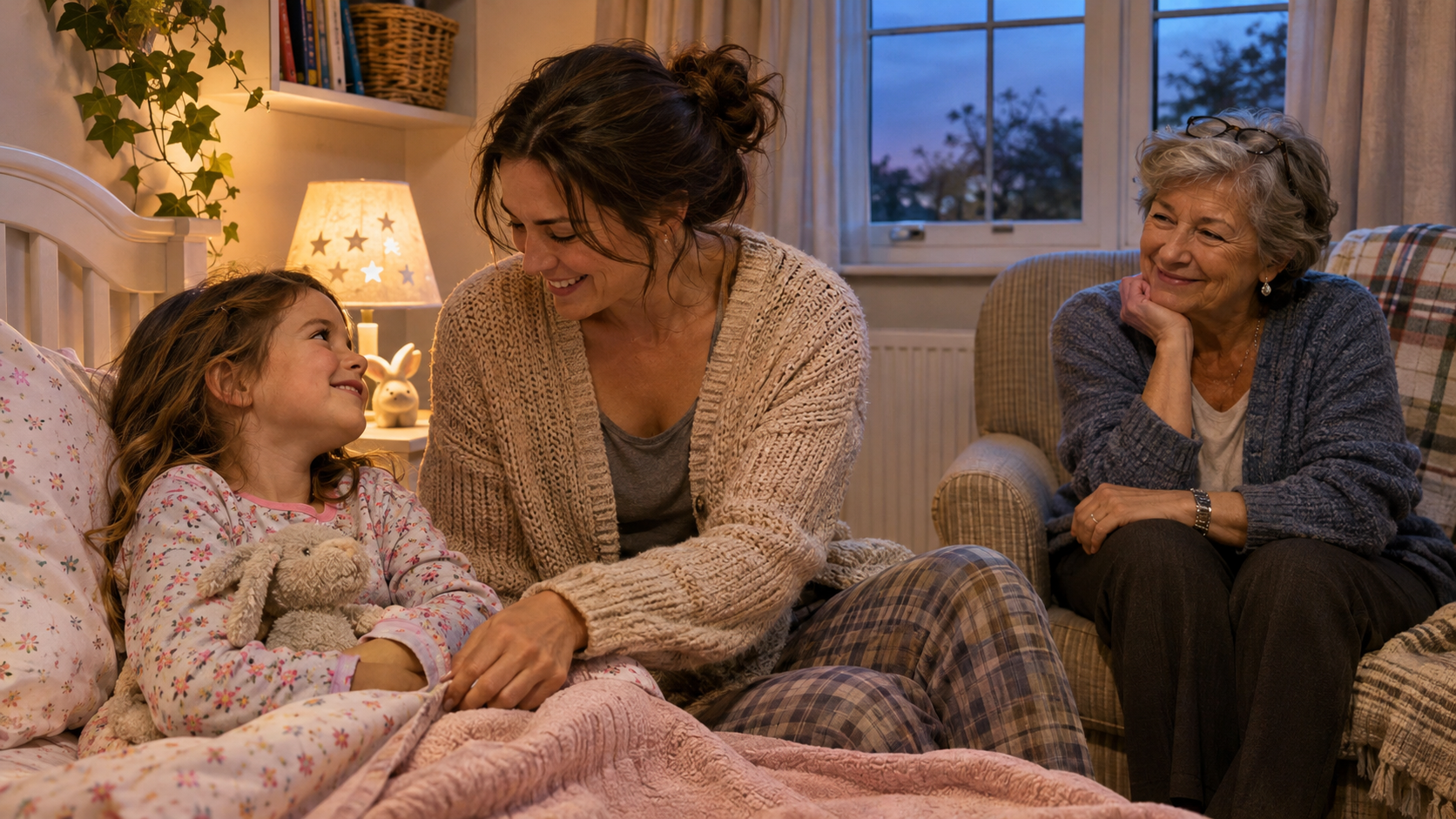
A warm relationship works best when the adults know which decisions belong to the parents. Grandparents do not have to copy your household in every detail, but they do need to respect the rules that protect your child and make care workable.
Separate non-negotiables from preferences
Before a visit or caregiving arrangement, sort your expectations into three groups:
- Health and safety rules: car-seat use, food allergies, medication instructions, choking hazards, smoke exposure, and secure supervision. These are not areas for improvisation. Give instructions directly and confirm that the grandparent can follow them.
- Routines that affect the rest of the day: nap cues, bedtime steps, meals, and screen use. Identify the few details that matter most instead of handing over an exhausting catalogue.
- Differences you can tolerate: a mismatched outfit, a different way of stacking toys, or an extra round of the same game. Leaving room for harmless differences lets the grandparent develop a genuine relationship with the child.
If a routine matters, explain the consequence rather than relying on because we said so. For example: Please start the bedtime routine after this book. When it runs later, she struggles to settle. A concrete request is easier to follow than a general instruction to keep everything consistent.
Keep adult disagreements between adults
Do not ask your child to carry messages or report whether Grandma followed the rules. Speak directly with the grandparent, away from the child when possible. Keep the conversation attached to behaviour: what happened, why it matters, and what must happen next time.
If a grandparent contradicts you in front of the child, avoid fighting for authority through the toddler. Restate the immediate boundary briefly: We are finished with the tablet now. Discuss the adult disagreement later. A child does not need to decide which loved adult is right.
Know when warmth is not enough
Being a beloved grandparent does not create an entitlement to unsupervised time. If a grandparent repeatedly ignores safety instructions, uses shame, pressures the child for physical affection, asks the child to hide things from you, or treats access as leverage in an adult conflict, change the arrangement. That may mean supervised visits, shorter visits, or a pause while the adults address the problem.
The standard is not perfection. It is whether the relationship remains safe, respectful, and compatible with your responsibility as the parent. Supporting a grandparent bond never requires you to overlook behaviour that puts your child at risk.
Key takeaways
- A child’s excitement about a grandparent is not a measure of how much the child loves or needs you.
- Do not compete, request proof of affection, or ask the child to rank family members.
- Build closeness with repeatable rituals rather than relying on presents or elaborate outings.
- For goodbyes, preview the ending, use a familiar ritual, leave openly, and allow the child to be upset.
- Acknowledge requests for a grandparent without changing a reasonable limit.
- Give grandparents clear health, safety, and routine instructions while leaving room for harmless differences.
- Limit or supervise contact when an adult repeatedly disregards safety, consent, or parental boundaries.
Choose one small ritual your child and their grandparent can repeat, then identify the one boundary that needs to be clearer before the next visit. That combination – dependable connection and dependable limits – gives the relationship room to grow without turning it into a contest.
References



