
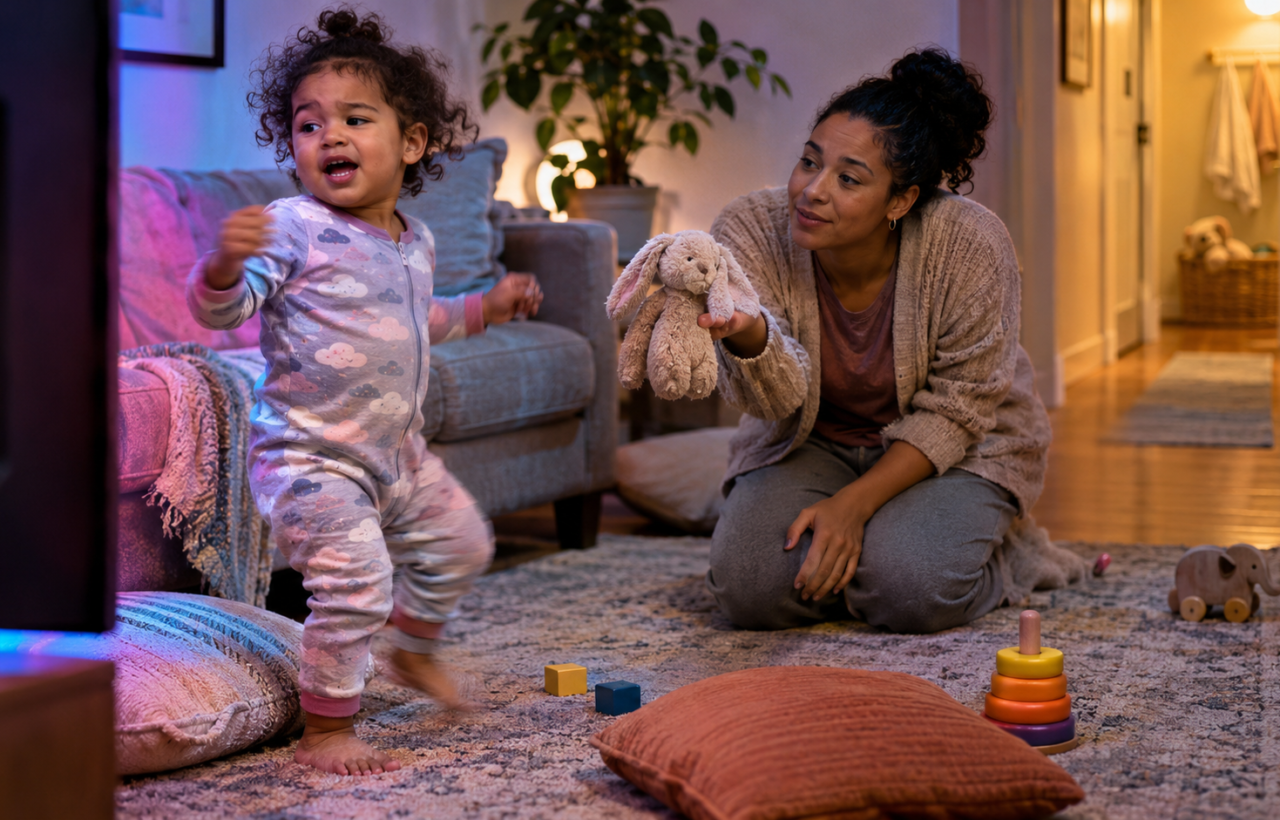
The show ends, but the energy does not. Your toddler races around, snaps at a small request, or falls apart when it is time to move to dinner or bed. If this keeps happening after particular programs, the way those programs are made may be part of the problem.
That does not mean the show has harmed your child, and one difficult transition does not prove sensory overload. The useful question is narrower: does high-intensity media make it harder for your child to shift into the next part of the day? You can answer that by watching for a pattern and changing one variable at a time.
What makes a children’s show feel fast-paced
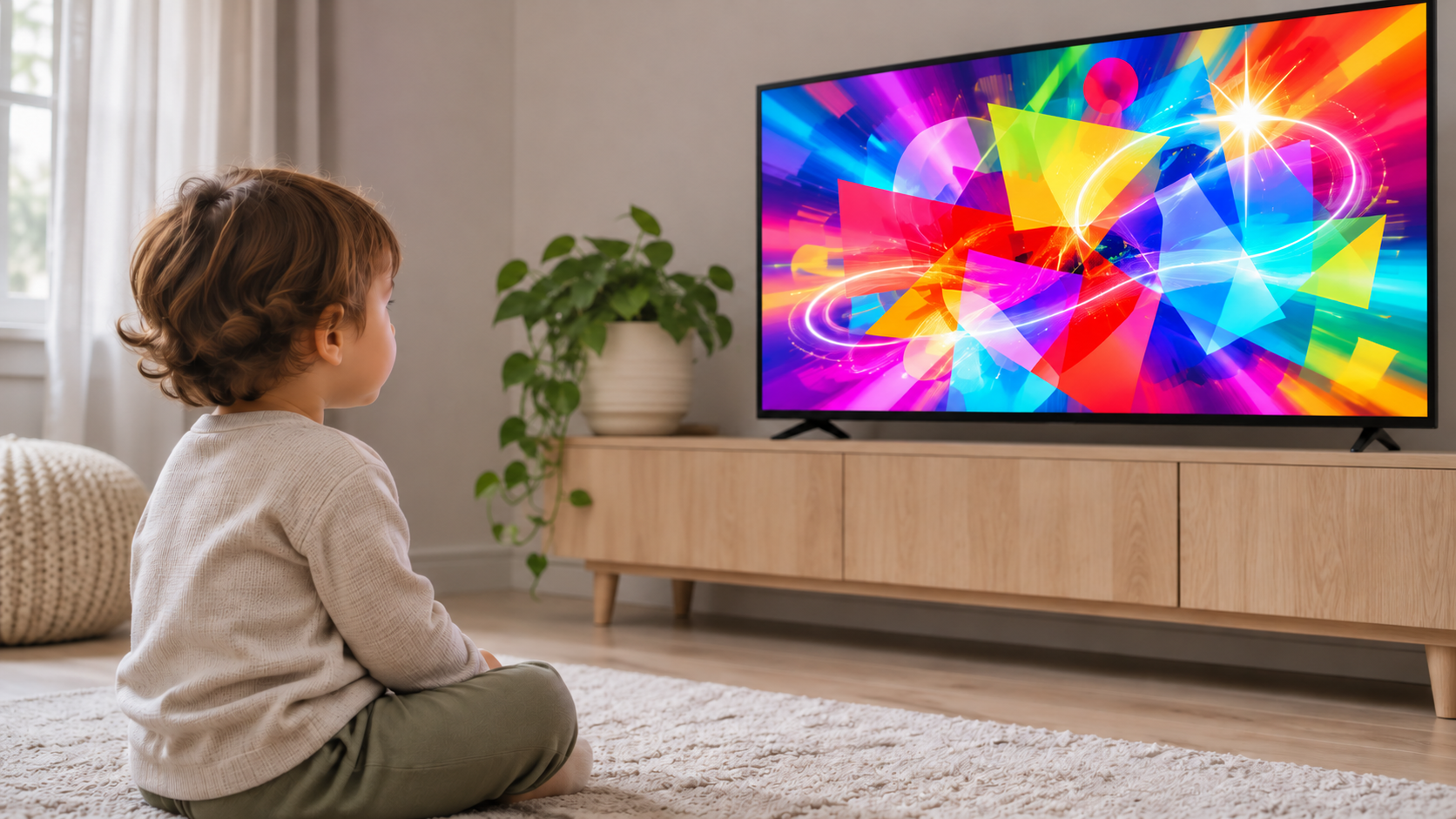
Fast pace is not just a character running across the screen. It is the rate at which the program asks a young brain to notice, sort, and respond to new information. Rapid scene changes, bright colors, and layered sound can combine to create a much heavier processing load than the story itself would suggest.
A show can have a gentle plot and still be visually or aurally intense. When you preview a program, look past whether it is educational, cheerful, or age-labelled. Pay attention to its construction:
- Shots change before there is much time to study the setting or characters.
- Large parts of the picture move at once, even when the story is not advancing.
- Colors, flashes, or busy backgrounds compete with the main action.
- Dialogue, music, sound effects, and character reactions overlap.
- There are few quiet moments or visually simple pauses between events.
No single feature makes a program unsuitable. The combined load matters, as does your child’s response. Instead of trying to classify every show as good or bad, ask how often it demands that your child reorient to a new image, sound, or event.
Look for a repeatable before-and-after pattern
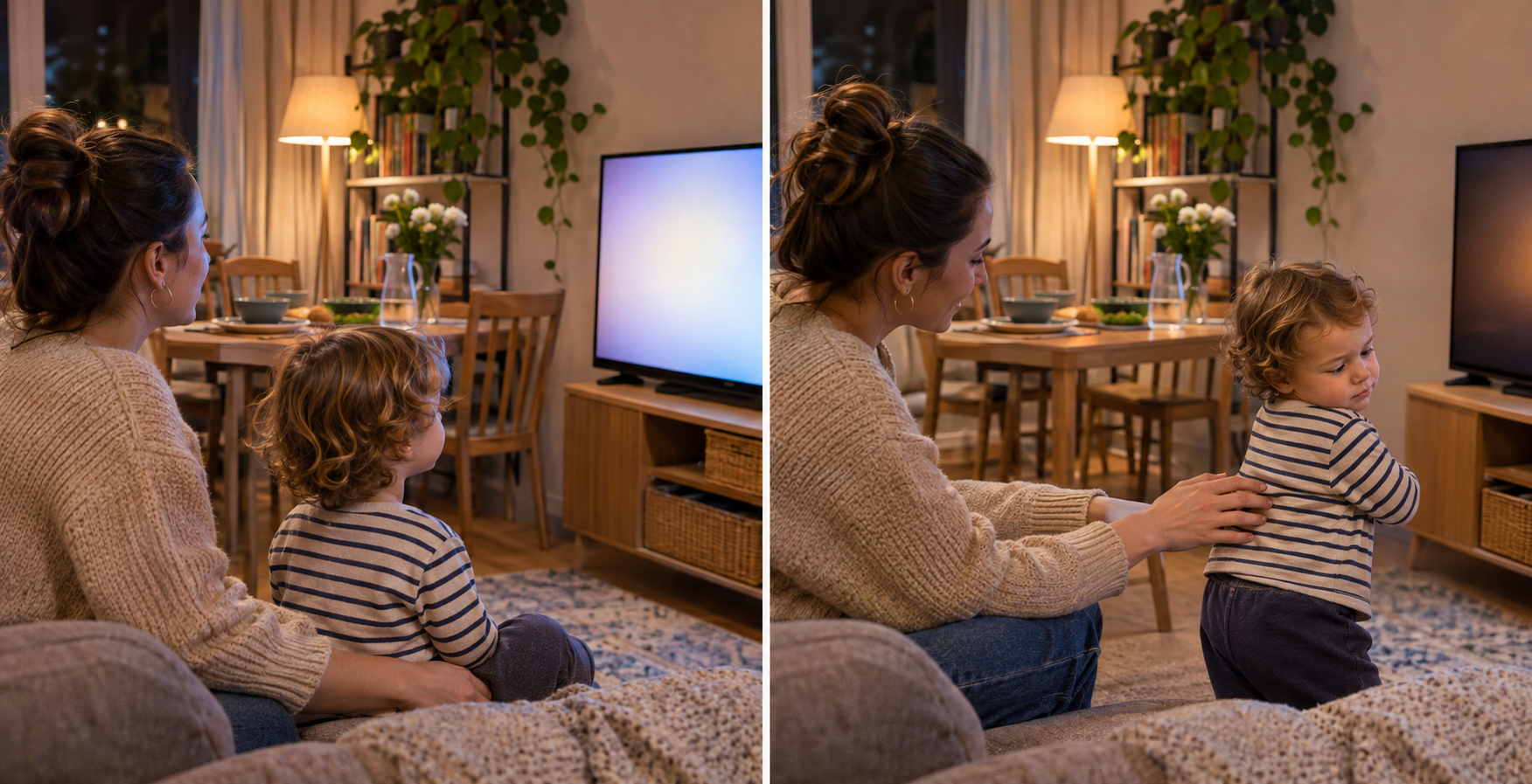
Sensory overload is a description of what may be happening in the moment, not a diagnosis. For some toddlers, stimulation appears to linger after the screen goes dark. The result can be irritability, frantic movement, or unusual difficulty moving on to dinner or bedtime.
Those behaviours do not identify the cause by themselves. A toddler may protest because a favourite activity ended. Hunger, fatigue, a disrupted routine, or an abrupt stop can produce a similar scene. What matters is whether the same response follows higher-intensity media more reliably than it follows calmer media or another preferred activity.
Keep a short note for several comparable viewing occasions. Record only what helps you make a decision:
- What your child watched: Note obvious features such as frequent cuts, busy visuals, or overlapping sound.
- What came before: Was your child already tired, hungry, upset, or out of routine?
- What happened at the transition: Record observable behaviour rather than a label. For example, write that your child ran between rooms and could not begin the bedtime routine, not simply that they were overstimulated.
- What happened after calmer media: Use a similar point in the routine so the comparison is meaningful.
Do not judge only by how still your child looks while watching. A compelling program can hold attention even when the transition afterward is difficult. The behaviour after the screen turns off is often the more useful clue for the question you are trying to answer.
Run a simple test without overhauling screen time
If you suspect a particular show, test the idea before making a household-wide rule. A clean comparison will tell you more than changing the program, viewing time, bedtime routine, and snack all at once.
- Choose a calmer comparison. Look for longer shots, simpler backgrounds, less constant movement, and fewer overlapping sounds. If possible, choose something your child finds about as interesting as the original show.
- Keep the surrounding routine similar. Compare viewing occasions that happen at roughly the same part of the day. A relaxed period and an overtired bedtime are not equivalent conditions.
- Change the program first. Leave the next activity and the way you end viewing as consistent as practical. That makes pace the clearest difference.
- Watch the handoff. Notice whether your child can respond to a simple direction, move toward the next activity, and settle into the usual routine.
- Repeat the comparison. A single easy or difficult day can be noise. A response that returns under similar conditions is more useful.
If transitions are repeatedly easier after the calmer option, you do not need a clinical conclusion to make a practical choice. You can reserve the more intense show for a less demanding part of the day, choose the calmer option before meals or sleep, or stop offering the intense program for now.
If the program makes no consistent difference, let that result change your theory. Look instead at how abruptly viewing ends, whether your child is tired or hungry, and whether the next demand is especially difficult. The goal is not to prove that screens are responsible. It is to find the part of the routine you can actually improve.
Make the transition carry less sensory demand
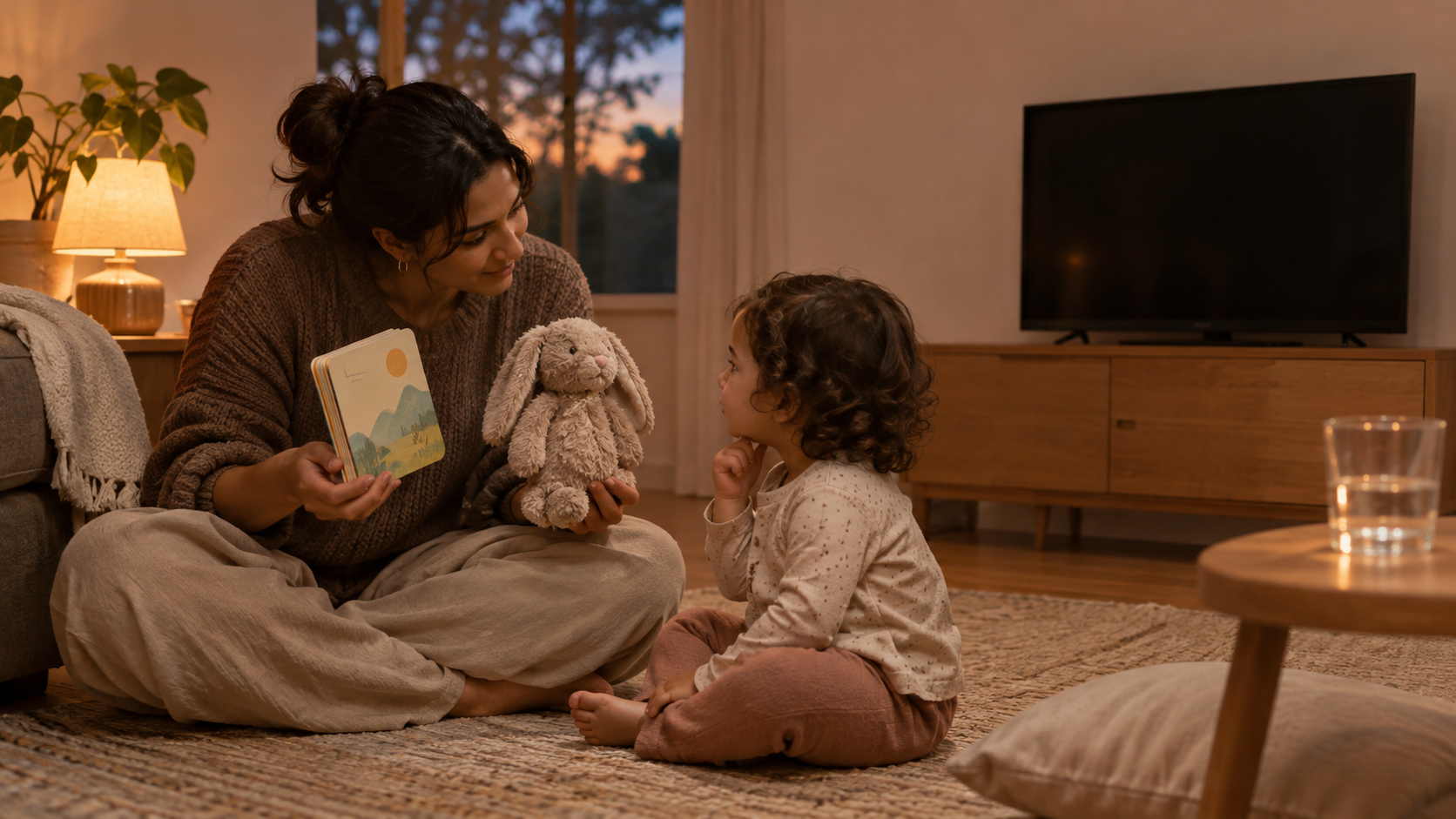
Changing the show may help, but the handoff still deserves attention. A child who has just processed a stream of changing images and sounds may struggle when several new demands arrive at once. Keep the next step plain and predictable.
- Say what comes next before viewing ends. Use one concrete sentence, such as, “When this ends, we are going to the kitchen for dinner.”
- Prepare the next activity first. Have the book, bath items, meal, or quiet toy ready so the child is not waiting in an uncertain gap.
- Use a familiar stopping point. When practical, end at a natural break rather than in the middle of an active sequence.
- Remove competing input. Turn off background television, pause other audio, and avoid giving several instructions over household noise.
- Give one next step. “Shoes off” is easier to process than a rapid list covering shoes, coat, handwashing, and dinner.
If your child is already upset, adding questions, explanations, or a lecture increases the amount they must process. Lower the surrounding noise, use fewer words, and offer familiar comfort in the form your child usually accepts. Return to the routine once they are able to engage with it. Treat the episode as information about the transition, not automatic proof of defiance or bad behaviour.
Media changes are not a substitute for a developmental assessment. If intense reactions also happen across ordinary settings, regularly interfere with sleep, meals, child care, or family activities, or sit alongside broader concerns about your child’s development, speak with your child’s pediatrician or family doctor. Bring your notes so you can describe the situations and behaviours clearly without trying to diagnose the cause yourself.
Key takeaways
- Fast-paced media combines rapid cuts, busy visuals, and layered sound, increasing how much information a young child must process.
- One difficult transition does not establish sensory overload. Look for the same before-and-after pattern under similar conditions.
- Compare a high-intensity program with a calmer one while keeping the surrounding routine as consistent as practical.
- Judge the transition after viewing, not only how absorbed or still your child appears during the show.
- Reduce background input, preview the next activity, and give one simple direction at a time.
- Seek professional guidance when strong reactions extend beyond media or regularly interfere with everyday life.
For your next viewing session, choose one commonly watched program and observe what happens before, during, and after it. Make one small change on the next comparable occasion. A repeatable pattern will give you a sounder basis for action than a blacklist, a guilty guess, or one hard evening.
References



