
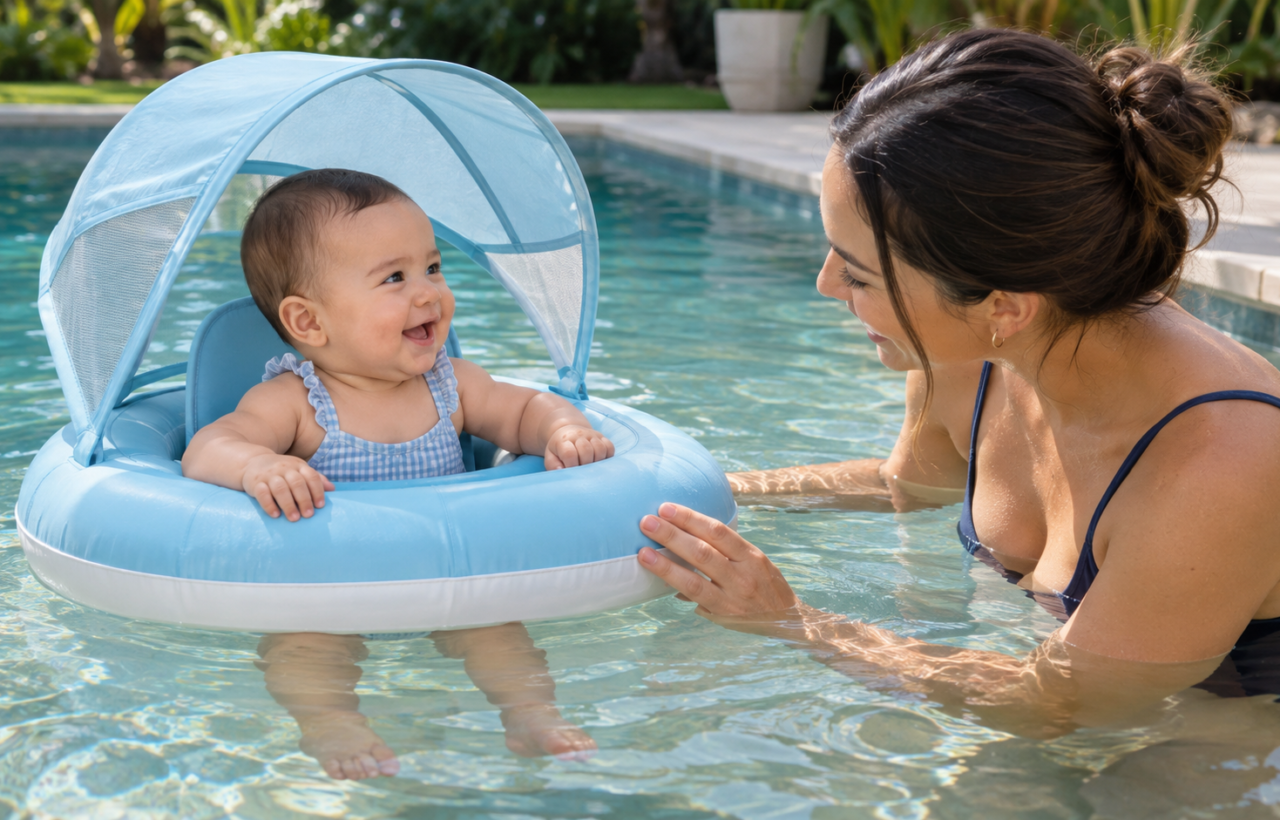
A canopy, harness and wide ring can make a baby pool float look like safety equipment. It isn’t. A float is a recreational seat or toy, and the safest model is still unsafe if your baby doesn’t fit it or the supervising adult moves out of reach.
Before you compare colours, toys or folding mechanisms, check three things: your baby can hold their head up independently, the product fits their current size, and one adult can stay close enough to reach them immediately. Those checks matter more than any premium feature.
Start with readiness, not a birthday

There isn’t one age at which every baby becomes ready for a pool float. Readiness depends on development and fit. Your baby should be able to hold their head up without help and fit securely within the float’s stated age and weight limits.
Treat the manufacturer’s age range as an eligibility check, not proof that the product is right for your child. Babies of the same age can have different body proportions and levels of head control. The seat, harness and flotation ring all need to work with the child who will actually use them.
- Check head position: Your baby’s head shouldn’t flop, tip forward or require your hand to keep it upright.
- Check seat depth: Your baby shouldn’t slump so low that their mouth approaches the water.
- Check openings: Leg holes shouldn’t be large enough for the body to slide through or so tight that they pinch.
- Check the label: Confirm both the age range and weight limit on the product itself. A retailer’s search filter or listing title isn’t enough.
- Check the intended position: Use only the positions described in the instructions. Don’t improvise a reclined, forward-facing or prone setup.
If your baby can’t maintain a stable head position in the seat, take them out. Holding the float in place doesn’t correct a poor fit; it only hides it until your grip shifts.
Skip neck floats entirely. They place flotation around a baby’s neck and are associated with a risk of death or serious injury. A body-supporting float is not lifesaving equipment either, but a neck float introduces a separate hazard that makes it unsuitable.
Choose features that solve real problems
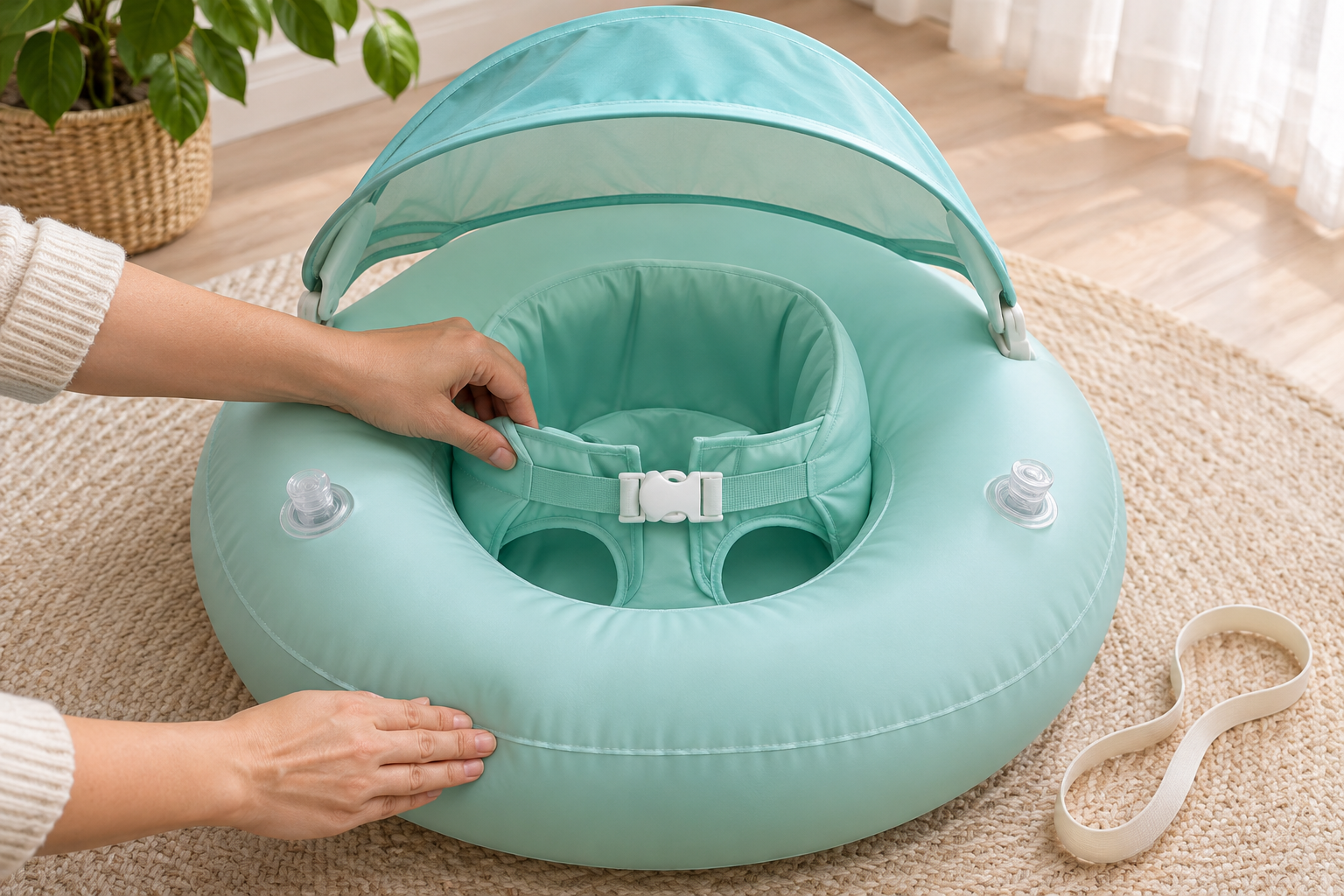
The useful comparison isn’t simply inflatable versus non-inflatable. It is secure fit, reliable construction, clear visibility and a design you can operate correctly every time.
- Secure containment: A well-adjusted harness can reduce climbing and wiggling out. A seat with leg holes may be simpler, but it still has to prevent your baby from sliding too low or through an opening. Neither design prevents every tip or replaces an adult’s hand.
- Flotation construction: A foam float cannot lose inflation through a puncture, although it is bulkier to store and transport. If you choose an inflatable, look for separate air chambers, dependable valves and instructions you can follow without guessing.
- Stable positioning: Look at the full shape, not a claim such as “anti-flip.” A broad, balanced design may feel more stable, but no baby float should be treated as tip-proof.
- Unobstructed visibility: You should be able to see your baby’s face and body position continuously. Avoid toys, fabric or canopy panels that block your view from the position where you will stand.
- A workable canopy: An adjustable canopy can provide useful shade, but some canopies work only at certain sun angles or shift out of position. Check that it stays secure, doesn’t interfere with the harness and can be moved without losing control of the float.
- Easy entry and removal: You need to place your baby correctly and release them promptly with wet hands. If buckles are confusing on dry land, they won’t become easier at the pool.
- Practical transport: An inflatable is easier to pack but may require a pump and inspection after travel. A non-inflatable model takes more space. Choose the version you can carry, store and prepare without skipping its safety checks.
Attached toys, bright colours and a canopy may improve the experience, but they are secondary. If a float with fewer extras fits your baby better and gives you a clearer view, it is the better choice.
Run a dry-land check before the first swim
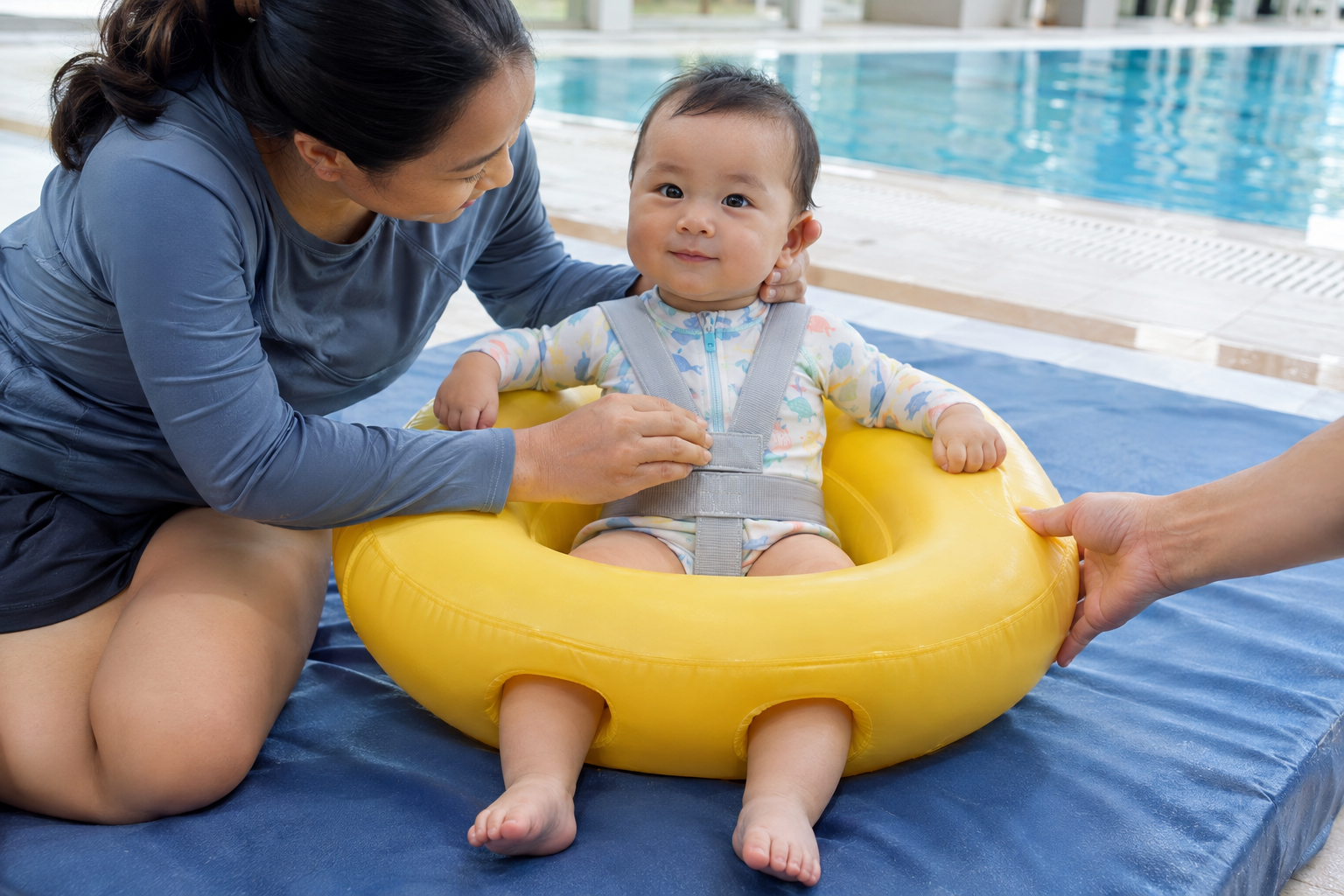
Don’t discover a weak valve, awkward buckle or poor fit after the float is in the water. Set it up fully at home or on the dry pool deck first.
- Read the instructions for your exact model. Confirm the permitted age, weight, position and inflation method. Keep every part in the arrangement the manufacturer specifies.
- Inspect the structure. On an inflatable, check each chamber, seam and valve for softness, leakage or damage. On a foam model, look for tears, warping or separation in the covering and core.
- Test the controls. Open and close the harness, canopy and valves. Make sure another caregiver who may supervise knows how they work.
- Check the fit out of the water. Support your baby while you confirm seat depth, head position, leg openings and harness placement. The harness shouldn’t press against the neck or allow your baby to slip beneath it.
- Choose the shallow area. The supervising adult needs stable footing while remaining within arm’s reach. A float drifting toward deeper water is not the moment to learn that you cannot move quickly enough.
- Remove your baby at the first warning sign. Stop if the float lists, an air chamber softens, a buckle moves, the canopy blocks your view, or your baby’s head or mouth approaches the water. Reassess on dry land rather than adjusting a failing setup while your baby remains seated.
Repeat the inspection before every use. Storage, heat, travel and ordinary wear can change a float that worked properly last time.
Make supervision a named job
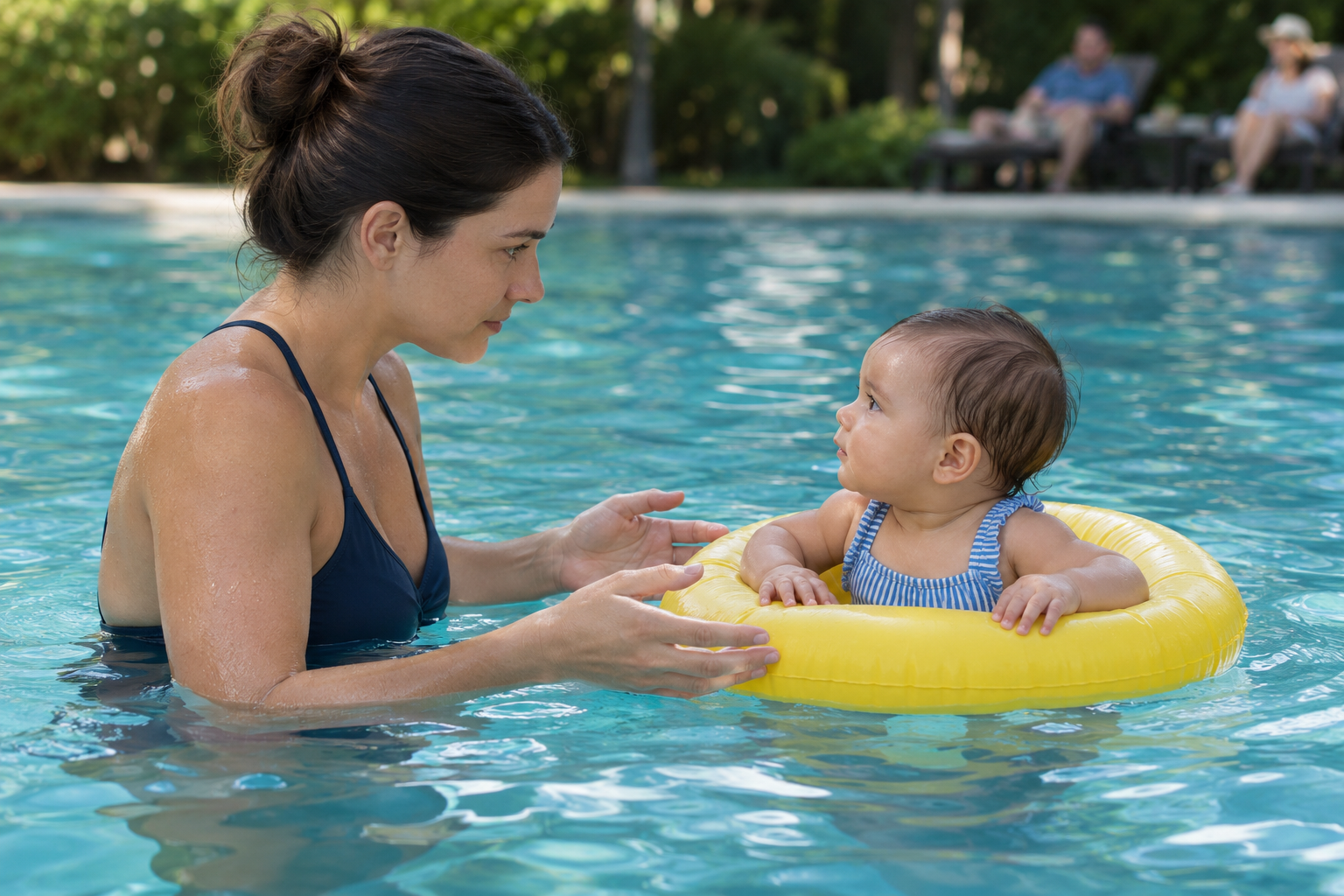
Water supervision fails when several adults assume someone else is watching. Name one adult as the watcher before your baby enters the pool. That person stays undistracted and within arm’s reach at all times. If you would need to step forward before reaching the baby, you are too far away.
The watcher shouldn’t take photos, check a phone, read, prepare food or leave for supplies. A float that connects to an adult ring may keep the baby physically closer, but it doesn’t make divided attention safe.
For longer pool sessions, rotate the job. A practical routine is to use 20-minute supervision shifts and make every handoff explicit. One adult says who is taking over, and the next adult confirms before the first looks away. Take the baby out of the water if no one is ready to accept the handoff.
Build in regular breaks as well. A break means your baby comes out of the float and out of the water; moving the float to the pool edge while the adult checks a message is not a break.
Most importantly, don’t let calm floating create a false sense of swimming ability. A recreational float is not a lifesaving device. When a setting calls for protective flotation, use an approved personal flotation device in the proper size and type, fastened according to its instructions. Pool-float play also doesn’t replace age-appropriate swim instruction.
Baby pool float FAQ
What is the safest age for a baby pool float?
There is no single universal age. Your baby needs independent head control and must fit securely within the exact product’s stated age and weight range. If either condition is missing, wait.
Does a harness or canopy make a float safety equipment?
No. A harness may help keep your baby in the intended position, and a canopy may add shade. Neither turns a recreational float into a life jacket or permits the supervising adult to move away.
Can a baby use water wings or a swim vest instead?
Don’t assume those products are suitable just because they are sold near pool toys. Babies are too young for most swim vests and water wings. Check the exact product label, and distinguish a recreational swimming aid from an approved, properly fitted personal flotation device.
Can the adult let go if they remain beside the float?
Being beside the float is necessary, but proximity doesn’t justify turning away or becoming distracted. Stay within immediate reach, keep your baby’s face in view and be ready to steady or remove them without delay.
Before your next pool visit, check the label and dry-fit the float while you have time to reject a poor match. Once you reach the water, the decision should already be made: shallow area, named watcher, immediate reach and no exceptions.
References



