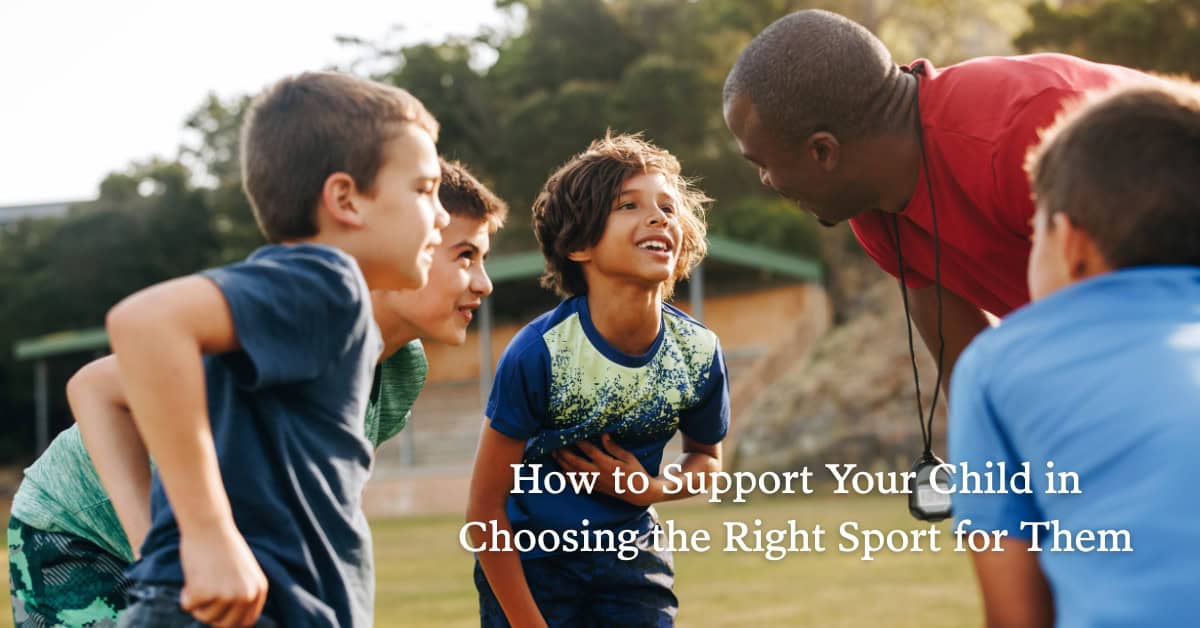
Childhood Development Info frames a child’s choice of sport as more than a routine after-school decision. The source describes it as a potentially meaningful part of childhood, while offering only a brief public summary of the full article.
For parents, the useful question is not which sport is objectively best. It is how to help a child notice what feels interesting, manageable, and worth returning to, while keeping adult expectations from taking over the decision.
Start With Fit, Not Performance
A sport can look ideal from the outside and still be a poor match for a particular child. Some children are drawn to fast team environments. Others prefer individual activities, predictable routines, creative movement, or sports where progress feels more personal than public.
Because the available source material does not list specific sports or make age-by-age recommendations, parents should treat this as a decision-making process rather than a checklist. The first signal is simple: does the child show curiosity before the first practice and a reasonable willingness to return after the novelty fades?
That does not mean every session has to be fun. New activities often include awkwardness, waiting, rules, and frustration. But a good fit usually leaves room for the child to feel some ownership, rather than feeling assigned to someone else’s plan.
Keep the Conversation Child-Led
Childhood Development Info’s brief summary emphasizes the importance of the right sport in a child’s life. The parent role, in practical terms, is to create enough structure for a child to choose without making the choice feel like a test.
- Ask what looks interesting about the activity, not whether the child expects to be good at it.
- Talk about the setting: team size, coach style, practice pace, and whether the activity feels social, competitive, or skill-based.
- Notice body language before and after sessions, especially if the child struggles to explain what they like or dislike.
- Separate temporary nerves from consistent dread; those are not the same parenting problem.
Parents can still set boundaries around cost, schedule, transportation, and safety. Child-led does not mean unlimited options. It means the child’s reactions are treated as evidence, not an obstacle to an adult preference.
Use Practical Limits Honestly
A sustainable sport has to work for the whole household. Even when a child is enthusiastic, the family still has to consider travel, equipment, practice frequency, sibling schedules, and the emotional load that comes with busy weeks.
Being honest about those limits can actually protect the child’s experience. A sport that causes constant family stress may become associated with pressure rather than enjoyment. If several options are available, a lower-friction choice may give a child more room to build confidence and consistency.
It is also reasonable to use trial periods when they are available. A short introduction, camp, recreational session, or beginner class can help a child learn what the sport feels like before the family commits deeply. That approach keeps the decision exploratory instead of final.
Key Takeaways
- According to Childhood Development Info, choosing the right sport can matter beyond the activity itself.
- The best starting point is fit: interest, temperament, environment, and the child’s willingness to keep trying.
- Parents should guide the process without turning the decision into a performance goal.
- Family logistics matter because a sport is more likely to last when it is realistic to support.
Watch for Pressure Creep
Sport can support movement, social connection, discipline, and confidence, but those benefits are easier to protect when adults watch their own intensity. Praise effort and problem-solving more than outcomes. Give children permission to be beginners. Avoid treating early talent as a binding commitment.
If a child wants to stop, the next step is a calm conversation, not an automatic yes or no. Parents can ask whether the issue is the sport, the coach, the schedule, the competitive atmosphere, or the difficulty of learning something new. The answer may point to a different sport, a different level, or simply a pause.
The strongest choice is usually the one a child can grow into without losing their sense of ownership. A parent’s job is to keep the door open, the expectations proportionate, and the decision grounded in the child in front of them.
Inspired by this post on Childhood Development Info.