Children can spend long summer days moving between playgrounds, backyards, patios, beaches, splash pads, and camp drop-offs. My Baba frames sun protection as a child-specific health issue, noting that young skin needs extra care because little ones are more vulnerable to UV damage.
Because the source material is brief, the most useful approach is to separate what it reports from practical, general guidance parents can apply: understand why caution matters, reduce exposure where possible, and make protection part of the routine rather than a last-minute scramble.
Why Children Need A More Careful Sun Routine
According to My Baba, children’s skin needs extra care in the sun. The key point is not that every outdoor moment is dangerous, but that children are not just smaller adults when it comes to sun exposure. Their routines are different, their play is often longer and more active, and they may not notice or communicate discomfort until exposure has already gone on for a while.
That makes adult planning important. A child who is absorbed in water play, sports, or running around with friends is unlikely to pause and ask for shade, a hat, or another layer of sunscreen. The safer pattern is to build protection in before the outdoor time begins, then keep checking as the day changes.
Think Beyond Sunscreen Alone
Sunscreen matters, but it should be part of a wider approach. General sun-safety practice usually combines several layers: shade, clothing, hats, sunglasses where appropriate, and sunscreen used according to its label. This matters because no single measure is perfect in every setting.
Shade can shift. Clothing can get wet. Sunscreen can be missed in easy-to-forget areas. Children may remove hats, wipe their faces, or spend more time outside than planned. The goal is not to create a complicated system; it is to avoid relying on one line of defense for an entire day.
Key Takeaways For Parents
- My Baba reports that children’s skin needs extra care in the sun because little ones are more vulnerable to UV damage.
- Protection works best when it is planned before children go outside, not handled only after skin looks hot or irritated.
- Use a layered routine: shade, protective clothing, hats, and sunscreen that is suitable for the child and used as directed.
- Re-check protection during the day, especially after water play, sweating, changing clothes, or long stretches outdoors.
Make Protection Easy To Repeat
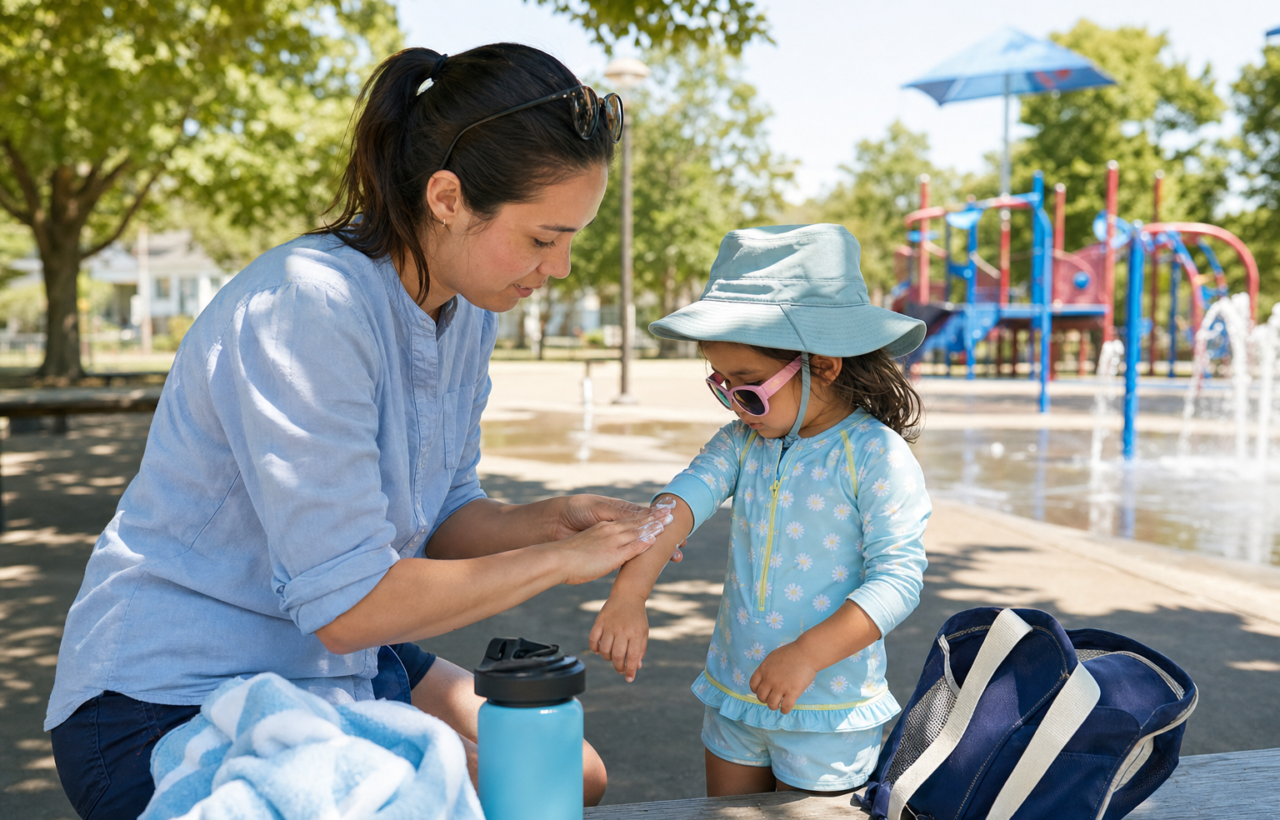
The best sun routine is the one a family can actually repeat. Keeping hats near the door, packing sunscreen with swim gear, and choosing clothes that cover more skin can remove decision-making at the busiest moments. For childcare, camp, or family outings, it also helps to know who is responsible for reapplying sunscreen and whether the child can do any part independently.
Parents can also make the routine feel normal rather than negotiable. A hat goes on before the scooter comes out. Sunscreen is applied before shoes. Shade breaks become part of snack time. Small habits reduce the need for repeated arguments when everyone is already hot, late, or distracted.
What To Watch During Outdoor Play
My Baba’s summary points to keeping children protected throughout summer, which means paying attention to the setting as much as the weather. Water, open fields, playgrounds with little shade, and long days away from home can all make it easier for protection to slip.
A practical check is simple: look at what skin is exposed, whether the child still has their hat or cover-up on, whether sunscreen may have rubbed off, and whether there is a shaded place to cool down. If the answer is unclear, it is time to pause and reset the routine.
A Sensible Summer Habit, Not A Scare
The useful message from My Baba’s piece is straightforward: children’s skin deserves more deliberate sun protection. For parents, that does not require fear or perfection. It means making outdoor time easier to enjoy by preparing early, layering protection, and checking in often enough that small oversights do not become bigger problems.
Inspired by this post on My Baba.