
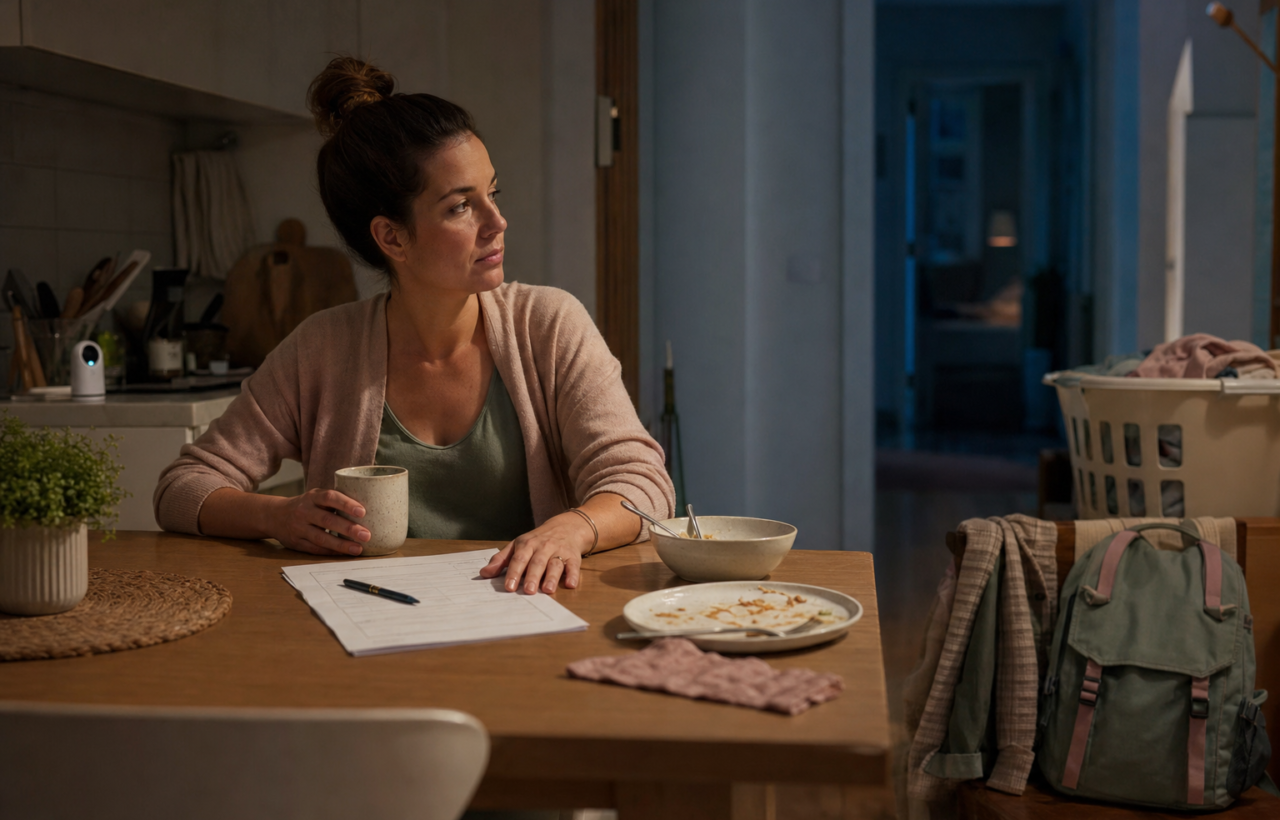
Self-care advice can feel insulting when a parent has little practical support. A quiet morning, regular therapy appointment, workout class, or child-free errand is much harder to arrange when there is no nearby family, no dependable partner coverage, or no trusted backup.
Drawing from Diary of an honest mom’s article on mothers with little to no support system, this piece reframes self-care as something smaller and more realistic: not a luxury day away, but a set of decisions that protect time, energy, and basic well-being.
Why Self-Care Feels Different Without Backup
For unsupported moms, the problem is not usually a lack of awareness. Most already know they need rest. The harder question is how to get it when children still need meals, bedtime, supervision, clean clothes, school forms, comfort, and transportation.
The source names several common situations: single parenting, partners who work long hours, partners who do not share the load, family living far away, estrangement, and the absence of a reliable village. Those circumstances change what self-care can reasonably look like. It may need to happen inside the existing day rather than outside it.
Diary of an honest mom also points to a cited study reporting that 78 percent of women said they often delay caring for themselves because they are caring for their families. That figure is presented by the source as a warning sign: when postponing basic needs becomes the default, burnout can begin to look normal.
Start With Permission, Not A Perfect Plan
The source’s strongest through-line is that guilt can block self-care before logistics even enter the picture. A mother may technically have ten minutes, a screen-time window, or enough money for a small treat, yet still feel that using any resource on herself is wrong.
That is why the first practical shift is internal: treating the parent as a human with needs, not only as the person who meets everyone else’s. This does not mean ignoring children. It means recognizing that exhaustion, resentment, and constant depletion are not proof of devotion.
A realistic self-care plan for an unsupported parent may begin with a sentence as plain as this: the household is allowed to function without everything being ideal. That mindset makes the rest of the changes easier to keep.
Make The Day Do Less Work Against You
Several of the source’s suggestions are really about reducing daily friction. A predictable schedule, an earlier bedtime, simpler meals, and planned playtime all aim at the same outcome: fewer chaotic transitions and more identifiable pockets of time.
A schedule does not need to be rigid to be useful. For many families, the benefit is simply that everyone knows what comes next. If mornings, meals, and bedtime follow a familiar rhythm, a parent may spend less energy renegotiating the day from scratch.
The same logic applies to food. Diary of an honest mom argues that meals do not have to be elaborate to count. Simple, acceptable dinners can give time back to the parent without turning every evening into a test of effort or worth.
Screen time is treated similarly in the source: not as an all-day substitute for parenting, but as one possible tool when there is no other adult to step in. The useful distinction is between using screens intentionally for a short break and letting guilt make the break feel unusable.
Lower Standards Where Perfection Costs Too Much
One of the most practical themes in the original article is lowering expectations. That can sound like giving up, but in this context it is closer to triage. Not every task has the same value, and not every household standard deserves the same amount of a parent’s limited energy.
The source separates a sanitary home from a perfectly tidy one. That difference matters. Clean enough to be healthy and functional is not the same as constantly reset, photo-ready, or organized to someone else’s standard.
For an unsupported mom, choosing not to fold every item perfectly, not to volunteer for every school request, or not to make every outing look seamless can be a form of protection. The point is not laziness. The point is preserving capacity for parenting, work, sleep, health, and a life that still includes the parent.
Key Takeaways
- Self-care without a support system usually has to be practical, small, and built into ordinary routines.
- Guilt is a major barrier; rest is harder to use when a parent believes she has not earned it.
- Schedules, earlier bedtimes, simpler meals, and intentional screen time can create short but meaningful breaks.
- Lowering household expectations can free energy for the tasks and relationships that matter most.
- When affordable, paid help such as cleaning, babysitting, laundry, daycare, or other services can be a legitimate way to buy back time.
When Help Has To Be Bought Or Built
Diary of an honest mom includes hiring help as one option for parents who can afford it. That might mean a cleaner, babysitter, laundry service, extra daycare time, or help with a specific chore. The source frames this not as indulgence, but as a practical exchange: money spent to recover time.
That option will not be available to every family, and it should not be presented as a universal fix. But where it is possible, even occasional help can change the shape of a week. The same principle can apply in lower-cost ways too: narrowing commitments, batching errands, simplifying routines, or protecting one predictable quiet window.
The larger message is that unsupported mothers should not have to pretend constant depletion is sustainable. Self-care in this context is less about pampering and more about building a household that leaves some room for the parent to remain well.
Inspired by this post on Diary of an honest mom.