
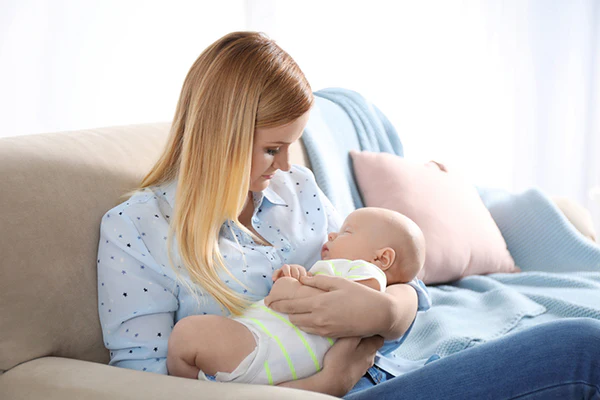
A baby who sleeps peacefully in someone’s arms and wakes the moment they are placed down can make naps and nights feel impossible. Newton Hush describes this as a common sleep challenge, especially when a baby has learned that being held is part of falling asleep.
The goal is not to remove comfort. It is to shift the final moments of falling asleep toward a safe sleep space, while keeping routines calm, predictable, and realistic for the baby’s age.
Why being held works so well
According to Newton Hush, babies may prefer being held because a parent’s body is warm, familiar, and scented in a way that feels reassuring. A crib or bassinet can feel like a sudden change: cooler, still, and separate.

The source also points to the Moro, or startle, reflex. When a baby is moved away from the body or lowered into a crib, the sensation can trigger a sudden arm jerk that wakes them. Newton Hush says this reflex is present in babies and usually lasts until around four months.
There is also the habit piece. If a baby repeatedly falls asleep only while held, the arms become a sleep association. Changing that association takes repetition, and some protest is expected because the baby does not understand why the pattern has changed.

Key takeaways
- Start by noticing when the baby naturally gets sleepy, then build the routine around that window.
- Place the baby down drowsy but still awake when possible, so the crib becomes part of falling asleep.
- Use touch, a calm room, and consistent cues before picking the baby up again.
- Keep sleep safety separate from sleep training: avoid bed-sharing and use a safe sleep surface.
Safety comes before convenience
Newton Hush makes a strong safety distinction between room-sharing and bed-sharing. Room-sharing means the baby sleeps in the same room as a parent, but on a separate sleep surface. Bed-sharing means the baby sleeps in the adult bed.
The source says the American Academy of Pediatrics strongly recommends against bed-sharing because adult mattresses, pillows, and bedding can create suffocation hazards, and there is also a risk of a sleeping adult rolling onto the baby. Newton Hush reports that experts endorse room-sharing for at least the first six months.
For the same reason, the article advises skipping blankets for babies and using a fitted crib sheet only. The baby cannot adjust loose bedding if they become too hot or too cold, and loose bedding can become unsafe.
A practical transition plan
The most useful first step is observation. Newton Hush recommends documenting sleep patterns: when naps happen, how long they last, and when the baby tends to get sleepy in the evening. A routine works better when it matches the baby’s natural rhythm instead of fighting it.

- Choose a short, repeatable bedtime sequence, such as dim lights, soft sound, a bath, massage, a story, a lullaby, or rocking.
- Hold and soothe the baby until they are calm and drowsy, then place them in the crib before they are fully asleep.
- If the baby stirs, try comforting touch first: a hand on the back, gentle strokes, or quiet presence without lifting them right away.
- If the baby is already asleep in arms, Newton Hush suggests waiting until deeper sleep before attempting the transfer.
This approach may involve crying. The source notes that some families use a cry-it-out method and others do not; it frames that as a parental choice rather than a single required path. Either way, consistency matters more than perfection.
Make the crib easier to accept
A baby who is used to body warmth is more likely to resist a room that feels too bright, noisy, or uncomfortable. Newton Hush suggests setting up the sleep space so it gives clear nighttime cues: dim lights, room-darkening curtains, and white noise if household sounds are disruptive.

The source reports that a nursery temperature comfortable for a lightly clothed adult is a useful guide, and gives 68 to 72 degrees Fahrenheit as a common range. Clothing still matters, but blankets are not part of the adjustment for babies.
For younger babies, Newton Hush says swaddling can help recreate a snug feeling and limit startle waking. It also cautions that once a baby starts rolling over, around 2 to 4 months, swaddling is no longer safe and a sleep sack may be the better transition.
When another issue may be keeping baby awake
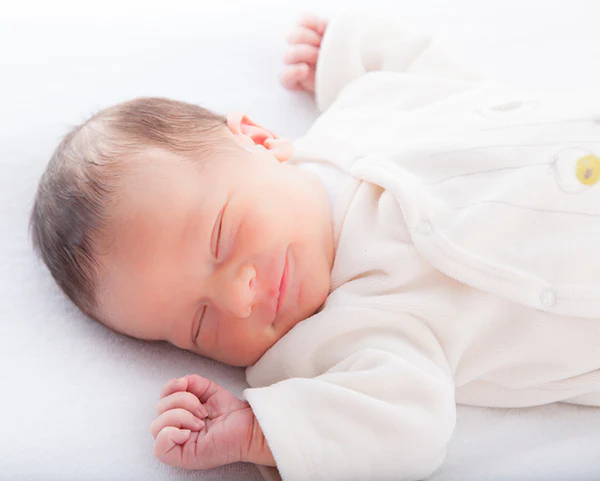
Not every wake-up is only about wanting to be held. Newton Hush notes that indigestion, gas, or reflux may make lying flat uncomfortable. Burping may need extra attention, and the source suggests feeding in an upright position and keeping a baby upright for about half an hour after feeding when reflux is a concern.
The article also recommends avoiding feeding to sleep once the baby is past the newborn stage, because it can become another sleep association. A feed shortly before bed may still help, but the final step should ideally not be nursing or bottle-feeding every time the baby wakes.
A pacifier may be another soothing tool. Newton Hush says sucking can be calming, and it may help when a baby fusses after being placed down drowsy.
Small adjustments for real family life
If one parent is strongly linked with being held to sleep, Newton Hush suggests having the other partner take over part of the bedtime routine. The change in caregiver can sometimes make the new pattern less confusing for the baby.
The source also notes that many babies are better candidates for this transition around three to four months, when circadian rhythm begins to develop. It may be possible at other ages, but sleep associations can become more established over time.
Progress is usually uneven. A baby may need contact, reassurance, and a few minutes to settle, especially at the start. The steady aim is simple: keep the baby safe, keep the routine predictable, and help the crib become a familiar place to finish falling asleep.
Inspired by this post on Newton Hush.