When a baby strains, cries, or skips a bowel movement, the question is usually not just how often they are pooping. The more useful clue is what the stool looks like and how hard the baby has to work to pass it.
Using hibobbie Blog’s guide as the source, this article separates normal variation from signs of firm stool, then outlines age-appropriate steps parents can discuss or try without jumping straight to unnecessary interventions.
What Counts as Firm Stool in a Baby?
Babies do not all follow the same bathroom schedule. According to hibobbie Blog, some breastfed infants may have a bowel movement after many feeds, while others may go several days and still be fine if the stool is soft when it arrives.
That is why texture matters. Hard, dry stool that looks like pellets or small pebbles is more concerning than a soft stool that simply arrives less often. Straining alone can also be misleading, because young babies are still learning how to coordinate the muscles needed to bear down.
Parents may want to pay closer attention when firm stool comes with crying, a bloated belly, obvious discomfort, or tiny tears or blood around the anus after a difficult bowel movement.
Why Stool Can Suddenly Get Harder
The source points to several common triggers. A change from breast milk to formula, or the reverse, can shift stool patterns. Starting solid foods can do the same. Depending on age, too little fluid or too little fiber may also contribute.
There is also a developmental piece. Babies have immature digestion and are still building their gut microbiome. Their pelvic floor coordination is still developing too, so effortful pooping is not always the same as constipation.
The practical takeaway is to look for a pattern. A one-off hard stool after a feeding change may need observation and gentle support. Repeated pellet-like stools, ongoing pain, or feeding refusal deserves more caution.
Gentle Steps Parents Can Try
For babies under 6 months, hibobbie Blog says breast milk or infant formula should provide the needed fluids. For babies older than 6 months, the source says a small amount of water may help, with a limit of no more than 4 to 8 ounces per day. It also advises avoiding juice unless a pediatrician recommends it.
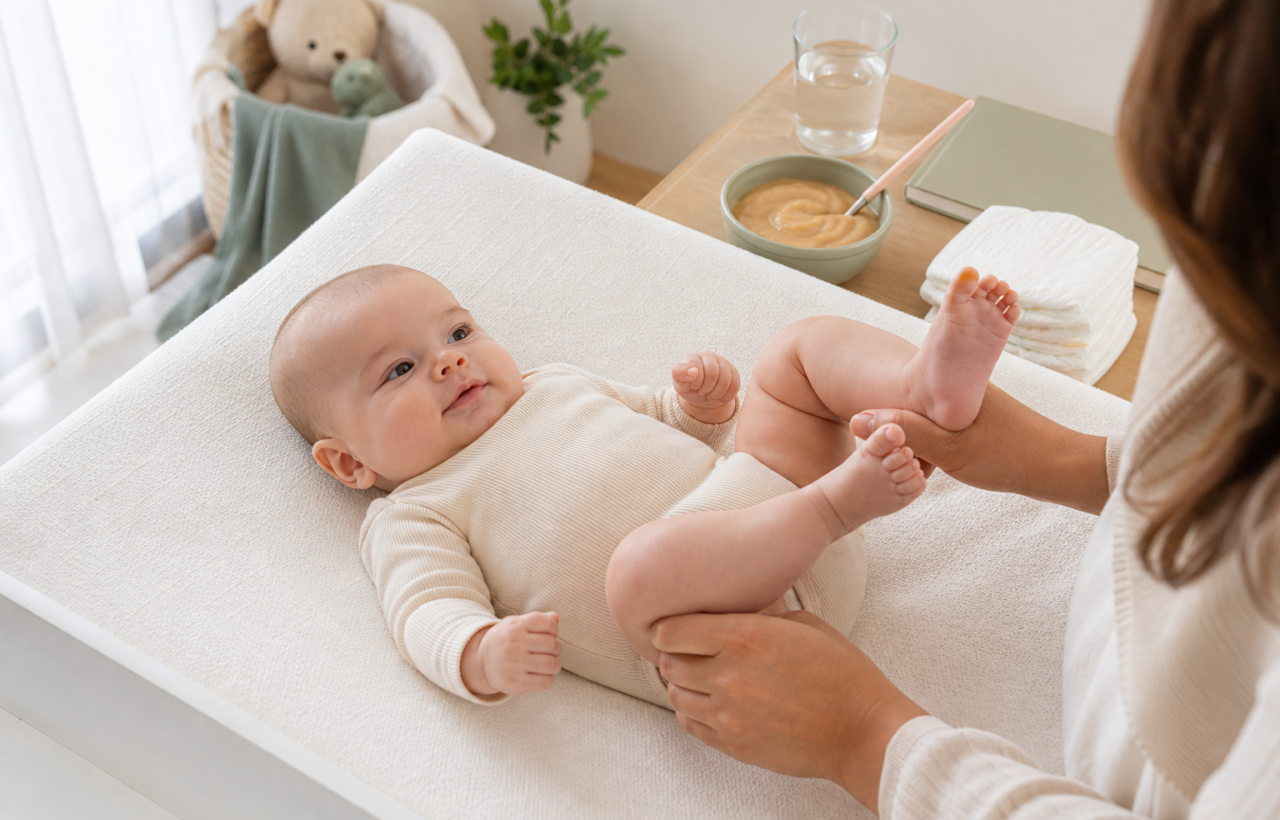
Movement can help as well. Gentle clockwise belly massage, slow bicycle-leg motions, and regular tummy time may stimulate the bowels and support the muscles involved in passing stool. These are low-pressure tools best used when the baby is calm.
For babies who are already eating solids, the source suggests small servings of higher-fiber options such as pureed prunes, pears, peas, or apricots. It also notes that rice cereal and bananas may be worth avoiding temporarily if the baby is already struggling with firm stool.
Probiotics are another option mentioned by hibobbie Blog, but the source is clear that parents should check with a pediatrician before starting a supplement. Formula-fed babies with recurring digestive issues may also need a conversation about whether their current formula is the right fit.
Key Takeaways
- Frequency alone is not the best measure; stool texture and baby comfort matter more.
- Hard, dry, pellet-like poop is a stronger sign of trouble than a soft stool after a longer gap.
- For babies over 6 months, hibobbie Blog says a small amount of water can help, but parents should stay within age-appropriate limits.
- For babies eating solids, prunes, pears, peas, and apricots are source-supported foods to consider.
- Blood, severe discomfort, feeding refusal, or a long unusual stretch without stool should prompt a pediatrician call.
Age Matters When Choosing a Remedy
Newborns and young infants need the most conservative approach. For 0 to 6 months, the source recommends sticking with breast milk or formula, using gentle movement, and asking a doctor about probiotics if infrequent stooling keeps recurring.
For 6 to 12 months, support can expand slightly. Breast milk or formula remains important, but parents can introduce small amounts of water and fiber-rich fruits or vegetables when solids are already part of the baby’s diet.
Toddlers have a broader diet, so regular fluids, vegetables, whole grains, active play, and predictable potty routines can all matter. hibobbie Blog also flags cow’s milk intake for ages 1 to 2, saying more than the recommended 16 ounces per day can contribute to firmer stools.
When to Call the Pediatrician
Most firm-stool episodes improve with simple, age-appropriate adjustments. Still, some signs should not be managed by guesswork. The source recommends checking in with a pediatrician if there is blood in the stool, pellet-like stool that does not improve after a few days, refusal to eat, or extreme discomfort.
Another reason to call is a long stretch without a bowel movement, especially if it is not normal for that baby. hibobbie Blog uses more than 5 to 7 days as a point where parents should seek guidance.
The best response is usually measured: observe the stool, match the remedy to the baby’s age, and involve a clinician when pain, blood, feeding changes, or an unusual delay enters the picture.
Inspired by this post on hibobbie Blog.