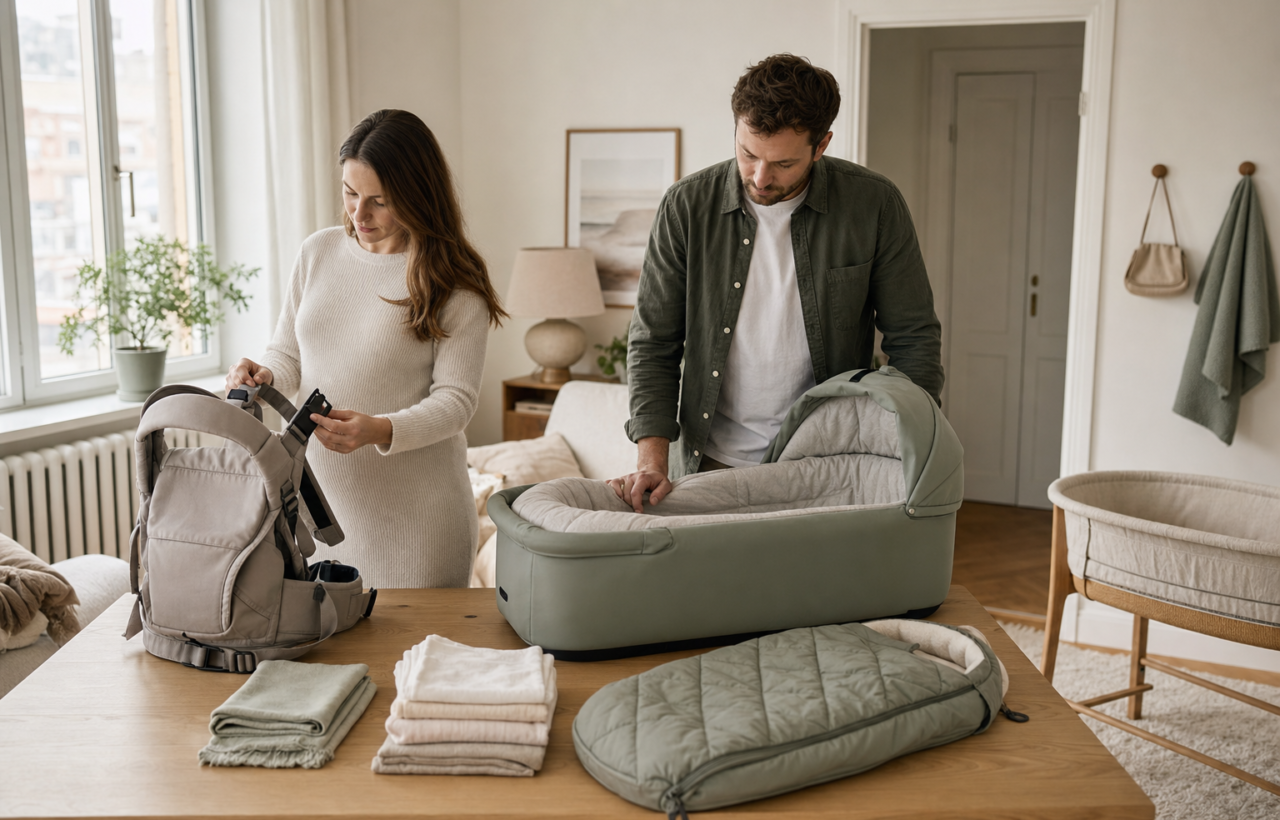
You’re considering Najell because the products look polished and promise to make life with a baby feel less cumbersome. The useful question isn’t whether the brand is appealing. It’s whether a particular Najell product will remove enough friction from your routine to justify a premium place in your budget or registry.
Najell has attracted attention for combining Scandinavian styling with thoughtful functionality. That explains the appeal, but it doesn’t settle the purchase. You still need to test the exact product against your space, your baby’s stage, the people who will use it, and the moments when parenting feels least convenient.
Start with the parenting problem, not the brand

Before opening another product page, write a short job statement: “We need this item to help us _____ when _____, without _____.” The blanks force you to define the problem in practical terms.
For example, you might need an item that is easier to handle during solo errands, takes less space in a small home, moves conveniently between caregivers, or reduces setup during an already crowded routine. Those are useful requirements. “It looks nicer than the alternatives” is a preference, not a functional requirement. Appearance can still matter, but separating the two keeps style from quietly making the whole decision.
Ask these questions about the exact Najell product you are considering:
- Which recurring moment is this supposed to improve?
- How often is that moment likely to happen during the stage when the product fits your baby?
- What is awkward about your current plan: setup, carrying, adjustment, cleaning, storage, or switching between adults?
- Will the product remove that difficulty, or merely replace it with a different sequence of steps?
- Do you already own, expect to receive, or plan to buy something that performs the same job?
This is the simplest protection against an expensive duplicate. A premium product earns its place by solving a frequent problem noticeably better, not by being the most attractive version of a job you barely need done.
Test “easy to use” against your least convenient moment

Functionality is only valuable in context. A feature that seems intuitive while you are calmly watching a demonstration may feel very different when your hands are occupied, another child needs attention, or you are trying to leave the house.
If you can handle the product before buying, recreate the real sequence rather than inspecting it as a display item. If you are shopping online, use demonstrations and the product manual to walk through the same sequence mentally.
- Begin where the routine actually begins. Include taking the product out of storage, preparing it, positioning or adjusting it, and getting your baby in or out as applicable.
- Notice every pause. Look for steps that require a free hand, a clear surface, fine adjustments, or a part that could be misplaced.
- Include the handoff. Ask another caregiver to explain or perform the sequence without being coached through every movement.
- Finish the routine. Consider where the item goes afterward, what needs cleaning, and whether it must be reset before the next use.
- Check the failure case. Decide what you will do if your baby dislikes the position, the fit feels wrong, or the product proves awkward in your actual space.
The last step matters because a product can be well designed and still be wrong for your household. Ease of use is a relationship between the object, the user, and the situation. It is not a permanent quality that every family experiences in the same way.
Safety has to sit outside the convenience calculation. For anything that supports, carries, restrains, or gives your baby a place to rest, verify the instructions, permitted configurations, and fit requirements for the exact product. Do not infer one item’s limits from another or rely only on a short registry description. If you cannot confirm that the product is appropriate for your baby’s current stage and size, pause rather than improvising. If medical or developmental needs could affect positioning or fit, ask your baby’s clinician before use.
Decide whether the premium is buying function or finish
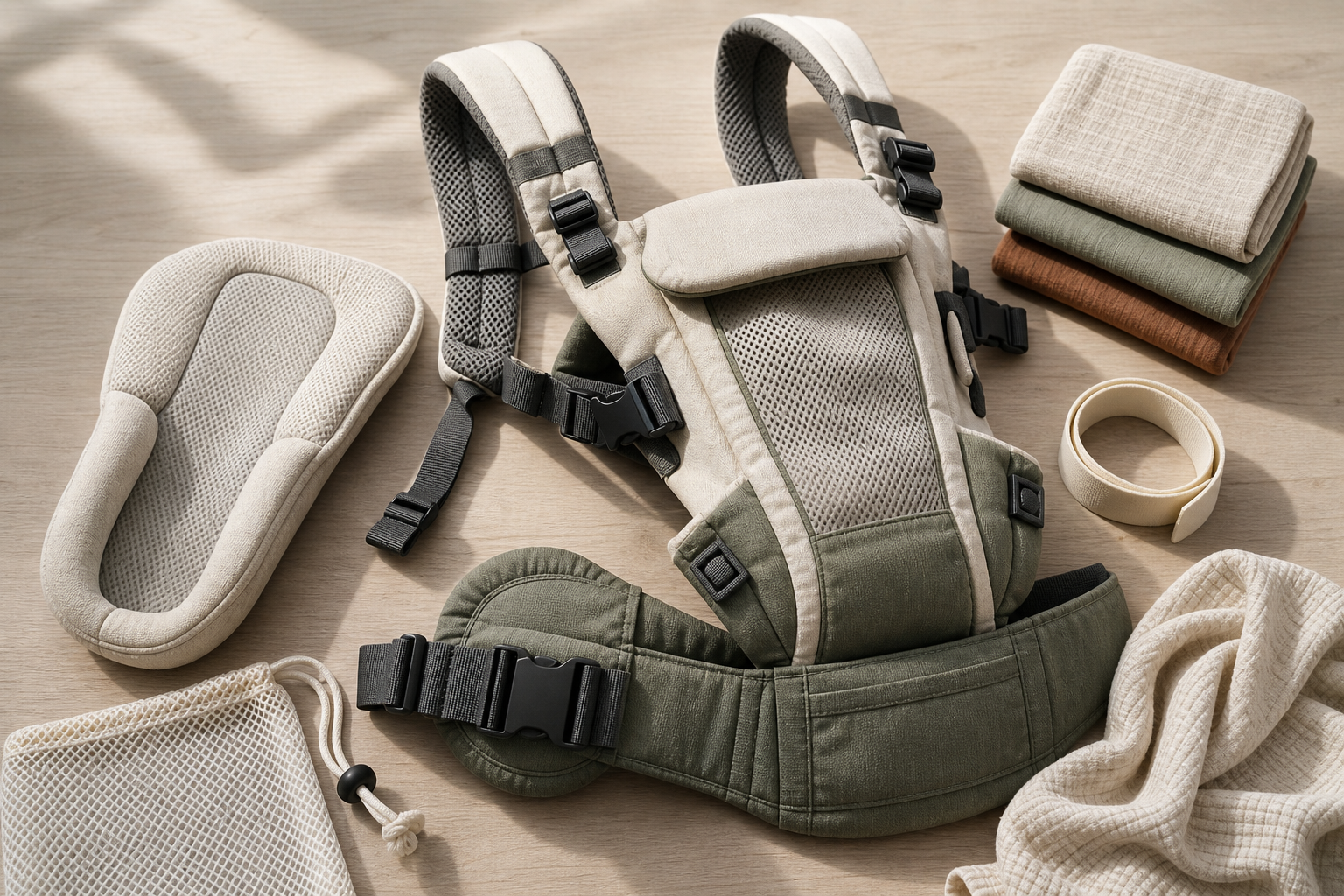
There is nothing wrong with paying for a design you enjoy. Baby gear often occupies your home and becomes part of daily life. The mistake is allowing appearance, convenience, and necessity to blur into one vague feeling that the purchase is “worth it.” Give each part of the decision its own test.
The function test
Describe the practical advantage without using words such as stylish, premium, clever, or beautiful. If you cannot complete that sentence, you are mainly considering a design upgrade. That may still be worth paying for, but it should come from the part of your budget reserved for preferences.
The frequency test
Repeated friction is where a well-designed product can earn its keep. A small improvement in a routine you perform regularly may matter more than a dramatic feature used occasionally. Think in terms of the stage during which your family expects to use the item, not an imagined future in which every possible use case occurs.
The full-cost test
Compare the landed cost of complete, usable setups. Include any required components, shipping, taxes or duties where applicable, and the likely cost of a return. If one option needs additional pieces to perform the job you defined, its starting price is not the number that matters.
The opportunity-cost test
Ask what leaves the budget if you choose the Najell product. A premium purchase is easier to justify when essentials, foreseeable recurring costs, and a financial buffer are already covered. It is harder to justify when it forces compromises on items your baby will use more often or on costs that cannot be postponed.
You are not trying to prove that Najell is universally worth or not worth its price. You are identifying what the premium buys in your situation. If the answer is a meaningful improvement to a frequent routine, the case is strong. If the answer is mostly visual coordination, treat it as a style decision and budget for it honestly.
Put Najell on your registry with an exit plan

A registry can make a premium item easier for friends or family to contribute toward, but it cannot make an unsuitable product useful. Add a specific Najell item only after you have defined its job and checked that it does not duplicate another gift or planned purchase.
- Name the exact item and configuration. A brand-level request leaves room for the wrong size, colour, component, or product to be purchased.
- Add a brief reason. Tell gift-givers what problem the item will solve. That helps them understand why it has priority over a coordinated accessory.
- Check who handles returns. Confirm the retailer’s return conditions, whether opened items are eligible, and whether a gift receipt is available before placing the item on the registry.
- Account for cross-border costs. If the order crosses a border, verify the currency, delivery charges, possible duties, return destination, and who pays return postage.
- Open and assess it promptly. Do not leave a fit-dependent or routine-dependent item boxed until the relevant return period has passed.
- Keep a workable alternative. Do not discard or give away another essential option until the new product has proved suitable for your baby and routine.
If several Najell products appeal to you, resist building a coordinated set before you know which jobs genuinely need solving. Start with the item attached to the most frequent, frustrating routine. Let that choice stand on function; add matching pieces only when each can pass the same test independently.
Key takeaways
- Najell’s premium design is relevant, but the exact product should solve a clearly named problem in your routine.
- Evaluate setup, adjustment, handoffs, cleaning, and storage under realistic conditions, not only during a polished demonstration.
- Read the instructions and fit requirements for the exact item. Convenience never overrides the product’s safety limits.
- Compare complete costs and required components rather than headline prices.
- Use your registry’s return protections, and assess the product before the return period closes.
- Buy coordinated products separately on their merits rather than assuming the entire range will suit your family.
Your next move is simple: choose the specific Najell product you are considering, write down the recurring job it must perform, and walk through the full routine from storage to cleanup. Compare it with a practical alternative using the same requirements. If Najell meaningfully reduces frequent friction, fits your baby and caregivers, and leaves the rest of your baby budget intact, it has earned its place. If it wins mainly on appearance, you can still choose it – but you will be making a clear style choice instead of mistaking desire for need.
References