You can baby-proof your living room and still feel unprepared the first time your baby bumps their head, sleeps somewhere unfamiliar, or boards a plane. Those moments are harder because you have to make decisions while tired, rushed, or worried.
A useful safety plan does two jobs: it prevents the hazards you can control, and it tells you what to do when something unexpected happens. Here is how to build that plan around your baby’s changing abilities, then carry it from home to the airport and your destination.
Key takeaways
- Baby-proof for the movement your baby is likely to learn next, not only what they can do today.
- Prioritize falls, sleep spaces, water and heat, accessible medicines or chemicals, choking hazards, and transportation restraints.
- After a head bump, check responsiveness and breathing first. Escalate immediately for loss of consciousness, seizure, abnormal breathing, difficulty waking, or another sign of serious injury.
- A baby may be allowed to fly soon after birth, but airline eligibility and medical readiness are separate questions.
- At a hotel, rental, or relative’s home, complete a safety scan before you unpack and before your baby is put on the floor.
Baby-proof for the next skill, not the current age
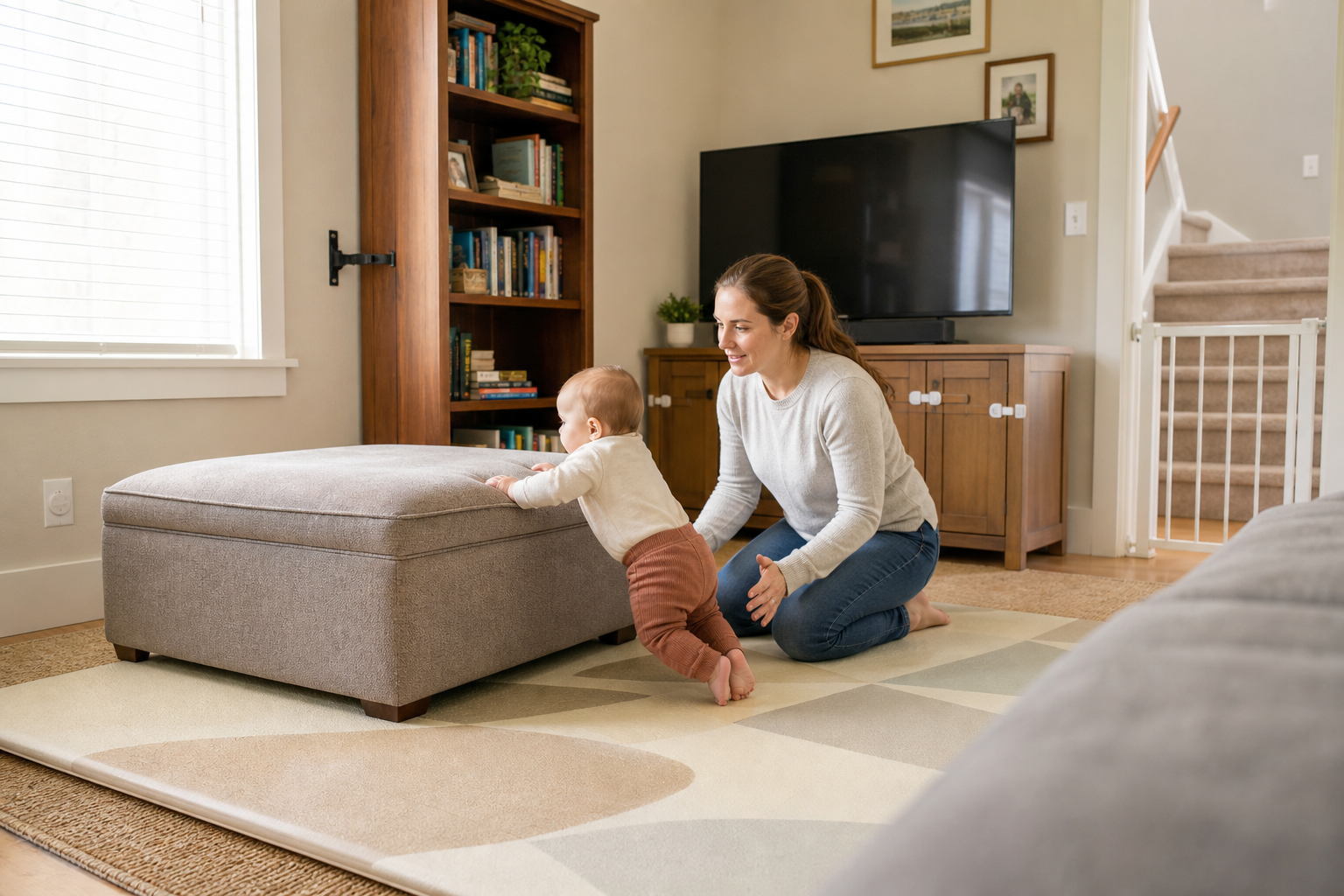
A baby’s abilities do not change neatly on a birthday. Rolling, reaching, pulling up, climbing, and opening containers can appear before you have adjusted the room. That gap between a new skill and a safer setup is where preventable incidents happen.
Start each room scan with two questions: What can my baby do now, and what will become dangerous when they gain one more movement? A low table may be irrelevant to a baby who stays on a play mat, then become a head-impact and climbing hazard as soon as that baby pulls to stand.
- Begin at floor level. Look for small objects, coins, batteries, magnets, pet items, cords, sharp edges, floor vents, and anything that can be pulled down. If an object can fit into a baby’s mouth or break into smaller parts, do not leave it within reach.
- Look up from your baby’s position. Check dangling blind cords, tablecloths, charging cables, hot drinks near an edge, televisions, lamps, and furniture that could tip when pulled or climbed. Secure unstable furniture and keep climbable pieces away from windows.
- Check every boundary. Review stairs, exterior doors, windows, balconies, fireplaces, pools, and rooms containing water or hot appliances. If a hazard cannot be corrected, make the entire area inaccessible rather than relying on your baby to ignore it.
- Test storage against future reach. Medicines, cleaning products, alcohol, sharp objects, and other dangerous household products should be secured, not merely moved to the back of a low cupboard. Keep products in their original containers so their contents and instructions remain identifiable.
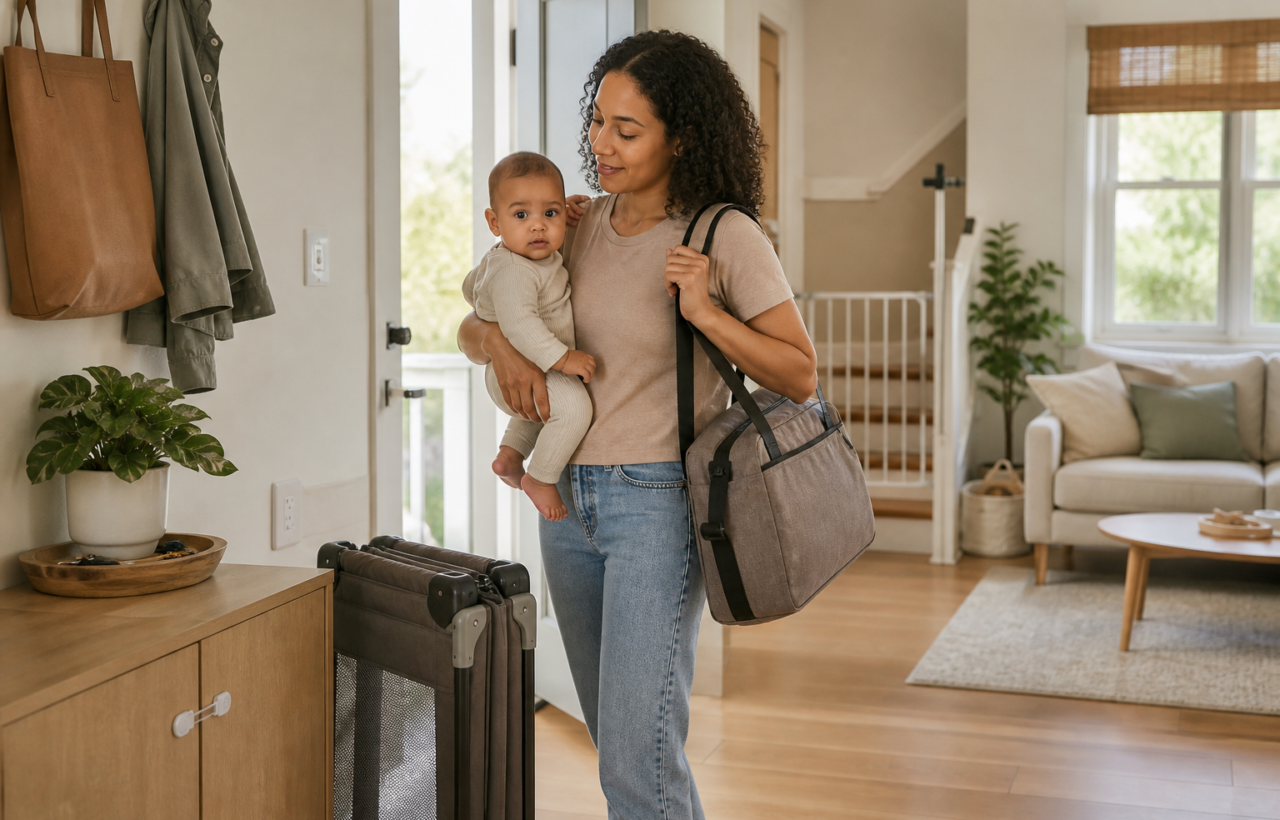
- Create one dependable safe zone. You need somewhere appropriate to place your baby when a delivery arrives, a pot boils over, or you have to handle luggage. A correctly assembled crib, play yard, or gated child-safe area is more reliable than improvising while distracted.
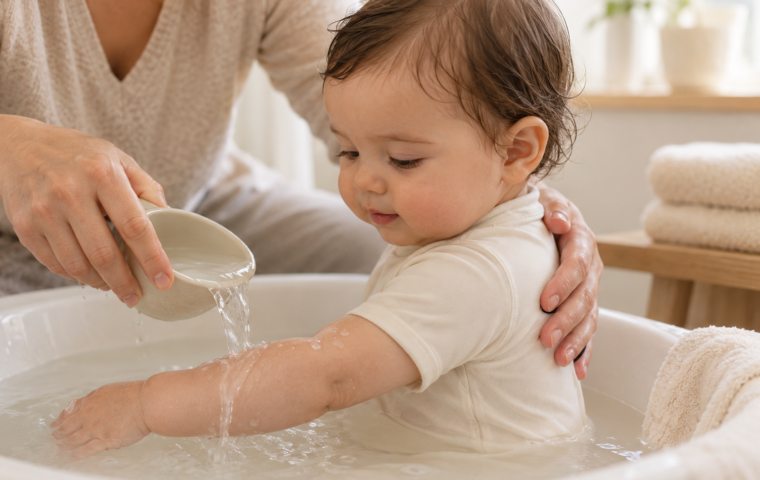
Give extra attention to situations in which one missed step can have a serious consequence. Keep a hand on a baby who is on a changing table or other raised surface. If you forgot a diaper or clean outfit, take the baby with you or move them to the floor before retrieving it. Around a bath or any other open water, stay close enough to maintain direct physical reach; supervision from the doorway is not enough.
Use the same discipline for sleep. Prepare a firm, flat, clear surface intended for infant sleep before your baby becomes tired. Keep pillows, loose bedding, and unrelated objects out of that space. Travel fatigue is not a reason to substitute a sofa, armchair, or improvised padded surface.
Know which head-bump signs change the plan
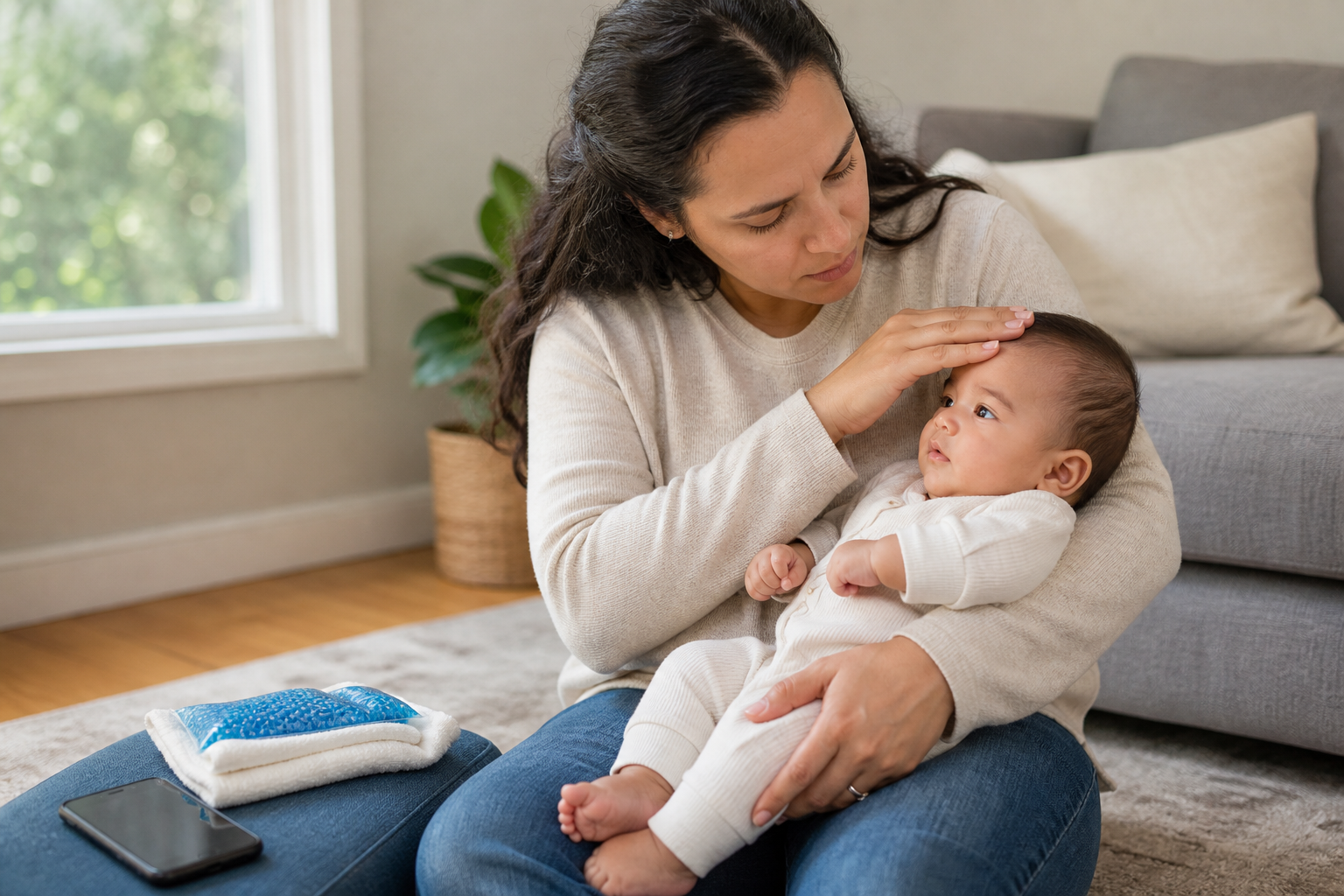
Almost every baby bumps their head at some point, and most bumps are not cause for alarm. That is useful context after a minor tumble, but it should not replace a deliberate check. The size of the visible bump alone cannot tell you everything about the injury.
- Make the scene safe. Prevent another fall, move nearby hazards, and approach calmly. If a neck or spine injury seems possible, avoid unnecessary movement unless the baby is in immediate danger.
- Check breathing and responsiveness. Notice whether your baby is breathing normally, looking at you, moving as usual, and responding to your voice or touch. Do not shake a baby to test responsiveness.
- Call local emergency services for emergency signs. These include abnormal or absent breathing, loss of consciousness, a seizure, inability to wake, new weakness or abnormal movement, an obvious serious head injury, or severe bleeding that does not stop with gentle pressure.
- Seek prompt medical guidance for concerning changes. Repeated vomiting, increasing drowsiness, unusual behaviour, persistent inconsolable crying, trouble feeding, balance or vision changes, blood or clear fluid from an ear or the nose, or symptoms that worsen instead of settling need professional assessment.
- Record what happened. Note the time, the approximate distance of the fall, the surface struck, the part of the head involved, any loss of consciousness, and every symptom you observe. This is more useful to a clinician than simply saying the baby had a bad fall.
Age, medical history, the force and surface involved, and changes from your baby’s normal behaviour all matter. Very young babies cannot describe pain or dizziness, so contact your pediatric clinician or local health service when you are uncertain, even if the visible injury looks small. Ask how closely to observe your baby, whether sleep needs to be interrupted, and which changes should send you for in-person care.
Do not use a new medicine or a dose copied from general online advice after a head injury. Medication choice and dosing depend on the baby’s age, weight, symptoms, and medical history. A pediatric clinician or pharmacist can give instructions that apply to your child.
Separate permission to fly from readiness to fly
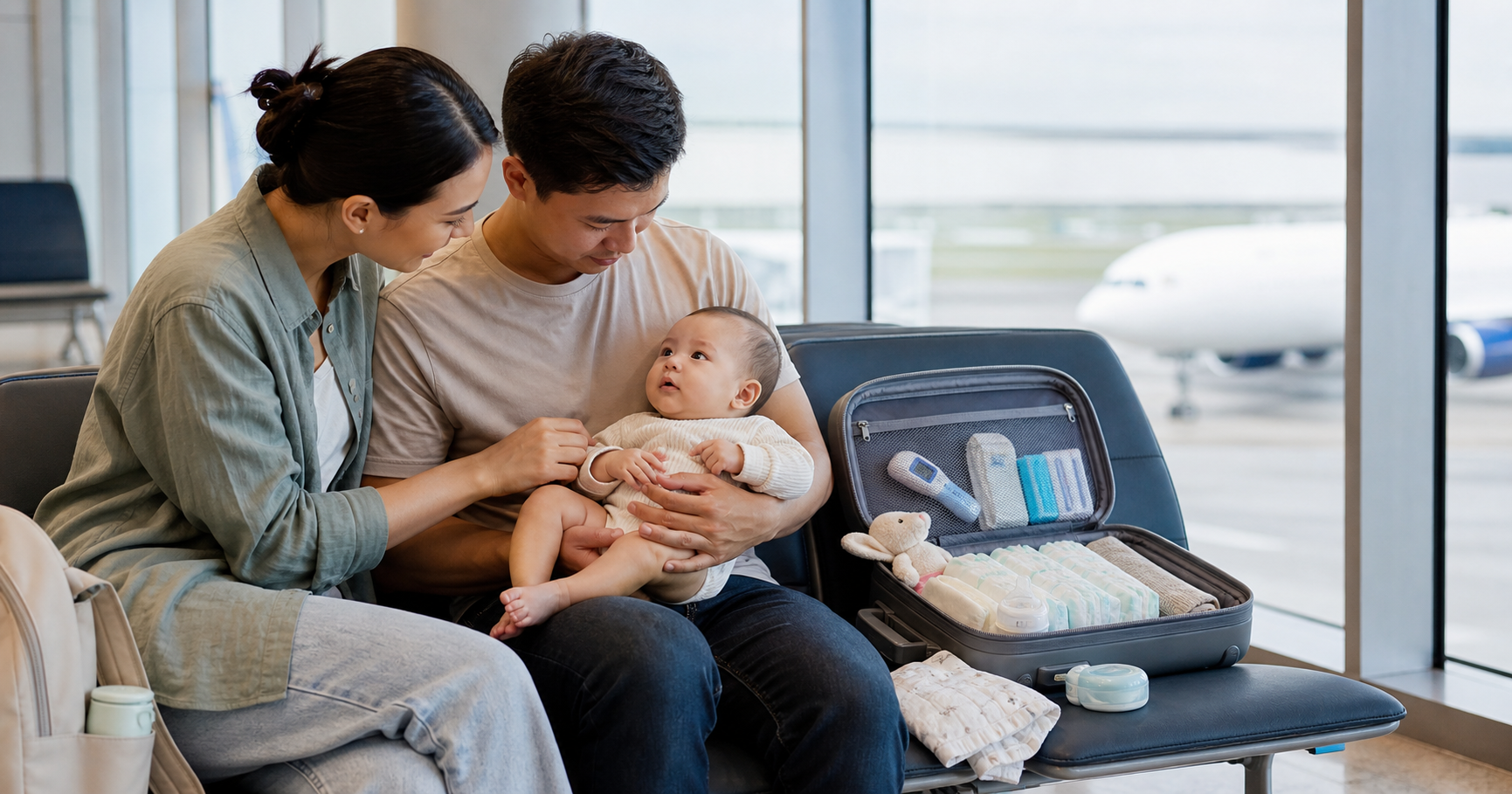
Babies can sometimes fly soon after birth, but that does not mean every newborn should take every trip. The airline decides whether a passenger meets its booking rules. A pediatric clinician helps you judge whether the trip is sensible for your baby’s health. You need both answers before committing.
Contact your baby’s clinician before booking if your baby is very young, was born prematurely, has a heart or lung condition, has recently had a procedure, or currently has a fever, breathing symptoms, significant congestion, or an ear concern. Do not treat a general statement about when babies can fly as clearance for an individual medical situation.
Then verify the practical rules directly with the airline. Ask about minimum-age requirements, identification or medical documents, baggage allowances for baby equipment, and the restraints accepted in the cabin. Policies can differ, and a booking system that allows a lap infant does not answer how you want your baby protected during turbulence.
If you want your baby secured rather than held during the flight, plan for a separate seat and a child restraint that is approved for aircraft use, appropriate for your baby’s size, and accepted by the airline. Confirm the restraint’s label, dimensions, and permitted seat locations before departure. Do not assume that every car seat or every aircraft seat is compatible.
Air pressure changes may make some babies uncomfortable. If your baby normally breastfeeds, bottle-feeds, or uses a pacifier, sucking and swallowing during ascent or descent may help. Do not force a feed, and keep normal feeding safety in mind. Never give a sedating medicine simply to make a baby sleep through a flight unless a qualified clinician has specifically instructed you to use that medicine for your child.
Plan the entire journey, not just the time in the air. Your baby needs an appropriate restraint for the drive to the airport, any taxi or rental vehicle, and the trip from the destination airport. Confirm availability and installation before you arrive; discovering that the expected seat does not fit after a long flight creates pressure to accept an unsafe substitute.
Run a portable safety reset at every destination
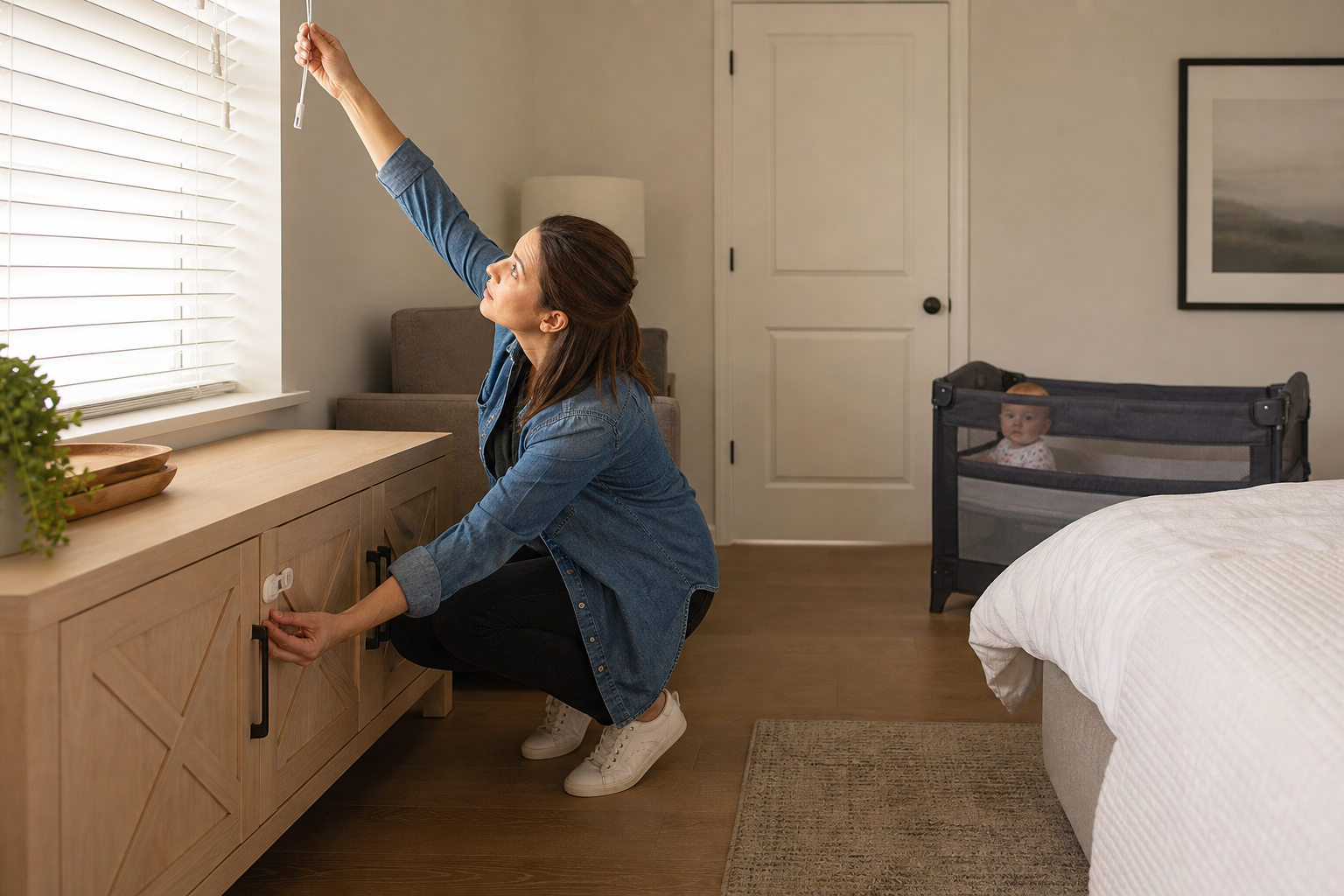
A relative’s house, hotel, or vacation rental may be welcoming without being ready for a mobile baby. The quickest way to reduce risk is to assign one adult to the baby while another checks the space. Do not put the baby down among bags and unfamiliar furniture while everyone assumes someone else is watching.
- Establish the sleep space first. Confirm that the crib or play yard is intended for infant sleep, correctly assembled, firm, flat, and clear. Follow its instructions rather than guessing how unfamiliar parts lock into place.
- Sweep the floor. Remove dropped pills, coins, batteries, magnets, broken toy pieces, pet food, plastic packaging, and other mouth-sized items. Check under beds and furniture, not only the visible centre of the room.
- Control exits and edges. Inspect stairs, balconies, windows, exterior doors, pools, fireplaces, and access to the kitchen or bathroom. Move chairs and other climbable furniture away from windows and balcony rails.
- Secure adult products. Move medicines, cleaners, toiletries, razors, alcohol, and hot appliances into inaccessible storage. A suitcase on the floor can also contain medicines or small objects, so keep it closed and out of reach.
- Check pull and tip hazards. Look for loose cords, dangling tablecloths, lamps, televisions, and unstable furniture. If you cannot secure a hazard without altering someone else’s property, close off that room and choose a safer place for play.
- Save local help information. Put the destination’s exact address, the local emergency number, your baby’s clinician contact, relevant medical information, and insurance details in a phone note that both caregivers can open.
Use explicit handoffs when adults are moving through an airport, loading a vehicle, or carrying luggage. Say who has the baby and wait for an acknowledgement before letting go of the stroller, carrier, or child. This simple habit closes the dangerous gap created when each adult thinks the other is in charge.
Your next step can be small. Do one floor-level scan at home, create the emergency-information note, and write down the medical, airline, restraint, and sleep-space questions that must be answered before your next trip. That gives you a working safety system before you are forced to make decisions under pressure.
References
- Parents – Steps to Take When Your Baby Bumps Their Head
- Parents – When Can Your Baby Safely Take to the Skies?