You’re thirsty, the baby needs you again, and the drink you poured is still sitting on the counter. If coconut water sounds more appealing than another glass of plain water, it can be a useful postpartum option. The useful part is that you may actually drink it, not that it has a special recovery power.
The short answer is simple: coconut water can contribute to your fluid intake, but you don’t need it to hydrate after birth. Treat it as a pleasant alternative to water, not as a postpartum treatment, a meal, or a guaranteed way to increase milk supply.
Key takeaways
- Coconut water is an optional hydration choice. Plain water remains a practical default for everyday thirst.
- Some coconut waters contain naturally occurring electrolytes, including potassium, but the word “electrolyte” does not make a drink medically necessary or superior for postpartum recovery.
- Choose coconut water if its taste helps you drink more consistently, not because you feel pressured to buy a special postpartum beverage.
- Read the individual product label, especially if you are comparing original and flavoured varieties or have been told to limit potassium, sugar, or fluids.
- Inability to keep fluids down, very little urine, fainting, confusion, trouble breathing, chest pain, or rapidly increasing bleeding needs medical attention, not a different drink.
What coconut water actually adds
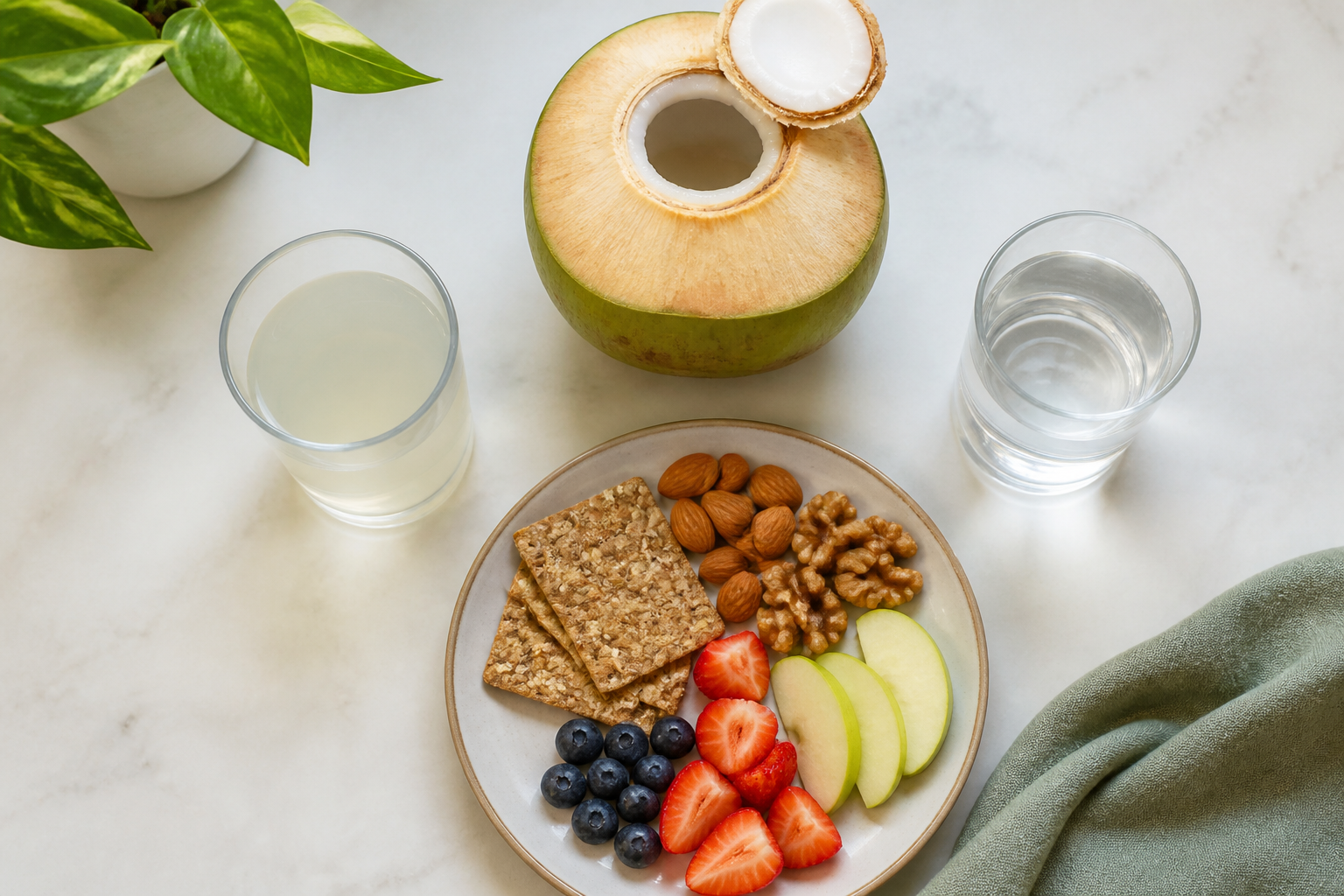
Coconut water gives you another way to take in fluid. That can be genuinely helpful when plain water has become unappealing and leaving an enjoyable drink nearby makes you more likely to sip it.
Vita Coco Original is marketed as containing naturally occurring electrolytes and nutrients, including potassium, with no artificial colours or dyes. Those are product characteristics, not evidence that it hydrates postpartum parents better than water or produces a particular recovery outcome.
Electrolytes are minerals involved in ordinary body functions, including fluid balance. Their presence on a label does not tell you that a beverage has the composition needed to manage illness-related dehydration. Coconut water should not replace a clinician-directed rehydration plan if you are losing fluids through repeated vomiting, diarrhea, fever, or another medical problem.
It also isn’t a substitute for food. If thirst and hunger arrive together after a long feed or pumping session, have a drink and something to eat. A sweet-tasting beverage may feel satisfying for a moment, but it does not provide the range of nourishment found in a meal or snack.
Build hydration into the places you already stop

The main postpartum obstacle is often access rather than knowledge. You know you need to drink, but your hands are occupied and your attention keeps shifting. Make hydration part of the physical setup for caring for your baby.
- Put water at every regular feeding or pumping spot. Use a container you can comfortably lift and open with one hand. A huge bottle is not helpful if it is awkward during recovery.
- Use an existing action as your cue. Take a drink when you settle into the feeding chair, sit down for a meal, or finish a diaper change. A repeated event is easier to remember than another reminder on your phone.
- Keep coconut water as the change of taste. Store it according to the package directions and bring it to your usual spot when you want something other than water. It doesn’t need to become your only drink.
- Assign refilling as a real household task. If a partner, relative, or friend asks how to help, ask them to refill bottles and restock drinks near the places where you feed the baby.
- Follow individual medical instructions. If your midwife, obstetric team, family doctor, or another clinician gave you a fluid target or restriction, use that guidance instead of a generic bottle schedule.
This setup should reduce decisions, not create another performance target. You do not need a clock-marked container to prove you are hydrating correctly. Your needs can change with feeding, activity, weather, illness, food, and your individual recovery.
Choose coconut water for the right reason
For routine thirst, choose the safe drink you enjoy and can keep within reach. Water is inexpensive, widely available, and perfectly reasonable. Coconut water earns a place in your routine when the flavour makes drinking easier or gives you welcome variety.
Before making it a daily purchase, check the actual package rather than relying on the front-label language. Original and flavoured versions can have different ingredient lists. Look at the serving size, total sugar, added sweeteners, ingredients, potassium information if provided, and storage directions after opening. “No artificial colours or dyes” does not automatically mean unsweetened, medically necessary, or appropriate for every diet.
Pay special attention if a clinician has told you to restrict potassium or fluids. In that situation, ask whether coconut water fits the plan instead of assuming a naturally occurring electrolyte is harmless in any amount. The same principle applies if you are managing a medical condition or taking medication that affects what you may drink.
Be equally direct about claims involving breastfeeding. Coconut water can be one of your drinks while nursing or pumping, but it should not be treated as a proven milk-supply aid. If you are worried about supply, painful feeding, your baby’s intake, or diaper output, contact a qualified health professional or lactation specialist rather than trying to solve the concern with a beverage.
Know when the problem is bigger than beverage choice

Forgetting to drink during a demanding stretch is usually a logistical problem you can address by pausing, accepting help, and putting fluids within reach. Persistent or severe symptoms need a different response.
Contact your maternity team, midwife, family doctor, or another clinician promptly if you repeatedly cannot keep liquids down, are passing very little urine, or remain unusually thirsty and unwell despite drinking. Seek emergency care for fainting, confusion, chest pain, trouble breathing, or bleeding that is very heavy or increasing quickly. Do not wait to see whether coconut water fixes those symptoms.
Your practical next step is small: place water where feeding and baby care happen, keep coconut water available if you genuinely enjoy it, and ask someone supporting you to handle refills. That turns hydration from another task to remember into part of the routine already carrying you through the day.
References