

If buckling your baby means bending under the roof, twisting around the door frame and trying to straighten a harness you can barely see, a rotating car seat may solve a real daily problem. It lets you turn the seat toward the open door for loading, then return it to the permitted travel position.
That convenience is only useful if the seat fits your child, your vehicle and the way your family actually travels. Before you pay for the swivel, check the less glamorous details: installed clearance, access to the controls, harness adjustment and the steps required to lock the seat before every drive.
Key takeaways
- A rotating seat can make loading and buckling easier, especially when reaching into the back seat is awkward.
- The rotating mechanism is a convenience feature. It does not replace correct installation, correct harness use or the required travel orientation.
- Judge fit with the seat fully installed in the exact vehicle position you intend to use. An uninstalled display model cannot reveal every clearance problem.
- A full-circle swivel claim describes movement, not permission for a child to travel facing in any direction. The manual determines the allowed modes and positions.
- Choose the seat that every regular caregiver can operate correctly, including rotating it back and confirming that it is locked.
What rotation changes, and what it does not
The practical appeal is simple: turning the seat toward the door can make getting your child in and out easier. You can face the harness while placing your baby in the shell, move straps away from the child’s body and check for twists without leaning as far across the vehicle.
That can matter on an ordinary Tuesday more than an impressive list of secondary features. If you make several short trips, load a sleeping baby, park beside other cars or find deep bending difficult, improving the loading angle may remove friction from every outing.
Rotation does not automatically create more room. The base, shell and turning path still occupy physical space. A seat may fit while stationary but contact the door, front seat or vehicle trim as it turns. A neighbouring passenger or car seat may also block the motion. You need enough clearance for both travel and rotation, subject to what the child-restraint and vehicle manuals permit.
It also does not simplify every trip. Some designs add a release control, a lock check or another sequence a caregiver must remember. If a grandparent, babysitter or partner cannot find the release or tell when the seat is locked, the feature has introduced a new point of confusion. Daily ease should include the whole process, not just the satisfying moment when the shell swivels.
Be careful with product language. A rotating range describes how the seat can move on its base. It does not tell you which way your child may face while the vehicle is moving, which installation method is allowed or whether every mode is available throughout the seat’s stated limits. Those answers belong to the model’s labels and manual.
Check the complete fit before you buy
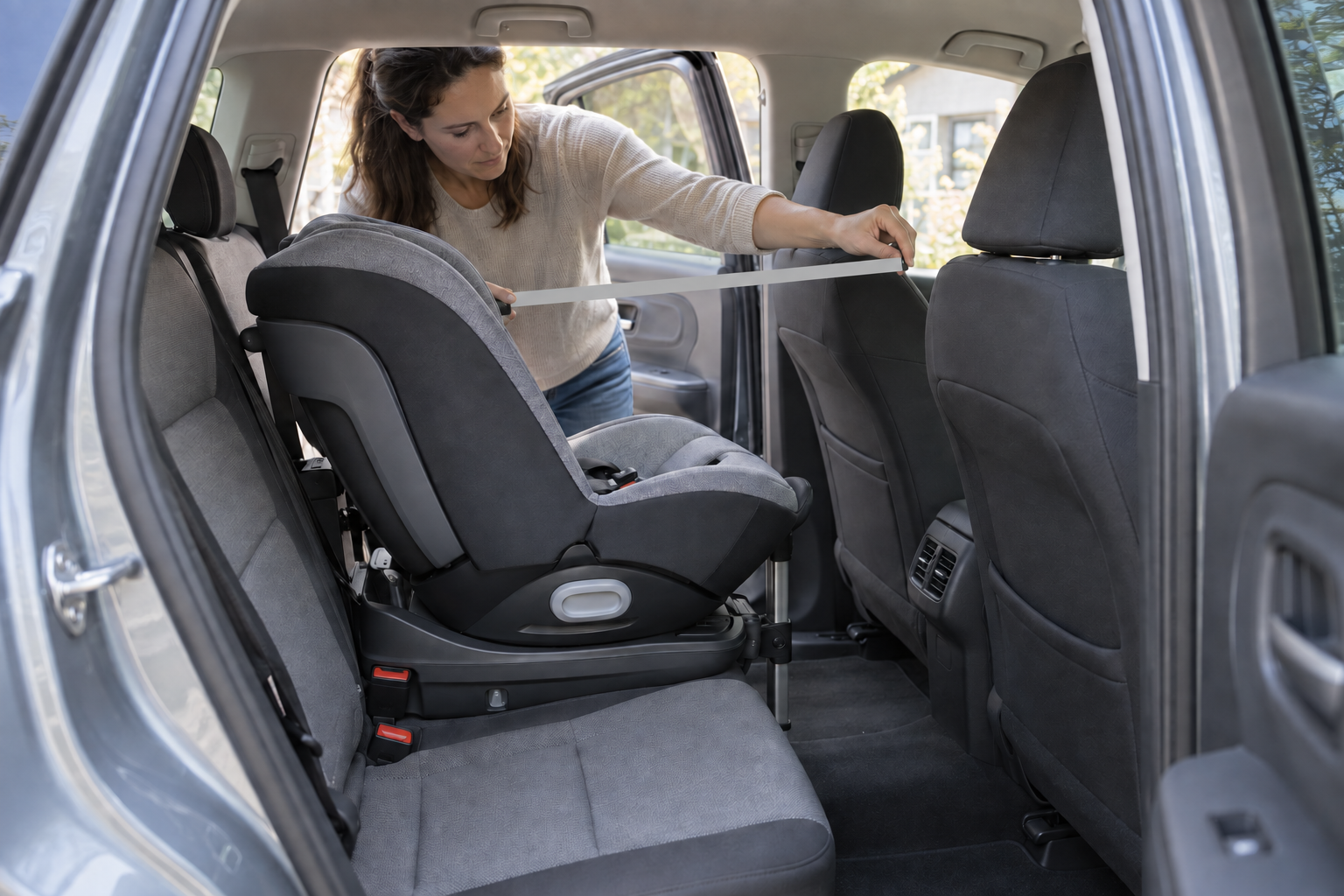
A rotating seat has to pass several fit tests at once. Work through these questions with your actual vehicle and child in mind rather than choosing from a feature list alone.
- Will it fit the intended seating position? Check the child-restraint manual and your vehicle manual before installation. Confirm that the position and installation method are allowed. Once installed, make sure the front passenger can still use a safe, practical seating position and that the door closes without pressing on the restraint.
- Can it complete its rotation while installed? The display seat’s movement is not enough. The installed angle, vehicle cushion, door opening, roofline and nearby seats all affect the turning path. If a retailer permits a vehicle trial, perform the full rotation after completing the installation rather than holding the seat loosely on the vehicle cushion.
- Does it fit your child in the needed mode? Read the model’s child-fit limits and instructions. Use the label and manual rather than assuming that an age range, marketing category or long overall lifespan guarantees the right fit now. Check where the harness, buckle and required inserts sit on your child’s body.
- Can you reach every control? Try the rotation release, harness adjuster and buckle from the position where you will actually stand. A control that feels easy on a waist-high display may be awkward beside a narrow door opening. Make sure you can see or feel the model’s lock confirmation without guessing.
- Does it work for the rest of the back seat? Installations can affect access for siblings and adult passengers. Confirm that another restraint can be buckled independently, passengers have usable space and nobody must push the rotating seat out of position to get in.
- Will it work in every vehicle that matters? Do not assume a successful fit in one car transfers to another. If the seat will move between vehicles, check each vehicle manual, each intended position and the installation process. Also decide whether repeatedly moving a larger base is realistic for your household.
Cleaning belongs in the fit decision too. Look up how the cover comes off, which parts may be washed and how debris should be removed from the rotating area. Crumbs and small objects collect around moving parts. You need a care routine that follows the manufacturer’s instructions without soaking, lubricating or dismantling components that are not meant to be treated that way.
Before opening the box, confirm the seller’s return conditions. Some return policies change once a restraint has been used or its packaging has been discarded. A vehicle-fit trial is far more useful when you know whether an unsuitable seat can still be returned.
The safety check happens after every swivel
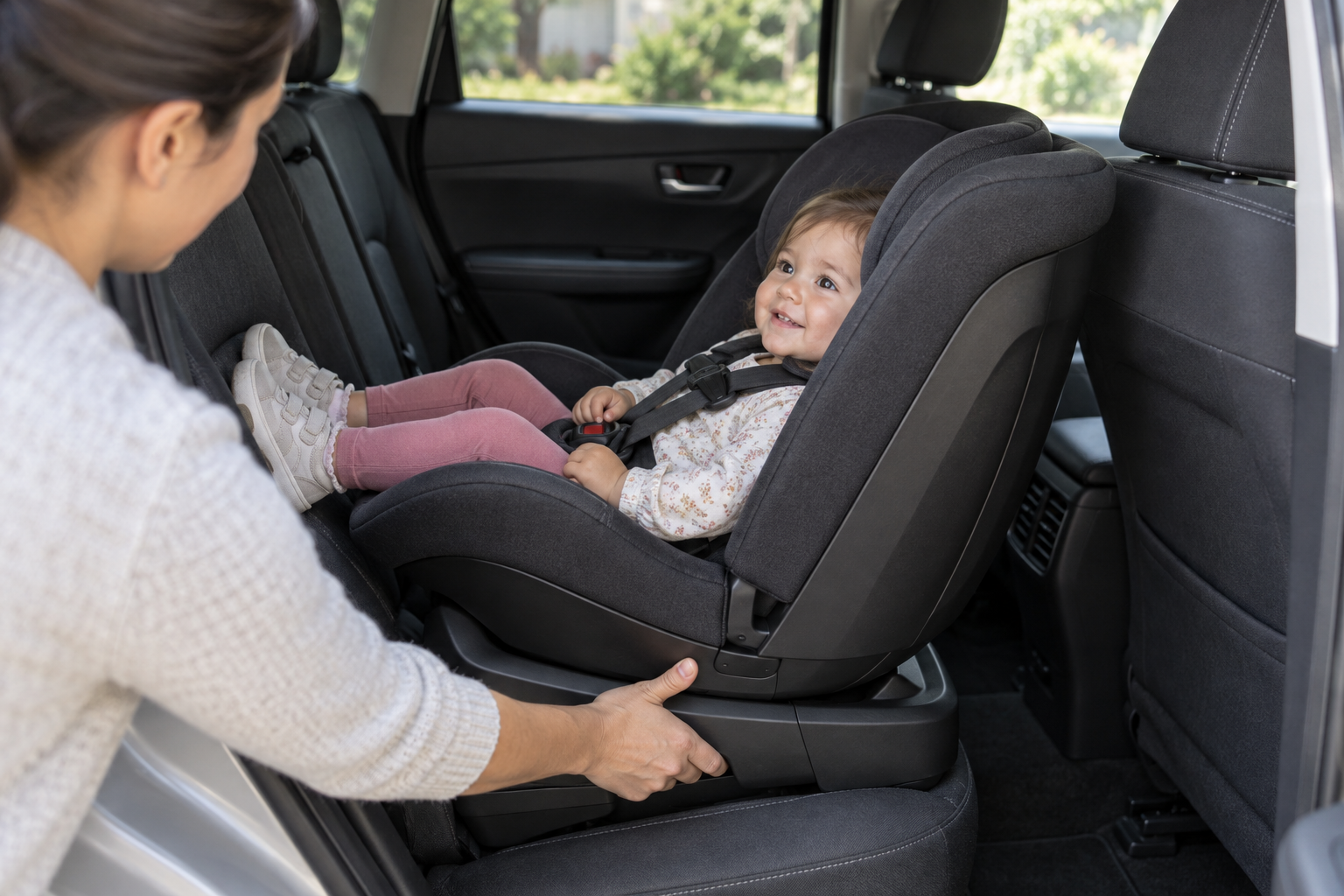
The side-facing position is for access when the model permits it, not an invitation to improvise a travel position. Before the vehicle moves, return the seat to the orientation required for your child’s current mode and confirm that the rotating mechanism is positively locked as the manual directs.
Do not rely only on hearing a click. Road noise, conversation and a crying child can make sound an unreliable check. Use the model’s specified indicator or physical confirmation as well. If the seat will not lock cleanly, stop and inspect it according to the manual; do not drive while hoping that movement will settle it into place.
Keep installation and rotation checks separate in your mind. A stiff swivel does not prove that the base is installed correctly, and a correctly installed base does not prove that the shell is locked for travel. Check installation at the location and in the manner specified by the manufacturer, then check the rotating lock as its own step.
The rest of the restraint still needs the same attention as any other car seat:
- Use only a seating position, installation method and belt or anchor routing permitted by both manuals.
- Do not combine installation methods unless the child-restraint instructions explicitly allow that combination.
- Place and tighten the harness exactly as directed for the child’s current mode, removing twists rather than hiding them under clothing.
- Use only the inserts, padding and accessories approved for that model and configuration.
- Recheck the instructions after removing the cover, moving the restraint, changing vehicles or changing modes.
- Keep objects and debris away from the rotating and locking areas, cleaning them only as instructed.
- Never operate the rotation feature while the vehicle is moving.
Every person who transports your child should be able to complete the sequence without prompts: buckle and adjust the harness, rotate the shell into the required travel position, and confirm the lock. Show them using the installed seat. A quick verbal explanation in the driveway is not enough if they have never handled the controls.
If the manuals conflict with your intended setup, the seat will not lock reliably or you cannot determine whether the installation is allowed, pause before using it. Contact the manufacturer or arrange an in-person check with a trained child-passenger-safety professional. The rotating feature is not worth guessing about.
Decide based on your hardest routine trip

Picture the trip that makes buckling hardest: a narrow parking space, a low roof, a tired toddler, a caregiver with limited reach or another child waiting beside you. Then test whether rotation fixes that specific difficulty. This gives you a better decision rule than treating a swivel as an automatic upgrade.
Make rotation a must-have when it meaningfully improves a frequent loading problem and the seat passes every fit and operation check. Treat it as a bonus when you can already buckle comfortably, rarely use the car or would have to compromise vehicle fit to accommodate the mechanism. A conventional seat that fits well and is used correctly is a more practical choice than a rotating model that crowds the vehicle or confuses its caregivers.
When you have a short list, bring the exact vehicle, intended seating position and regular caregivers into the decision. Read the manuals, perform a permitted fit trial and practise the complete loading-to-locking sequence. Buy the model whose correct use feels clear and repeatable on an ordinary day, not merely the one that turns most dramatically in the showroom.
References




